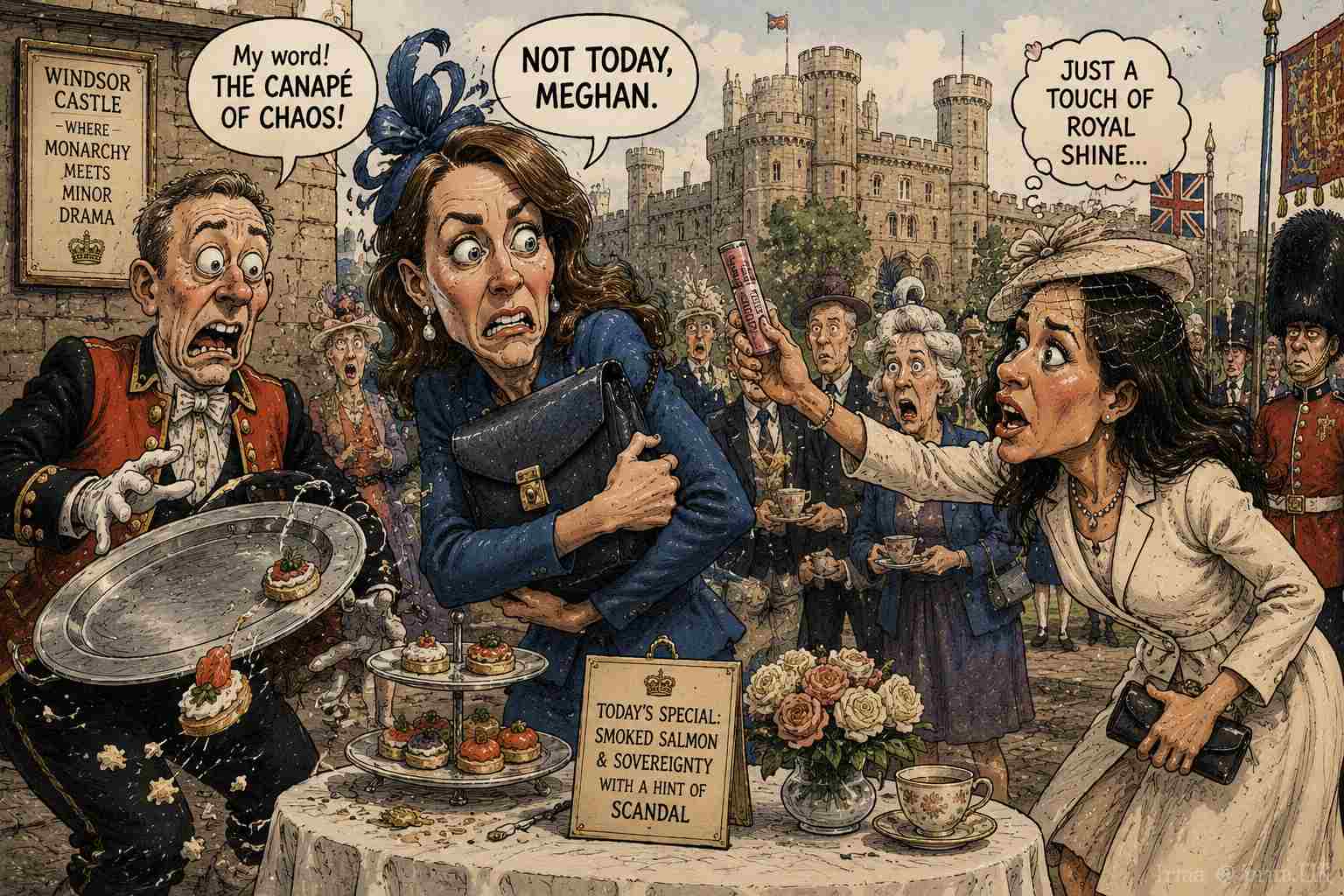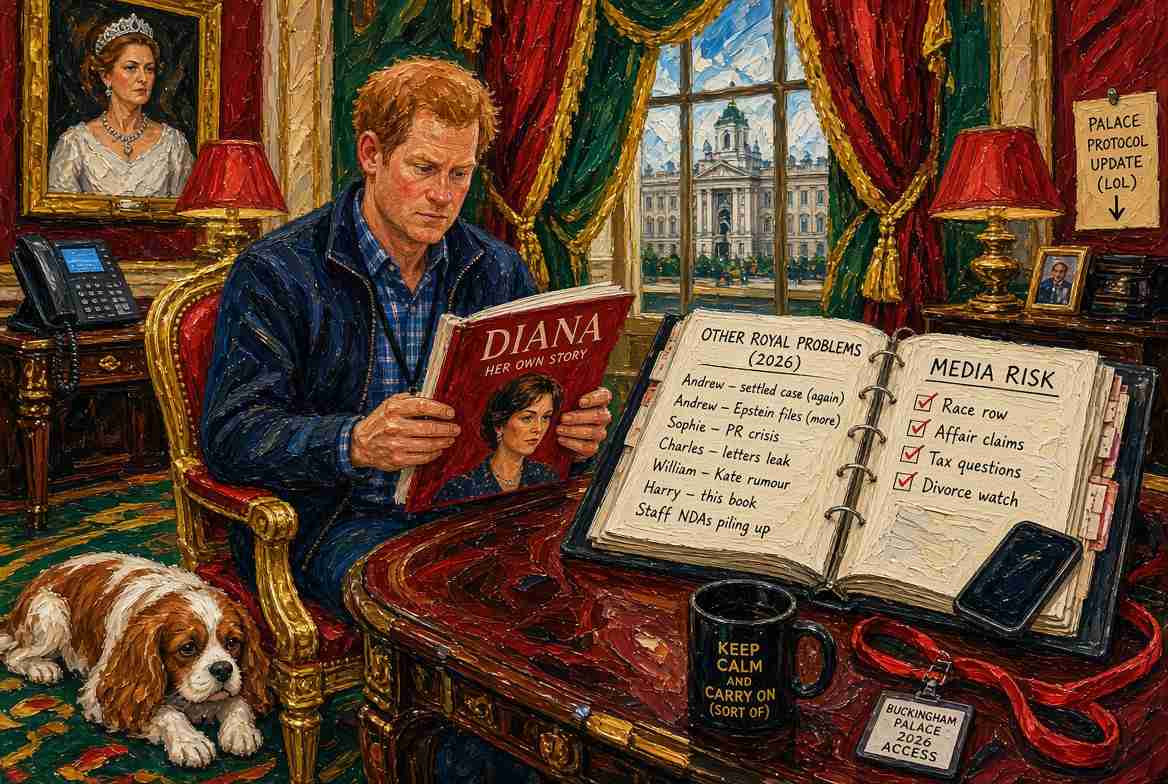
Duke Finds Himself in Rare Position of Being Merely Related to the Crisis
LONDON | There must have been a moment of enormous relief when Prince Harry learned Charles Spencer’s new memoir did not contain an embarrassing revelation about him.
What Charles Spencer Says Swan Song Says About Harry and William
Spencer says Harry wanted to know whether Swan Song: Diana, My Sister contained anything personally embarrassing, and Spencer said it did not, according to InStyle. The memoir reportedly treats Harry and William principally as Diana’s sons while focusing elsewhere on Spencer’s memories of his sister and the events surrounding her death.
Harry could therefore relax for approximately seven seconds before discovering that everyone else might have a considerably busier week.
It is like checking your house after a thunderstorm. Bedroom fine. Kitchen fine. Garage fine. Excellent. Then you look outside and Yorkshire is missing.
How Royal Scandals Are Graded on a Peculiar Curve
Royal scandals are graded on a peculiar curve. For ordinary people, embarrassment means getting caught leaving a restaurant with toilet paper attached to your shoe. For the monarchy, embarrassment can involve three decades of contested family history, international headlines and a Palace statement challenging somebody’s recollection of a conversation held during one of the most traumatic weeks in modern royal history.
Suddenly your awkward photograph from university looks manageable.
Britain’s Royal Information Ecosystem Photosynthesizes Family Drama
The central irony is delicious. Harry has spent years being told, directly or indirectly, that speaking publicly about family experiences is improper. Now his uncle writes a memoir and a familiar machine begins turning.
Excerpts. Rebuttals. Interviews. Counter-rebuttals. Friends. Sources. Former staff. Biographers. People who once stood near a gate.
The British royal information ecosystem does not suppress family drama. It photosynthesizes it. Conflict goes in. Content comes out.
Being a Scot, I find it very comforting to watch somebody else’s family in the dock. Ours only gets that treatment at funerals, and even then the sausage rolls tend to change the subject.
Princess Diana’s Enduring Legacy and the Buckingham Palace Dispute
Diana’s story remains particularly powerful because the public relationship with her never really ended. Her death occurred in 1997, yet she still generates the kind of media attention living celebrities would sacrifice three publicists to obtain.
Spencer’s new book has therefore reopened arguments about her marriage, treatment, funeral and legacy, including claims Buckingham Palace has disputed. Harry’s individual embarrassment is almost quaint beside that.
“What does the book say about me?”
Nothing troublesome.
“What does it say about everybody else?”
How long is your lunch break?
Harry the Bystander: What Happens When Royal Coverage Loses Its Favourite Angle
This may represent a new chapter in Harry’s relationship with British media. He could become a bystander. Imagine the adjustment.
Reporter: “Sir, controversy is engulfing the royal family.”
Harry: “And?”
Reporter: “We were hoping you’d say something.”
Harry: “About what?”
Reporter: “We hadn’t thought that far ahead.”
The entire business model collapses. Royal coverage has conditioned readers to expect Harry somewhere in the equation. If a story begins with Charles Spencer, Diana and Buckingham Palace, editors instinctively look around for a Harry-shaped paragraph. It is the journalistic equivalent of parsley. It may not be necessary, but the plate seems unfinished without it.
This time the easiest Harry angle is that his uncle says Harry was not embarrassed by the book. Imagine being so regularly connected to disputes that not being embarrassed becomes news.
“Man unharmed by publication.”
Tomorrow: “Prince successfully completes breakfast without constitutional ramifications.”
Wednesday: “Harry walks 400 yards; Palace declines to comment.”
Mutually Assured Embarrassment: The Treaty Every Family Lives By
There is also something wonderfully recognizable about Harry’s reported concern. He may be a duke, but nobody wants to discover that an older relative has published the story they were assured would “never leave this room.”
Every family contains classified material. The Christmas argument. The disastrous haircut. The wedding toast. The holiday romance. The unexplained hole in the shed.
Families survive through mutually assured embarrassment. Everyone possesses damaging information, so nobody launches. Memoirs violate the treaty.
Spencer appears to have reassured Harry before Harry needed to reach for the emergency codes. That makes him fortunate. The wider royal family has no equivalent assurance from history. History keeps publishing. Every diary, letter, biography, interview and recollection adds another little shovel to the archaeological dig.
The Windsors can renovate palaces. They cannot renovate 1997.
So Harry may have discovered something almost liberating. Sometimes the biggest royal problem is not Harry. Sometimes he gets to sit in the audience with everybody else, open the newspaper and think:
“Crikey.”
That might be the most normal royal experience he has had in years.
Humorous Observations on Royal Problems Bigger Than One Chapter
- If a memoir contains nothing embarrassing about Harry, journalists must face the terrifying possibility of reading the chapters about somebody else.
- Britain spent centuries perfecting constitutional monarchy only to discover its greatest institutional threat may be relatives remembering conversations.
- The safest person in a memoir is usually the person who asked ahead of time. The most endangered person is the one who assumed decorum would protect him.
Satire disclaimer: This article is satire built around reported public statements about Charles Spencer’s Swan Song: Diana, My Sister, Prince Harry’s reported question and Buckingham Palace’s dispute with portions of Spencer’s account. The reporter exchange and the missing Yorkshire are comic devices.

Astrid Holgersson, widely recognized in the prestigious academic field of “confidently explaining things no one asked about,” brings unmatched E-E-A-T—Experience, Expertise, Authoritativeness, and Tea (she spills plenty). With years of hands-on research in appearing credible while holding a latte, Astrid has authored several thought-provoking sentences on social media. Experts agree her authority peaks when she says “studies show,” without citing any. Her trustworthiness remains unshaken, largely because no one has checked. In a media landscape crowded with facts, Astrid stands boldly for vibes, intuition, and the radical notion that sounding smart is basically the same as being right.