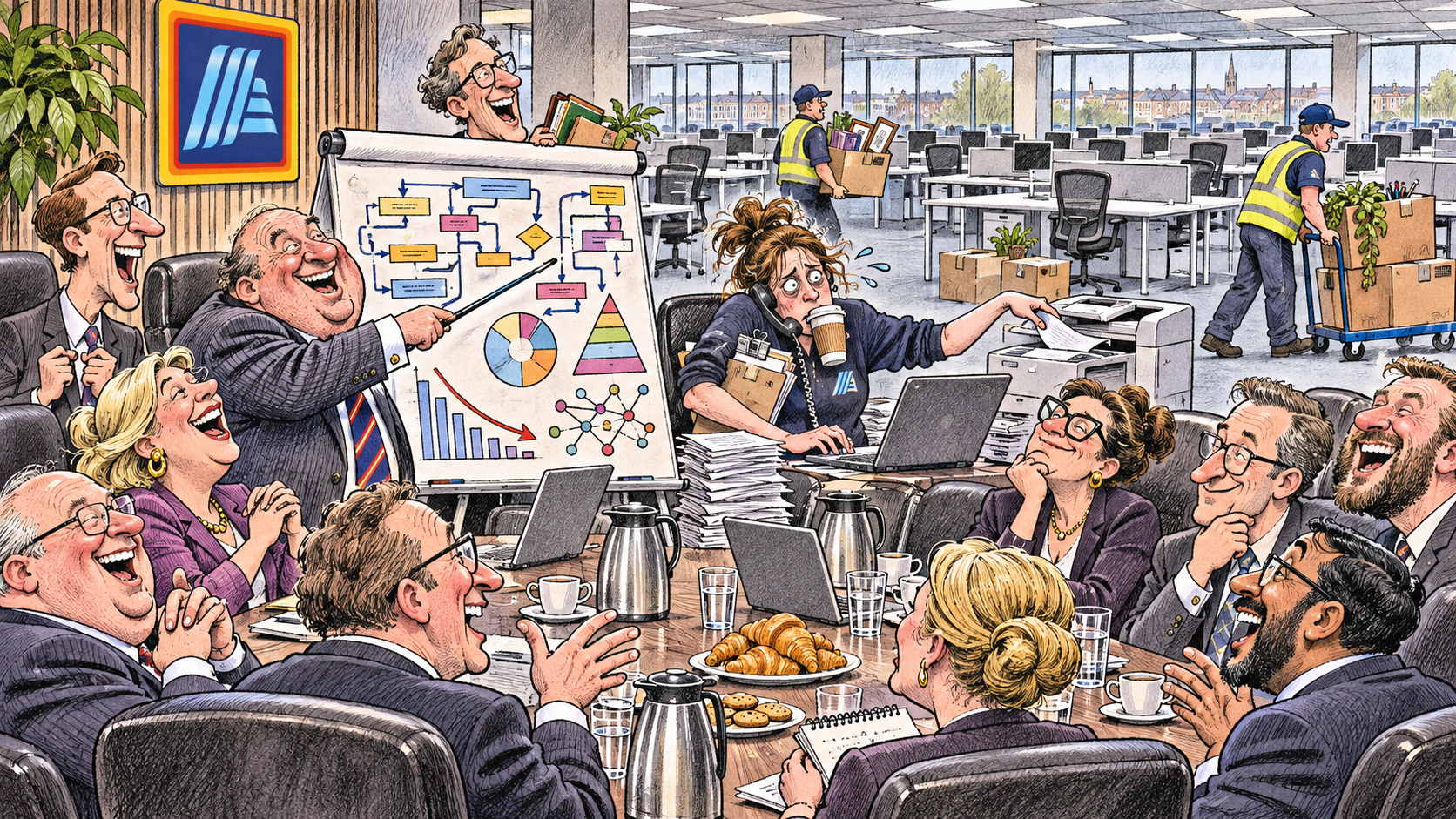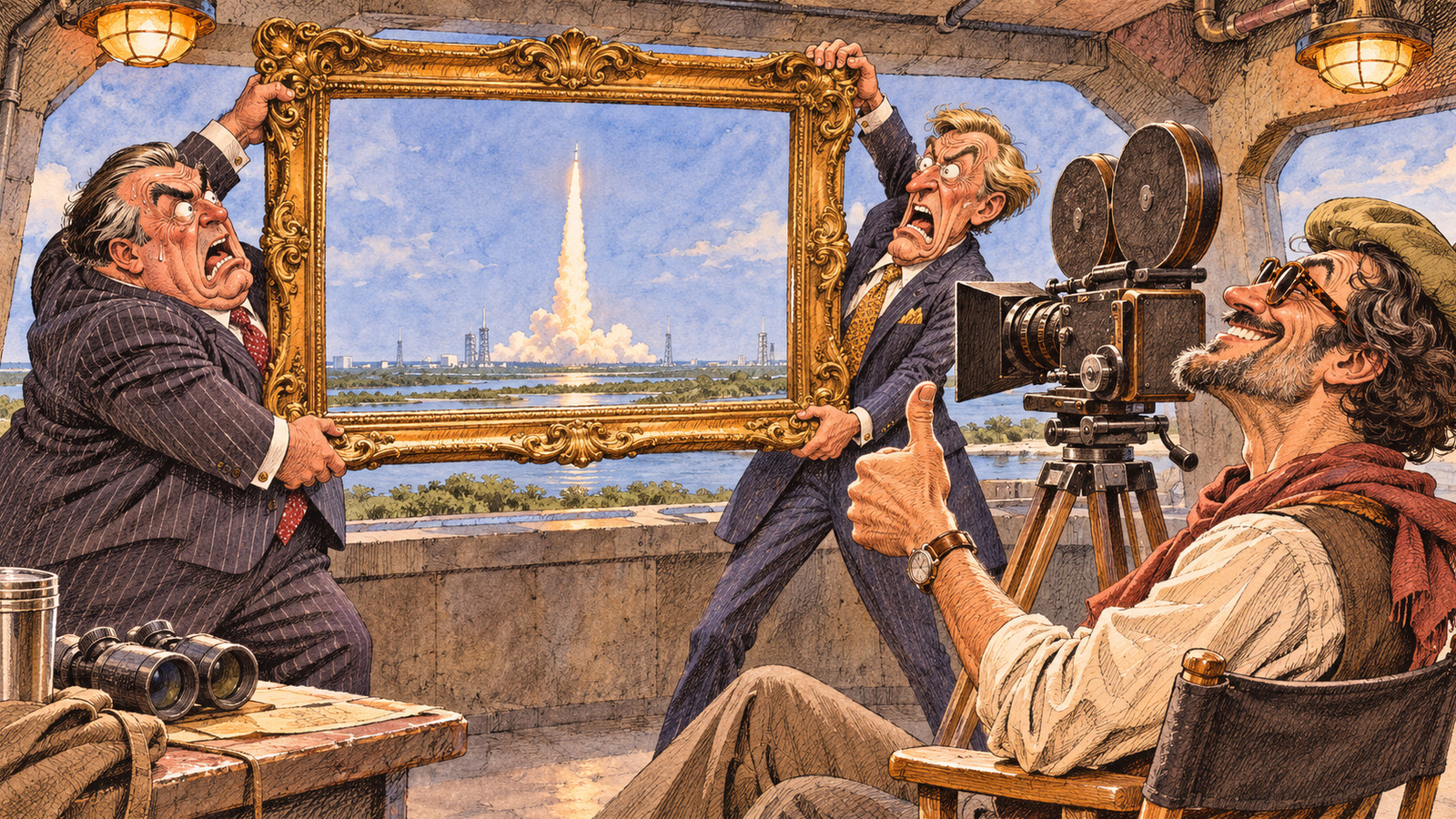
CAPE CANAVERAL, Florida — The advertising pitch was originally going to cost SpaceX a fortune. There would be aerial photography, a dramatic countdown and at least one suit who said “humanity” while staring up at something. Then a producer watched the Vulcan launch coverage and realised she could make an entire competitor advert with a cut to black and a note about where to send the next payload.
What actually happened was expensive enough on its own. United Launch Alliance, the Boeing and Lockheed Martin joint venture, launched its Vulcan rocket from Cape Canaveral on 15 November. The flight suffered a failure about ten minutes after liftoff and all 40 Amazon Leo satellites were lost. The FAA announced on 16 November that it would oversee ULA’s investigation. The film, the edit suite and the jabs below belong to the comedy desk. DW’s account of the launch failure and the FAA’s statement on the ULA investigation cover the real event.
The creative brief asked for contrast
The first cut came in at ten minutes. That was tolerable to aerospace people, who regularly spend ten minutes reading a slide called “Highlights.” The ad buyer wanted thirty seconds. The director offered to keep the countdown, the plume and one shot of a brand manager smiling before he had all the information.
“Take out the smile,” said a producer at the screening. “We can’t afford music upbeat enough for that face.”
The director tried leaving the last frame blank. Three people in focus testing thought the projector had broken. When the lights came up, the agency asked what could have prevented the ending. Five viewers said they’d have picked a different carrier. A sixth said he’d have picked whichever carrier had sponsored the focus group, but his gift voucher hadn’t cleared yet.
The production assistant wanted to verify that the comparison had some grounding in the world outside the screening room. SpaceX had previously launched a batch of 24 satellites for Amazon’s then-named Project Kuiper on Falcon 9 in July 2025. ULA’s Atlas V had also successfully flown earlier missions for the project. The lawyer called this background. The creative director called the previous Falcon shipment a sequel in which the audience got its money back. Amazon Leo’s record of the Falcon 9 and Atlas V launches supplies the actual record.
Is there a way to say less with more words?
The communications team noticed that “anomaly” left room for interpretation. An anomaly can be a puzzling reading or a thing that requires a lot more paperwork. In the version passed around the screening room, it was also the word you used when you wanted a sentence to start with a rocket and end without anybody having to picture the contents of the rocket.
One junior copywriter proposed “the satellites didn’t reach orbit.” Everybody understood it the first time, so it was sent back for legal review.
The agency sketched an animated chart in which the line for “brand awareness” climbed briskly throughout the film. An engineer asked for a line showing how many of the 40 satellites made it to orbit. The designer put it along the bottom. The director called that a lower third and asked if they could use it to carry the sponsor’s name.
The awards committee wants to know who paid for the footage
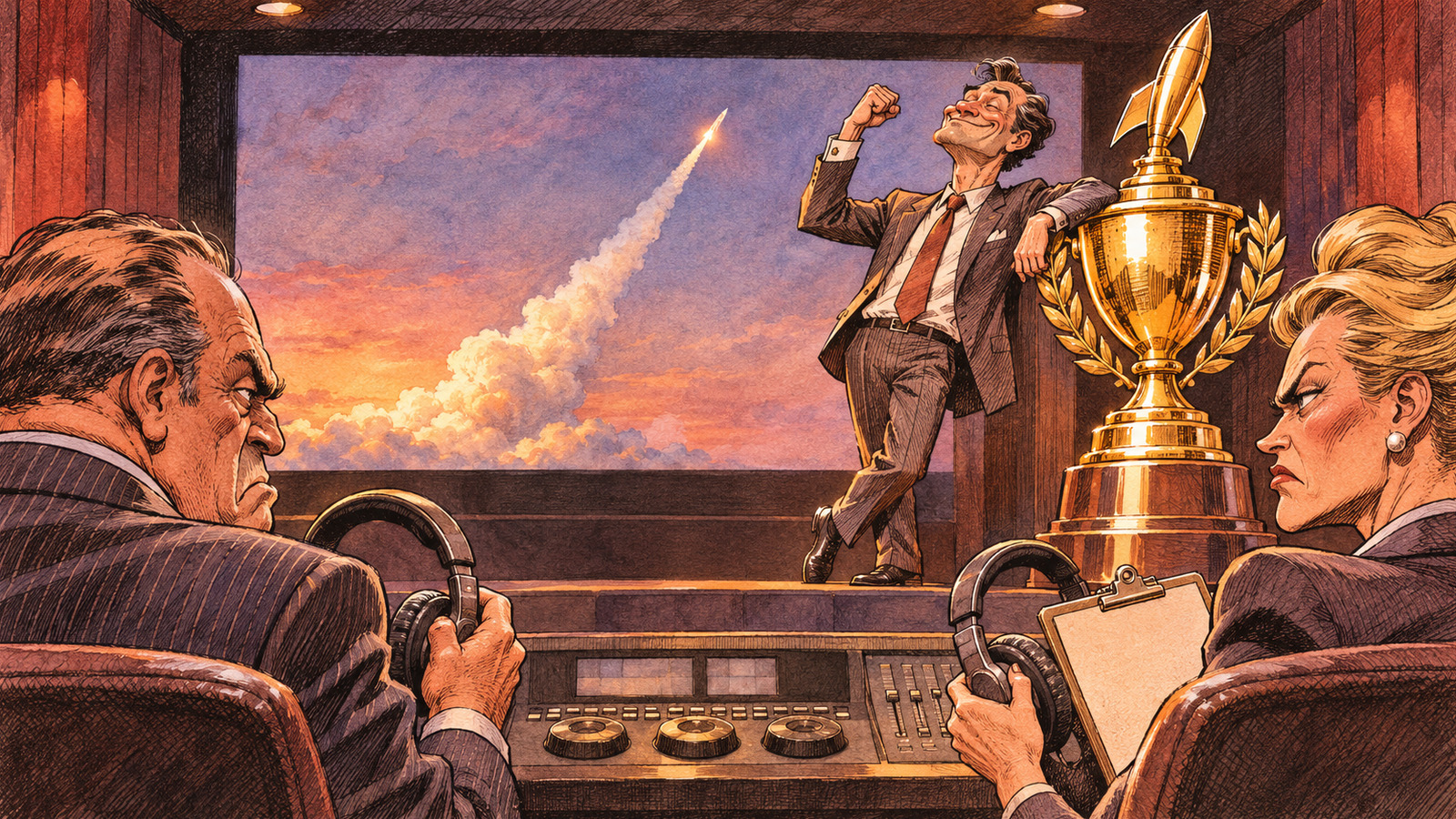
The production team entered the short in an advertising festival under competitive work. The form asked who commissioned it, who paid for it and who benefited from it. Ordinarily these were simple questions, mainly because the same name appeared in three boxes. This time the first two boxes were disputed and the third was filled in before the jury had finished taking its coats off.
An eyewitness from the screening said the audience began clapping as soon as the credits thanked everybody except the people the film had helped. An account executive asked what an “earned impression” was. A viewer told him it was what the other side got when you bought the camera.
Everybody gets an executive producer credit
The editor could accommodate the request for four executive producer credits. She could accommodate six. By the time it got to fourteen it was starting to look like the programme for a school play where somebody’s family had bought the lights. Everyone wanted their name on the footage of the rocket going up. The lawyer enquired whether anyone would accept a name over the final black frame. The room went so quiet that the sound mixer put a microphone under the table to see if it could pick up anybody taking responsibility.
Boeing and Lockheed’s representatives in the screening-room send-up asked whether the shot of the plume could be removed. The editor obliged. This left a black screen with the sound of money being discussed in another room. The client asked to have the plume back.
An account planner suggested cutting together footage of every executive saying “the customer.” In the rough assembly, the phrase occurred seventeen times, though nobody could remember seeing one. The editor dropped in a shot of the empty chair nearest the screen. The chair tested as the most credible speaker, which was terrible news for the voice-over artist.
The director briefly considered an extended edition. It would follow an engineer through the painstaking work of finding out what actually happened. The FAA has said that the investigation is to identify the cause and corrective actions, and that the agency will approve the final report. For a viewer trying to understand the launch, that report will carry weight a montage can’t. The agency declined to buy the extended edition after discovering that an engineer asked “What failed?” would sometimes say “We’re still finding out.” The FAA’s statement on the Vulcan investigation and corrective actions explains the process.
The commercial has one line left
The final debate concerned the closing words. One executive wanted “a bold vision for tomorrow,” which had the admirable quality of applying to a rocket, a current account or a slightly improved lawn mower. The producer wanted an address and a telephone number. The director suggested “When it needs to be there,” then spent half an hour negotiating with legal over whether someone would have to define “there.”
Eventually a projectionist who had been running the film all day asked why everybody kept stopping at the shot of a rocket going up. The managers explained that it was their best shot. He said his brother did wedding videos and always included footage of the couple leaving together, even if the ceremony looked terrific. Otherwise, his brother said, people would ask him what happened after the confetti.
The agency decided to show the short one last time without a slogan. When the screen went black, somebody in the back asked who to call for the next launch. The projectionist handed him the rival’s number. The producer counted it as a conversion.
Editorial disclaimer. This spot was made, in our newsroom’s telling, by two sentient human collaborators, the world’s oldest tenured professor and a philosophy major turned dairy farmer. The professor awarded it first prize. The farmer asked where the product was.

Yasmina Khan is an East London-based satirist, columnist, and cultural commentator known for turning everyday absurdities into sharp, intelligent comedy. Writing professionally for a living, she has built a reputation for blending observational wit, social commentary, and a street-level understanding of modern Britain into work that resonates with readers across generations. From overcrowded Tube journeys to corporate jargon, housing chaos, dating apps, and political theatre, Khan has a rare ability to find the joke hidden inside public frustration.
Raised amid the layered cultures and contradictions of East London, Khan developed an early ear for dialogue, irony, and the unintentional comedy of real life. That background remains central to her voice. Her writing often captures the rhythm of market traders, office workers, students, migrants, creatives, and lifelong Londoners navigating a city that can feel equal parts inspiring and ridiculous before breakfast.
Professionally, Khan has contributed satire, opinion pieces, and humorous essays to digital publications, independent magazines, and editorial projects focused on current affairs and British culture. Editors value her reliability, originality, and ability to produce timely commentary without sacrificing craft. Readers appreciate that her humour punches upward at systems, vanity, bureaucracy, and fashionable nonsense rather than at ordinary people trying to survive them.
Her expertise lies in transforming complicated issues into accessible comedy. Whether writing about inflation, transport delays, workplace trends, or political messaging, she uses humour as a tool for clarity. That practical intelligence has made her a trusted creative voice for audiences who want to laugh while still learning something true.
Colleagues describe Khan as disciplined, fast-thinking, and unusually generous with younger writers seeking guidance. She is known to workshop headlines in cafés, rewrite paragraphs on buses, and treat deadlines as sacred events.
Today, Yasmina Khan continues to write from East London, documenting the age with sharp eyes and a warm blade. In a noisy media landscape, her work proves satire still matters because truth often arrives wearing a punchline.