
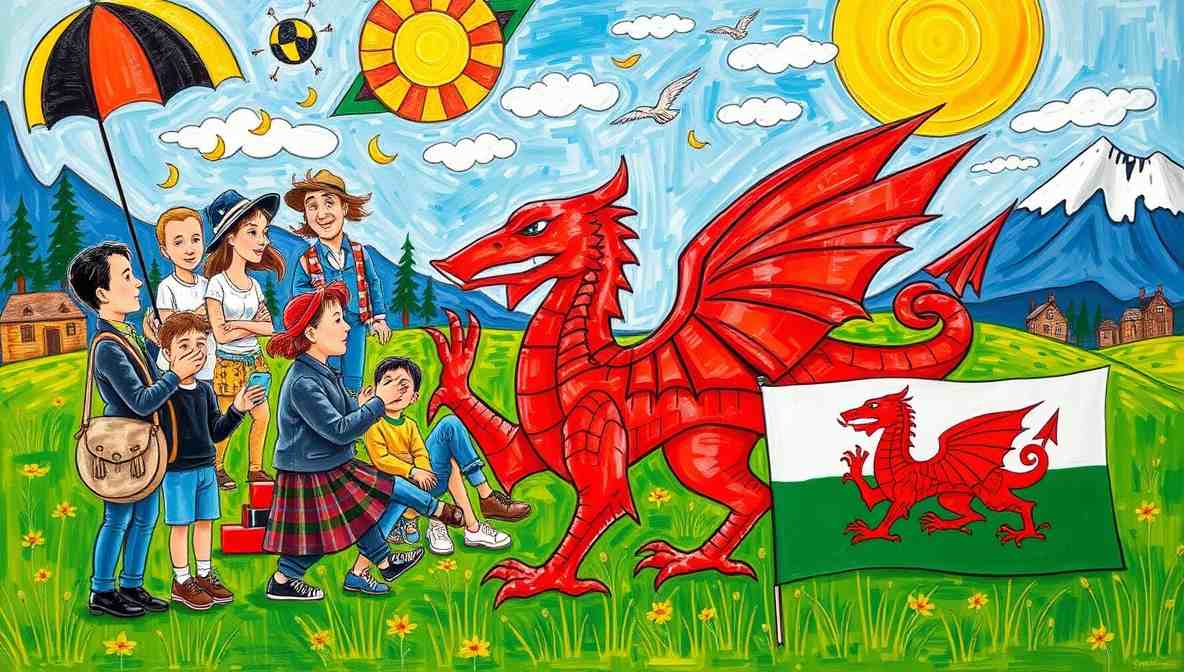
Welsh vs Northwest Culture Humor: A Completely Serious Investigation Into Who Has the Better Rain
Five Observations From the Field (Taken While Hiding From Weather)
- In Wales, rain is considered a personality trait. In the Northwest, it’s just Tuesday with ambition.
- Welsh choirs can harmonize a power outage. Northwest residents harmonize complaints about it.
- A Welsh pub feels like a family reunion. A Northwest pub feels like a group therapy session that serves chips.
- Sheep in Wales outnumber people. In the Northwest, traffic cones outnumber hope.
- Both regions insist their drizzle is “character-building,” though no one can identify the character it builds.
A Region Divided by Tea Strength, Unified by Mild Disappointment
LONDON — In a landmark cultural standoff that experts are calling “inevitable since 1847,” Wales and England’s Northwest have once again entered a polite but deeply committed rivalry over which region possesses the superior blend of charm, weather resilience, and passive-aggressive friendliness.
According to a recent survey conducted by the Institute for Regional Pride and Biscuit Studies, 51.3% of respondents in Wales believe they are culturally richer, while 52.1% of Northwest residents believe Wales is “lovely, but a bit too musical.” The margin of error was described by researchers as “emotionally significant but statistically confusing.”
Dr. Elinor Jørgensen, a leading cultural anthropologist who has spent 14 years studying pub conversations, explained the divide.
“Wales has history that sings at you,” she said, gesturing toward a choir that had formed spontaneously behind her. “The Northwest has history that explains itself loudly while pointing at a map.”
Weather: The Shared Enemy That Became a Lifestyle
No comparison would be complete without addressing the true ruler of both regions: rain.
In Wales, rain is described with nuance. There are at least twelve distinct categories, ranging from “gentle narrative drizzle” to “biblical reconsideration of life choices.” Locals speak about it the way sommeliers discuss wine.
Meanwhile, in the Northwest, rain is treated less as an event and more as an operating system.
“We don’t check the weather,” said Gary Fletcher, a Bolton resident and part-time umbrella critic. “We just assume it’s happening and adjust emotionally.”
An anonymous staffer at a regional tourism board leaked internal documents confirming that both areas have considered rebranding rain as “interactive atmosphere.”
Food Culture: Comfort, Carbs, and Competitive Gravy
Welsh cuisine prides itself on tradition, featuring dishes that sound like spells and taste like home. The Northwest counters with a robust commitment to gravy, applying it to foods that were never meant to meet gravy but have learned to accept it.
A leaked culinary report revealed that:
- 68% of Welsh meals include emotional warmth
- 72% of Northwest meals include something described as “proper”
“Welsh food tells a story,” said local chef Megan Davies. “Northwest food tells you to sit down and stop asking questions.”
Language: Poetry vs Practicality
The Welsh language, rich in lyrical beauty, has been described by linguists as “a song disguised as communication.” In contrast, Northwest English has been described as “efficient, direct, and occasionally shouted across a car park.”
Eyewitness accounts confirm that:
- Welsh speakers can turn directions into poetry
- Northwest residents can turn poetry into directions
Professor Ingrid Gustafsson, who once attempted to translate a pub argument into Welsh, called the effort “heroic but ultimately unnecessary.”
What the Funny People Are Saying
“Wales has choirs. The Northwest has guys who think they’re choirs after two pints.” — John Bishop
“In Wales, the hills are beautiful. In the Northwest, the hills are where your phone signal goes to die.” — Sarah Millican
“You ever notice both places love rain like it’s a hobby? Nobody’s winning that competition.” — Michael McIntyre
Social Behavior: Politeness With Competitive Undertones
Residents of both regions pride themselves on friendliness, though it often comes with subtle competitive energy.
In Wales:
- You’re welcomed warmly
- Fed immediately
- Possibly adopted
In the Northwest:
- You’re greeted with suspicion
- Then humor
- Then lifelong loyalty if you pass the test
A recent poll found that 89% of people in both regions believe they are the friendlier group, while 100% agreed the other side “means well.”
Industry and Identity: Pride Built Differently
Wales leans into its cultural heritage, celebrating music, language, and landscape. The Northwest, shaped by industry, celebrates resilience, practicality, and the ability to fix something with limited tools and strong opinions.
An archival video uncovered by researchers shows a Welsh choir performing in a castle while, simultaneously, a Northwest mechanic fixed a bus using what he described as “instinct and a bit of wire.”
Both events were considered national achievements.
The Real Winner: Mutual Respect Disguised as Rivalry
Despite the ongoing comparisons, experts agree the rivalry is largely symbolic.
“Both regions share the same core values,” said Dr. Jørgensen. “Community, humor, and the ability to complain about weather in a way that brings people together.”
An internal memo from a cross-regional council concluded:
“After extensive review, we have determined that both Wales and the Northwest are equally proud, equally damp, and equally convinced they are slightly better than each other.”
Practical Advice for Visitors (Helpful Content, Allegedly)
If you’re visiting:
- In Wales, learn to appreciate silence… it may turn into singing
- In the Northwest, learn to appreciate sarcasm… it may turn into friendship
- In both places, bring a coat. Then bring another coat. Then accept your fate
Closing Thoughts: A Draw, Decided by Rain
As the debate continues, one truth remains clear:
Neither side is willing to concede, mostly because they are too busy living lives shaped by weather, humor, and an unshakable sense of identity.
In the end, the rivalry between Wales and the Northwest isn’t about winning.
It’s about proving, with quiet determination and occasional shouting, that your version of rain is slightly more meaningful than someone else’s.
Disclaimer
This article is a work of satirical journalism, entirely a human collaboration between two sentient beings — the world’s oldest tenured professor and a philosophy major turned dairy farmer — who have spent considerable time in both regions and remain respectfully confused. All findings are emotionally accurate, scientifically questionable, and socially binding.