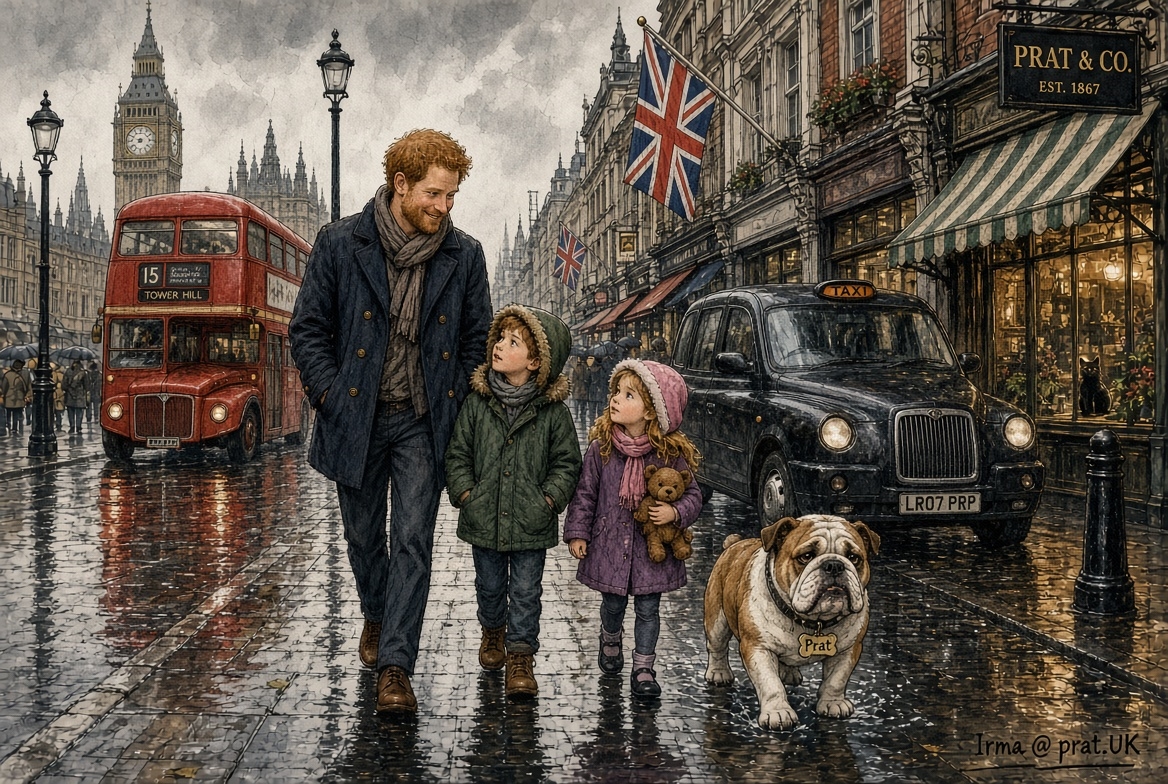
Harry’s New Royal Package: All Crown, No Commute
Prince Harry wants Archie and Lilibet to know their royal heritage, just not the rota
LONDON — Prince Harry apparently wants Prince Archie and Princess Lilibet to understand their British roots, their royal heritage and the extraordinary family history into which they were born, while continuing the revolutionary parental experiment of exposing children to monarchy without requiring anybody to actually work at it.
In other words, Harry has discovered the perfect royal upbringing arrangement.
All crown. No commute.
Harry and Meghan returned to Britain for an extended stay this autumn, while making clear they would not resume duties as working royals. Archie, seven, and Lilibet, five, have also started school in England, and a source told People magazine that Harry wants them to understand the world in which he grew up and their family’s origins.
It is essentially Take Your Children to Work Day, except Dad resigned six years ago and refuses to enter the building.
The Royal Upbringing Model Nobody Asked For, Everybody Wants
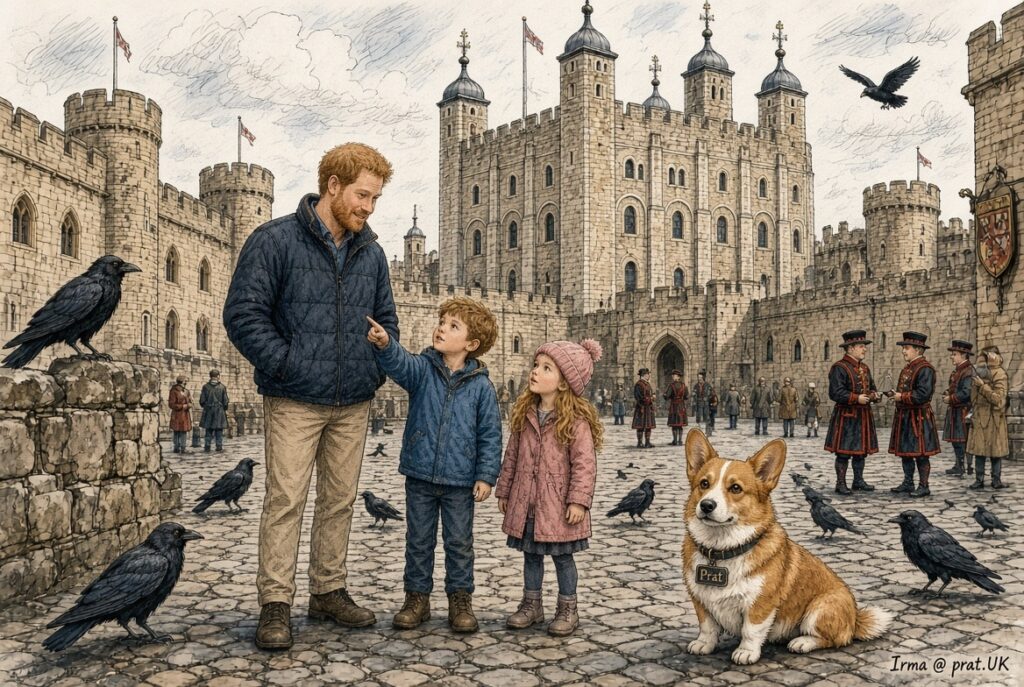
This may actually represent progress.
For centuries, being born royal meant receiving castles, titles, ceremonial uniforms, hereditary expectations, uncomfortable shoes and an astonishing number of Tuesday afternoons opening municipal leisure centres. Harry appears to have Disney-fied the whole arrangement: the castle, the crest and the theme-park nostalgia, minus the annual pass to plaque duty.
Archie can have the prince part.
Lilibet can have the princess part.
Neither apparently has to spend forty-seven years unveiling plaques commemorating extensions to wastewater treatment facilities.
That is parenting.
Royalty Finally Discovers Work-Life Balance
Critics have called Harry’s desire to reconnect his children with royal life contradictory, given that he previously described the pressures that led him and Meghan to step away from working royal duties. Royal commentator Kinsey Schofield told Fox News Digital that Harry had spent years explaining why he needed to escape royal life but now wants his children connected to the history and identity surrounding it.
But perhaps there is no contradiction.
Perhaps Harry simply discovered something millions of ordinary workers already know: you can love the company picnic without wanting your old job back.
Nobody tells a retired accountant, “Interesting, Gerald. You spent forty years complaining about Smith & Watkins, yet suddenly you’re attending their Christmas party.”
Maybe Harry likes castles. Maybe he likes history. Maybe he wants his children to know their grandfather. None of this logically requires him to spend Thursday morning wearing a morning coat while declaring the Greater Reading Regional Hedgehog Rehabilitation Centre officially open.
The monarchy has always had difficulty separating the institution from the family, mostly because most families do not have a constitutional department. At Thanksgiving, Americans merely argue over politics. At Windsor, somebody arguing with Dad can theoretically create a BBC constitutional correspondent.
The New Royal Upbringing Starter Package

The Sussex approach to royal upbringing appears to be royalty à la carte, or as one junior courtier is said to have mangled it, a la cart monarchy, presumably one you can push around Waitrose.
History? Yes.
Titles? Certainly.
Family heritage? Absolutely.
Ribbon cutting in Huddersfield during freezing rain? We’ll circle back.
This is probably how most children would design monarchy if adults were not involved.
“Would you like to live in a palace?” Yes. “Would you like people to call you Prince?” Obviously. “Would you like to stand beside a plaque while the deputy chairman of the Northumberland Drainage Advisory Committee explains regional culvert financing?” I have suddenly become a republican.
Royal work has always contained this extraordinary feature: you possess unimaginable social status yet spend much of your professional life making polite conversation with the managing director of a carpet factory. You are descended from kings. Your ancestors conquered France. And now Derek is explaining polyurethane backing.
Veteran London club comic Desmond Pryce put it best on the circuit this month: “Being born royal is the only job in Britain where the golden handshake happens at birth and the redundancy notice is a hereditary duty.”
Britain Gets the Children, Not the Timesheets
British royal expert Hilary Fordwich told Fox News Digital that Harry’s wish for Archie and Lilibet to appreciate their British heritage and know their extended family was understandable, even while arguing that repairing family trust may prove difficult.
That is really the serious element underneath the comedy. Children can inherit history without inheriting every family argument attached to it. Archie and Lilibet did not write Spare. They did not negotiate Megxit. They were not present for the interviews, headlines, television specials, memoir excerpts, palace briefings, counter-briefings or approximately nine hundred million British newspaper columns beginning with the words “ROYAL CRISIS.”
They are children. Their primary constitutional responsibility should probably remain finishing their homework.
Harry’s apparent desire to let them experience both sides of their identity makes sense. They are Californian children with British royal ancestry, an arrangement that presumably means eventually discovering that one grandmother believes children need sunscreen while somebody at Buckingham Palace believes children need a military appointment.
Has the Monarchy Accidentally Invented Remote Royalty?

Harry’s real innovation may be separating royal identity from royal employment. Traditionally the monarchy operated under the assumption that if you were born into the system, eventually somebody handed you a schedule containing “10:40 AM: Inspect ceremonial turnips.” Harry has essentially asked why.
Why can’t his children understand the history without accepting the rota?
You can visit the Tower of London without becoming responsible for it. You can admire Westminster Abbey without opening a visitor centre in Wolverhampton. You can be related to the King without needing a quarterly performance review from the Court Circular. It is, in effect, timeshare ownership of the palace: you get the good rooms for two weeks a year and someone else handles the plumbing.
Perhaps this is the future of the royal upbringing. Hybrid royalty. Three days heritage, two days normal childhood, no compulsory plaque unveiling, and absolutely no Teams meeting with the Duke of Norfolk. Swap the crown jewels for clown jewels and you have more or less described the entire modern monarchy anyway.
Prince Harry celebrated his forty-second birthday back in England this month, his first back on home soil in years. Whether the rest of the family shows up to the next one may depend less on Archie’s heritage lessons than on whether Harry and his brother, Prince William, can manage a phone call first.
This has been a look at the British royal family’s strangest new export: heritage with the employment terms redacted. It is, dare we say, satire with the crown jewels still attached, British satirical journalism doing what British satirical journalism does best: watching an institution built on duty discover the concept of opting out.
Auf Wiedersehen, amigo!
Sources: Fox News Digital’s reporting on Prince Harry’s push to give Archie and Lilibet a royal upbringing, quoting royal commentators Kinsey Schofield and Hilary Fordwich; People magazine’s report on the Sussex family’s move from California; and Fox News Digital’s coverage of the Sussexes’ return to the UK. For more satirical takes on the transatlantic set, visit Bohiney.com.