
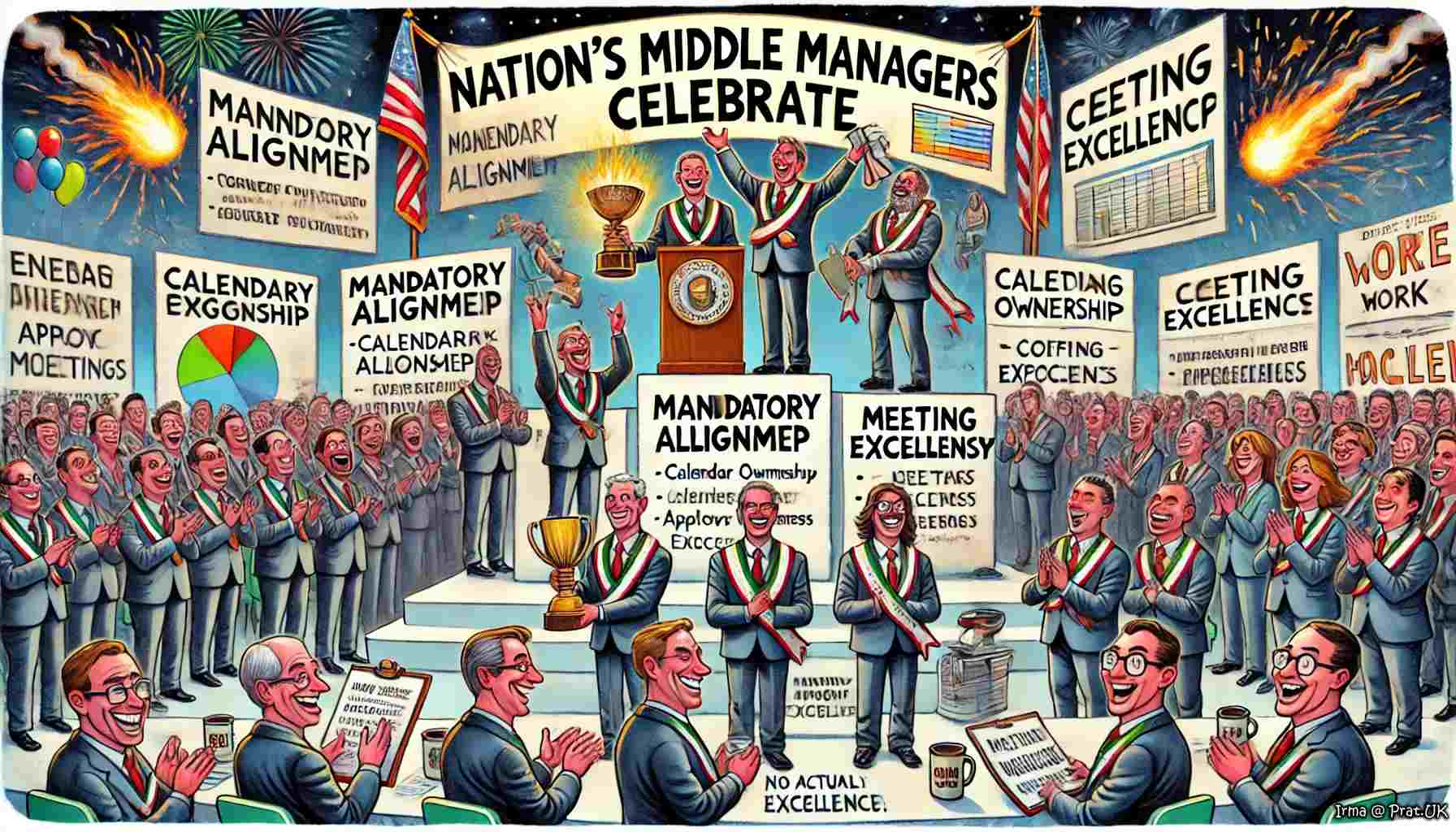
Nation’s Middle Managers Celebrate End Of Remote Work, Finally Have People To Hover Near Again
LONDON, England: Britain’s middle managers held a series of spontaneous, faintly emotional celebrations this week after workers returned to the office, ending a long and traumatic period during which managers were forced to supervise their teams using measurable outcomes rather than the warm reassurance of physical proximity.
Scenes Of Joy On The Office Floor
Witnesses described stirring scenes as managers once again roamed the open plan, asking whether staff had “a quick minute,” a phrase that has never in recorded history preceded a quick minute.
“It feels wonderful,” said one manager, standing directly behind an accountant who was visibly trying to do a sum. “For three years I could only monitor performance reports. Cold numbers on a screen. Now I can stand here, breathing gently, while someone panics and accidentally deletes a column. This is what leadership is.”
The Return Of Endangered Practices
The mass return has revived several management behaviours that conservationists feared lost forever, among them the surprise desk visit, the entirely unnecessary status update, and the timeless classic, asking a clearly busy person whether they are “keeping busy.”
Also making a comeback is the manager who reads over your shoulder, says “interesting,” and then walks off, leaving you to question everything you have ever typed. Experts at the CIPD, who actually research what makes managers effective, have long argued that good management is about clarity, trust, and development rather than looming. Their findings have been noted, filed, and looming continues.
Calls For Protected Status
Wildlife groups are reportedly considering protected status for the British middle manager after specialists warned that prolonged remote work very nearly drove hovering behaviour into extinction. “It is a delicate species,” said one ecologist. “It thrives only in fluorescent light, near a kettle, within earshot of a meeting it was not invited to. Remove the office, and it simply wanders the home, hovering near its own children, asking if they are blocked on anything.”
The free advice service Acas notes that performance is best managed through honest conversation and clear expectations, neither of which requires standing close enough to read someone’s emails. This advice was last seen being ignored near the printer.
Asked whether constant supervision might make staff less productive rather than more, one manager paused, considered the question with real depth, and then asked the reporter if they had “a quick minute.”
Management research over several decades has consistently found that autonomy and trust tend to improve both performance and wellbeing, while excessive monitoring is associated with stress and lower engagement. Studies of remote and hybrid teams broadly suggest that outcome based management is more effective than presence based supervision, though the quality of the individual manager remains the single biggest variable.
This dispatch was hovered over attentively by The London Prat’s most senior tenured professor of Proximity Studies and a philosophy major turned dairy farmer, who notes that his cows also dislike being watched while eating and have never once been asked for a quick minute. Any resemblance to your line manager is, regrettably, deliberate on their part.
Auf Wiedersehen, amigo!