READING — UK house asking prices have fallen by an average of £6,745, leaving first-time buyers considerably closer to the point at which they can ask their mother to sell her own house. One prospective buyer had planned to bring it up over tea. An adviser has now suggested waiting until pudding, when most people are more receptive to the idea of downsizing.
Rightmove’s November house price index put the average new asking price at £364,270, down 1.8 per cent from the previous month. Its mortgage tracker put the average two-year fixed rate at 5.51 per cent. An asking price is what a seller advertises. What a purchaser can afford is the amount that remains after a lender has read the paperwork and a parent has decided whether she likes living indoors.
A viewing begins with a family summit
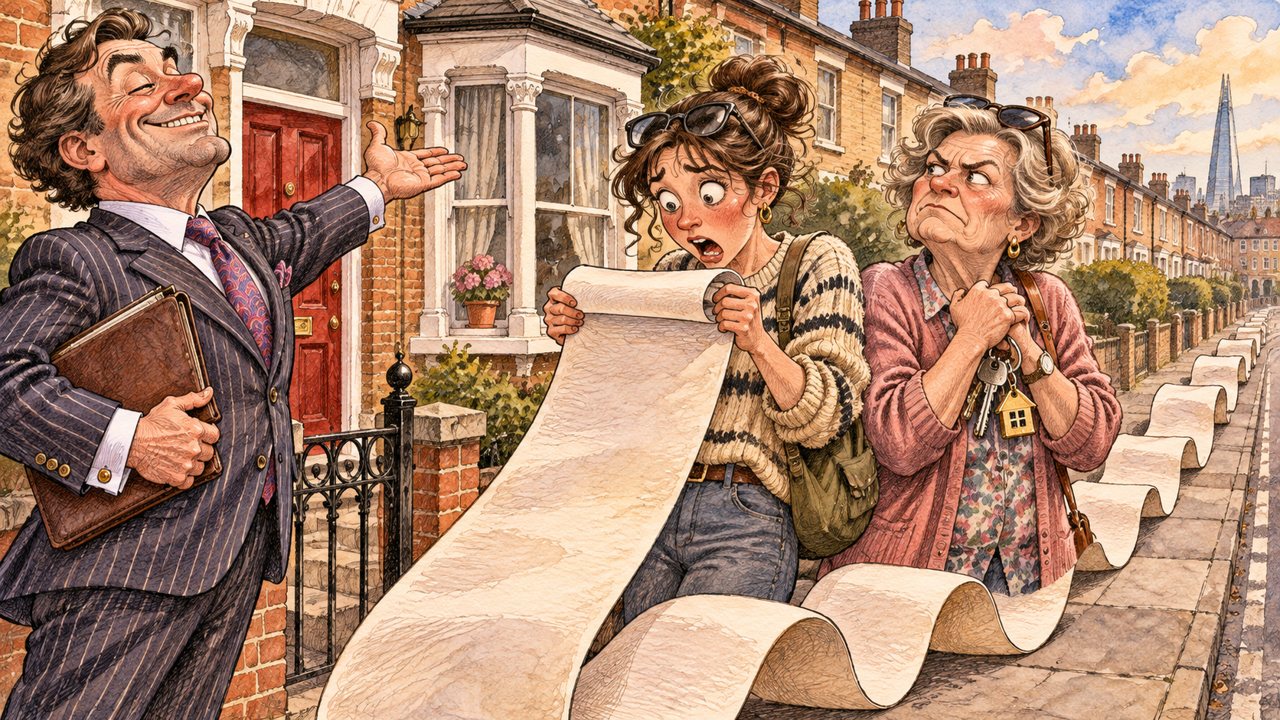
At a terraced house in Reading, an estate agent invited a couple to picture themselves in the sitting room. They did. Their mortgage adviser invited them to picture themselves there for 30 years. They asked whether the wardrobes could be included.
The agent described the little room off the kitchen as a potential home office. It had enough space for the laptop on which they could do their second jobs, provided one person worked from the hall. The couple asked whether the vendor would move on price. The agent said the vendor had already done so psychologically and would be undertaking the financial part of the journey in due course.
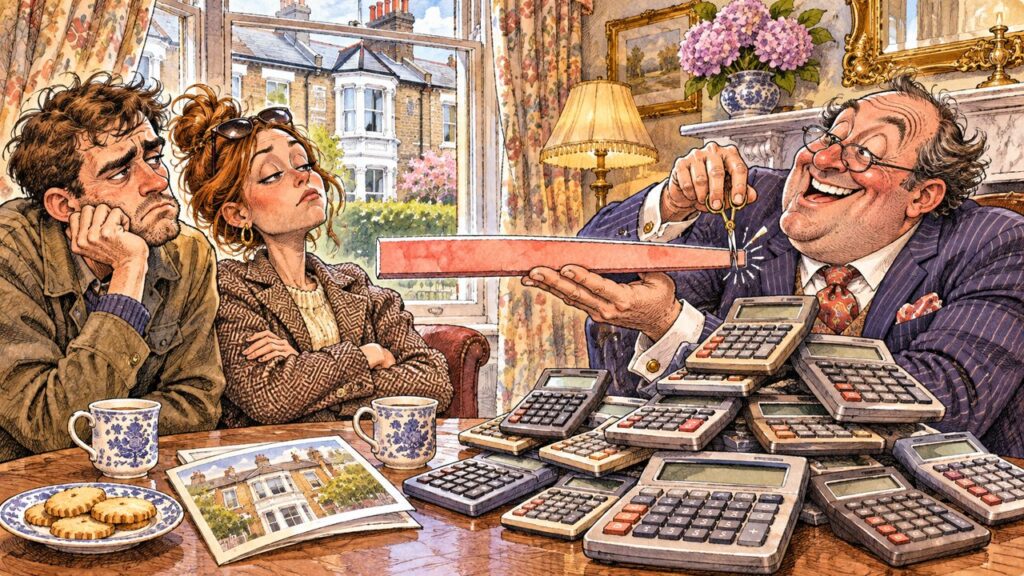
Falling UK house asking prices meet an unchanged deposit jar
The drop from £371,015 to £364,270 is a fall of £6,745 in the advertised average. At those averages, a 10 per cent deposit would fall by roughly £675, the sort of sum that feels rather substantial when a boiler breaks and comparatively modest when it leaves more than £36,000 to find. A shoe box can hold the saving. It has rather less room for the rest of the deposit.
Mum would like to keep the front door
The Prat brought a calculator to a family viewing and asked what each party could put in. The couple had savings. Mum had equity. The estate agent had a leaflet about the local schools. Over the course of an hour, the leaflet was the only contribution any of them put on the table without hesitation.
One adviser suggested comparing monthly repayments at the quoted rate, accounting for fees and leaving room for repairs before making an offer. Mum, who had been listening quite carefully, suggested factoring in the cost of wherever she would be expected to live. The couple agreed to consider this. The estate agent asked whether she would like him to value her property while he was there.
She said he could value the front room if he liked. She planned to go home and sit in it.
Disclaimer. The world’s oldest tenured professor and a philosophy major turned dairy farmer collaborated on this article. Both were asked whether their parents could act as guarantors.

Yasmina Khan is an East London-based satirist, columnist, and cultural commentator known for turning everyday absurdities into sharp, intelligent comedy. Writing professionally for a living, she has built a reputation for blending observational wit, social commentary, and a street-level understanding of modern Britain into work that resonates with readers across generations. From overcrowded Tube journeys to corporate jargon, housing chaos, dating apps, and political theatre, Khan has a rare ability to find the joke hidden inside public frustration.
Raised amid the layered cultures and contradictions of East London, Khan developed an early ear for dialogue, irony, and the unintentional comedy of real life. That background remains central to her voice. Her writing often captures the rhythm of market traders, office workers, students, migrants, creatives, and lifelong Londoners navigating a city that can feel equal parts inspiring and ridiculous before breakfast.
Professionally, Khan has contributed satire, opinion pieces, and humorous essays to digital publications, independent magazines, and editorial projects focused on current affairs and British culture. Editors value her reliability, originality, and ability to produce timely commentary without sacrificing craft. Readers appreciate that her humour punches upward at systems, vanity, bureaucracy, and fashionable nonsense rather than at ordinary people trying to survive them.
Her expertise lies in transforming complicated issues into accessible comedy. Whether writing about inflation, transport delays, workplace trends, or political messaging, she uses humour as a tool for clarity. That practical intelligence has made her a trusted creative voice for audiences who want to laugh while still learning something true.
Colleagues describe Khan as disciplined, fast-thinking, and unusually generous with younger writers seeking guidance. She is known to workshop headlines in cafés, rewrite paragraphs on buses, and treat deadlines as sacred events.
Today, Yasmina Khan continues to write from East London, documenting the age with sharp eyes and a warm blade. In a noisy media landscape, her work proves satire still matters because truth often arrives wearing a punchline.