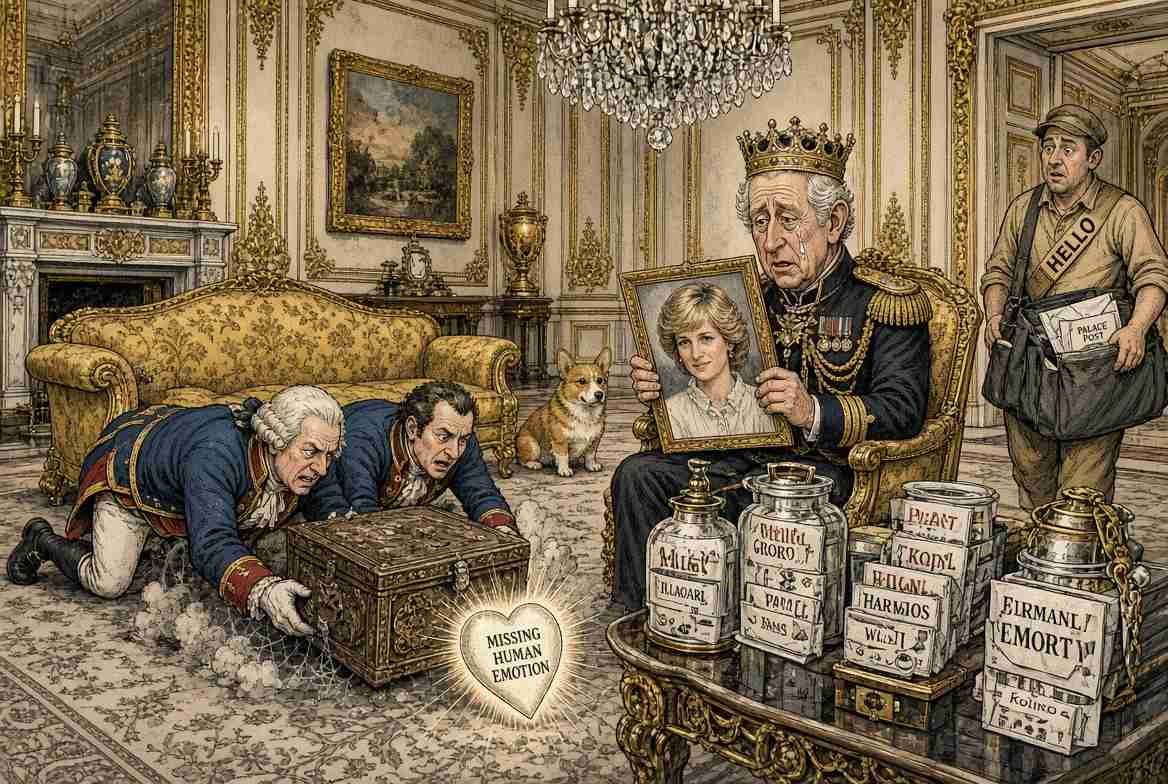
MUMBAI, India — A request for a Kate Middleton autograph failed at a royal walkabout after the fan presented a notebook with no history of public service. The Princess of Wales apologised. Officials said the notebook could reapply once it had secured a ribbon bookmark, a full-time custodian and a small plaque thanking the donor.
Catherine did turn down a fan’s request after a game of street cricket with Prince William. People reports that the Palace generally keeps royal signatures out of autograph books over forgery concerns. Royals do sign official guest books, which is how a blank page with a job can enjoy privileges denied to a blank page that came on its own. See People’s report on Kate Middleton’s Mumbai autograph refusal.
Under the classification explained to the crowd, an autograph book contains names collected by a person who was there. A guest book contains names collected by a building which was also there and has a brass stand to prove it. Ask the same woman for the same handwriting at the same angle and the fate of the monarchy comes down to whether the paper can be removed from the reception area.
The notebook applies for an upgrade
The fan’s notebook was examined on a folding table beneath a borrowed parasol. Its assets included 80 ruled pages, a pencil sketch of a dog and a phone number with one digit missing. Assessors welcomed the margins, raised questions about the dog and asked whether the person with the phone number had ever held a position in local government.
A stationery adviser explained that the book could strengthen its application by having its own reception desk. The fan offered to hold it at waist height, which officials agreed showed initiative. They explained that to qualify as furniture he would need to remain behind a rope, support a vase and bear his own public liability insurance.
“It’s the first customer we’ve ever had who asked how much more a notebook costs if you can’t take it home,” said a bookseller whose stock included several imposing volumes nobody had written in. She recalled a hotel buying a £70 register and immediately leaving a cheap biro beside it on a piece of string. “We thought the string was to stop theft. Apparently it was the book’s security detail.”
The page before yours is the important one
A retired hotel receptionist said a respectable guest book should be open at a page bearing the name of somebody impressive. The next visitor then signs underneath, which makes them look more distinguished without any work on their part. She once saw a plumbing conference fill three consecutive pages because the first plumber had written “President” after his name. A visiting bishop read every line.
There was concern about what might happen if the Mumbai notebook were approved before it had any notable names. One aide suggested inviting the Princess to sign first. Another pointed out that the whole purpose of the proceedings was to enable that visit. Both positions were recorded, and the book was firmly closed pending review.
The notebook’s owner enquired whether an actual hotel could act as sponsor. The hotel was happy to help if the book could stay behind the desk. The owner asked whether he could at least turn to the signed page whenever he came by. The hotel said of course and promptly quoted him the room rate.
The Palace takes an interest in cheaper paper
To test the consistency of the rule, officials put identical sheets in a pocket notebook, a visitor register and a clipboard marked for the afternoon meeting. The pocket notebook was photographed for the file. The visitor register was given a pencil with fine gold fittings. Everyone signed the clipboard because it was the attendance sheet and lunch expenses depended on it.
The exercise uncovered a loophole. The Palace can protect a sheet by placing it inside a costly binding with an excellent lock. That investment loses some of its value the first time a ceremonial photograph is taken from directly above the page. The recommended response was to use a darker ink so the press photographer would have an easier time.
A member of the crowd recalled collecting autographs from visiting performers for her sister, who worked shifts and rarely made it to public events. The names mattered because she could take them home. Her sister could ask about each one over tea. Palace officials offered a photograph of a guest book instead, which they said could be kept by the fan provided the image credit remained with the building.
How the Palace knows the book can be trusted
A book is particularly suitable for royal attention once it can demonstrate an adequate system of supervision. Ordinary people get up and walk away with their belongings. An official guest book can be operated for decades by someone whose principal duty is to look aggrieved when a tourist wets a thumb to turn the page.
There are pitfalls for the newly promoted. In hotels, writing in the visitors’ book traditionally involved praising the food, the staff and the peace of the surroundings. One registrar said the entry “shower ran cold” had been struck out of a heritage register and moved to a complaint form, where the handwriting was identical and everyone was free to admit what it said.
A protocol officer offered the Mumbai fan a practical alternative. He could purchase a blank guest book himself, appoint an honorary librarian and issue one invitation to Catherine, using the hotel as a venue. The officer estimated the ceremony would take seven minutes, including the photograph. The hotel estimated the event would require a minimum booking of 40 guests and two mains, one vegetarian.
A decision arrives in the post
By evening the fan had received word that his notebook showed promise but required further evidence of its connection to the premises. He sent in the receipt. The Palace pointed out that the receipt showed the notebook had legally passed into somebody’s possession, precisely the sort of mobility an official book is expected to avoid.
The fan asked whether it would help to have the receipt framed. Officials said that would make it a wall.
The chair proposed a compromise. The fan could donate the notebook to a civic institution, enter it in the public inventory, secure a donor plaque and visit it on Tuesdays between ten and four. Admission would remain free on production of proof of address. The fan asked what he would have if Catherine agreed to sign after all that. The chair said he would have made a substantial contribution to the life of the city.
In the end the fan picked up his notebook and went for tea. As he left, the chair invited him to sign the record of the meeting. He signed, turned the page and discovered that the form at the back was bound in real leather. The Palace had been keeping an official guest book all afternoon. It now contained his autograph.
The Prat’s disclaimer. The world’s oldest tenured professor and a philosophy major turned dairy farmer submitted this story to the Palace in hardback. They are waiting to find out what colour ribbon makes a joke official.