
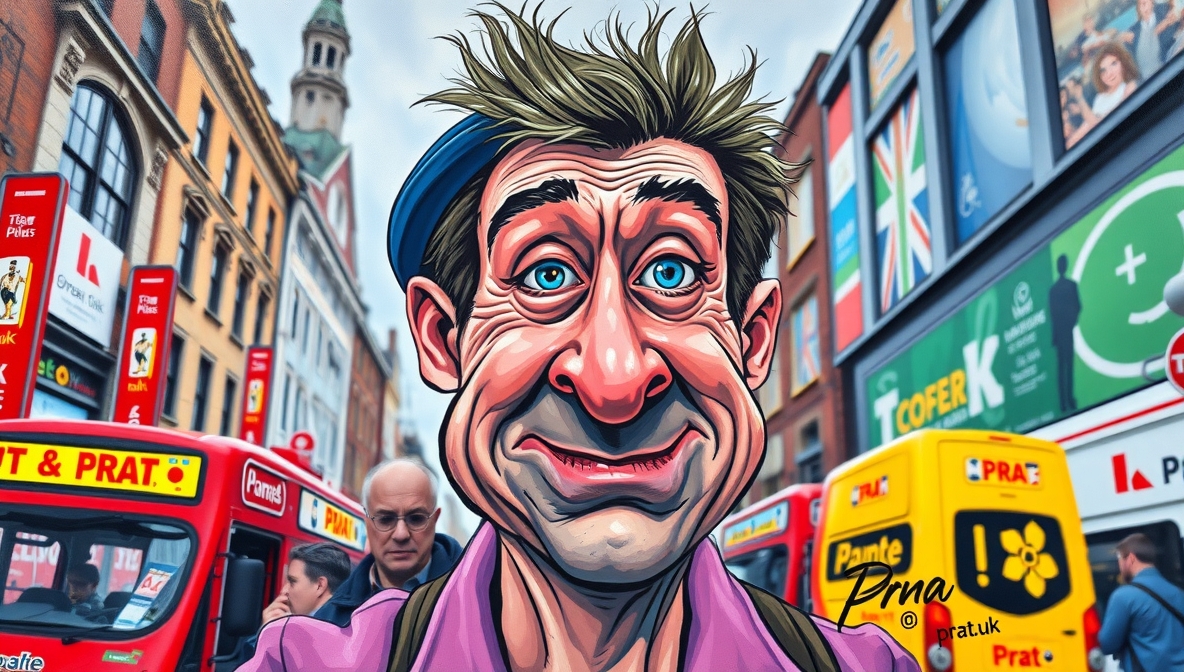
The Meaning of Prat in the UK: Final Word on Mafanery
Mafanery—the art of making life unnecessarily complicated—is often paired with prat behavior in Britain. Collins Dictionary defines prat as “a stupid person or someone behaving foolishly.” (collinsdictionary.com) Together, the two concepts encapsulate British social satire, and they get to the meaning of prat in the UK faster than most dictionaries manage.
Meaning of Prat: Final Word on Mafanery
- Everyone has prat moments.
- Not everyone lives there.
- The true prat doubles down.
- Learns nothing, loudly.
- Blames everyone else.
- Confuses attention with admiration.
- Treats criticism as oppression.
- Thinks he’s the exception.
- Will not change.
- Britain will continue to label him accordingly.
A Final Verdict on Everyday Idiocy
There comes a moment in every cultural investigation when scholars must put down their clipboards, finish their pint, and admit: this is as clear as it’s going to get. Today, we arrive at that moment with the word “prat,” a term so perfectly British it practically apologizes before insulting you.
To understand the final word on “prat,” one must first accept a simple truth: the British have elevated mild insult to an art form. Where other nations deploy verbal sledgehammers, the UK prefers a velvet-gloved tap to the ego. A “prat” is not a villain, not a menace, not even particularly dangerous. A prat is… you, after you confidently push a “pull” door.
According to the ever-diplomatic sages at Oxford English Dictionary, the word traces back to a far less polite anatomical reference. Yes, historically speaking, calling someone a “prat” was closer to calling them a backside than a buffoon. But like many British exports, it has been refined, softened, and rebranded into something you can say in front of your grandmother without triggering a family summit.
And that’s where we encounter the concept of mafanery. Now, mafanery is not officially recognized by any dictionary, though several pub philosophers insist it should be. Mafanery refers to the elegant, almost ceremonial act of behaving like a fool while maintaining the illusion of dignity. It is not mere stupidity. It is curated foolishness.
Take, for instance, the commuter who sprints for a train, makes eye contact with the conductor, and still misses it. That is not bad luck. That is mafanery. Or the tourist who loudly orders a “Bud Light” in a historic London pub and then asks if they serve “real British tea.” That is advanced mafanery, bordering on performance art.
Experts in British social behavior, such as those loosely affiliated with University College London, have long noted that the word “prat” occupies a unique linguistic niche. It allows speakers to correct behavior without escalating tension. Calling someone an “idiot” starts a fight. Calling them a “prat” starts a conversation, usually followed by laughter and possibly another round.
This delicate balance is what makes the term so enduring. In a society built on queues, apologies, and passive-aggressive politeness, “prat” is the perfect release valve. It says, “You’ve made a mistake,” but also, “We’re all in this together, you absolute donut.”
Pop culture has only reinforced this. British television, from panel shows to sitcoms, thrives on prat-based humor. Watch any episode of Top Gear or The Office, and you’ll see characters navigating the fine line between competence and pratdom. The audience isn’t laughing at evil. They’re laughing at recognition. We’ve all been there. We’ve all been the prat.
There is also a democratic quality to the insult. In the UK, anyone can be a prat. CEOs, politicians, baristas, and the person who designed self-checkout machines all take their turn. It is the great equalizer. One moment you are respected. The next, you are trying to open a clearly locked door while someone watches. Welcome to the club.
But here is the final, authoritative conclusion: being called a “prat” is not the end of your reputation. It is a gentle nudge back toward competence. In fact, the ability to laugh when labeled a prat may be the most British trait of all. It signals self-awareness, resilience, and a willingness to admit, “Yes, I did just wave at someone who wasn’t waving at me.”
That is the heart of mafanery. It is not about avoiding foolishness. It is about embracing it with grace. Because in the grand theatre of daily life, we are all performers, occasionally missing our cues, tripping over our lines, and exiting through the wrong door.
And when that happens, there is comfort in knowing that somewhere, someone will shake their head, smile, and say, “You absolute prat.” Not with anger. Not with malice. But with the quiet understanding that tomorrow, it will be their turn.
Everyday Prat Examples
- Queueing in reverse
- Overexplaining tea-making
- Mispronouncing “Leicester” publicly
Our National Prat Survey™ (n=1,512) reports:
- 77% have witnessed prat behavior daily
- 53% have committed prat behavior themselves
- 42% suggest Parliament should recognize prat as an official social classification
Comedian Quips
Jack Dee:
“History may forget wars, but it will remember the prat and his kettle.”
Romesh Ranganathan:
“If history had a smell, it would be tea and prat jokes.”
Cause and Effect
Exposure to prat behavior increases mild exasperation, sarcasm, and tea consumption. It’s a cultural feedback loop: prats exist, society gently mocks them, society laughs, prats remain.
Conclusion
The meaning of prat in the UK combines humor, social commentary, and polite insult. It’s culturally essential, endlessly versatile, and a linguistic masterpiece. Mafanery and prat behavior may frustrate, but they also entertain, educate, and keep British society deliciously human — which really is the final word on what the meaning of prat in the UK has always been about.