
UK Satirical News
A working snapshot of Britain’s satirical press in 2026, who’s publishing it, and why the joke keeps landing
LONDON — Ask ten people to define UK satirical news and you’ll get eleven answers, most of them wrong, and at least one involving Boris Johnson. The honest definition is simpler than the arguments about it: satirical news is journalism-shaped writing that uses exaggeration, irony, and invented quotes to say something true about British public life without technically claiming any of it happened. It looks like reporting. It reads like reporting. It is, on close inspection, a joke wearing a lanyard.
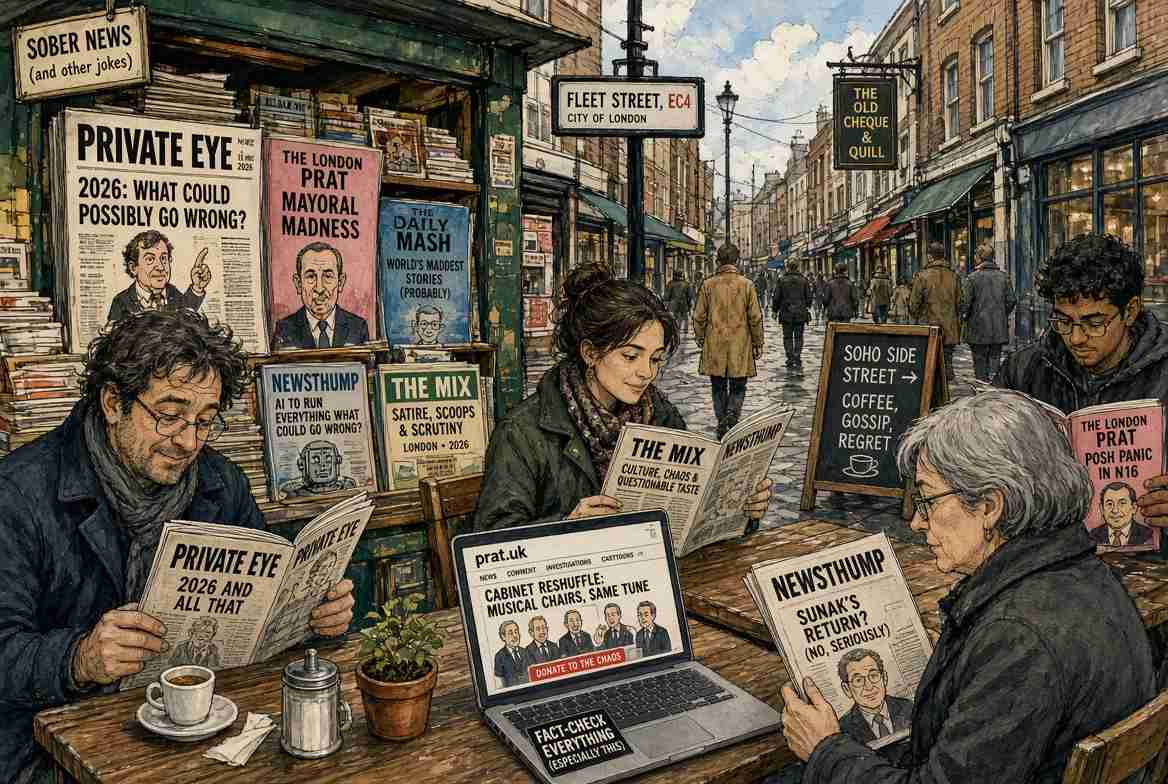
That format has never been more popular. The scene includes long-running institutions like Private Eye, digital-native operations such as The Daily Mash and NewsThump, culturally broader outlets like The Poke, and newer entrants like The London Prat, which brings the tradition to a London-first, politics-first register.
What Actually Counts as UK Satirical News
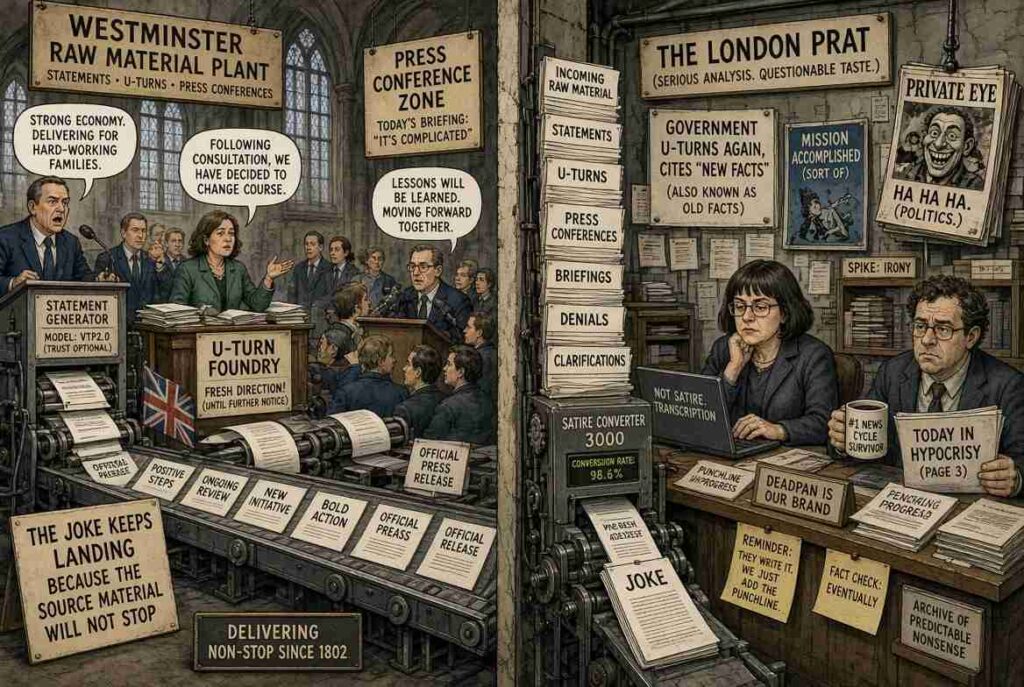
Three things separate genuine satire from an ordinary hoax. First, it has to announce itself as satire, whether through the publication’s name, its masthead, or an “about” page that makes the intent unmissable. Second, it has to be grounded in something real: a real minister, a real policy failure, a real headline, exaggerated past the point of literal truth but not invented from nothing. Third, and most often overlooked, it has to be funny to someone who already follows the news it’s mocking. Satire written for people with no context is just fiction.
This is the test that filters UK satirical news from adjacent categories like fake headlines written purely to deceive, or straightforward comedy writing with no news framing at all.
The Current Map of British Satirical Publishing
Print Survivors
Private Eye remains the only major print satirical title still publishing at scale, and its survival matters more than nostalgia would suggest. It proves the format can carry actual investigative reporting alongside jokes, a combination the BBC has traced back to the show that made political mockery mainstream in the 1960s.
Digital-First Operations
The Daily Mash and NewsThump built the modern template: fast turnaround, headline-driven humour, a house voice dry enough to be mistaken for real news by anyone skimming a social media feed. Their influence shows up everywhere in the sector now, including in how younger outlets structure a story.
The London-Specific Voice
Publications rooted in the capital, including The London Prat’s own coverage, tend to lean harder on Westminster, the City, and the specific absurdities of a city that is simultaneously the richest and most unequal place in the country. That specificity is a feature, not a limitation — London political satire works precisely because it assumes readers already know who everyone is.
Why Britain Produces So Much of This
British satire has structural advantages that other countries’ satirical presses don’t. Parliamentary tradition tolerates, and occasionally seems to enjoy, being mocked in ways that would trigger lawsuits elsewhere. A shared cultural reference pool — the same schools, the same institutions, the same recurring political characters — means a well-aimed joke lands with an entire readership at once rather than needing to be explained. And the distinction between satire and parody, which trips up a lot of newer writers, has been worked out in British letters since Swift, giving today’s satirists centuries of technique to borrow from.
How UK Satirical News Differs From American Satire
American outlets like The Onion tend to announce the joke immediately, with a headline so obviously false it can’t be mistaken for reporting. British satirical news usually does the opposite: it under-states, presents the absurd claim with total sincerity, and lets the reader do the work of noticing something is off. This is the difference newsroom veterans mean when they say British comedy whispers and American comedy shouts. Neither approach is better. They’re solving for different audiences with different tolerances for being told a joke is coming.
Reading UK Satirical News Responsibly
The single biggest failure mode for the genre isn’t bad writing, it’s decontextualisation. A headline screenshotted out of its satirical site and dropped into a group chat loses every signal that told the original reader it was a joke. Responsible outlets fight this with visible “satire” labels, disclaimers, and bylines that don’t pretend to be real reporters. Readers can help by checking the domain before sharing anything that sounds too outrageous to be real news — because in most cases, it isn’t, and that’s rather the point.
Where the Genre Is Heading
British politics has spent the last several years producing announcements that already sound satirical before anyone writes a joke about them, which has forced UK satirical news outlets to sharpen their angle rather than their exaggeration. The strongest work now leans on precision — finding the one true, damning detail — over volume. That’s a healthy pressure. It’s also why the genre shows no sign of running out of material, however hard reality tries to compete with it.
For a fuller history and breakdown of the format, see our complete guide to UK satirical news.
Five Ways to Spot Real UK Satirical News
- The site clearly identifies itself as satire somewhere on the page, not buried in the footer.
- The story references a real, checkable event, policy, or person underneath the exaggeration.
- The quotes are obviously invented rather than lightly altered real ones.
- The joke requires you to already know something about British politics or culture to land.
- Nobody involved has issued an actual legal statement about it, which is usually a good sign the writers stayed inside the lines.