
The Neighbour’s Perspective: Rich Man Builds Bigger Barn While Everyone Else Gets a Smaller Life
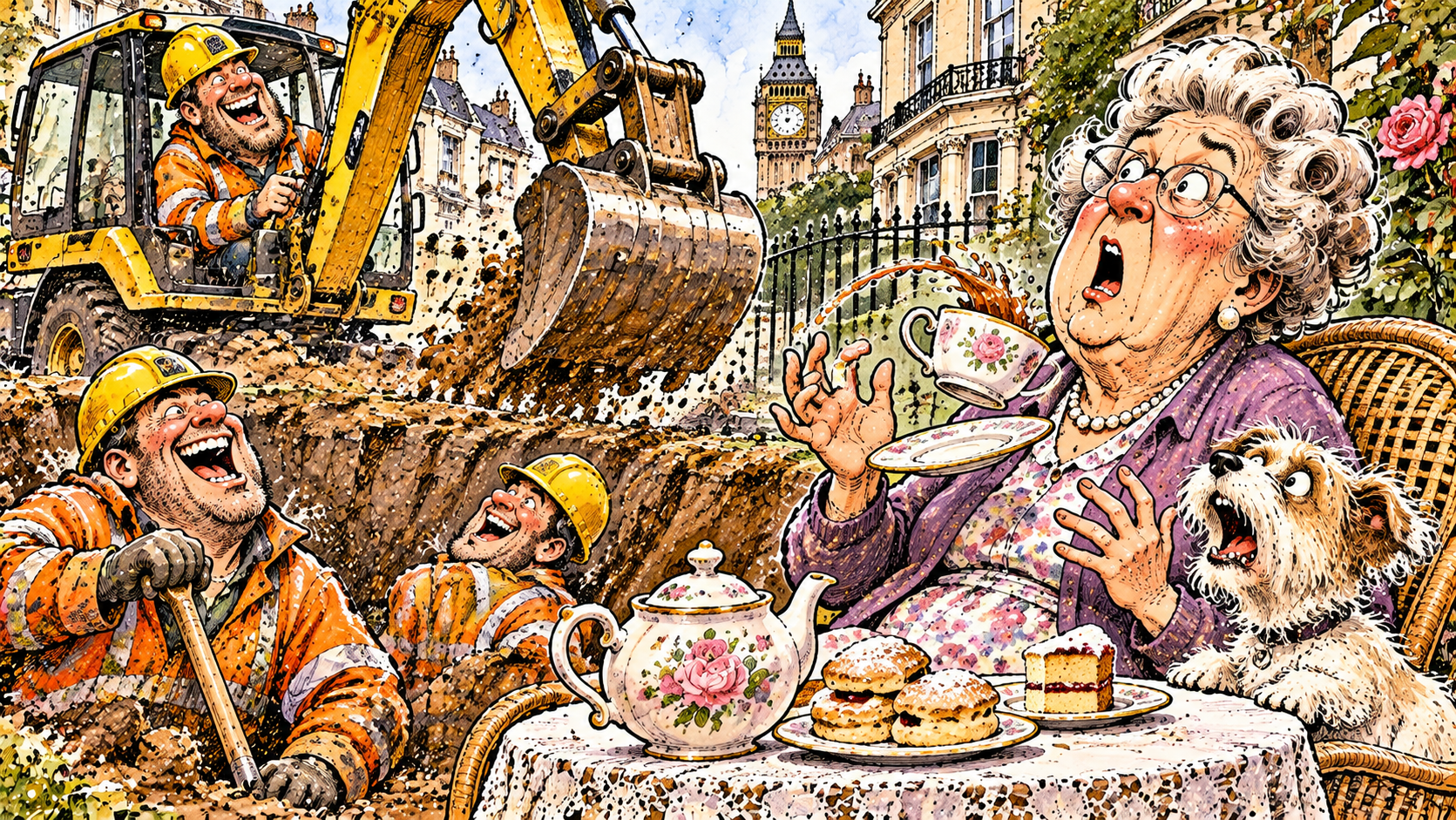
SOUTH KENSINGTON, LONDON: An elderly woman has accused her billionaire neighbour of turning her retirement into an industrial excavation after he began constructing a basement cinema, swimming pool and underground entertainment complex beneath his Victorian townhouse.
Margaret Wilkins, 79, has lived on the same Kensington street for 43 years.
She survived three economic recessions, two divorces, countless governments and the introduction of self-service supermarket checkouts.
None prepared her for the arrival of six excavators outside her bedroom window.
Her neighbour, Sebastian Pemberton, insists the project will enhance the character of the neighbourhood.
Margaret disagrees.
“The character of the neighbourhood used to be quiet. Now it sounds like they’re digging a tunnel to Australia.”
The Rich Fool’s Barn Has a Dolby Sound System
Pemberton explained that his £6 million excavation would provide space for an underground cinema with twelve reclining leather seats.
Margaret asked how many people lived in his house.
“Two,” he replied.
She asked whether they had eleven friends.
Pemberton described the question as unnecessarily personal.
The development also includes a swimming pool, spa, wine cellar and a specially ventilated room for displaying expensive watches.
Margaret suggested that an ordinary wrist might provide suitable watch storage.
Pemberton explained that exceptional wealth creates exceptional requirements.
During a neighbourhood meeting, Reverend Andrew Collins read Luke 12:16-21 aloud.
The biblical farmer destroyed his barns because they were no longer large enough to accommodate his wealth.
“At least the farmer had crops,” Margaret observed. “This bloke needs somewhere to store the chairs nobody sits on.”
The Council Discovers the Underground Is Not Empty
Kensington and Chelsea’s official basement planning guidance recognises the potential impact of excavation on neighbouring properties. The borough also withdrew certain permitted development rights for basement extensions, bringing such projects within planning scrutiny.
Margaret welcomed these safeguards but questioned why residents needed specialist legal knowledge simply to prevent their living rooms from vibrating.
A planning consultant assured her that construction impacts would be appropriately managed.
At precisely that moment, her teacup rattled off its saucer.
The consultant described the incident as an unfortunate demonstration of ground conditions.
Margaret asked whether her neighbour could build his swimming pool above ground.
Pemberton explained that the garden needed to remain available for outdoor entertaining.
She asked whether he entertained frequently.
“Not while this dreadful construction is happening.”
Neighbours Demand a Right to Ordinary Silence
Residents formed a committee demanding reasonable protection from excavation noise, dust and heavy vehicles.
Pemberton accused them of opposing progress.
A retired engineer explained that progress normally improved people’s lives.
Pemberton responded that his future property valuation would undoubtedly improve.
The engineer suggested that several people lived on the street, not merely one exceptionally prosperous man.
Pemberton called this an argument against ambition.
Margaret proposed a compromise.
He could keep the cinema, but she wanted lifetime access to the swimming pool.
Pemberton rejected the proposal because it might compromise privacy.
She asked whether two years of industrial drilling had compromised hers.
The billionaire promised to reflect on the question.
He did so from his holiday home in Switzerland.
The Parable Gets a Kensington Ending
When the basement was finally ready, Pemberton arranged a celebration.
The swimming pool gleamed. The cinema seats reclined. The wine cellar contained bottles nobody intended to drink.
He invited twelve guests.
Three attended.
Margaret received no invitation.
Nevertheless, she enjoyed the first quiet evening she had experienced in years.
Reverend Collins observed that the original rich fool had worried about storing possessions while forgetting life’s uncertainties.
Kensington had improved the arrangement.
Its rich man stored possessions underground while ensuring that everybody else above ground remembered him.
Editorial Disclaimer
This report gives a Kensington pensioner two years of drilling in which to consider Luke 12:16-21. The council’s basement guidance is real and linked; Margaret Wilkins, Sebastian Pemberton, his twelve cinema seats and his ventilated watch room are comic inventions, and no real street or neighbour is depicted. No teacups were rattled in the writing of this disclaimer, and readers who prefer their London satire without vibrations are welcome to read on in peace.
This work is presented in the tradition of an entirely human collaboration between two sentient beings: the world’s oldest tenured professor and a philosophy major turned dairy farmer.
The lesson of Luke 12:16-21: A bigger barn can hold more grain. A bigger basement can hold more wine. Neither can hold another tomorrow.

Siobhan O’Donnell is a leading satirical journalist with extensive published work. Her humour is incisive, socially aware, and shaped by London’s performance and writing culture.
Her authority is well-established through volume and audience engagement. Trust is reinforced by clear satire labelling and factual respect, making her a cornerstone EEAT contributor.


