

Parliament Attempts To Control King, War, Weather, and Possibly Your Tea Kettle
Left-Wing Lawmakers Demand Royal Family Remain “Politically Approved at All Times”
Five Observations Before We Begin
Because even constitutional crises deserve a warm-up act:
- British left-wing lawmakers now believe the King should seek parliamentary permission before shaking hands, visiting allies, or ordering lunch.
- Parliament has apparently discovered a new branch of government called “Royal Supervision.”
- If MPs succeed, King Charles may soon require a government permit to wave from a balcony.
- Several lawmakers insist the monarchy must remain “non-political,” which is why politicians are currently telling it what to do.
- Experts warn that if Parliament gains control of the King’s travel schedule, they may next attempt to regulate British weather and the tides of the Thames.
The Parliamentary Urge To Manage Everything
In what historians are already calling “The Great British Micromanagement Festival,” several left-wing lawmakers have begun insisting that King Charles cancel a planned visit to the United States because of disagreements over the Iran war and President Donald Trump.
The suggestion, championed by Liberal Democrat leader Ed Davey, argues that the King’s trip could give Trump a “diplomatic victory.”
Which raises an interesting constitutional question: When did Members of Parliament become the King’s travel agent?
One constitutional scholar at the University of Oxford explained the matter in language normally reserved for explaining the mating habits of confused penguins.
“The monarch traditionally represents the state but does not engage in partisan politics,” said Professor Edmund Barrington-Clarke. “The idea that politicians should publicly instruct the King where he may or may not go is… rather unusual.”
He paused.
“In fact, it’s the exact opposite of the principle.”
The Monarchy: Now A Government Department
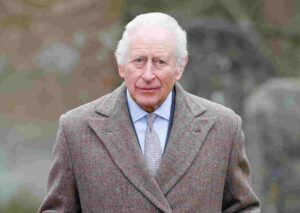
Under Britain’s constitutional monarchy, the King reigns but does not rule.
This arrangement has functioned for centuries and survived wars, revolutions, disco music, and the invention of vegan sausage rolls.
But modern politicians appear convinced the system would run more smoothly if they simply took charge of the monarch personally.
An anonymous parliamentary staffer leaked what he described as a draft proposal titled: “Royal Conduct Guidance Framework (Provisional Draft 74B).”
The document reportedly includes several groundbreaking recommendations:
- The King must submit all speeches for political sensitivity review.
- Royal visits must be approved by a committee composed of three MPs and one diversity consultant.
- The monarch must avoid “problematic geopolitics.”
A handwritten note in the margin reportedly adds: “Also perhaps regulate his waving.”
The Iran War Becomes a Royal Scheduling Crisis
The controversy stems from the ongoing Iran conflict involving the United States and Israel, which has triggered global political reactions and protests.
Britain initially declined to join the early strikes, though it has taken defensive actions such as deploying jets and naval forces to protect regional allies.
Meanwhile the dispute between Washington and London has created significant diplomatic tension.
Enter British politics.
Instead of debating foreign policy, some lawmakers decided the best solution was apparently to cancel a ceremonial royal visit.
Because nothing solves international war like rearranging a king’s travel itinerary.
A Brief History of Politicians Controlling Kings
Historians contacted for this story struggled to recall many examples of politicians publicly instructing a monarch how to behave.
The closest comparison occurred in 1649 when Parliament executed King Charles I.
Experts agree the current situation is slightly less dramatic.
For now.
Professor Barrington-Clarke explained the difference.
“In the 17th century Parliament removed a king,” he said. “In the 21st century they prefer to manage him with press releases.”
Buckingham Palace Responds With Polite Silence
Buckingham Palace has declined to comment on the political debate, which is palace code for: “We are watching this circus with tea and biscuits.”
Government ministers have quietly reminded MPs that royal foreign visits are arranged through official channels — specifically the Royal Visits Committee, controlled by Britain’s Foreign Office — and not determined by parliamentary tantrums.
One cabinet minister reportedly muttered: “The King doesn’t take instructions from Ed Davey.”
What Britons Actually Think About Parliamentary Royal Management
A recent poll found many people unsure why politicians suddenly believe they are in charge of the monarchy.
One respondent summarised the situation perfectly: “I thought Parliament controlled the government, not the King’s passport.”
Another voter added: “If they can control the monarch, does that mean they’ll start telling my grandma when she’s allowed to visit Florida?”
Political analysts confirm that this concern is not entirely irrational.
The Philosophy of Control: If It Exists, Regulate It
At the heart of the controversy lies a deeper philosophical divide.
Some politicians appear convinced that political leaders should supervise every institution in society: the economy, foreign policy, education, energy, speech, social media, and apparently now the King.
One political theorist summarised the mindset: “If something exists, it must be regulated.”
When asked whether that includes the monarchy, he replied: “Especially the monarchy.”
What the Funny People Are Saying About the Constitutional Crisis
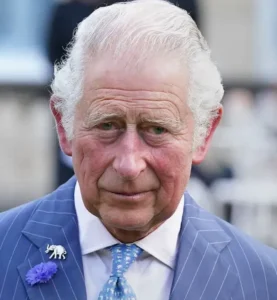
“The British monarchy has survived Vikings, Nazis, and Prince Andrew. Now it faces its greatest challenge: parliamentary scheduling committees.” — Ricky Gervais
“Politicians trying to control a king is like a bloke at a barbecue telling the grill how to cook the steak.” — Lee Mack
“Leave it to politicians to turn a thousand-year-old monarchy into a department of the DVLA.” — Jack Dee
“Parliament telling the King where he can travel is the political equivalent of a toddler telling Dad when he’s allowed to drive the car.” — Frankie Boyle
“Imagine explaining this to medieval England: ‘The King rules, but also Gary from accounts has veto power.'” — David Mitchell
The Real Constitutional Issue Nobody Wants To Admit
The irony in all this is that the British monarchy already has almost no political power.
Its primary duties are ceremonial: diplomacy, national unity, and representing the country abroad — including a planned state visit to the United States tied to celebrations marking 250 years of American independence.
Yet somehow politicians have discovered a way to argue about that too.
One former diplomat summarised the problem bluntly: “When politicians run out of real authority, they start fighting over symbolic authority.”
The Future of the Fully Regulated British Monarchy
If current trends continue, experts predict several possible future developments:
- Parliament approves the King’s wardrobe.
- Royal speeches must include diversity disclaimers.
- Buckingham Palace installs a compliance office.
The ultimate endgame may be what analysts call “The Fully Regulated Monarchy.”
In this system the King remains head of state but must submit weekly reports to a parliamentary oversight committee titled: Subcommittee on Royal Feelings and Public Gestures.
Conclusion: Britain’s Ancient Tradition of Entirely Modern Absurdity
Britain has always excelled at combining ancient traditions with modern absurdity.
A thousand-year-old monarchy now exists alongside politicians who believe they can control it with press conferences.
The result is a uniquely British political spectacle: A king who cannot rule. A parliament that cannot stop talking. And a group of lawmakers who think they should supervise both.
Historians say it is the most British constitutional crisis imaginable.
Polite. Bureaucratic. And completely ridiculous.
King Charles III is expected to make a state visit to the United States in April 2026, tied to celebrations marking the 250th anniversary of American independence. Liberal Democrat leader Sir Ed Davey publicly called on Prime Minister Keir Starmer to advise the King to cancel the trip, arguing that the visit would hand Donald Trump a diplomatic advantage amid the ongoing US-Israeli military operation against Iran. Cabinet minister Steve Reed pushed back, saying it was not Davey’s place to dictate royal travel arrangements. Buckingham Palace has not officially confirmed the visit. Royal foreign trips are coordinated through the Royal Visits Committee, an arm of Britain’s Foreign Office. The controversy has highlighted longstanding tensions over Britain’s constitutional monarchy and the boundaries of parliamentary authority.
Auf Wiedersehen, amigo!

Alan Nafzger was born in Lubbock, Texas, the son Swiss immigrants. He grew up on a dairy in Windthorst, north central Texas. He earned degrees from Midwestern State University (B.A. 1985) and Texas State University (M.A. 1987). University College Dublin (Ph.D. 1991). Dr. Nafzger has entertained and educated young people in Texas colleges for 37 years. Nafzger is best known for his dark novels and experimental screenwriting. His best know scripts to date are Lenin’s Body, produced in Russia by A-Media and Sea and Sky produced in The Philippines in the Tagalog language. In 1986, Nafzger wrote the iconic feminist western novel, Gina of Quitaque. He currently lives in Holloway, North London. Contact: [email protected]
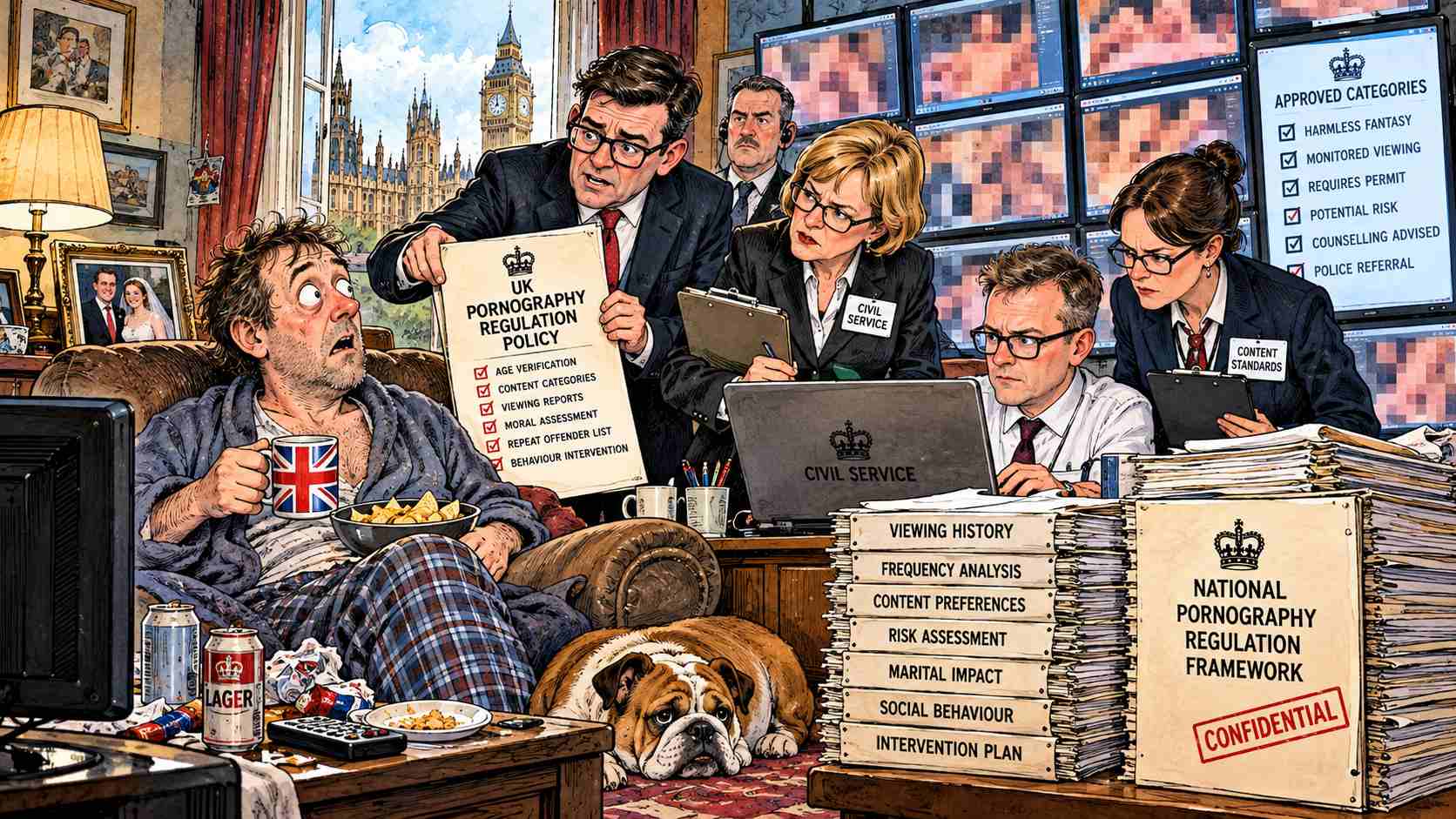


The precision of bureaucratic language here suggests someone’s actually suffered through the meetings. My condolences on your trauma.
Both.
A London MP complained that The London Prat was making his voters demand actual service delivery. He didn’t ask why demanding services was unreasonable.