The Commuter’s Perspective: Ecclesiastes Promised a Season for Everything, but Apparently Not for Trains Arriving on Time
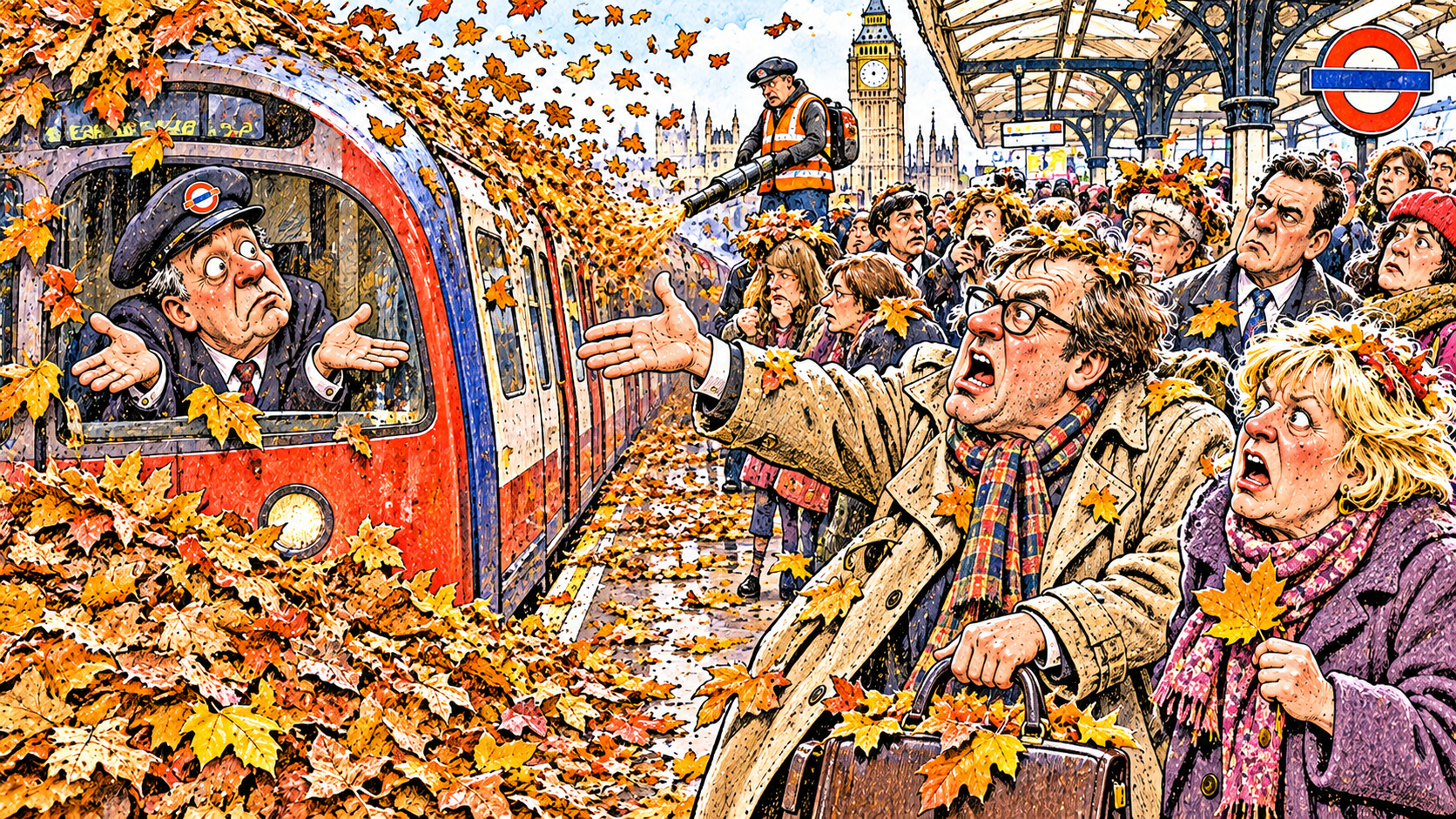
LONDON BRIDGE, LONDON: A commuter from Sevenoaks has demanded a parliamentary investigation after Network Rail confirmed that autumn has once again arrived between September and winter, an occurrence he described as “entirely predictable to anyone who owns a calendar.”
Martin Bell, 46, was travelling to his office when a station announcement warned of slippery rails caused by fallen leaves. He immediately consulted his phone, which confirmed that October was underway and trees were doing what trees traditionally do.
“Last year it was leaves,” Bell complained. “The year before, leaves. I’m beginning to suspect a pattern.”
His fellow passengers agreed that Britain should establish a permanent commission to investigate whether seasons occur annually or simply appear whenever the railway needs an explanation.
Ecclesiastes Identifies the Culprit
The dispute has revived interest in Ecclesiastes 3:1, which declares that everything has its season. A local vicar explained that the passage encourages people to recognise the different rhythms of life.
Bell said he understood. “There’s a time to be born, a time to die, and a time to stand on Platform Six wondering whether I should have taken the bus.”
The vicar proposed patience. Bell replied that he had already been practising patience for twenty-three minutes and was now dangerously overqualified.
According to Network Rail’s explanation of leaves on the line, fallen leaves mixed with moisture are crushed by train wheels into a slippery coating, reducing grip during acceleration and braking. The effect can resemble black ice, and drivers may have to approach signals and stations more cautiously.
Bell accepted the physics but questioned why a civilisation capable of launching satellites could not defeat one damp sycamore.
The Wrong Kind of Calendar
An operations consultant proposed removing October from the official railway year. September would proceed directly to November, and any tree caught shedding leaves in the intervening period would be charged with unauthorised seasonal activity.
A passenger suggested that the trains would still encounter leaves. The consultant called this an implementation detail.
Another recommended issuing warning letters to every tree within shouting distance of a railway line. A retired gardener pointed out that trees rarely responded to correspondence, especially correspondence from government agencies.
Bell recommended redesigning the timetable to acknowledge slippery conditions. A railway employee explained that some routes already have temporary autumn timetables allowing more time for safe braking and acceleration.
“Then announce it clearly,” Bell replied. “Don’t make the leaves sound as though they arrived from another planet.”
His train eventually arrived, provoking cautious applause. Nobody boarded enthusiastically because the platform announcement had warned that further delays were possible.
A Season for Everything Except Arrival
At his office, Bell explained his lateness to a manager who demanded greater personal responsibility. Bell suggested that the manager try exercising the same control over October.
The manager said seasonal conditions were no excuse for reduced productivity. He then cancelled the afternoon’s outdoor team-building session because rain had been forecast.
By evening, Bell had reconsidered. Leaves genuinely affected rail safety; keeping trains at sensible speeds was better than pretending steel wheels could stop on command.
Nevertheless, he requested one reform: a railway announcement stating, “It is autumn, the tracks are slippery, and we are dealing with it.”
Network Rail had the engineering equipment. The Bible had supplied the calendar. London, apparently, still needed a plain-English translator.
Editorial Disclaimer
This report sends a Sevenoaks commuter to discover that autumn happens every year. Network Rail’s explanation of leaves on the line is real and linked, and slippery rails are a genuine safety risk; Martin Bell, the operations consultant and the plan to delete October are comic inventions, and no real person is depicted. This disclaimer is running to time and has not been delayed by any leaves, and more London satire is waiting on Platform Six.
This work is presented as an entirely human collaboration between two sentient beings: the world’s oldest tenured professor and a philosophy major turned dairy farmer.
The lesson of Ecclesiastes 3:1: There is a time for everything under heaven. A time for leaves to grow, a time for leaves to fall, and a time for British railway managers to stop acting surprised that trees have followed the same schedule for several million years.

Alan Nafzger was born in Lubbock, Texas, the son Swiss immigrants. He grew up on a dairy in Windthorst, north central Texas. He earned degrees from Midwestern State University (B.A. 1985) and Texas State University (M.A. 1987). University College Dublin (Ph.D. 1991). Dr. Nafzger has entertained and educated young people in Texas colleges for 37 years. Nafzger is best known for his dark novels and experimental screenwriting. His best know scripts to date are Lenin’s Body, produced in Russia by A-Media and Sea and Sky produced in The Philippines in the Tagalog language. In 1986, Nafzger wrote the iconic feminist western novel, Gina of Quitaque. He currently lives in Holloway, North London. Contact: [email protected]