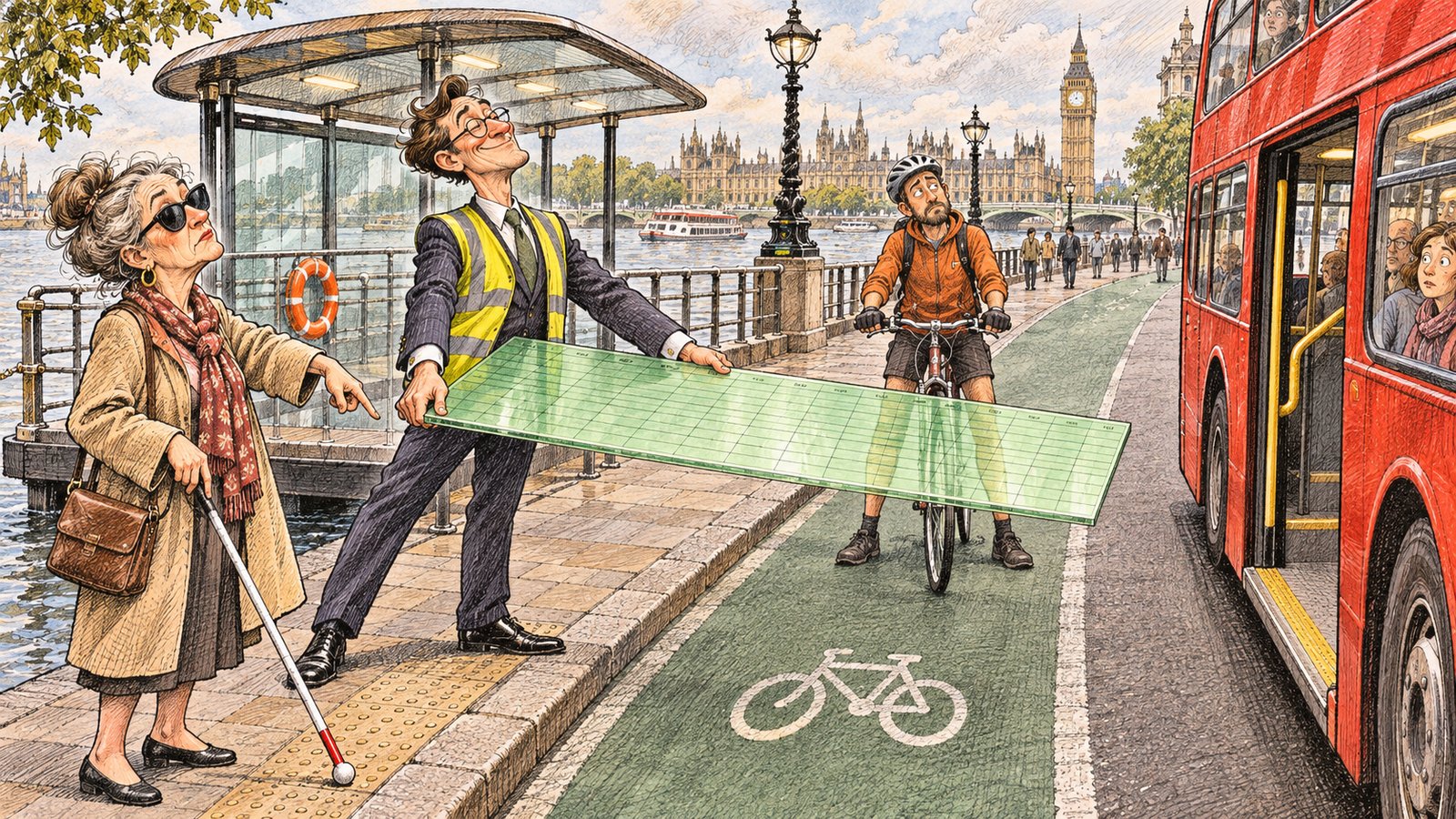
LONDON — Transport for London has described floating bus stops as posing a very low risk, offering concerned passengers the opportunity to cross the cycle lane in a spreadsheet, where every carriageway comes with a reassuringly solid border. A pilot crossing in cell D14 has handled thousands of simulated journeys without a single passenger having to leave the kerb.
At floating bus stops, the boarding island is separated from the pavement by a cycle track. Passengers cross the track to catch a bus. The Standard’s account of TfL’s safety findings records concerns raised by disability campaigners. The London Assembly has urged TfL to pause further installations. TfL has entered the two views in adjoining columns and drawn a thick line between them to prevent either from crossing.
Floating bus stops perform well in the office
A transport planner demonstrated the approved route by dragging a green rectangle towards a picture of a double-decker. “You wait for the little bicycle icon to pass, then you move your entire row,” he said. “If you suddenly find yourself on the wrong side of the crossing, simply undo.”
Passenger Ruth Meredith asked what would happen if she decided to avoid the stop altogether. A planner thanked her for helping to reduce the recorded number of incidents and offered to add her to a different file. That file tracks people expressing an interest in the bus they have already concluded they cannot conveniently board.
Cyclists were keen to point out that a cycle track works best when everyone can see one another. Bus passengers said the same of a bus stop. Both groups agreed on this for nearly two minutes before a consultant arrived and drew an arrow suggesting they should blame each other instead.
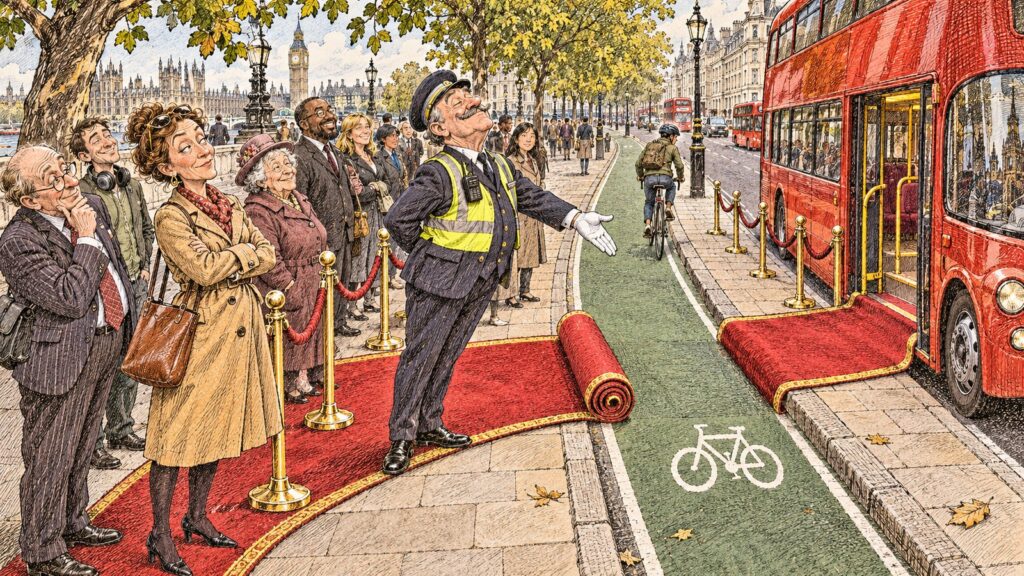
TfL trials a red carpet with the middle removed
An official demonstration saw TfL roll a red carpet from the pavement to the bus doors, then remove the middle section to preserve the cycle route. A brass band played on the pavement. The tuba player was still on the island at dusk and has since been included in the permanent street furniture.
Several passengers suggested bringing the next design workshop to an actual bus stop. The project team considered this an excellent idea and booked a meeting room overlooking one. From the fourth floor the boarding island looks generously proportioned, the traffic is silent, and anyone who cannot manage the crossing becomes too small to record.
For readers accustomed to Londoners walking during the Tube strike, the walking element at least felt familiar. The novelty was being asked to do it in exactly the place the bus had been put there to save them walking to.
TfL has invited further feedback. Comments can be submitted in column E, next to the perfectly safe crossing.
This satire brings together the world’s oldest tenured professor and a philosophy major turned dairy farmer, two sentient collaborators who stop the tractor before opening the gate.