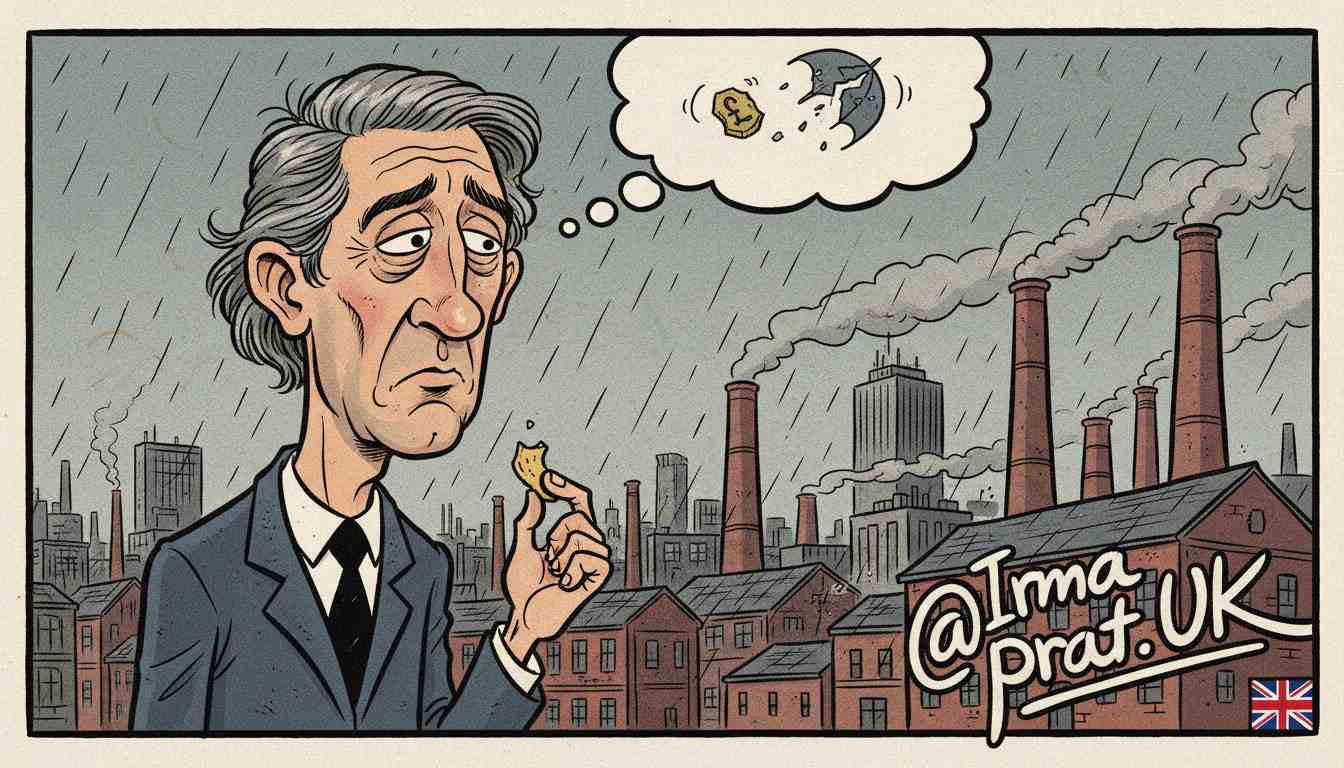
Buckingham Palace Extends Queen Elizabeth Fashion Exhibit After Britain Discovers Looking At Old Hats Is More Affordable Than Living
Nation Queues To See 70 Years Of Handbags While Pretending The Economy Is Fine 🇬🇧👒
Britain this week celebrated the shocking revelation that the late Queen Elizabeth II owned clothes, after Buckingham Palace announced the royal fashion exhibition Queen Elizabeth II: Her Life in Style would be extended through April 2027 due to overwhelming demand.
The exhibit at The King’s Gallery, Buckingham Palace reportedly sold out within weeks, drawing hundreds of thousands of visitors eager to spend £22 to stare silently at handbags their grandmother once described as “perfectly sensible.”
Royal historians say the exhibition contains more than 300 items from the Queen’s wardrobe, including gowns, hats, shoes, gloves, ceremonial dresses, sketches, handwritten correspondence, and approximately 11 metric tonnes of floral fabric specifically engineered to survive rain in Birmingham.
Professor Crump Explains Everything In Entirely Serious Terms
Professor Lionel Crump of the University of Milton Keynes Centre for Advanced Royal Fabrics explained the exhibit’s popularity in entirely serious terms.
“British people enjoy continuity,” he said while adjusting a tie covered in tiny corgis. “The Queen wore the same colours for seventy years. In modern Britain that level of commitment is considered radical extremism. Most governments don’t survive longer than a Tesco meal deal.”
Visitors entering the gallery reportedly become emotional within minutes after seeing the Queen’s famous coats arranged chronologically like the evolution of British stoicism itself.
One pensioner from Leeds stood silently before a pale blue hat for 23 minutes before whispering, “That hat saw six prime ministers collapse.”
Another visitor described the experience as “like walking through the history of Britain, if Britain were mostly brooches.”
The exhibition arrives as Britain continues its transformation into a nation powered entirely by nostalgia, queueing, and pretending things used to be built better. Experts say royal exhibitions now serve as emotional support museums for citizens exhausted by inflation, collapsing councils, train strikes, and apps demanding subscriptions to boil kettles.
A leaked government memo reportedly described the exhibit as “the closest thing Britain currently has to emotional stability.”
Royal Fashion Now Considered Last Functioning British Industry
Fashion analysts confirmed the late Queen accidentally became Britain’s most successful influencer despite never once posting “link in bio.”
Curators say the exhibit reveals how carefully the monarch used clothing as diplomatic strategy. Exhibition curator Caroline de Guitaut, Surveyor of The King’s Works of Art, noted that bright outfits helped crowds spot the monarch in any crowd. British citizens reacted with amazement upon learning the Queen intentionally dressed brightly instead of simply wandering into public events dressed like a ceremonial Easter egg.
One room reportedly displays the transparent raincoat designed so crowds could still see the Queen during downpours.
“That right there is leadership,” said one man from Croydon. “Current politicians hide from voters entirely. She literally dressed like a waterproof greenhouse so people could wave at her in Wolverhampton.”
The exhibition’s biggest attraction remains the Queen’s 1947 Norman Hartnell wedding dress, which historians now classify as Britain’s final functioning industrial achievement before the country pivoted fully into financial services and artisanal sausage rolls.
Tour guides say younger visitors appear confused by the idea of clothes lasting more than eight months.
A 22-year-old influencer reportedly stared at a 1950s evening gown before asking, “Wait… people used to repair things?”
London Tourists Treat Buckingham Palace Like Royal Disneyland
Outside the gallery, tourists from around the world formed queues stretching through Westminster as souvenir vendors sold commemorative tea towels featuring phrases like “KEEP CALM AND ORGANISE YOUR HANDBAGS LIKE THE QUEEN.”
American tourists reportedly entered the exhibit expecting scandal and left discussing tweed construction techniques.
“It’s weirdly calming,” admitted Todd Jenkins from Ohio. “Nobody’s screaming. Nobody’s selling crypto. It’s just seventy years of structured handbags and emotional repression.”
One Italian tourist became visibly overwhelmed after learning the Queen carried clear handbags as coded signals to aides indicating whether conversations should end. Historians have confirmed this handbag semaphore system was a genuine feature of royal life for decades.
“That woman invented human AirTags,” he whispered.
London businesses nearby are already capitalising on the surge in visitors. Pubs around Victoria Station have introduced themed cocktails including “The Crown Jewels Spritz,” “Philip’s Last Martini,” and “Emergency Palace Gin” served warm and slightly judgemental.
Meanwhile, economists estimate the exhibition may soon contribute more to British tourism GDP than manufacturing.
What The Funny People Are Saying
“British people will stand quietly in line for four hours to look at a purse from 1963, but ask them to queue calmly at airport security and suddenly it’s the French Revolution.” — Ricky Gervais
“The Queen dressed like every grandmother who says, ‘I don’t want attention,’ while wearing neon lime green in church.” — Sarah Silverman
“Only Britain could turn sensible shoes into constitutional symbolism.” — Jimmy Carr
“Americans use influencers to sell energy drinks. Britain used a handbag and a wave for seventy years.” — Trevor Noah
Buckingham Palace Quietly Becomes Britain’s Largest Therapy Centre
Royal Collection officials confirmed the extension followed “unprecedented demand.” Organisers now estimate visitor numbers could reach 400,000, making it the most visited show in the history of the Royal Collection Trust. Unofficially, palace staff admitted citizens simply enjoy entering buildings where things appear orderly.
“People miss institutions,” said one anonymous palace employee. “They come here because the carpets match and nobody’s arguing about Wi-Fi passwords.”
Sources say several visitors cried softly upon seeing garments arranged neatly by decade.
“That level of organisation is impossible in modern Britain,” explained behavioural scientist Dr. Hannah Peabody. “Most citizens currently store important tax documents inside an old Greggs bag.”
Meanwhile, cultural critics noted the exhibit accidentally highlights how dramatically public life has changed. The Queen’s generation valued restraint, durability, and subtle symbolism. Modern celebrity culture consists mainly of apology videos filmed inside kitchens larger than Norwich.
Even younger royals reportedly visited the exhibition and became startled by how little branding existed in the late Queen’s wardrobe.
“No visible logos?” whispered one horrified influencer attending a preview event. “How did people know she was rich?”
Britain Once Again Comforted By Hats
As crowds continue flooding into Buckingham Palace, officials now predict the exhibit could become the most visited show in Royal Collection Trust history. Experts say the exhibit ultimately offers something modern Britain rarely experiences anymore: consistency.
For seventy years, the Queen appeared in public smiling politely while dressed like a highlighter pen designed by Parliament.
And somehow… it worked.
At closing time Monday evening, one exhausted gallery attendant reportedly looked over the endless queue still wrapping around the palace gates and sighed:
“Turns out the British Empire ended, but the British appetite for looking respectfully at coats survived.”
This article is a human collaboration between the world’s oldest tenured professor and a philosophy major turned dairy farmer. No corgis were emotionally manipulated during production, though several handbags demanded constitutional immunity. The authors accept no responsibility for nostalgia-induced queueing behaviour, nor for any readers who emerge from the exhibit inexplicably devoted to tweed. Auf Wiedersehen, amigo!
Britain’s Queen Elizabeth II: Her Life in Style exhibition, hosted at The King’s Gallery at Buckingham Palace, was originally scheduled to close in October 2026 but has been extended to 18 April 2027 after selling out within weeks of opening. The show marks the centenary of Queen Elizabeth II’s birth and is the largest display of the late monarch’s fashion archive ever staged, featuring more than 300 items including her 1947 Norman Hartnell wedding dress, her 1953 coronation gown, and never-before-seen design sketches. Visitor numbers are expected to approach 400,000, which would make it the most-visited exhibition in the history of the Royal Collection Trust. Tim Knox, Director of the Royal Collection, called the public response “unprecedented.” Around half the garments on display have never been shown publicly before.
Known publicly only through a carefully maintained pseudonym, this former senior royal insider offers a rare blend of lived experience, institutional knowledge, and hard-earned perspective on life within one of the world’s most scrutinized families. Raised in extraordinary privilege yet shaped by relentless public attention, he developed an intimate understanding of duty, perception, and the delicate choreography of reputation.
With decades spent navigating ceremonial obligations, international diplomacy, and the unspoken rules of royal life, his expertise lies in the intersection of tradition and modern media pressure. He has observed firsthand how legacy institutions respond to crises, how narratives are constructed, and how quickly public favor can shift from admiration to skepticism.
His insights are informed not only by access, but by consequence. Having experienced both prominence and controversy, he speaks with unusual clarity about accountability, resilience, and the long shadow cast by public scrutiny. Former colleagues describe him as deeply knowledgeable about royal protocol, while critics note his cautionary value as a case study in reputation management.
Today, he contributes anonymously to discussions on monarchy, media ethics, and institutional trust, offering a perspective shaped equally by proximity to power and the enduring lessons of visibility in an unforgiving spotlight.