Retail Sales Rise as Heatwave Forces Britons to Purchase Shorts They Will Wear Twice
Garments Expected to Return to Wardrobes Immediately After August Rain Arrives Sideways
A Heatwave-Driven Rise in Retail Sales
LONDON, England — British retail sales unexpectedly rose in June after a heatwave forced millions of citizens to purchase shorts for two afternoons, one barbecue and an optimistic weekend booking in Bournemouth.
Official estimates show retail sales volumes increased by 1% over the month. Warm weather, promotions, sports merchandise and demand for fans and air-conditioning equipment contributed to the increase. Clothing stores recorded their strongest monthly rise since September 2025.
The Office for National Statistics has classified the event as consumer growth.
British households classify it as being caught unprepared by summer for the 47th consecutive year.
The Annual Drawer Discovery

Every June, citizens open a drawer and discover the shorts situation has deteriorated.
One pair is too small.
One pair has a stain connected to mustard and memory loss.
One pair is technically swimwear but lacks the confidence required for Tesco.
The consumer therefore enters a shop and purchases beige cargo shorts, Britain’s traditional uniform for men who have recently begun discussing sheds.
A Bohiney Institute fashion audit found that British shorts are worn an average of 2.4 times before entering long-term textile storage.
The first appearance occurs during a heat warning.
The second occurs at a family barbecue.
The remaining 0.4 occurs when the wearer begins dressing for sunshine but checks the weather before leaving.
How Online Shopping Absorbed the Heatwave Rush
Women’s summer purchases follow a similar pattern but involve more sophisticated negotiations with workplace temperatures, public transport and pockets inserted entirely for decoration.

Retailers reported strong sales of clothing, outdoor products and cooling equipment. Online sales surged as people chose not to walk through hot town centres while carrying shopping bags.
The internet offered thousands of shorts in cuts described as regular, relaxed, tailored, athletic, loose, slim and “What Happened to My Legs?”
Customers ordered three sizes because fashion companies abandoned shared measurement standards during the Napoleonic Wars.
Two sizes were returned.
The third was retained out of exhaustion.
The Velocity of Clothing
Returns now form a significant portion of the modern British summer economy. Vans deliver trousers in the morning, collect them in the afternoon and pass an identical van returning the same trousers to another customer.
Economists call this velocity of clothing.
World Cup Spending and the Aspirational Replica Shirt

The World Cup provided an additional boost. Consumers purchased football shirts, televisions, snacks and beverages while convincing themselves that watching sport represents participation in sport.
Replica shirts became particularly popular.
They are designed for elite athletes with minimal body fat but sold primarily to men eating pork pies during stoppage time.
The contrast demonstrates the aspirational power of retail.
A shirt cannot improve cardiovascular fitness.
It can, however, make shouting tactical instructions at the television look officially licensed.
Pubs enjoyed stronger trade on England match days, while supermarkets sold barbecue supplies to households assuming rain would respect the tournament schedule.
Rain did not sign the agreement.
Britain’s Wardrobe Compared to Countries With Predictable Summers
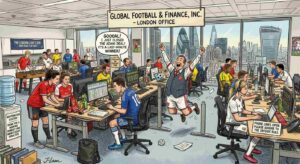
Britain’s relationship with hot weather is economically productive because every warm period arrives as a complete surprise.
Countries with predictable summers own ceiling fans, external shutters and wardrobes containing linen.
Britain owns radiators beneath every window and one oscillating fan last seen in a university bedroom in 1998.
When temperatures rise, the nation must rebuild summer from retail components.
What the Growth Figures Do and Don’t Show
This boosts sales but does not necessarily reflect broad prosperity. Households may be diverting money toward immediate weather-related needs while facing persistent pressure from housing, energy and food costs. Economists have warned that geopolitical tensions and higher energy prices could weaken spending later.
The June figures were still better than expected.
Quarterly retail volumes rose by 0.6%, and sales were 4.2% higher than a year earlier.
The government welcomed the data.
A minister stood beside a rack of summer clothes and announced that Britain had turned a corner.
The corner led directly into a seasonal clearance sale.
The Shorts’ True Purpose
By late August, the newly purchased shorts will be folded into drawers beside unused resistance bands, foreign currency and charging cables belonging to unidentified devices.
Their owners will wear jeans through another heatwave because retrieving the shorts feels excessive.
Retail economists will then study the unexpected decline.
The shorts know the truth.
They were never clothing.
They were a two-day emergency infrastructure project with belt loops.
Disclaimer: This is satire based on official retail-sales data showing stronger demand for clothing, sports merchandise, outdoor goods and cooling equipment. No shorts were consulted during preparation of the economic forecast. This is satirical news, part of a continuing english satirical news series produced in the manner of classic UK satire. This story is entirely a human collaboration between two sentient beings: the world’s oldest tenured professor and a philosophy major turned dairy farmer.

Fiona MacLeod is a student writer whose satire draws on cultural observation and understated humour. Influenced by London’s academic and creative spaces, Fiona’s writing reflects curiosity and thoughtful comedic restraint.
Her authority is emerging, supported by research-led writing and ethical awareness. Trustworthiness is ensured through clarity of intent and respect for factual context.
Fiona represents a responsible new voice aligned with EEAT standards.