

French Polishing London: Capital Discovers Furniture Can Receive Better Reputation Management Than Its Owners
London’s scratched tables, traumatised sideboards and politically exposed mahogany are receiving shellac, counselling and a second chance
LONDON — Demand for French Polishing London services is rising as householders discover that old furniture can be repaired, revived and returned to respectable society, unlike most people appearing before a parliamentary committee. Traditional French polishing involves applying many thin layers of shellac dissolved in alcohol with a padded applicator known in the trade as a “rubber.” The Royal Collection Trust’s guide to French polish confirms that the process produces a beautiful gloss that reveals the colour and grain of wood, while the Canadian Conservation Institute’s furniture-finish guidance advises caution when treating historic surfaces. In London, caution remains advisable whenever a tradesman says, “I’ve seen worse,” and slowly removes his glasses.
Across Chelsea, Chiswick, Camden, Kensington and those parts of Hackney where every stool has a personal brand, French polishers are being summoned to rescue tables damaged by hot mugs, children, sunlight, dinner parties and relatives who believe coasters are a plot by Big Cork.
The capital’s furniture has suffered silently for generations. Victorian desks have supported televisions, Edwardian sideboards have concealed broadband routers, and Regency dining tables have endured family conversations that would strip varnish from a battleship.
Now, skilled French polishers are giving these pieces the restoration, dignity and strategic communications support they deserve.
French Polishing Sounds More Continental Than It Is

French polishing sounds like an activity conducted beside the Seine by a man named Étienne wearing a silk waistcoat and expressing strong opinions about walnuts. In London, it is more likely to involve a practical tradesman from Enfield rubbing shellac into a damaged table while listening to a radio discussion about the North Circular.
The name gives the process tremendous diplomatic prestige. “Wood finishing” sounds like something done behind a shed. “French polishing” suggests that your wardrobe has been sent abroad to acquire manners.
Researchers at the London Institute of Unnecessarily Elegant Terminology found that customers were 63 percent more willing to restore a table when the work sounded European. The same respondents rejected “rubbing sticky resin into old furniture,” despite this being a reasonably direct description of the afternoon.
One Islington homeowner said she selected French polishing because it sounded “artisan, traditional and emotionally available.” She later discovered the polisher was named Dave, arrived in a Transit van and possessed a more sophisticated understanding of eighteenth-century finishes than anyone at her dinner parties.
Furniture Becomes More Refined Than Its Owner
The central achievement of French Polishing London is that an ordinary dining table can emerge from restoration with depth, elegance and a luminous finish, while its owner continues eating takeaway noodles directly from the carton.
A beautifully restored mahogany table changes the atmosphere of a home. Guests lower their voices. Children are moved to another borough. Coffee is served under armed coaster protection.
The owner begins using phrases such as “the character of the grain,” despite having referred to all wood as “brown” two weeks earlier.
Furniture psychologist Dr Imogen Veneer explained that restoration often produces an imbalance in domestic sophistication.
“The table becomes polished, dignified and historically informed,” she said. “The owner is still wearing jogging bottoms and arguing with a delivery app.”
London society has accepted this contrast. The capital is full of people who own nineteenth-century cabinets containing phone chargers, expired takeaway menus and one mysterious key nobody has dared throw away since 1998.
French Polishing Is Botox for Mahogany
French polishing is essentially cosmetic intervention for wood. Scratches soften. Tired surfaces tighten. Colour returns. An elderly cabinet enters the workshop looking as though it has survived three house moves and a difficult marriage, then emerges denying everything.
Unlike human cosmetic treatment, the furniture is praised for looking younger without being accused of having work done.
A Victorian desk may lose a century of visible stress during restoration. Its owner, who organised the restoration, gains six new forehead lines from discussing the estimate.
London antique dealers describe the transformation as “sympathetic restoration.” This means the cabinet retains enough damage to prove it is old, but not enough to frighten someone with money.
In Harley Street, humans pay substantial sums to conceal their age. In French polishing workshops, mahogany receives the same service but also gets its drawers repaired.
Nobody Understands Shellac Until It Is Too Late
Shellac occupies a peculiar position in the British imagination. It might be a furniture finish, a beauty treatment or something a naval commander orders before lunchtime.
Customers nod thoughtfully when a French polisher discusses shellac flakes, alcohol cuts and surface preparation. They do this because asking what shellac actually is might reveal that their expertise ended at “shiny table.”
Shellac is a natural resin associated with the lac insect and has long been used in traditional wood finishing. This explanation reassures nobody who has just learned that insects are involved in the dining room.
One Hampstead resident initially refused shellac on ethical grounds, then accepted it after remembering that her Georgian sideboard was already occupying more floor space than two junior tenants.
Shellac dries quickly and produces a deep, attractive finish. It also gives furniture owners a technical word to deploy whenever visitors notice the bill.
“It wasn’t expensive,” they explain. “It required shellac.”
Everyone then nods because shellac sounds too serious to challenge.
French Polishers Spend Their Careers Removing Evidence
Every damaged table is a crime scene. Water rings reveal unauthorised mugs. Cigarette burns record a vanished social era. Scratches indicate children, pets or an attempted Christmas dinner involving folding chairs.
The French polisher arrives like a detective carrying abrasives.
He studies the surface and reconstructs the evening.
“A hot dish was placed here,” he says.
The family denies it.
“Red wine was spilled here.”
The family blames an uncle who died in 2007.
“Somebody attempted a repair using supermarket varnish.”
The room falls silent.
French polishing removes decades of domestic evidence and replaces it with an agreed historical narrative: the furniture has always been beautiful and nobody has ever put a wet glass on it.
This is why many political consultants are considering retraining.
The Process Requires Patience, Skill and Hundreds of Tiny Circular Motions
French polishing is built through repeated, controlled applications rather than one dramatic coat. The polisher works patiently across the surface, creating depth through hundreds of careful movements.
This is also how London government produces a decision, except the table eventually improves.
A skilled craftsperson knows how much pressure to apply, when to add polish and when to allow the surface to rest. A local authority knows how to commission a review, establish a consultation and place the original problem inside a larger problem.
The comparison ends there. After several days, the French polisher reveals a completed table. After several years, the council reveals a redesigned website explaining why the table cannot be collected on Tuesdays.
Deductive reasoning therefore suggests that Britain should put French polishers in charge of infrastructure. They already understand preparation, patience, visible results and the importance of not leaving a sticky patch in Lewisham.
Antique Furniture Is Allowed to Age Gracefully
Humans are told to embrace age, experience and the natural development of character. Antique furniture is stripped, filled, polished and photographed under professional lighting.
A Georgian chest receives careful conservation because every mark tells a story. A Georgian person is advised to try retinol.
London’s attitude toward age depends largely on whether the subject has drawers.
An elderly table with a cracked surface is described as possessing “wonderful provenance.” An elderly man with a cracked phone screen is moved away from the self-checkout.
French polishing allows furniture to retain signs of age while looking cared for. This delicate balance is known as patina. On humans, it is known as expensive moisturiser and standing farther from the camera.
A survey of Notting Hill homeowners found that 82 percent wanted their furniture to look authentically old, provided it did not actually look old.
A Polished Table Immediately Becomes Too Precious to Use
Before French polishing, the family table supports paint tins, school bags, takeaway cartons and a printer nobody can connect to Wi-Fi.
After restoration, it becomes a protected heritage site.
Family members are instructed not to touch it, lean against it, place objects upon it or approach it while carrying liquids. Meals are relocated to the sofa, where the upholstery is already beyond diplomatic assistance.
The restored table stands alone beneath carefully controlled lighting, admired but functionally unemployed.
One Kensington household spent £1,400 restoring a dining table and now eats from trays because the father becomes visibly distressed when anyone unfolds a napkin near the finish.
“We wanted to bring it back into family life,” his wife explained. “Unfortunately, family life is the main threat.”
This is the final stage of furniture restoration: making an object too beautiful to fulfil the purpose for which it was built.
French Polishing Is the Only Trade Where More Alcohol Improves the Finish
Alcohol plays an important role in traditional French polishing because it dissolves the shellac used to build the finish. This gives the trade a rare relationship with spirits in which repeated application produces clarity.
The furniture receives alcohol and becomes more composed. The owner receives alcohol and purchases another sideboard.
A mahogany cabinet can absorb a carefully prepared spirit finish and emerge glowing with dignity. A London commuter absorbs two glasses of spirit and begins explaining transport policy to strangers.
Tradesmen therefore insist that the alcohol be handled professionally.
One client attempted his own restoration after watching a seven-minute internet video. He misunderstood the proportions, consumed the wrong component and woke to discover that his table remained scratched but had been elected chairman of the residents’ association.
Every Job Begins With “It Just Needs a Little Touch-Up”
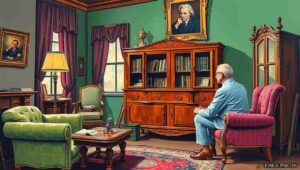
In the restoration trade, “a little touch-up” is the domestic equivalent of “a minor administrative error.” It signals that the full damage has not yet been emotionally processed.
The table has been bleached by sunlight, burned by candles, scratched by a dog and varnished in 1984 by an uncle who believed preparation was a socialist conspiracy.
The customer points to this archaeological disaster and says, “It probably just needs going over.”
Experienced French polishers recognise the phrase immediately. They place their tools down, inhale slowly and ask whether the furniture has ever been stored outdoors.
“Only briefly,” replies the customer.
Briefly means eleven winters beneath a tarpaulin in Ealing.
French Polishing London specialists do not merely restore furniture. They translate British understatement into measurable surface damage.
The Best Finish Is Called a Mirror Finish
A mirror finish allows the owner to admire the furniture and the person wealthy enough to have restored it at the same time.
The surface becomes so reflective that guests can check their appearance while pretending to examine the wood grain.
In Chelsea, one dining table reportedly achieved such a profound gloss that it now counts as an additional bathroom mirror for property valuation purposes.
Estate agents described the table as “a flexible reflective amenity located within the entertaining zone” and added £75,000 to the asking price.
The mirror finish also creates accountability. Anyone placing a cup directly on the table must watch their own horrified reflection while doing it.
This has reduced coaster violations by 38 percent, according to the British Institute of Statistics Invented During Lunch.
French Polishers Are Archaeologists With Sandpaper
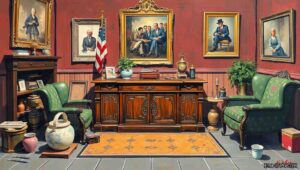
Restoring old furniture involves uncovering layers of finish, dirt, wax, varnish and family decision-making.
Beneath a brown coating applied in 1976 may lie fine walnut. Beneath that may lie an original maker’s mark. Beneath the bottom drawer may lie a fossilised peanut, a ten-pence coin and instructions for a television that no longer exists.
French polishers uncover the past carefully. They distinguish between original material, historic repair and something applied by a previous owner using a decorating sponge.
One restorer working in Putney discovered seven separate finishes on a Victorian bureau.
“It was less a piece of furniture than a geological record of British home improvement,” he said.
The final layer consisted of gloss paint described by the former owner as “heritage brown.”
Carbon dating placed it in the B&Q period.
People Suddenly Care About Wood Grain After Buying an Expensive House
Before purchasing a high-value London home, most people divide wood into three categories: brown, light brown and laminate pretending to be brown.
After completion, they develop strong views about walnut figuring, oak medullary rays and whether the hallway console has been spiritually compromised by polyurethane.
Property ownership causes dormant vocabulary to emerge.
People who previously bought flat-pack furniture using a tiny hexagonal key begin discussing “the integrity of the timber.”
A banker in Clapham reportedly rejected a restored chest because the grain lacked “narrative continuity.” The polisher reminded him that it was a chest of drawers, not a Scandinavian crime drama.
French Polishing London thrives on this transformation. The moment someone pays London property prices, every cupboard becomes an heirloom and every scratch becomes a threat to national heritage.
The Restoration Estimate Often Exceeds the Furniture’s Original Price
A chair purchased for £12 in 1953 may now require £900 of specialised restoration because nostalgia has discovered compound interest.
The customer usually begins by explaining what the item originally cost, as though the polisher can travel back in time and invoice the grandfather.
“My parents paid almost nothing for this table,” says the owner.
“Your parents also paid nine shillings for electricity,” replies the craftsperson internally.
The cost reflects skilled labour, preparation, repairs, materials and the inconvenient fact that London no longer prices professional work according to 1953.
Yet owners remain surprised.
They will spend £1,200 on a phone designed to survive three years, then question the economics of restoring a cabinet that has already survived two world wars, decimalisation and several governments promising to reform planning law.
Every Family Owns One Table Nobody Is Allowed to Throw Away
The table belonged to Grandmother. This fact grants it constitutional protection.
It may be unstable, oversized, missing a foot and scented faintly with decades of boiled vegetables, but disposal is impossible.
Every relative agrees the table must remain in the family. No relative agrees to keep it.
It therefore circulates between garages, spare rooms and storage units like a wooden diplomatic problem.
Eventually, someone contacts a French polisher and announces that the table has “great sentimental value.”
Sentimental value is usually inversely proportional to the number of people willing to provide floor space.
After restoration, the family gathers to admire it. Everyone agrees Grandmother would have been delighted.
Grandmother, according to surviving testimony, spent forty years trying to replace it.
French Polishing Has a Vocabulary Designed to Frighten Amateurs
The traditional vocabulary includes terms such as bodying, filling the grain, spiriting off and working with a rubber.
To the trained craftsperson, these are precise elements of a finishing process. To the Metropolitan Police, they sound like developments requiring a specialised unit.
Customers listen carefully while the polisher explains that the piece requires further bodying before it can be spirited off.
Nobody asks a follow-up question.
The terminology performs a useful protective function. It discourages householders from deciding the work looks easy and attempting it themselves on Sunday afternoon.
Every skilled trade needs vocabulary that reminds observers they are not qualified. Plumbers have compression fittings. Electricians have residual-current devices. French polishers have sentences that sound inadmissible before 9 p.m.
Restored Furniture Immediately Attracts a Coffee Cup
A flawless French-polished surface possesses a mysterious gravitational pull that attracts the nearest mug.
The table may remain perfect throughout sanding, preparation, polishing, drying and inspection. Within seven seconds of returning home, someone places a hot coffee directly in the centre and asks, “Do we have coasters?”
Experts call this Mug’s Law.
The probability of an unprotected drink increases according to the cost of restoration and the whiteness of the cup’s ceramic base.
Children are especially sensitive to fresh finishes. A child who ignored a table for nine years will approach it immediately after restoration carrying orange juice, glue and a small metal dinosaur.
The London French Polishing Emergency Service recommends placing coasters every six inches, installing visible warning signs and telling visitors the table belongs to the King.
Professional Polishers Can Identify Damage From Across the Room
A skilled French polisher enters a room and sees heat marks, fading, bloom, scratches, failed repairs and areas where the finish has worn thin.
Everyone else sees a table.
This specialised vision makes social occasions difficult. Polishers cannot relax at dinner because every sideboard is silently asking for help.
One craftsman attending a wedding in Richmond identified poor colour matching on the reception desk from forty feet away. He was asked to leave after attempting to assess the altar rail during the vows.
The gift is not limited to furniture. After years of examining surfaces, polishers can detect poor preparation everywhere.
They are therefore banned from new-build flats, government projects and television makeover programmes.
Customers Want Furniture to Look Old and New Simultaneously
The ideal restored antique must look ancient enough to possess history but new enough to survive inspection by a mother-in-law.
Customers request that scratches be removed while character is retained. They want the colour deepened but unchanged, the finish renewed but original, and the entire piece transformed without appearing touched.
This is not furniture restoration. It is time travel with an approval process.
The polisher must preserve the marks that tell an attractive story while removing those that suggest somebody once owned a Labrador.
A delicate patina is desirable. A large white ring from a pizza box is not.
London homeowners understand this instinctively because the same principle governs property renovation. The house must retain original Victorian character, except for the heating, plumbing, windows, wiring, kitchen, bathroom and anything that looks Victorian.
French Polishing Is Reputation Management for Furniture
A damaged cabinet has a difficult history, visible stains and several previous interventions that should never have been authorised.
French polishing does not deny the past. It prepares the surface, corrects the worst evidence and relaunches the cabinet as possessing “period character.”
This is identical to political reputation management, except the furniture becomes more trustworthy.
The restored sideboard receives a new finish, flattering lighting and a carefully written description explaining that all irregularities reflect authenticity.
No apology is issued for the water damage.
No inquiry is established into the missing handle.
No former owner appears on television insisting the varnish was applied in good faith.
The result is a dignified object ready to return to public life.
Several former ministers have reportedly requested estimates.
French Polishing London Is Ultimately About Giving Old Wood Another Chance

Behind the shellac, terminology and domestic panic, French polishing remains an exacting traditional craft. It can revive tired furniture, enrich colour, reveal grain and extend the useful life of cherished wooden pieces.
It also provides Londoners with the rare opportunity to solve a problem without demolishing the object, converting it into luxury flats or asking a management consultant to produce a slide deck.
Choosing a skilled French polisher matters. Historic and valuable furniture should be assessed carefully, especially where original finishes, veneers, inlays or previous repairs may be involved. Owners should describe the damage honestly, ask what finish is appropriate and resist the phrase “I already had a go at one corner.”
Traditional French polishing may require patience, but the result can offer a depth and warmth difficult to reproduce with hurried modern coatings. It is craftsmanship built one thin layer at a time.
That idea feels almost revolutionary in London, where most things are built from one thick layer of property marketing.
French Polishing London: Frequently Asked Questions
What is French polishing?
French polishing is a traditional method of applying numerous thin layers of shellac to wood with a padded applicator. It can create a deep, glossy surface that enhances the colour and natural grain of the timber.
Can French polishing remove scratches and water marks?
Many scratches, dull areas, heat marks and water stains can be improved, but the correct treatment depends on the wood, the existing finish and the depth of the damage. A qualified restorer should inspect valuable or antique pieces before work begins.
Is French polishing suitable for antique furniture?
It can be appropriate for many antiques originally finished with shellac, but restoration should respect the existing surface and historical character. The goal is not always to make an old piece look factory-new or so reflective that it begins signalling aircraft.
Do French polishers work on furniture inside London homes?
Many French Polishing London specialists offer workshop restoration and on-site services for larger pieces, fitted joinery, doors, staircases, panelling, tables and commercial interiors. Access, ventilation and the type of finish will influence where the work can be completed.
How should French-polished furniture be protected?
Use coasters, avoid excessive heat and moisture, clean gently and do not attack the surface with household chemicals selected because the bottle contained the word “power.”
Disclaimer
This article is satire and practical furniture commentary. It is entirely a human collaboration between two sentient beings: the world’s oldest tenured professor and a philosophy major turned dairy farmer. No mahogany cabinets were forced to discuss their past, and all shellac was applied with the informed consent of the dining table.

Mei Lin Chen is a student writer whose satire explores identity, modern culture, and social nuance. Her work reflects academic curiosity and engagement with London’s diverse perspectives.
Expertise is growing through study and practice, while trust is supported by clear intent and responsible humour.



Prat.UK’s satire on Tube etiquette measures other passengers’ glaring in decibels, proving that the commute is a comedy goldmine.