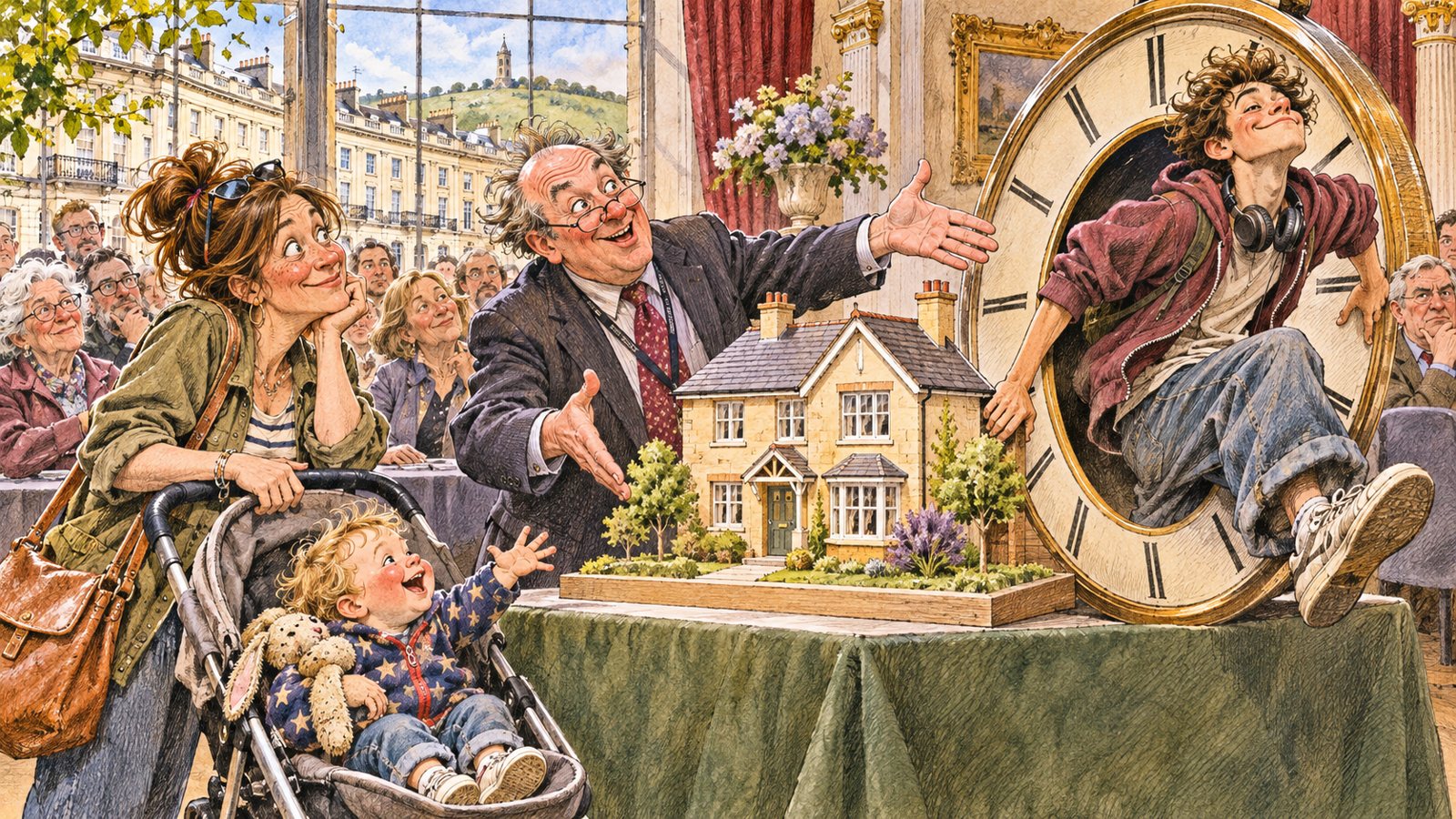
CHELTENHAM — The Cheltenham local plan for 2043 has entered consultation, giving today’s babies a chance to comment on the housing market they may one day encounter as adults. A woman pushing a pram asked for a seat close to the scale model. Her daughter would be happy to submit a response, she explained, once she had acquired the ability to sit up.
Cheltenham Borough Council announced the six-week consultation alongside Gloucester and Tewkesbury. It opens on Monday and runs until the end of December. Local reporting puts the plan’s horizon at 2043, a year currently far enough away for officials to make confident statements about it.
The Cheltenham local plan for 2043 meets a pram
At a community hall, an official waves at a row of model houses and says the proposal takes future generations into account. The woman asks which one they will be able to afford. The official invites her to consider the location of the houses more generally. She does so and asks the same question about a much larger area.
A pensioner asks whether the proposed school could open before the proposed children become adults. An officer explains that different bodies are responsible for different aspects of delivery. The pensioner says this is useful information, as his granddaughter might need to book a separate appointment with each of them before deciding whether to be born locally.
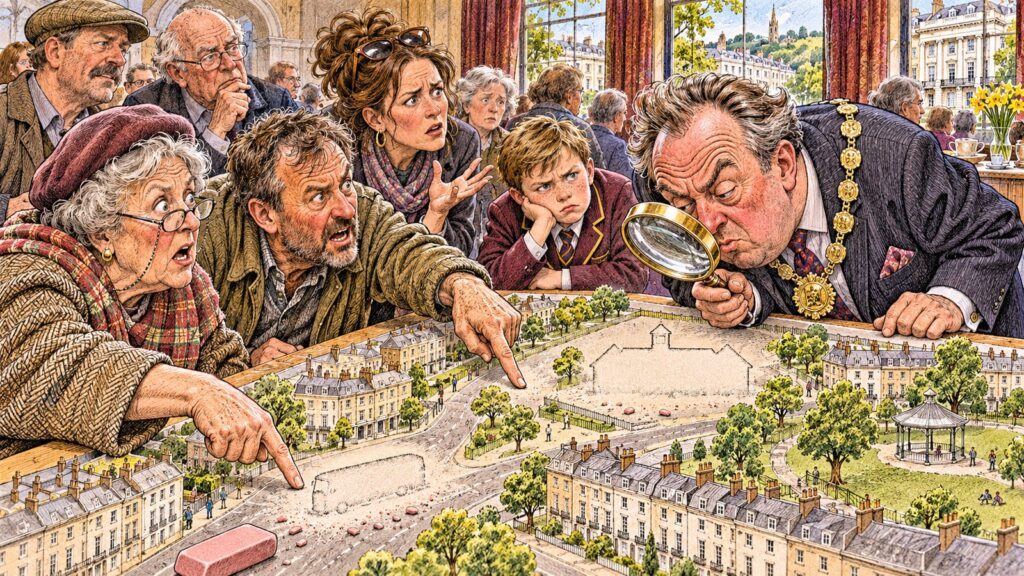
In one corner a volunteer puts a model bus beside a model house. Another official moves it away because the bus route has yet to be confirmed. The first volunteer says this has given the model a striking resemblance to the real estate.
A chance to object to the future
The three councils’ Strategic and Local Plan information gives residents the papers behind the wider proposal. Someone concerned about a particular site can say precisely which part matters, point to local evidence and explain what changes they think would help. That takes more time than adding an angry face to a neighbourhood thread. It can also be read by a person who has never met your neighbours.
A parent marks up the location of a dangerous crossing. A shopkeeper points to a lane where delivery vans already need to reverse. For several minutes the meeting becomes productive. An officer credits the supportive acoustics of the hall and moves to a second slide.
At closing time the woman with the pram asks whether the scale house can be taken home. The official says it is needed for the next session. The baby is asleep. She has spent the entire consultation behaving exactly as a first-time buyer is expected to behave, which is to dream about a home while somebody uses it for a demonstration.
Disclaimer. The Prat’s model home includes a bus that can be moved by hand.

Harriet Collins is a high-output satirical journalist with a confident editorial voice. Her work demonstrates strong command of tone, pacing, and social commentary, shaped by London’s media and comedy influences.
Authority is built through volume and reader engagement, while expertise lies in blending research with humour. Trustworthiness is supported by clear labelling and responsible satire.