
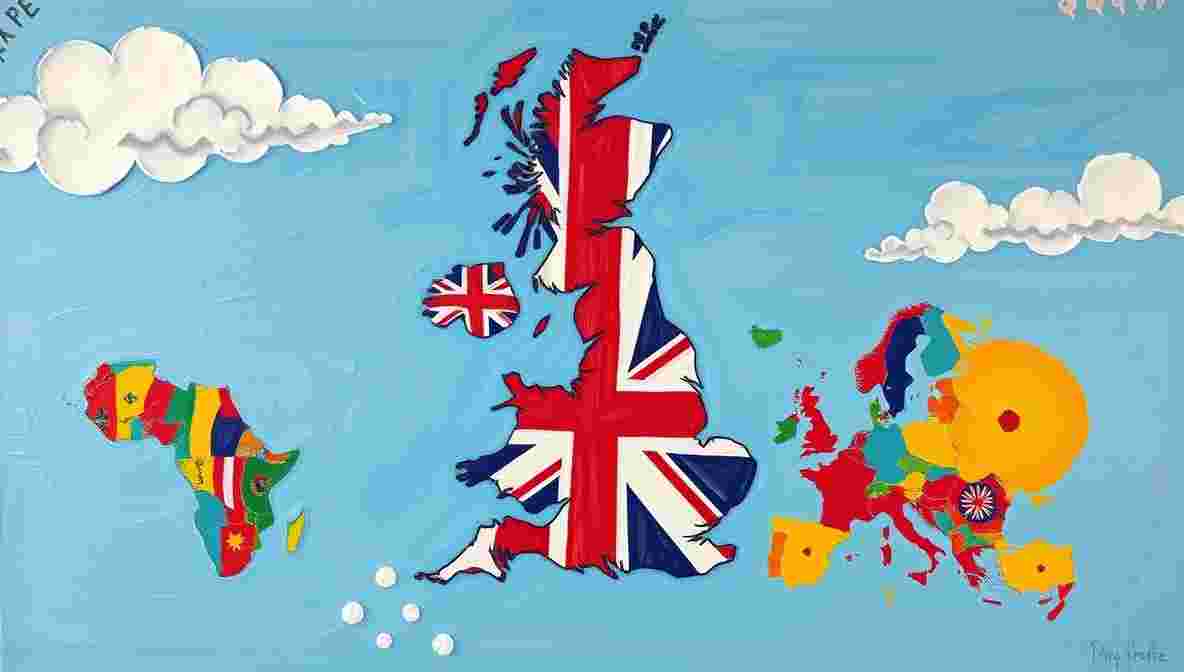
World Economies Enter Bold New Era of Pretending Debt Is a Personality
World Economies Declare Everything Fine, Footnote Lists 47 Reasons It Is Not
Five Humorous Observations on the World Economies and the State of the Planet’s Finances — Where the Numbers Are Real and the Optimism Is Not
- Debt used to be a problem. Now it is an identity, like being a foodie or owning a sad air fryer.
- Economists can describe total disaster in such calm language that people hear “market adjustment” and think their sofa is being delivered.
- Inflation has become the only thing in public life that still believes in growth.
- Every nation claims its GDP is strong right up until somebody asks what, exactly, anyone still makes.
- The global economy now resembles a wedding cake carried by six interns, one caffeinated accountant, and a man whispering, “Don’t look down.”
Economists Confirm: Global Recession Is Just Growth Wearing a Trench Coat
World Economies Declare Central Banks Heroes, Central Banks Order Second Pudding
The world economy entered a bold new phase this week after leading economists agreed that debt is no longer a burden, a warning sign, or a mathematical inconvenience, but “part of who we are now.” The announcement came at the Global Fiscal Resilience and Positive Messaging Forum, a summit attended by finance ministers, central bankers, consultants, and at least one billionaire who still says “disruption” as if it were a prayer.
According to the summit’s opening declaration, recession should no longer be described in pessimistic or judgmental terms. Instead, officials are urging the public to understand it as “growth wearing a trench coat and trying something new.” This subtle reframing, they say, will allow citizens to experience falling consumption, layoffs, and rising prices not as economic pain, but as a sophisticated national mood.
Professor Clive Pettifog, Senior Fellow at the Institute for Advanced Financial Euphemism, told delegates that the public simply needs better language. “People hear the word recession and panic,” he said, adjusting spectacles so expensive they had their own lending rate. “But if you tell them the economy is pausing to rediscover itself, suddenly the whole thing sounds like a wellness retreat with fewer jobs.”
His claim appears to be supported by a recent survey conducted by the Centre for Public Confusion, which found that 63 percent of respondents were more comfortable with “temporary realignment” than “everything costs more and your nephew was laid off.” Another 21 percent said they no longer know what any economic term means, but assumed somebody in Geneva had a chart for it.
For context, this is not entirely satire. The IMF reports that global debt remains above 235 percent of world GDP, with US government debt alone surging to 121 percent of GDP. The summit language is fictional. The debt mountain is not.
Planet’s Financial Leaders Promise Stability, Immediately Set Fire to the Spreadsheet
World Economies Declare Recession Over, Ask Public to Stop Noticing Things
The summit got off to a promising start when global leaders gathered around a giant digital dashboard labelled STABILITY OUTLOOK 2026, only to watch it burst into metaphorical flames after a routine update from bond markets. Witnesses said the room fell silent except for the dry cough of a deputy minister from Belgium and the unmistakable clicking sound of three dozen advisers updating their LinkedIn biographies.
The fire, officials clarified, was symbolic, though not entirely unrelated to events. One leaked internal memo described the global financial position as “fragile but narratively robust.” Another said several major economies are now functioning on a combination of rollover debt, optimistic forecasting, and the sort of facial expression one uses while opening a utility bill.
An eyewitness waitress at the summit hotel said she knew something was wrong when the central bankers began eating dessert before the keynote speech. “You can always tell when powerful people are frightened,” she said. “They start saying things like ‘headwinds’ and ordering two puddings.”
For their part, world leaders remained calm. A joint statement assured the public that fiscal systems remain “dynamic, adaptive, and fully committed to the appearance of continuity.” Moments later, one delegate from a G7 nation reportedly asked whether national debt could be reclassified as “historic enthusiasm.”
The real numbers are, as usual, more alarming than the language used to describe them. According to the Institute of International Finance, the global debt stock surged by over $12 trillion in the first three quarters of 2024 to a record high of nearly $323 trillion — a figure so large it had to be read twice by everyone in the room, including the waitress who ordered pudding.
World Economies Declare Inflation Mostly a Vibe — Prices Continue Ascending Anyway
On the second day of the conference, the International Pricing Council unveiled its most ambitious theory yet: inflation is not entirely caused by supply shocks, monetary expansion, labour costs, commodity pressure, geopolitical risk, rent extraction, or corporate pricing strategies. It is also, they said, “a vibe.” The room nodded gravely, as if this were not the exact sentence that should have ended modern economics.
Under the new framework, higher prices are best understood as a shared emotional experience between consumers and markets. Bread is not more expensive because of inputs, transport, speculation, and policy distortion. Bread is more expensive because the loaf has boundaries now.
This was welcome news to supermarkets, which immediately announced “emotionally aligned pricing.” A bag of coffee rose by 14 percent before lunch. Olive oil became a luxury fluid. Eggs entered a period of self-discovery. One apple in a major American city was seen carrying itself with the confidence of a minor duke.
Dr. Helena Wren, a behavioural macroeconomist and part-time doom enthusiast, explained the theory with admirable seriousness. “Inflation is partly psychological,” she said. “If people expect prices to rise, businesses raise them. If businesses raise them, people expect them. At some point the economy stops being a machine and becomes a WhatsApp rumour with electricity.”
In rural Texas, plumber and reluctant philosopher Terry Gibbons offered a simpler model. “A bacon sandwich used to cost me four bucks. Now it costs nearly nine and comes with a speech about artisan tomatoes. That’s not a vibe. That’s a mugging with napkins.”
The World Bank’s Global Economic Prospects report confirms that real per capita income growth is projected to average only 2.8 percent in 2026–27, which is insufficient to recover pandemic-era losses or generate adequate job creation — meaning your bacon sandwich problem, Terry, is a peer-reviewed international development concern.
GDP Wars: Nations Compare World Economy Strength Like Men at a Backyard Barbecue
World Economies Declare GDP Strong, Cannot Locate Anything Actually Made
No summit on global economics would be complete without nations measuring themselves against one another using single metrics of questionable emotional value. By mid-afternoon the delegates had migrated into familiar territory: comparing GDP the way middle-aged men at cookouts compare lawnmowers, pickup trucks, or cholesterol medication.
One nation boasted of its nominal output. Another bragged about per-capita resilience. A third waved a slide deck arguing that true strength lies not in total productivity but in “strategic demographic improvisation.” By this point, several smaller nations were pretending to take phone calls.
The atmosphere grew especially tense when a minister from one wealthy country described his economy as “quietly exceptional,” prompting three neighbouring delegations to laugh so hard that one of them had to loosen a ceremonial tie. Soon charts were being exchanged with the quiet menace of Victorian duellists. Growth forecasts were unsheathed. Purchasing-power parity was mentioned in a tone normally reserved for family betrayals.
A public-opinion poll taken outside the summit found that ordinary citizens view GDP with mixed feelings. Thirty-eight percent said they assume it matters because serious people keep bringing it up. Twenty-seven percent said it sounds like a Victorian disease. The remaining respondents asked whether GDP can be used to lower rent, shorten commutes, or prevent a cabbage from costing more than a paperback, and were politely escorted away from the microphone.
What the GDP cheerleaders did not mention: World Bank data on central government debt as a percentage of GDP shows the uncomfortable truth behind the boasting — growth numbers and debt obligations exist in an increasingly uncomfortable marriage, and somebody is sleeping on the conference room couch.
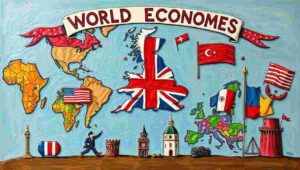
How Central Banks Save Civilization by Moving a Decimal Point With Great Authority
By evening, as confidence thinned and jackets loosened, the world’s central bankers arrived to do what they do best: stand at lecterns, move decimal points, and behave as though civilization itself is attached to their fountain pens. Their message was firm. Rates may rise, fall, pause, or “remain data dependent,” which is central banker for “we will do something later and then explain why it was inevitable.”
One governor, speaking beneath a backdrop of flags and unnecessary confidence, declared that monetary policy remains “an essential anchor in uncertain times.” This would have been more reassuring had his own briefing not included the phrase “consumer distress plateau.”
Still, nobody can deny the enduring theatre of central banking. There is something deeply moving about watching a room full of elites tremble before a quarter-point adjustment, like peasants waiting to learn whether the moon has been taxed.
An anonymous staffer who helped draft the summit communiqué said the real strategy is straightforward. “You raise rates until the public stops buying nice things. Then you lower them before the banks start sweating. After that you say ‘prudence’ about nine times and fly home.”
This method, though inelegant, has reportedly preserved the modern order for decades. Whether it can continue to do so is a question economists discuss in soothing tones while the public quietly cancels streaming subscriptions and asks whether protein bars count as dinner.
For context: The IMF’s World Economic Outlook datamapper tracks debt-to-GDP ratios across advanced and emerging economies — a tool so full of blinking red indicators that using it feels like defusing a bomb while reading a restaurant menu.
Global Economic Collapse Prevention: Blame the Farmers, the Weather, and Human Feelings
As the conference drew toward its climax, delegates reached the most sacred ritual in all of international economics: assigning blame elsewhere. Farmers were discussed with the affectionate exasperation usually reserved for in-laws and customs officials. Weather, naturally, was denounced as erratic and insufficiently market-friendly. Human feelings took the biggest hit of all.
According to one policy paper, consumer sentiment remains a dangerous wildcard in the recovery process. In plain English, this means the public keeps noticing things. They notice shrinking pay packets, rising rents, weaker services, costlier food, slower growth, and the general sensation that every institution now speaks like a management consultant hiding behind a ficus.
So the summit did what summits do. It produced language. Glorious, billowing, climate-controlled language. There would be resilience initiatives, adaptive frameworks, coordinated dialogues, cross-sector alignment, and a bold roadmap for restoring trust through enhanced transparency and a downloadable PDF nobody will ever open.
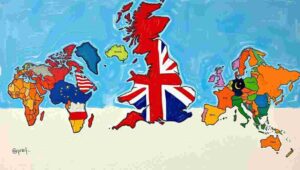
Meanwhile, a wheat farmer from Kansas, asked for comment, stared into the middle distance for five full seconds before saying, “If they blame me for butter again, I’m coming to Washington with a tractor and a very educational attitude.”
The farmer has a point. World Bank Open Data makes it painfully clear that agricultural input costs, commodity volatility, and food inflation remain deeply structural, not vibes-based — no matter how many wellness metaphors the policy paper uses in Section 4(b).
The Debt Personality Test: Is Your National Economy Moody, Persistent, or Just Overextended?
World Economies Declare Inflation a Lifestyle Choice and Raise Prices Accordingly
The summit’s unofficial highlight came not in a session but in a hallway conversation between three economists, a trade attaché, and a man from the hotel’s IT department who had come to fix the WiFi and stayed for the macroeconomics.
The question on the table — or rather the hallway carpet — was this: if debt is indeed a personality, what kind of personality is it?
The consensus that emerged was troubling but accurate. Debt, as a personality, is:
- Moody — It shows up fine and then suddenly causes a crisis at a dinner party called a bond yield spike.
- Persistent — You cannot ghost it. It emails. It calls. It issues sovereign downgrades.
- Overextended — It has committed to more engagements than any reasonable entity could honor. Much like a politician who has promised both tax cuts and more services to everyone simultaneously.
- Somehow invited to everything — Defense budgets, infrastructure plans, pension promises, stimulus packages. Debt shows up even when nobody RSVPs for it.
- Optimistic to a fault — It keeps rolling over. Every maturity date is met with a fresh issuance, a new repayment schedule, and the confident whisper of “we’ll figure it out in the next administration.”
The IT man, who had now given up fixing the WiFi entirely, said he found the whole thing relatable. “I’ve got four credit cards and a car payment and I keep saying things are fine,” he said. “I didn’t realise I was running a G7 economy.”
He was not wrong. The IMF’s 2025 Global Debt Monitor shows that while private debt has declined in some advanced economies, government borrowing in those same nations has risen to nearly 110 percent of GDP — meaning the public sector has quietly taken on the debt the private sector put down, like picking up a tab someone else left on the bar.
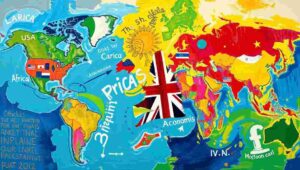
World Economy Warning Signs: Experts Say It’s All Held Together by Coffee, Denial, and One Shipping Lane
By the closing session, even the most polished delegates looked slightly haunted. The summit’s final report concluded that the global economy remains fundamentally sound, provided nothing unusual happens. This reassurance was undercut by a footnote listing 47 unusual things currently happening.
Experts now warn that the entire arrangement is being held together by coffee, denial, and one shipping lane. The shipping lane in question was not named, perhaps to avoid alarming insurers who are already one bad Tuesday away from speaking exclusively in vowels.
Still, there was optimism. There is always optimism. Markets may wobble, currencies may slump, debt may swell, and half the public may feel as though they are being mugged by nouns, but the guardians of the world economy remain unshaken in their belief that confidence can be summoned by conference.
And perhaps that is the true genius of modern economics. It is not the science of money, labour, and production. It is the art of looking at a smoking spreadsheet, a restless bond market, a weary public, and a mountain of debt, then standing up in a clean suit and saying, with immense dignity, “We see reasons for cautious encouragement.”
The public, for its part, has begun to suspect that debt is indeed a personality. It is moody, persistent, overstretched, impossible to ignore, and somehow invited to everything.
What nobody at the summit said — but what the IMF data makes quietly clear — is that the global fiscal deficit is averaging around 5 percent of GDP, driven by pandemic legacy costs, rising interest payments, and structural spending that no re-labelling exercise can dissolve. You can call a deficit a “positive momentum pause” but the bond market reads English.
What the Funny People Are Saying About World Economies in 2026
World Economies Declare Debt the Official Currency of Optimism
“They keep calling it a correction. If my wallet gets any more corrected, it’ll qualify as a monastery.” — Jerry Seinfeld, observing the euphemism machine
“Inflation is a vibe? Great. My landlord must be a disc jockey.” — Amy Schumer, on emotionally aligned rent increases
“Every economy says it’s resilient right up until somebody asks the price of cheese.” — Ron White, from a grocery store parking lot
“The national debt is like a group project. Everyone contributed to it, nobody wants to deal with it, and somehow the same three countries are going to end up doing all the work.” — Trevor Noah, at a summit he was not invited to
“I like that they call it ‘quantitative easing.’ What they mean is ‘we printed money and hoped you were busy.'” — Bill Burr, data-dependent as always
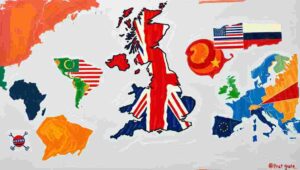
SEO Summary: Key Facts About World Economies and Global Debt in 2026
For readers who prefer their existential dread in bullet form:
- Global debt stands above 235 percent of world GDP, per the IMF.
- US government debt has reached 121 percent of GDP — crossing what analysts call the psychological danger threshold.
- Global debt stock hit a record $323 trillion as of late 2024, per the Institute of International Finance.
- World economic growth is projected at a modest 2.8 percent per capita for 2026–27, insufficient to recover pandemic-era losses.
- Advanced economy governments now carry debt averaging close to 110 percent of GDP.
- Global fiscal deficit averages around 5 percent of GDP annually — and climbing.
- Government debt levels are projected to climb more than a third by 2028, nearing $130 trillion.
None of this is vibes. All of it can be verified. Which is, arguably, funnier.
This satirical report is entirely a human collaboration between two sentient beings: the world’s oldest tenured professor and a philosophy major turned dairy farmer. Any resemblance to actual summits, actual debt, or actual men in dark suits rebranding catastrophe as confidence is purely evidence-based and spiritually accurate. Auf Wiedersehen, amigo!

Carys Evans is a prolific satirical journalist and comedy writer with a strong track record of published work. Her humour is analytical, socially aware, and shaped by both academic insight and London’s vibrant creative networks. Carys often tackles media narratives, cultural trends, and institutional quirks with sharp wit and structured argument.
Her authority is reinforced through volume, consistency, and reader engagement, while her expertise lies in combining research with accessible humour. Trustworthiness is demonstrated by clear labelling of satire and an ethical approach that values accuracy and context.
Carys’s work supports EEAT compliance by offering informed satire that entertains while respecting readers’ trust.

The layer of specific knowledge could only come from working in dysfunction or studying it obsessively. Both indicate damage.
The London Prat’s satirical journalism uses humor to critique power, expose hypocrisy, and hold institutions accountable, which is a fancy way of saying “we call out the nonsense.”
My mate’s a councillor. Not showing him this. He’s got enough stress.