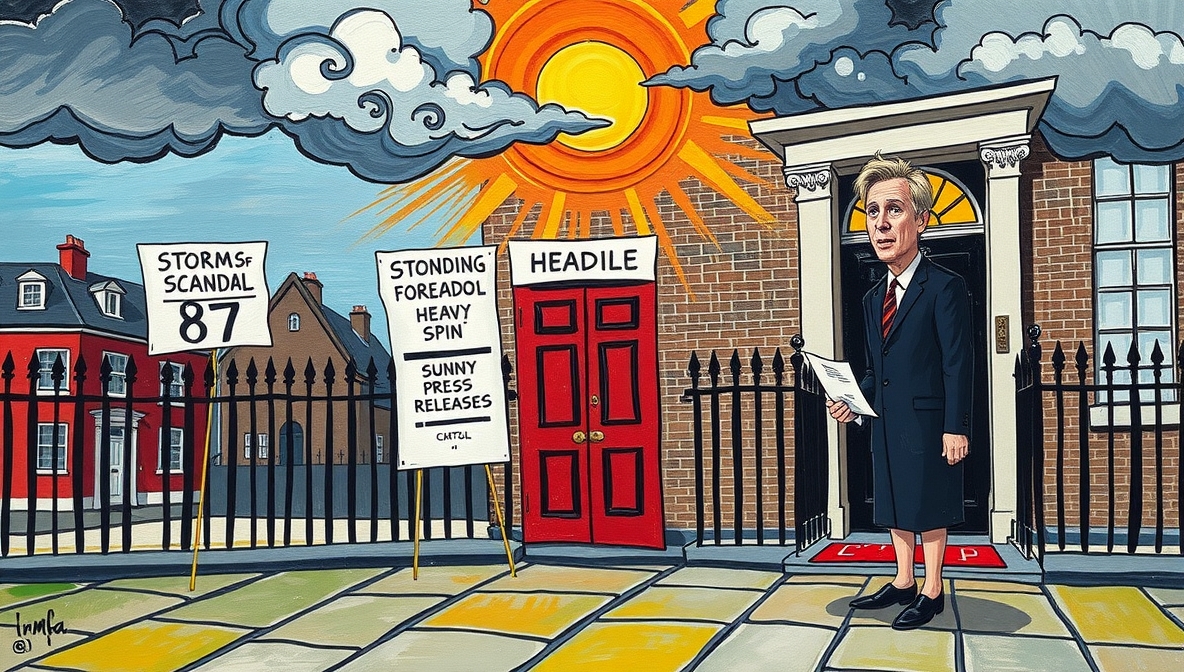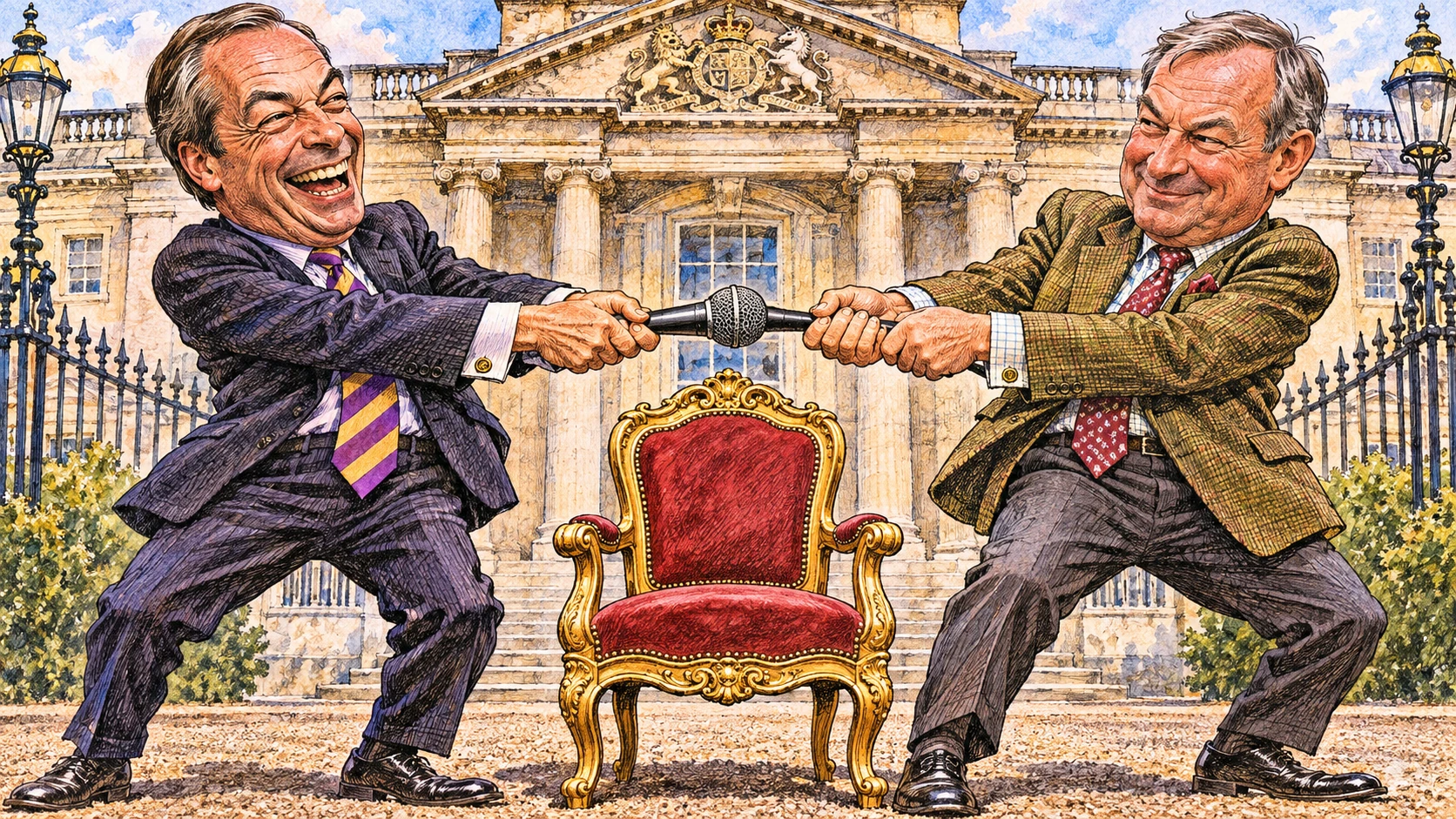
Reform UK pact speculation has reached the Prat’s alternative negotiating chamber, where two anti-establishment parties are attempting to establish which one is more convincingly outside it. The chamber has one door, one microphone and a chair nobody will admit wanting until somebody else sits down.
Richard Tice denied doing a deal with Rupert Lowe in Sunday’s coverage. No agreed pact is being reported here; our meeting concerns the less tractable problem of political furniture.
Reform UK pact arithmetic encounters the ego
The electoral consultant began with a simple diagram showing that two competing candidates might divide a pool of voters. The diagram was accepted until its arrows appeared to give one candidate a slightly larger arrowhead.
“We are united in rejecting the old parties,” said a delegate in our comic exercise. “We now need to establish whether the new party beside us has become an old party by arriving ten minutes earlier.” A procedural motion proposed measuring outsider status from the car park.
One team offered joint campaigning. The other asked whose face would be closest to the camera. A neutral photographer suggested a wide lens and was accused of diluting the message.
The anti-establishment seating plan
The first draft seating arrangement placed everyone at the same table. This was rejected as a stitch-up. A second put them at separate tables, which critics said proved they could not work together. The third removed the tables and became an expensive standing reception.
Our wholly unscientific survey of a single microphone found strong resistance to simultaneous use. The microphone did not express a political preference. It merely squealed when pulled in opposite directions, demonstrating more consistent principles than most coalition agreements.
Voters visiting the exercise asked practical questions about council services, migration policy and taxes. Organisers thanked them for providing a useful shared background against which to continue discussing the candidate list.
Unity requires an individually branded announcement
An adviser proposed that both sides could remain independent while avoiding unnecessary electoral collisions. This was compared to two drivers using the same narrow lane. Each driver accepted the analogy, provided the other reversed first.
The negotiations then reached their hardest clause: who would announce that neither side had compromised? A joint announcement was ruled out because it sounded too much like a deal. Two separate announcements were considered, but only if both could be delivered first.
Political cooperation can be sensible, and competition can give voters meaningful choices. The joke is the ease with which strategic arithmetic becomes a dispute about whose rebellion gets the larger lectern. A voter can understand both a policy difference and a bruised ego. Only one usually requires a forty-minute explanation.
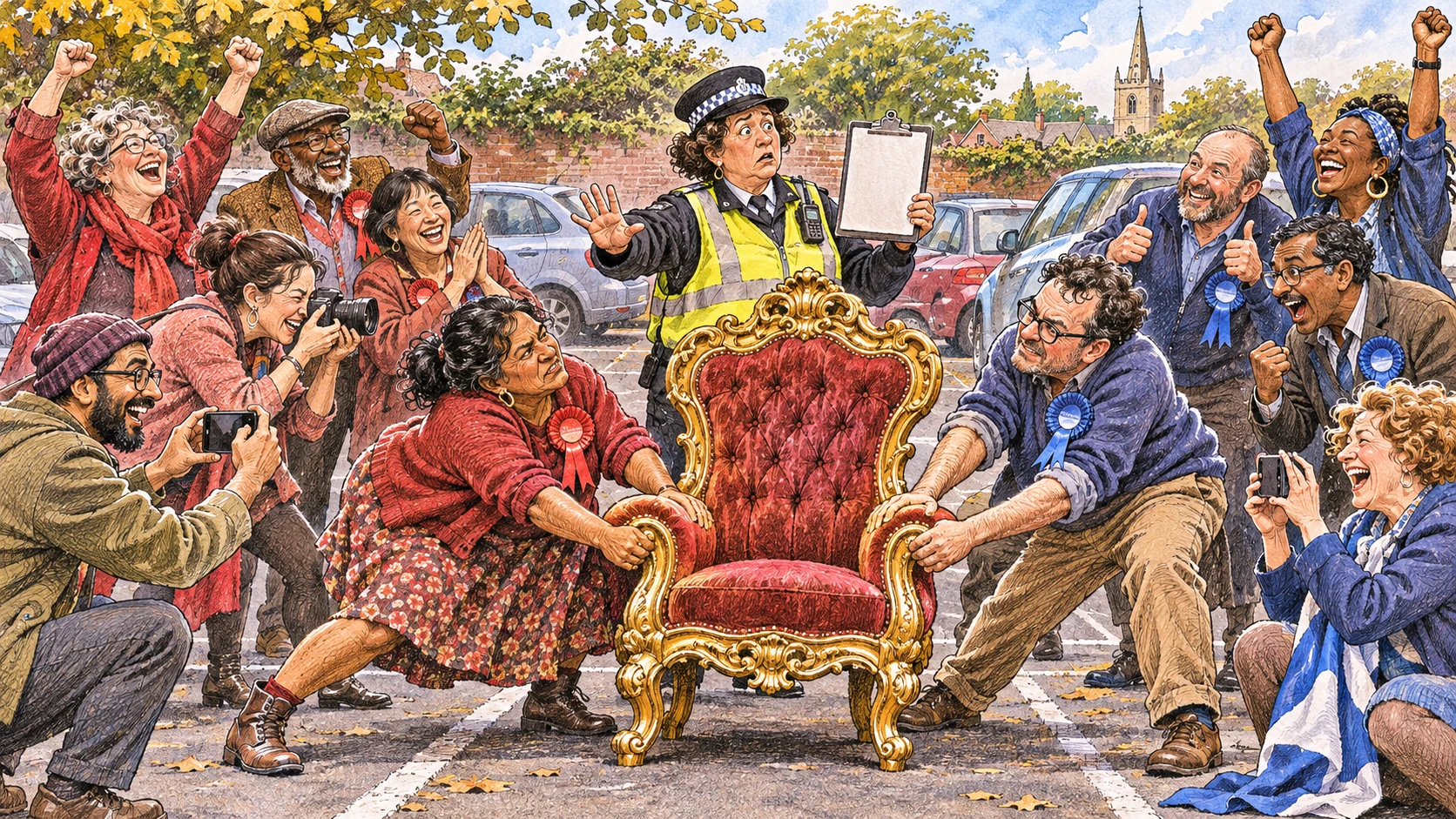
By late afternoon, the outsider chair had been carried into the street so nobody could accuse its occupant of entering the establishment. This attracted a parking enforcement officer, who asked whether the chair had a permit.
For the first time, the delegates found complete agreement. The permit system was absurd. Both volunteered to lead the campaign against it. Each then requested an exclusive photograph with the chair.
Satirical disclaimer: the chamber, furniture talks and microphone poll are comic constructions. Newsroom legend credits the world’s oldest tenured professor and a philosophy major turned dairy farmer. They are currently negotiating which one gets the byline’s larger comma.