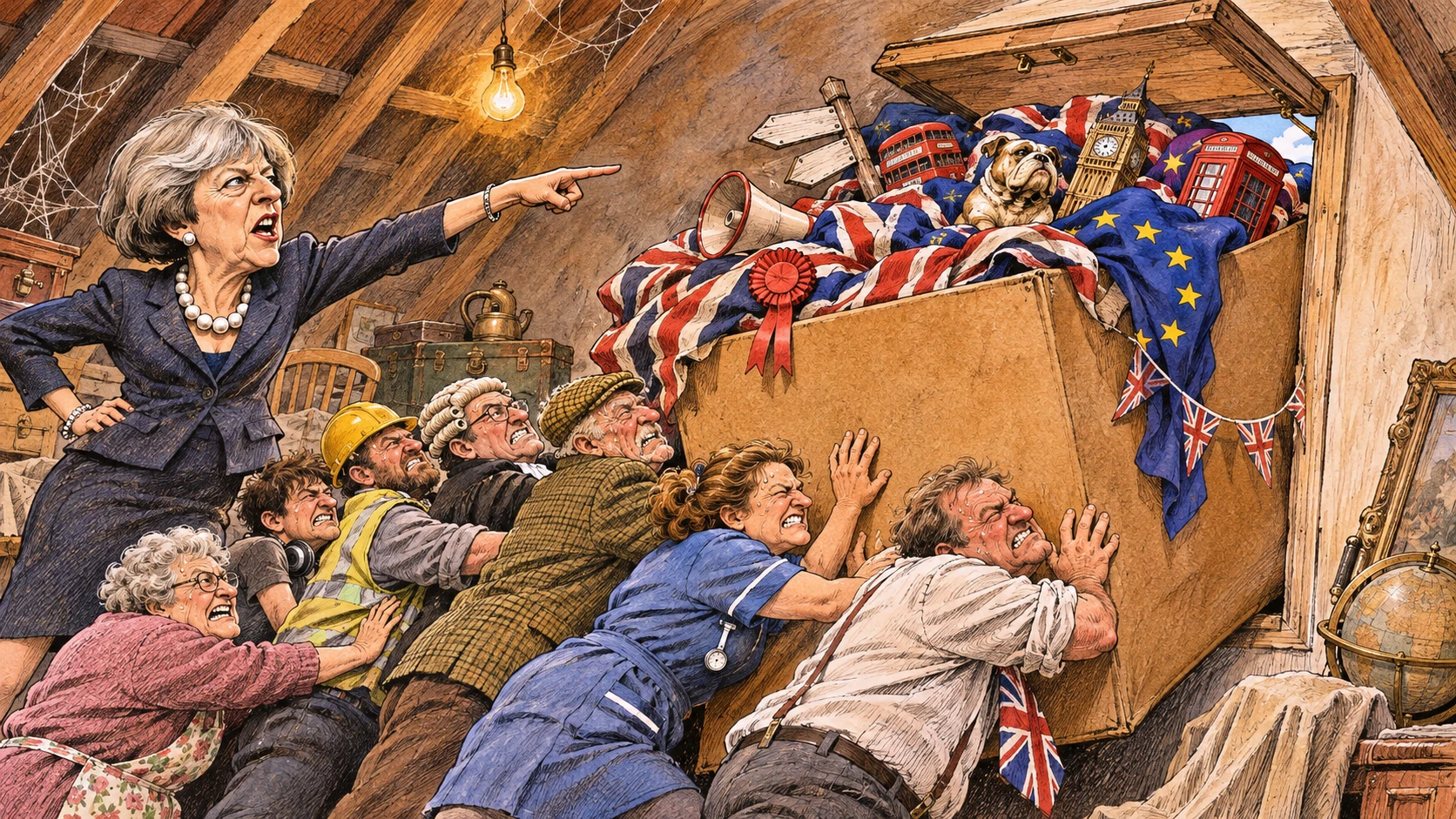
Theresa May Brexit advice has prompted Britain to attempt moving on, an ambitious domestic task involving a national attic, several million unresolved feelings and a box too large to fit through the hatch. Nobody agrees whether the box should remain open, closed or subject to a meaningful vote.
May urged Burnham to move on from Brexit, according to Sunday’s political coverage. The Prat has arranged a practical demonstration of how that might work.
Theresa May Brexit advice meets the removal men
The first removal company withdrew after learning the nation could not specify its destination. A second offered a transition period. A third said it could definitely move the argument, but only into the neighbouring room, where everybody would still be able to hear it.
At the packing session, former campaigners discovered that every item had sentimental value. One man had kept a sovereignty mug. Another had framed a customs diagram. Someone produced a leaflet that was supposed to settle everything and immediately started a fight about the printing date.
“Moving on is very simple,” explained our professional grievance organiser. “You acknowledge the past, accept the present and then explain why the other side has failed to do either.” He charged by the unfinished sentence.
A meaningful vote on changing the subject
The nation’s focus group was asked to discuss gardening. Within ninety seconds a participant had compared a border fence to a trading arrangement. A second accused the fence of undermining democratic consent. The gardener left with his invoice unpaid and his rose bed politically annexed.
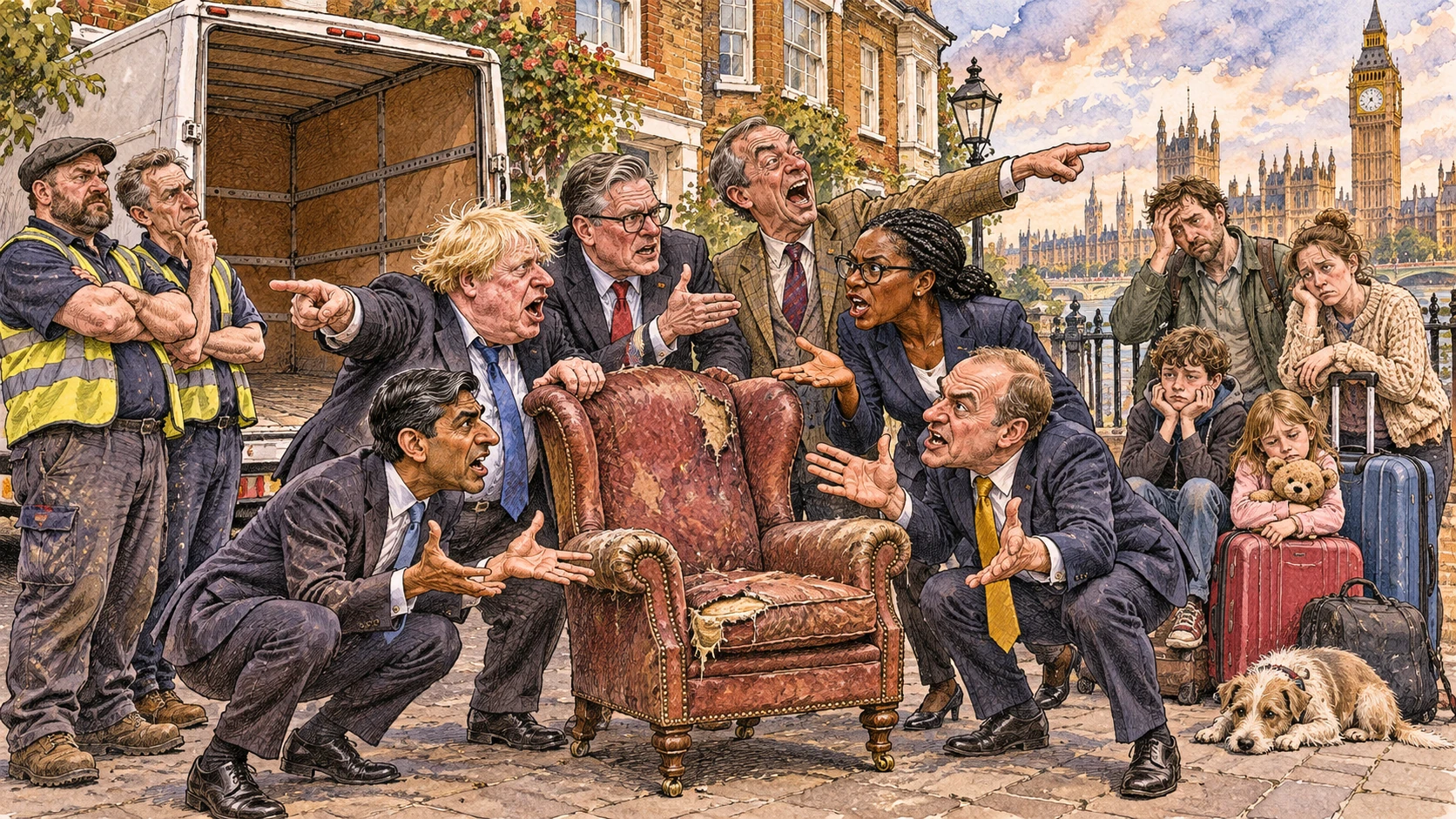
An entirely unscientific poll of the removal crew found that everyone supported moving on, provided somebody first admitted exactly who had been right. The poll was suspended after the van driver asked whether being right included loading the van.
May’s intervention has the atmosphere of a former wedding planner advising a divorced couple to stop mentioning the seating arrangement. Britain appreciates the advice. Britain would also like to know why the seating plan is still on the kitchen table and occasionally appears on television.
The future waits for the archive to finish speaking
Burnham’s new EU arrangements provide a fresh occasion for the old quarrel to put on a clean shirt. Supporters and opponents have actual arguments about trade, regulation and democratic control. Unfortunately, those arguments have to queue behind several slogans that already know where the microphones are.
Our practical definition of moving on is doing the next useful thing without requiring everyone to enjoy the previous thing. This has caused alarm among people whose entire professional identity consists of explaining why the previous thing remains the only thing.
A mediator proposed that the country keep one ceremonial Brexit argument every year, like a village fete, and use the other days for decisions. Organisers immediately disagreed about the date, the flags and whether the cake stall would accept European butter.
By evening, the box had finally reached the attic. Britain stood beneath it, relieved. Then somebody asked whether putting it there meant accepting the result or concealing the consequences.
The ladder has been recalled. The removal men have requested hazard pay. The future has left a card saying it called while everyone was upstairs.
Satirical disclaimer: the attic, focus group and grievance organiser are comic devices. Newsroom legend credits two sentient collaborators: the world’s oldest tenured professor and a philosophy major turned dairy farmer. Both insist the other packed the ladder.

Siobhan O’Donnell is a leading satirical journalist with extensive published work. Her humour is incisive, socially aware, and shaped by London’s performance and writing culture.
Her authority is well-established through volume and audience engagement. Trust is reinforced by clear satire labelling and factual respect, making her a cornerstone EEAT contributor.