LONDON — The London Prat
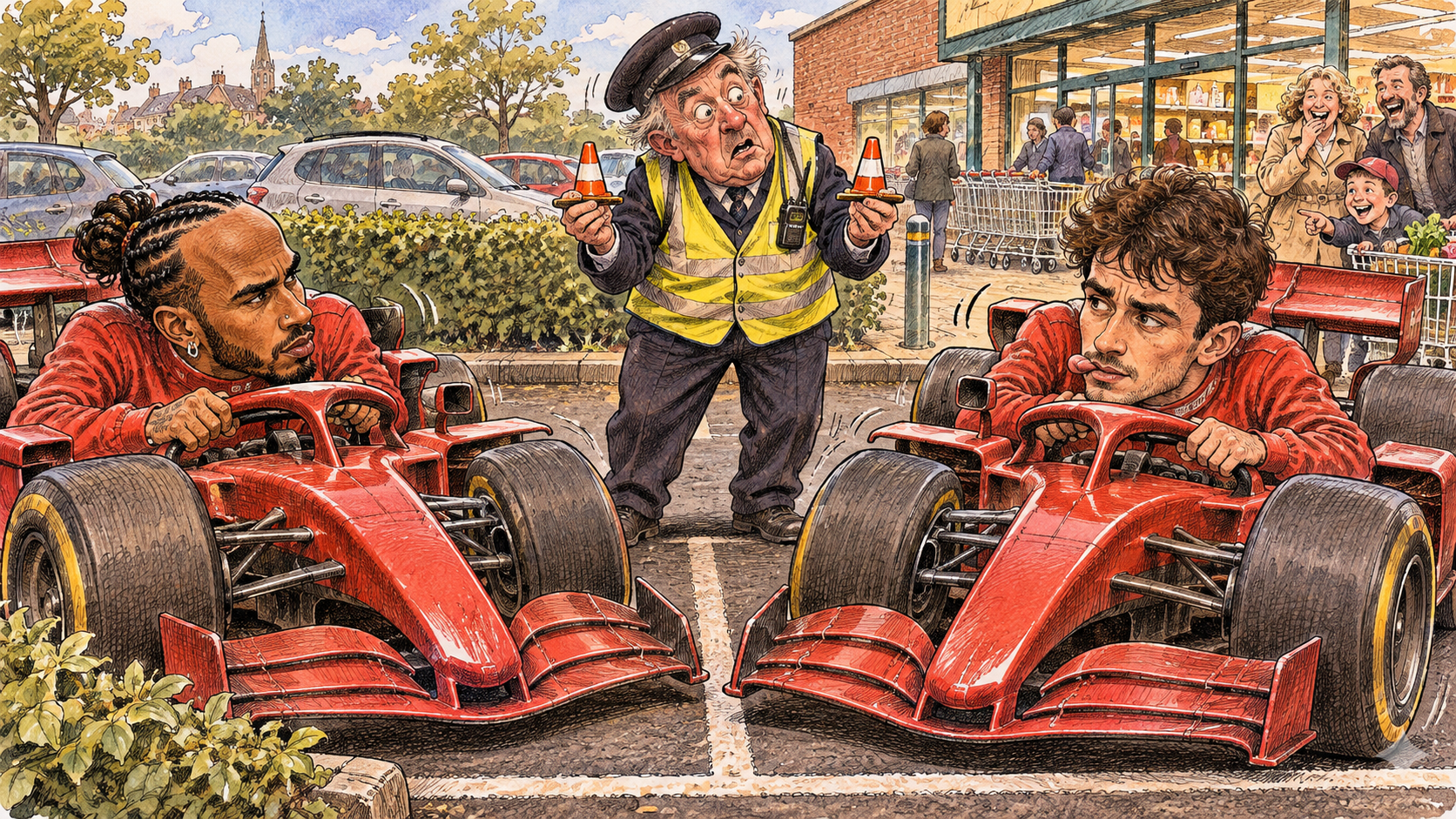
The Hamilton Leclerc collision has prompted Ferrari to consider a radical technical upgrade: giving its two drivers access to separate pieces of road.
Engineers believe the innovation could preserve expensive bodywork while reducing the number of team meetings conducted through tightly clenched teeth.
Hamilton Leclerc collision prompts a space-allocation review
Sky Sports’ account of the Las Vegas Grand Prix collision reports another collision between Charles Leclerc and Lewis Hamilton at the Las Vegas Grand Prix, with Leclerc penalised after spinning his teammate. Max Verstappen won the race.
The result belongs to the actual race. The parking consultancy now being offered by the Prat belongs to the equally demanding world of British supermarket manoeuvres.
Consultant Trevor Cone said Ferrari had overlooked a basic principle.
“If one vehicle is already in a place, putting another vehicle in exactly that place tends to produce an administrative event.”
He developed the rule during several tense encounters outside a garden centre.
Teamwork requires somebody else to move
Two elite drivers competing for position creates a genuine racing problem. Asking two equally determined people to yield also creates something familiar to anybody who has attempted to pass another trolley in a narrow supermarket aisle.
Both possess a plan. Both consider the plan sensible. Neither plan includes the other person remaining where he is.
Cone’s first intervention was to provide each driver with a small parking bay made from cones.
He refused to say whether either bay was the number-one bay, which he considered a sensible precaution for his own working conditions.
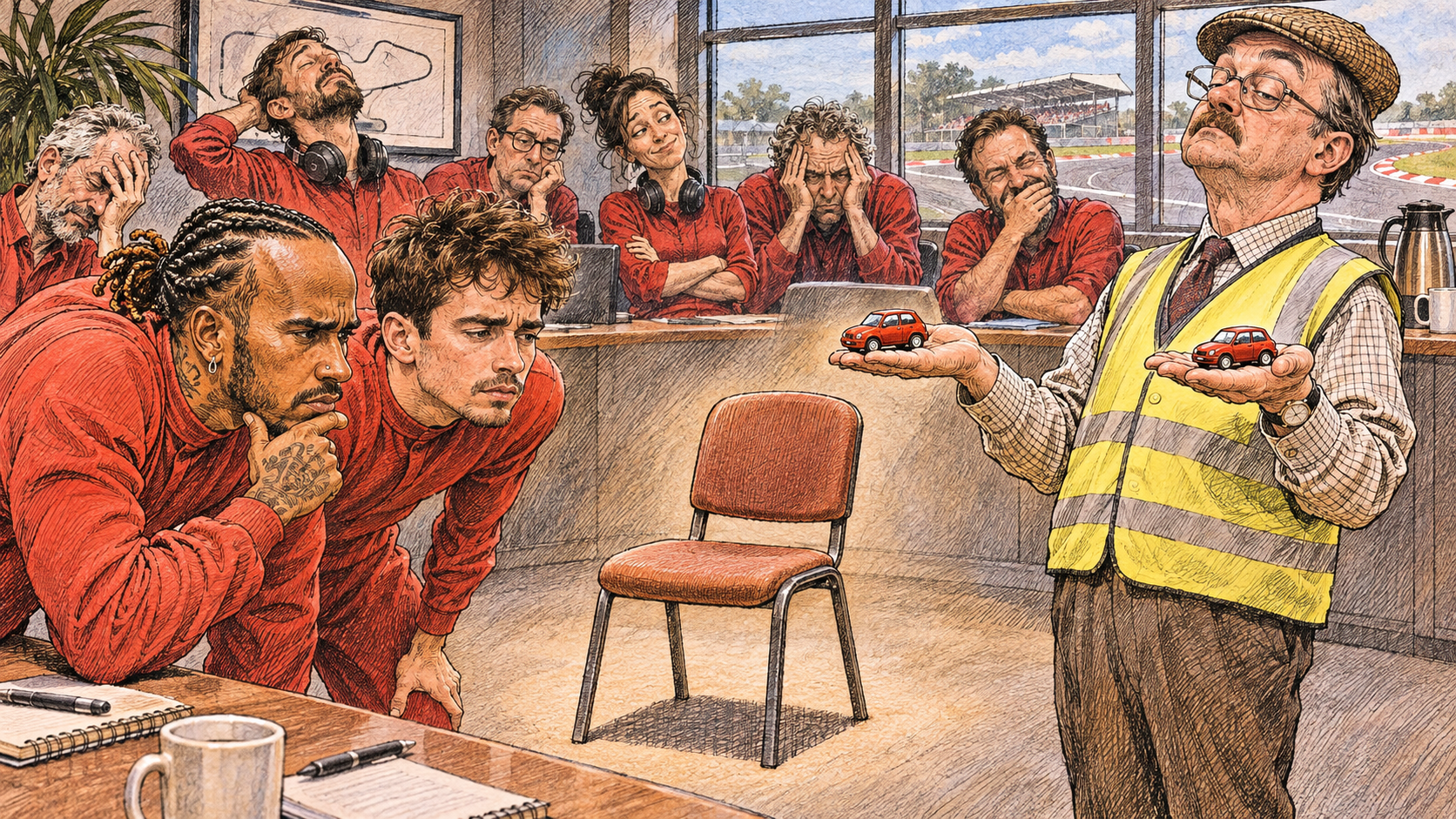
In the Prat’s simulated debrief, an engineer demonstrated that a car could be faster while still failing to pass cleanly through another car.
A management representative asked whether the conclusion held across all possible aerodynamic packages.
Cone said he had observed the same problem with a Vauxhall.
The cheapest upgrade is leaving a little room
Racing incidents require detailed assessment, and fans can argue endlessly about decisions, instructions and responsibility. None of that prevents the universal emotional response of watching teammates become each other’s nearest obstacle.
A supporter said he had bought merchandise to demonstrate loyalty, rather than to fund a season-long experiment in shared panel damage.
Another described Ferrari fandom as a relationship in which everyone has tremendous potential and nobody wishes to discuss the weekend.
Our entirely unscientific living-room poll found unanimous agreement that avoiding a teammate was preferable to explaining the contact afterwards. The poll consisted of one household and should not be used to appoint a sporting director.
Cone proposed a dashboard light showing when another Ferrari was nearby.
An engineer pointed out that the drivers already had mirrors and radios.
The consultant said that made the situation particularly British: the information existed, but agreement about what to do with it remained outstanding.
His final recommendation was a team-building exercise involving two chairs.
The drivers would be asked to sit down without choosing the same one.
Successful completion would unlock the advanced module: taking turns at a doorway while everyone continued to insist they were being perfectly reasonable.
Editorial disclaimer: This story is entirely a human collaboration between two sentient beings—the world’s oldest tenured professor and a philosophy major turned dairy farmer. No parking consultant has been appointed by Ferrari.
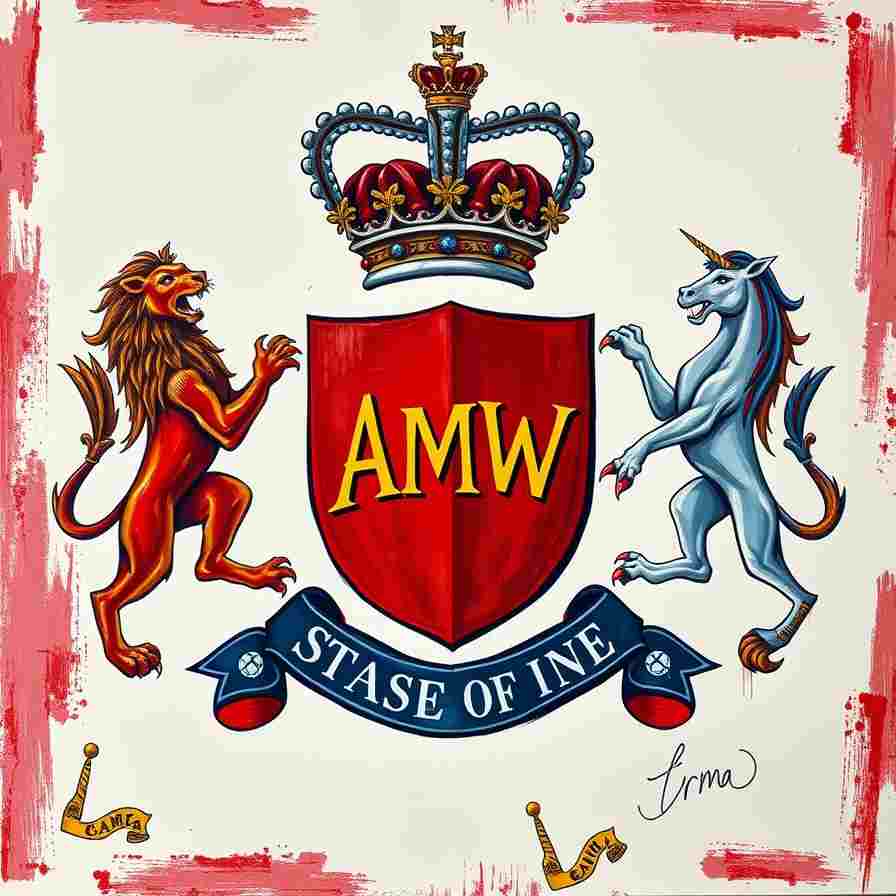
Known publicly only through a carefully maintained pseudonym, this former senior royal insider offers a rare blend of lived experience, institutional knowledge, and hard-earned perspective on life within one of the world’s most scrutinized families. Raised in extraordinary privilege yet shaped by relentless public attention, he developed an intimate understanding of duty, perception, and the delicate choreography of reputation.
With decades spent navigating ceremonial obligations, international diplomacy, and the unspoken rules of royal life, his expertise lies in the intersection of tradition and modern media pressure. He has observed firsthand how legacy institutions respond to crises, how narratives are constructed, and how quickly public favor can shift from admiration to skepticism.
His insights are informed not only by access, but by consequence. Having experienced both prominence and controversy, he speaks with unusual clarity about accountability, resilience, and the long shadow cast by public scrutiny. Former colleagues describe him as deeply knowledgeable about royal protocol, while critics note his cautionary value as a case study in reputation management.
Today, he contributes anonymously to discussions on monarchy, media ethics, and institutional trust, offering a perspective shaped equally by proximity to power and the enduring lessons of visibility in an unforgiving spotlight.