

The Great Streets of London Roleplay Revolution
Britain Finally Discovers a Way to Simulate Real Life Without Actually Going Outside
London has always been famous for theatre. Shakespeare wrote plays. Dickens wrote novels. And now, in the proud tradition of British storytelling, thousands of modern citizens gather online every night to pretend they are a London bus driver arguing with a man dressed as a kebab shop owner inside a video game server.
Civilisation has peaked.
Welcome to London street roleplay — a digital world where players pretend to live ordinary British lives inside a modified version of the video game Grand Theft Auto V. Players become police officers, ambulance workers, shop owners, criminals, or the highly coveted role of “guy shouting at pigeons outside Tesco.” The goal is realism. Participants speak with British accents, follow British laws, and occasionally complain about the weather while waiting for imaginary buses.
This entire ecosystem exists so people can experience the gritty realism of London life without paying £2,400 a month to share a kitchen with six strangers and a philosophical cockroach.
And if that sounds absurd, you clearly haven’t studied British culture.
The Rise of the Digital Londoner: How London Street Role Playing Took Over the Internet
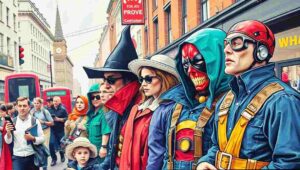
The concept is simple: join a server, create a character, and roleplay everyday life in the UK.
One moment you’re a police officer chasing a suspect through Camden. The next you’re filing paperwork for an imaginary parking violation because a virtual Prius stopped slightly too close to a digital zebra crossing.
Sociologist Dr. Leonard Boffington of the Institute for Extremely Serious Studies explains the appeal.
“Humans crave meaning,” he said while adjusting his monocle. “But since modern life is mostly emails and microwave meals, people now simulate bureaucracy for entertainment.”
Players reportedly spend hours conducting virtual traffic stops, issuing parking fines, and filling out roleplay police reports.
Which is fascinating because Britain already offers these experiences free of charge.
The Authentic UK London Roleplay Experience: What Players Actually Do
The creators of these London roleplay communities promise “authentic UK-based roleplay” with departments such as Metropolitan Police, NHS ambulance services, and fire brigades.
This realism is taken seriously.
Players must:
- Speak in British slang
- Follow traffic laws
- Respect police procedures
- Complain about council taxes
At one point a player reportedly spent three hours attending a simulated community planning meeting about recycling bins.
Historians believe this may be the first time someone voluntarily attended a council meeting.
Roleplaying the Entire British Economy: Jobs Available in the Virtual City
The servers also feature jobs.
You can be:
- Taxi driver
- Shop owner
- Police officer
- Criminal mastermind
- Guy selling vape cartridges behind a bus stop
Economists say the digital economy is actually more stable than the real UK economy.
One anonymous server moderator explained the system.
“If someone robs a bank we just respawn the money. Try doing that with the Bank of England.”
A leaked memo from the British Treasury reportedly describes the server as “the most functional version of Britain currently operating.” Whitehall has denied all knowledge, which means it is almost certainly true.
Britain’s Ancient Tradition of Pretending: London Street Roleplay Through the Ages
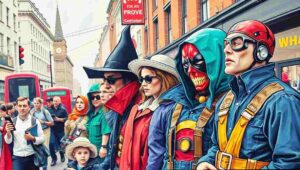
To be fair, roleplay has always been part of British history.
Victorian families once played parlour games called “Streets of London,” where players competed to match street cries and pretend to be London vendors.
In other words, British people have been roleplaying London life since 1880.
The only difference now is Wi-Fi. And considerably worse weather indoors.
Sociological Analysis of Digital Britain: Why London Street Role Playing Is Booming
Psychologists say the popularity of GTA London roleplay servers reflects deeper cultural trends.
People want community.
But community today means talking to strangers through headsets while pretending to arrest each other for virtual shoplifting.
A survey conducted by the Journal of Extremely Suspicious Statistics found:
- 43% of players enjoy pretending to be police officers
- 32% enjoy pretending to be criminals
- 25% just enjoy yelling “Oi mate!” at random people
Researchers concluded the experience is identical to riding the Northern Line at rush hour.
When London Street Roleplay Becomes More Real Than Reality
Things occasionally get intense.
One roleplay incident reportedly escalated into a three-hour hostage negotiation over a digital kebab shop robbery.
Witnesses say a player portraying the police negotiator delivered a powerful speech about justice, community safety, and the importance of parking permits.
The suspect surrendered after realizing he had to complete six pages of roleplay paperwork.
Even criminals have limits.
Meanwhile in Real Britain: Football Hooliganism, the Other National Pastime
While gamers simulate British life online, real Britain continues its most famous physical activity:
Football hooliganism.
Nothing brings people together like sports.
Except possibly hitting each other with folding chairs outside a pub after the match.
British football violence has been studied for decades by sociologists, historians, and one terrified German tourist who wrote a thesis titled:
“Why Are These People Throwing Traffic Cones At Me?”
A Beautiful Game With Slightly Less Beautiful Fists: The History of Terrace Violence
The British invented football.
They also invented the idea that watching football requires three pints of lager and a mild riot.
The tradition goes back generations. Remarkably, records of football violence date to the medieval era, when matches between neighbouring villages were essentially organised land disputes with a pig’s bladder involved. Plus ça change.
Historian Martin Keegan explains.
“Football hooliganism is essentially competitive patriotism expressed through headbutts.”
Supporters of rival teams occasionally meet in what experts call “pre-arranged spontaneous violence.”
This involves:
- shouting
- chanting
- throwing things
- apologising politely afterward
Because even hooligans have manners.
The Science of Football Violence: Tribal Identity, Alcohol and Questionable Impulse Control
Researchers have tried to understand why football inspires such passion.
A social study concluded the main causes of hooliganism are tribal identity mixed with alcohol and poor impulse control.
Which also explains most British weddings.
Fans identify deeply with their clubs.
If their team loses, they experience:
- grief
- anger
- philosophical despair
- the urge to fight someone wearing the wrong scarf
One sociologist described it as “group therapy with beer bottles.” This is not official NHS guidance, but it might as well be.
Britain’s Two Great National Pastimes: Virtual London vs Real London
Modern Britain now offers two parallel realities:
Reality One:
Real London where people argue about housing prices, football scores, and the weather.
Reality Two:
Virtual London where people pretend to argue about housing prices, football scores, and the weather.
The main difference is that in the digital version no one has to pay rent. Or queue for a bus that never arrives. Or make meaningful eye contact with another human being. It is, in many ways, an improvement.
The Philosophical Meaning of London Street Roleplay: What Does It All Mean?
Philosophers believe the rise of street roleplay gaming communities says something profound about modern society.
Humans once dreamed of heroic adventures.
Now we dream of simulating paperwork inside a police station in Croydon.
In medieval times people imagined slaying dragons.
Today they imagine issuing parking tickets.
Civilisation evolves.
Digital Football vs Real Football: Is Hooligan Roleplay the Next Big Thing?
Ironically, football violence has declined dramatically since the 1990s thanks to surveillance, stricter laws, and stadium security. Football-related arrests in the 2022/23 season sat at 2,264 — a far cry from the 6,000-plus per season at the peak of the 1980s.
But the culture remains legendary.
Which raises a strange possibility.
If London roleplay servers are so realistic, perhaps they will eventually include virtual hooliganism modules.
Players could simulate:
- arguing about referees
- chanting at opposing fans
- running dramatically from imaginary police horses
A beta test reportedly crashed when two players tried to roleplay Millwall vs West Ham at closing time.
Final Thoughts from the Experts on London Street Roleplay Culture
Dr. Boffington offered one final insight.
“Roleplay allows people to explore identity, power, and social interaction.”
Then he paused.
“And occasionally to yell ‘YOU’RE UNDER ARREST’ at a 14-year-old pretending to be a taxi driver.”
Which, if you think about it, is basically how Britain works anyway.
Conclusion: Britain Has Always Been a Nation of Performers
So whether you are:
- a digital police officer chasing a pretend criminal
- a football fan chasing a real criminal
- or a confused American wondering why both things exist
Remember this simple truth.
Britain has always been a nation of performers.
Some people act on stage.
Some act on football terraces.
And now, thousands act inside a video game where the greatest challenge is filing a realistic police report about a stolen virtual bicycle.
History will judge this era harshly.
But at least the paperwork will be accurate. 🏙️⚽
Auf Wiedersehen, amigo!
Streets of London Roleplay is a real and growing community of GTA V players using the FiveM multiplayer modification framework to simulate British emergency services, civilian life, and law enforcement. Communities like the Streets of London RPC run whitelisted servers featuring the Metropolitan Police, London Ambulance Service, and British Transport Police, with organised patrols running almost daily. The phenomenon is part of a global explosion of immersive roleplay servers on FiveM, which now hosts over 120,000 concurrent players worldwide. Meanwhile, real-world UK football hooliganism — long dubbed “the English Disease” — peaked in the 1980s with disasters including the 1985 Heysel Stadium tragedy, in which 39 fans died, leading to a five-year ban on English clubs from European competition. Arrests have fallen sharply since, from over 6,000 per season in the late 1980s to around 2,264 in 2022/23, suggesting that for many British men, the path from terrace violence to virtual policing may be shorter than anyone anticipated.













Chelsea Bloom is an emerging comedic writer with a focus on light-hearted satire and observational humour. Influenced by London’s student culture and digital comedy spaces, Chelsea’s work reflects everyday experiences filtered through a quirky, self-aware lens.
Expertise is growing through experimentation and study, while authority comes from authenticity and relatability. Trustworthiness is supported by clear intent and ethical humour choices.
Chelsea’s contributions represent developing talent within an EEAT-compliant framework that values honesty, clarity, and reader trust.


In British comedy, the prat is often the central consciousness—we follow them, we identify with them, and we laugh at them because they are us.
Read this on the Piccadilly Line after delays. The metaphor of unexplained dysfunction worked perfectly throughout.