War Currently Consists of Three Anonymous Sources
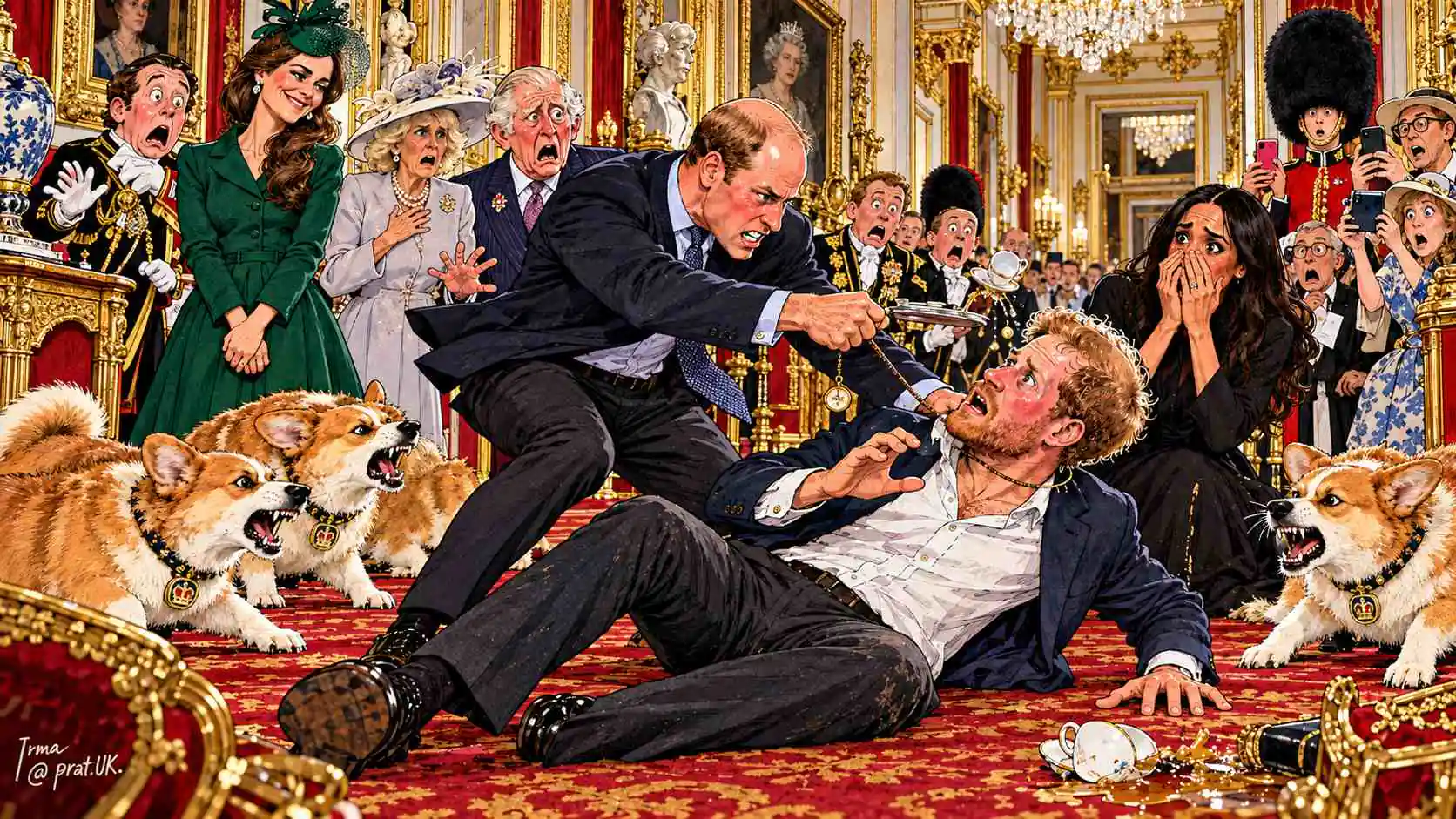
LONDON – Britain’s royal commentary industry has warned that Prince Harry and Meghan Markle’s recent charity visit to Nottingham could provoke an all-out war within the House of Windsor, despite the conflict currently possessing no armies, weapons, territorial objectives or confirmed declaration of hostilities.
The October 21 report warning of an all-out royal war relied on claims from unnamed sources concerning tensions between King Charles, Prince William and the Sussexes. The report suggested that William wants tougher action against Harry and Meghan, while Charles fears escalating the feud.
For Fleet Street, the developments represent an extraordinary opportunity. A family disagreement has now been promoted to military conflict without the inconvenience of anyone firing a shot.
Royal Journalism Discovers War Without Casualties
Traditional warfare requires opposing forces, military objectives, strategic planning and considerable expenditure. Royal warfare requires considerably less. One anonymous insider describes a prince as furious. A second source claims the King is deeply concerned. A third suggests the Duchess of Sussex has crossed an unspecified line. Within hours, a newspaper has sufficient material to declare that the monarchy is fighting for its survival.
No battlefield is necessary. The fighting takes place inside headlines. The weapons consist of adjectives. The principal ammunition is the phrase “palace insiders fear.”
British royal journalists have developed an impressive system under which nobody needs to say anything publicly for newspapers to report that everybody is talking. Silence becomes evidence of tension. A smile becomes evidence of a secret strategy. An unanswered telephone call becomes proof of permanent estrangement. Should two relatives actually speak, the conversation becomes evidence of a dramatic change in the balance of power.
The system has one outstanding commercial advantage. Every possible development produces another article.
Anonymous Sources Become Britain’s Largest Royal Employer
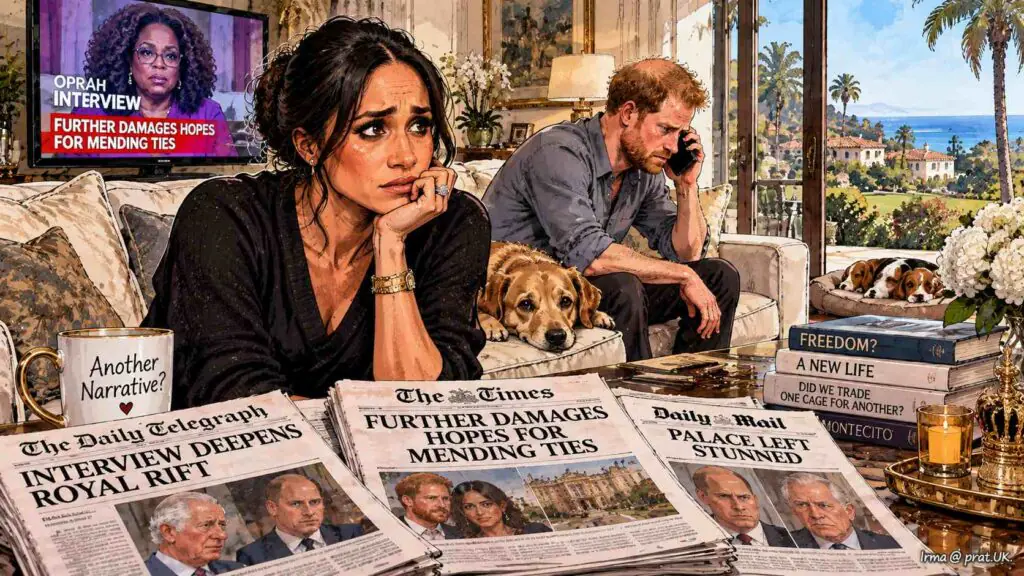
The most successful figure in modern royal journalism is not King Charles, Prince William, Prince Harry or Meghan Markle. It is the anonymous palace insider. This person appears in practically every major royal controversy.
The insider knows what the King thinks. The insider knows why William is angry. The insider understands Meghan’s motives, Harry’s intentions and the private emotional responses of courtiers who have never been identified. Occasionally, the insider knows what somebody was thinking during an event the insider did not attend.
Such expertise is remarkable. Britain’s intelligence agencies could learn something from it. MI6 requires years of training and sophisticated intelligence gathering to understand the plans of hostile foreign governments. A royal correspondent merely requires someone described as “close to the Palace.” This person can apparently interpret the thoughts of six individuals living in different houses.
The source frequently requests anonymity because the information is sensitive. The newspaper grants anonymity because the information is commercially valuable. The public is left to determine whether the source exists inside Buckingham Palace, outside Buckingham Palace or somewhere near a journalist who has a mortgage payment due.
Three Charities Become Participants in Constitutional Warfare
The latest controversy began with Harry and Meghan’s visit to Nottingham on October 15. As documented in Reuters’ coverage of the Sussexes’ return to public engagements, the couple visited community-focused organisations and were greeted by supporters. Their itinerary included youth development and food poverty initiatives.
In most circumstances, this would produce a straightforward story about the work of local charities. The royal press, however, has learned that charity alone is insufficiently dramatic. A community recording studio is a pleasant subject, but a rival royal court attracts considerably more attention. A food bank helps families, but a constitutional crisis helps newspaper circulation. Young people receiving support is encouraging, but an angry prince can sustain six television interviews and a podcast.
The resulting editorial transformation is impressive. A photograph of Harry shaking hands becomes evidence of an attempt to establish alternative royal authority. A photograph of Meghan smiling at volunteers becomes proof of a calculated campaign to undermine the monarchy. A photograph of William attending an entirely separate event can then be positioned alongside the others to suggest that the succession itself is under threat.
Nobody has to meet. Nobody has to argue. The newspaper can assemble the confrontation from photographs taken in different places. It is royal journalism’s answer to renewable energy. The same dispute can be recycled indefinitely.
Fleet Street Faces Financial Catastrophe if Brothers Reconcile
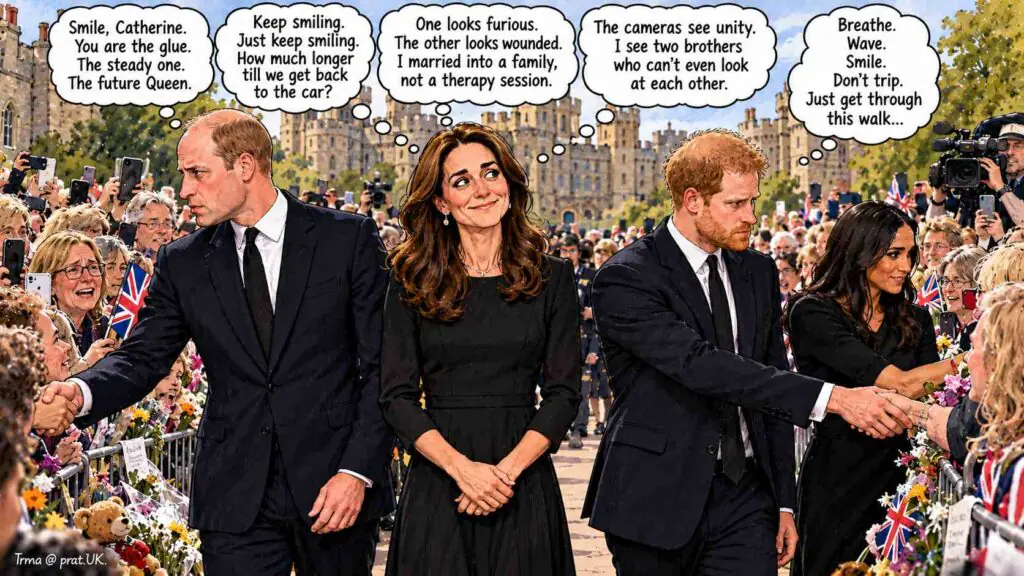
Behind the breathless headlines lies a serious economic concern. What happens if Harry and William make peace? The consequences could be devastating. A successful reconciliation would eliminate years of material from the royal news cycle. Columnists who have built entire careers interpreting the brothers’ facial expressions would suddenly require another occupation. Television experts would be forced to explain ordinary royal engagements.
Publishers would have to postpone books with titles such as The Final Betrayal, The Last Straw, The Breaking Point and The Final Last Straw After the Previous Breaking Point. Royal correspondents could be reassigned to subjects that require evidence. Some might even have to investigate government spending.
This would represent an unprecedented disruption to British journalism. The financial implications are particularly alarming because royal conflict has unusually low production costs. A foreign correspondent reporting a real war needs travel, security arrangements, accommodation, interpreters and reliable contacts. A royal correspondent covering an alleged palace war needs a laptop, a photograph of Windsor Castle and somebody willing to describe another person as furious.
Profit margins are therefore attractive. There are no frontline expenses. There is no ammunition bill. The casualties are usually restricted to reputations and family relationships. And because the conflict has no measurable military objective, there is no reliable method of determining when it has ended.
Royal Experts Warn Peace Could Damage National Interest
The prospect of reconciliation presents an uncomfortable commercial contradiction. Newspapers frequently announce that the brothers should repair their relationship. Then, when the possibility arises, the same publications devote enormous attention to why such a reunion might be disastrous. Peace is desirable as a theoretical objective. As an actual event, it presents problems.
Suppose Charles invites Harry to dinner. A newspaper could report that the King has extended an olive branch. Another could describe the invitation as a humiliating concession. A third might suggest that William has been betrayed. A fourth could claim Meghan masterminded the entire affair. A fifth would obtain an expert who believes the dinner could destroy the monarchy.
By the following morning, a family meal would have become the most consequential diplomatic summit since Yalta. And all because someone passed the potatoes.
Government Urged to Protect the Royal Gossip Industry
The scale of the potential economic damage could eventually require government intervention. A Parliamentary Committee for the Preservation of Unnamed Palace Sources would examine whether Britain possesses sufficient royal disagreements to support its existing media workforce. Newspapers might receive emergency assistance if the brothers exchange Christmas cards.
Tax incentives could be introduced for television programmes featuring the words “bombshell,” “furious” and “secret betrayal.” A Royal Estrangement Preservation Fund could finance further speculation during periods of suspicious family harmony. Should the King hug Harry in public, the Treasury might have to announce a rescue package for unemployed body-language experts.
Britain would finally discover a public expenditure programme that requires people to remain unhappy for the sake of economic growth.
The Greatest Threat to Fleet Street Is a Happy Royal Family
For all the drama, the underlying dispute concerns a father, two sons and disagreements about family relationships and public roles. These are difficult matters. They deserve more care than a perpetual contest to discover which anonymous source can sound most outraged.
Harry and Meghan’s Nottingham visit did not prevent anyone else from helping a charity. It did not remove William from the succession. It did not deprive Charles of his constitutional position. The practical achievement was that several organisations received attention and support. That is not civil war. It is a reasonably ordinary Thursday with unusually famous visitors.
Yet the British tabloid industry has developed a peculiar dependency on royal hostility. The worse the relationship becomes, the more urgent the headlines. The longer the feud continues, the more valuable the commentary. And the closer the family comes to resolving its differences, the greater the danger that somebody will need an entirely new subject.
King Charles may fear an all-out war with his son. Prince William may, according to anonymous reports, want tougher action. Harry and Meghan may simply want to continue their charitable work. But the real anxiety belongs to the newspaper executives contemplating the unthinkable. A father and son might reconcile. Two brothers might eventually speak. The grandchildren might visit their grandfather.
And the next morning, Fleet Street could face the greatest catastrophe in its modern history.
There would be nothing left to be furious about.
At least until somebody noticed what Meghan was wearing.
Five Humorous Observations
- A “source close to the Palace.” Close how? Next door? Across the road? Sitting in a Pret with a flat white and a mortgage? Because that’s where most of them seem to live.
- It’s a war with no army, no weapons and no land. You know what else is like that? My ex-wife’s group chat.
- These guys can tell you what six people in six different houses are thinking. I can’t tell what my wife’s thinking when she’s sitting next to me and has said “I’m fine.”
- The weapons are adjectives. The ammunition is “palace insiders fear.” The casualties are feelings. Honestly, that’s the most British war ever. Nobody dies, someone writes a strongly worded letter, and everyone has a cup of tea.
- A book called The Final Last Straw After the Previous Breaking Point. That’s not a title, that’s a hostage note from a publisher who’s run out of straws.
This war currently consists of one disclaimer and three anonymous sources. The Nottingham charity visits are documented; the reported family disagreements rely on attributed sources rather than confirmed palace announcements, and the battle plans and emergency government measures are comic exaggeration. Readers in doubt should consult how to tell satire from real news.

Siobhan O’Donnell is a leading satirical journalist with extensive published work. Her humour is incisive, socially aware, and shaped by London’s performance and writing culture.
Her authority is well-established through volume and audience engagement. Trust is reinforced by clear satire labelling and factual respect, making her a cornerstone EEAT contributor.