

First Principles Guide to the Iran War: A Completely Scientific Satirical Reconstruction of the Problem
Let us rebuild the current Iran war from first principles. That means stripping the situation down to the most fundamental truths and stacking them back together like geopolitical Lego bricks.
But instead of Downing Street briefings, imagine a row of world leaders bickering outside a motorway services.
Because honestly… that is not far off.
As of Day 11, the United States and Israel have struck more than 5,000 targets inside Iran. Defence Secretary Pete Hegseth announced Tuesday that today would be, quote, “our most intense day of strikes inside Iran yet.” Trump told Republican lawmakers the United States still requires “ultimate victory”—one day after declaring the war “very complete.” Oil prices are up 27 per cent in a single week. Seven American soldiers are dead. And somewhere in Tehran, a new Supreme Leader is being installed because the previous one was killed in the opening salvo on 28 February.
Meanwhile, Keir Starmer has spent a fortnight performing the geopolitical equivalent of standing in a pub doorway, one foot in, one foot out, insisting he is “not really here.”
So: from first principles. Let’s figure out how we all got here.
Fundamental Truth #1: Humans Like Power, Territory, and Being Right
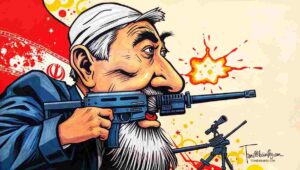
At the most primitive level, international politics is basically:
“This is mine.”
“No it isn’t.”
“Yes it is.”
“Right, let’s buy missiles.”
From cavemen lobbing rocks to modern states lobbing $2 million cruise missiles, the underlying logic is precisely the same.
- Iran wants influence in the Middle East.
- The United States wants stability and allies in the Middle East.
- Israel wants security.
- Oil markets want therapy.
- Keir Starmer wants to make clear he has learned the lessons of Iraq.
Eventually someone asks: “What if diplomacy fails?”
“Then we use the world’s most expensive argument.”
And thus a war is born.
Worth noting: as recently as 25 February, Iranian Foreign Minister Abbas Araghchi declared that a “historic” agreement was “within reach” in Geneva. Three days later, the bombs started falling. The window from “historic opportunity” to “historic rubble” is apparently 72 hours—roughly the same amount of time it took Starmer to decide whether to let America borrow Diego Garcia.
Fundamental Truth #2: Britain’s Role Is to Dither Heroically

When Washington requested use of British bases including RAF Fairford in Gloucestershire and Diego Garcia in the Indian Ocean, the Prime Minister consulted government lawyers, who advised against participation. Starmer then consulted more lawyers. Then a bit more. Then he released a video statement.
Trump, not known for patience, told The Daily Telegraph it had taken “far too much time” and that “this is not Winston Churchill that we’re dealing with.”
Nigel Farage, having demanded Starmer grant the Americans access to British bases, then criticised the Prime Minister for granting the Americans access to British bases, calling him “a follower, not a leader.” Farage is reliably consistent in finding Starmer wrong regardless of what Starmer does. It is, in its own way, a masterpiece.
A YouGov poll found that 58 per cent of Britons oppose letting the US launch air strikes on Iran from British bases. Starmer approved it anyway. The remaining 42 per cent presumably include the RAF, the Foreign Office, and Donald Trump.
Britain’s strategic position, reduced to first principles:
Step 1: Refuse to get involved
Step 2: Get involved
Step 3: Insist it is purely defensive
Step 4: Watch RAF Akrotiri get droned
Step 5: Release a strongly worded statement
Step 6: Repeat
Fundamental Truth #3: Oil Is the World’s Emotional Support Liquid
A huge proportion of the world’s oil flows through the Strait of Hormuz, a narrow shipping lane next to Iran that carries roughly 20 per cent of global oil supply. Iran’s military has confirmed the strait technically remains “open”—while simultaneously threatening to target any American or Israeli vessels that attempt to use it. That is the geopolitical equivalent of a gastropub saying they’re open for business but the landlord will glass you if you order the halloumi.
In one week of war, Brent crude climbed 27 per cent—the largest weekly gain since the COVID-19 pandemic. Shipping lanes are being rerouted. Petrol prices are heading somewhere that will require a second mortgage to fill a Ford Fiesta.
The first-principles economic model looks like this:
Step 1: Country A bombs Country B
Step 2: Oil stops moving
Step 3: Petrol hits £3 a litre
Step 4: Britons blame whoever is prime minister
Step 5: Economists appear on Radio 4
Step 6: Nobody understands the economists, including the economists
Fundamental Truth #4: War Is Just Physics With Flags
At its core, war is surprisingly straightforward. It is Newtonian physics applied to explosives.
Force = Mass × Acceleration
Missile = Metal × Grievance
On 28 February 2026, the US and Israel launched nearly 900 strikes in 12 hours, targeting Iranian missile sites, air defences, military infrastructure, and leadership. Supreme Leader Ali Khamenei was killed in the opening wave. Iran responded with missiles and drones against US allies across the region, including Bahrain—where, as Starmer dutifully noted to Parliament, Iranian strikes “narrowly missed British personnel.”
Shortly after the Prime Minister approved American use of British bases, a drone struck RAF Akrotiri in Cyprus—which is, legally speaking, sovereign British territory—damaging the runway. Two further drones heading for the base were intercepted. The government described the damage as “minimal.” Critics described the government’s response as the same.
The simplified geopolitical equation:
Missiles + Retaliation = More Missiles
Military strategists call this “escalation dynamics.” Everyone else calls it “things getting out of hand.”
Fundamental Truth #5: Every War Has a Spreadsheet
War is not just bombs. It is also PowerPoint. Somewhere in Washington, Tehran, Tel Aviv, and a Cabinet Office COBRA briefing room, analysts are staring at graphs that look like this:
| Chart | What It Means |
|---|---|
| Missile inventory | How many things can still be exploded |
| Oil price curve | How furious motorists will be by Thursday |
| Political approval rating | Whether anyone keeps their job |
| Drone losses | Eleven American MQ-9 Reapers and counting |
| Starmer’s legal opinion count | Rising faster than oil prices |
The US military has now lost 11 MQ-9 Reaper drones during Operation Epic Fury. These drones were designed for counter-terrorism environments with minimal air defences, not for countries with modern missile systems. Deploying Reaper drones against Iran’s air defences is roughly equivalent to sending a mobility scooter to the Le Mans 24 Hours.
Trump announced the war is running “very far ahead of schedule.” Nothing calms people down like hearing a war is running efficiently.
Fundamental Truth #6: Every Side Thinks It Is the Adult in the Room

A fundamental rule of geopolitics: every country believes the other side started it.
America: We acted in self-defence.
Iran: They attacked us without provocation.
Britain: We are merely providing defensive support.
Nigel Farage: Starmer should have done this faster.
Nigel Farage (one hour later): Starmer should not have done this.
Every government also believes it possesses a clever strategy that nobody else has grasped. In the current conflict, examples include:
- “Decapitation strike”
- “Strategic deterrence”
- “Escalation dominance”
- “Specific and limited defensive purpose” (Starmer, repeatedly)
- “Ultimate victory” (Trump, Monday afternoon)
- “The war is very complete” (Trump, Monday morning)
A US National Intelligence Council report found that a large-scale assault was unlikely to topple the Iranian government, and that the opposition taking power was also “unlikely.” The Trump administration called the report “political.” Chatham House called Britain’s legal position a “tightrope.” Kemi Badenoch called it a humiliation. Everyone called it Tuesday.
Fundamental Truth #7: Wars Spread Like Group Chats
Once fighting begins, other nations start joining the thread.
Iran has launched strikes against US allies in Bahrain, Kuwait, Qatar, Saudi Arabia, and the UAE. NATO air defences intercepted an Iranian ballistic missile over Gaziantep in Turkey. France authorised US use of French military bases and was described by Trump as “great.” Spain refused and received tariff threats. Britain eventually agreed to a “specific and limited” arrangement and received a comparison to Churchill—unfavourably.
Three Amazon Web Services data centres in the UAE were struck and damaged. Which means the war has now extended to the cloud. At some point, someone is going to have to explain to their IT department that the server outage was caused by geopolitics.
The situation resembles a family row at Christmas dinner:
- One relative kicks over the table
- Another relative throws roast potatoes
- The gran is shouting
- Someone has droned the house
- Keir is reading out a legal opinion
- Oil traders are quietly buying yachts
Fundamental Truth #8: Everyone Wants Victory Without Consequences
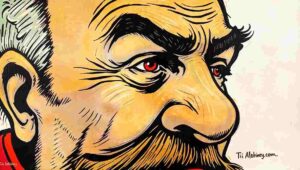
Every government hopes for the same outcome:
We win quickly.
They surrender.
The oil keeps flowing.
Nobody makes a documentary about our mistakes.
We all remember the lessons of Iraq.
Trump has now described the war’s conclusion as coming “very soon,” “pretty quickly,” “not this week,” and requiring “ultimate victory”—all in a single 24-hour period. That is four contradictory timelines before the watershed.
Starmer, for his part, has told Parliament the UK has “learned the lessons of Iraq,” a phrase he has now deployed so frequently that historians will one day record it as Britain’s primary contribution to the conflict.
Unfortunately, wars tend to run on their own timeline, which historians later describe as “a mistake”—usually in a Panorama special.
Fundamental Truth #9: The Global Economy Is Basically a Nervous Cat
Financial markets despise uncertainty. When a major oil route is threatened, the sequence is reliable:
- Investors panic
- Oil spikes
- Economists appear on the Today programme
- Nobody understands the economists
- The economists hold a conference
- The conference is inconclusive
Beyond oil prices, the war has disrupted global travel, halted flights across the Middle East, and forced shipping reroutes away from the Strait of Hormuz and the Red Sea. The humanitarian toll inside Iran has exceeded 1,255 dead and approximately 10,000 injured. A missile struck a girls’ school adjacent to a naval base, killing at least 160 people—many of them children—and Human Rights Watch has called for a war crimes investigation.
Which proves another fundamental truth: wars may start with missiles, but they end with accountants.
And sometimes, the Hague.
The Ultimate First-Principles Explanation
If we compress the entire conflict to its simplest form, the Iran war becomes:
Human nature
+ oil
+ pride
+ military technology
+ one prime minister and a sheaf of legal opinions
= geopolitics
Or, in plain English: people with powerful weapons disagree about things, and Britain anxiously does its bit while insisting it isn’t really doing its bit.
The Satirical Strategic Model: A COBRA-Ready Briefing Chart
| Step | Description |
|---|---|
| 1 | Leaders say war will be quick |
| 2 | Intelligence analysts say war will be complicated |
| 3 | Petrol prices go insane |
| 4 | Everyone becomes a Middle East expert on social media |
| 5 | History professors sigh deeply on Newsnight |
| 6 | Pentagon announces “most intense day of strikes yet” (repeat step 6) |
| 7 | Prime Minister releases a video statement saying he has learned the lessons of Iraq |
Final First-Principles Insight

After stripping the problem down completely, the deepest truth of the Iran war is this:
Civilisations invented satellites, artificial intelligence, nuclear physics, and the internet.
And yet global diplomacy still occasionally comes down to:
“Stop hitting me.”
“You stop hitting me.”
With oil tankers floating nearby like nervous Deliveroo riders—eleven drones already in the scrap heap—and a British Prime Minister standing in a doorway, insisting the whole thing is purely defensive.
Geopolitics right now looks like three blokes arguing over a petrol pump while holding nuclear physics degrees and matching Operation Epic Fury hoodies.
Auf Wiedersehen, amigo!
On 28 February 2026, the United States and Israel launched a coordinated military campaign against Iran, dubbed Operation Epic Fury by the Pentagon, killing Supreme Leader Ali Khamenei and triggering a wider regional conflict now in its eleventh day. The strikes, targeting Iran’s nuclear programme and ballistic missile infrastructure, have resulted in more than 1,255 Iranian deaths, seven American soldiers killed, and oil prices surging 27 per cent in a week. Iran retaliated with drone and missile attacks across the Gulf, striking Saudi Arabia, Kuwait, the UAE, Bahrain, Iraq, and a British base at RAF Akrotiri in Cyprus. The Strait of Hormuz has effectively closed to commercial shipping. British Prime Minister Keir Starmer initially declined to permit US use of British military bases before reversing course, prompting Donald Trump to compare him unfavourably to Winston Churchill. A new Iranian Supreme Leader, Mojtaba Khamenei, son of the slain cleric, has since been named.

Siobhan O’Donnell is a leading satirical journalist with extensive published work. Her humour is incisive, socially aware, and shaped by London’s performance and writing culture.
Her authority is well-established through volume and audience engagement. Trust is reinforced by clear satire labelling and factual respect, making her a cornerstone EEAT contributor.
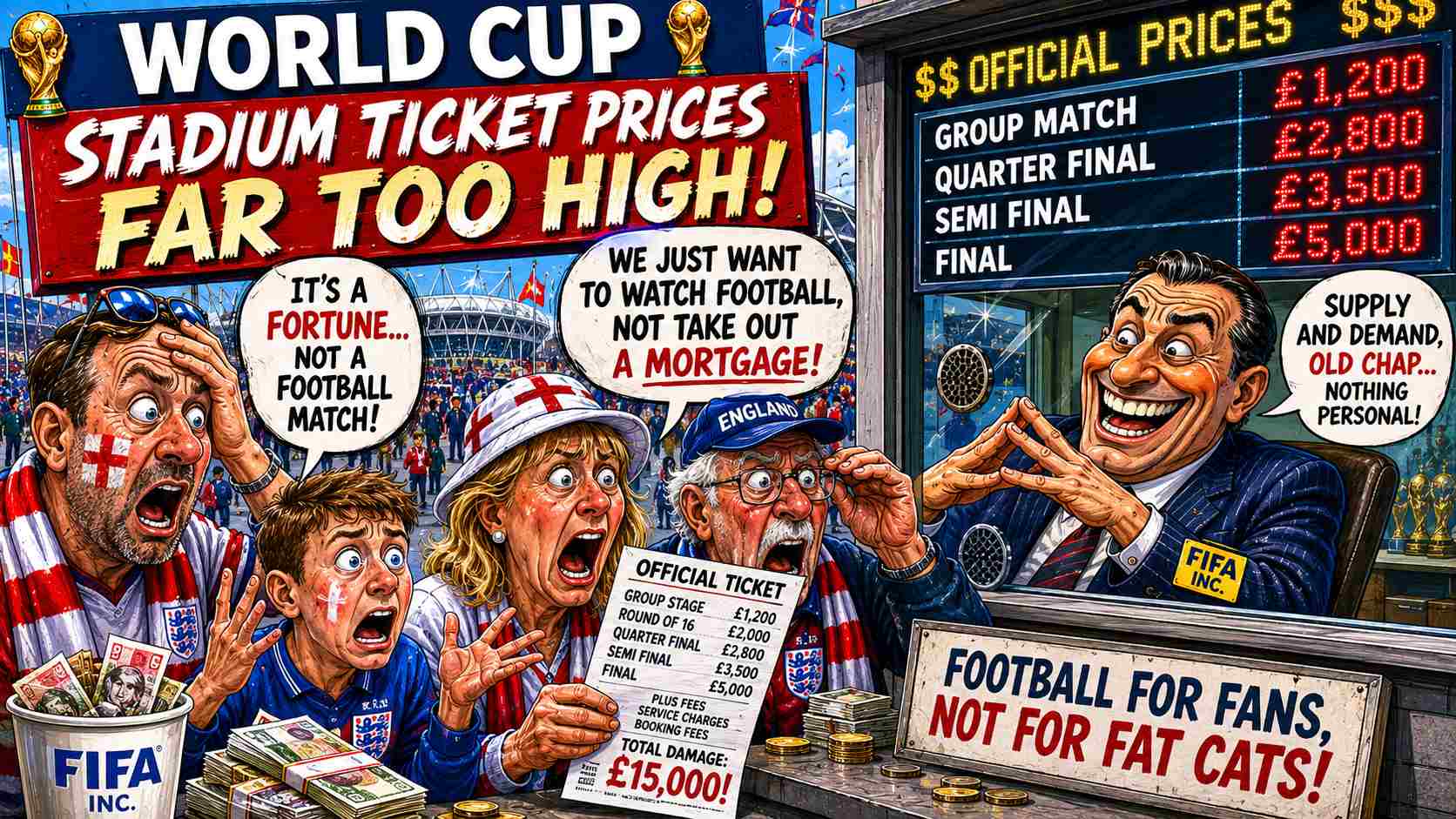

In British comedy, the prat is the character who makes us laugh because they remind us of ourselves at our most foolish.
My professor said it was the piece she wished she’d produced instead of academic papers nobody read.
My dad said this should be required reading before anyone’s allowed to work in London government. He’s right but that would end all London service.
The thing about it for educators is it provides material for teaching students to analyze institutional reality.