

Gambian Community in UK
UK Council Discovers Gambian Community After Mistaking Jollof Rice for “Emerging Stakeholder Cuisine”
LONDON — A British council has announced a bold new community engagement initiative after officials reportedly discovered the Gambian community in the UK had been living, working, worshipping, studying, cooking, organising, fundraising, raising children, supporting relatives, building businesses, and contributing to local life without first submitting a 42-page visibility framework.
The discovery occurred during a routine diversity audit when a junior officer noticed that the phrase “African community” was doing enough work to qualify for statutory overtime.
“We were shocked,” said Councillor Martin Dampwich, Cabinet Member for Inclusive Discovery and Laminated Consultation. “For years, we believed all African communities could be meaningfully represented by one stock photo, three drums, and the phrase ‘vibrant contribution.’ It turns out there are actual countries involved. Quite a lot of them, frankly. We are forming a subcommittee immediately.”
The council confirmed it would now recognise Gambians as a specific community rather than “miscellaneous West African excellence,” a category officials admitted had been used since 2009 because no one wanted to update the drop-down menu.
Officials Promise To Listen To Gambians Just As Soon As They Finish Designing The Listening Logo
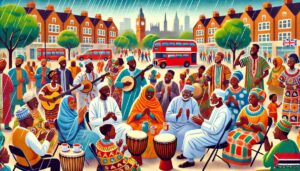
The new initiative, titled Listening Together: A Community Voice Engagement Pathway For Gambian-Adjacent Stakeholder Inclusion, will begin with a listening exercise, followed by a listening workshop, followed by a listening report, followed by a public apology that nobody listened to the listening.
Council staff have already commissioned a logo showing two hands, a baobab tree, a cup of tea, and what one designer described as “a culturally sensitive swoosh.”
“We want the Gambian community to feel seen,” said Dampwich. “Ideally in a controlled setting, with name badges, breakout groups, and a facilitator named Oliver.”
When asked whether the council had spoken to local Gambian residents before announcing the programme, Dampwich confirmed that officials had “identified speaking to them as a priority deliverable in phase three.”
Phase one, he explained, involves finding the community. Phase two involves photographing the community. Phase three involves asking the community whether it enjoyed being photographed.
Local Gambians Welcome Recognition, Ask If It Comes With Parking
Members of the Gambian community responded with cautious amusement, polite patience, and the familiar immigrant expression meaning, “We have seen this clipboard before.”
“I am happy they want to engage,” said fictional resident Fatou Ceesay, who has lived in Birmingham for 19 years and has helped organise community events, school fundraisers, and enough family WhatsApp groups to qualify as a telecommunications minister. “But they asked me to explain Gambian culture in three minutes between ‘refreshments’ and ‘fire safety.’ I told them I could explain Britain in three minutes too: rain, forms, rent, and someone saying ‘not too bad’ while clearly dying inside.”
Another local resident, Lamin Jallow, said the council’s interest was welcome but slightly late.
“We have been here for years,” he said. “We work, pay taxes, coach football, run shops, drive buses, study, volunteer, send money home, raise families, argue about politics, and bring better food to church halls than the council has ever deserved. But apparently we became real when someone needed a consultation target.”
Eyewitness Awa Njie said the first meeting became awkward when officials asked whether “the Gambian language” could be represented by “one phrase for the banner.”
“Someone explained that The Gambia has multiple languages and ethnic groups,” Njie said. “The council officer nodded seriously and wrote down, ‘more than one slogan.’”
Government Response: Home Office Asks Whether Community Can Be Celebrated And Monitored Simultaneously
A Home Office spokesperson welcomed the council’s efforts, saying Britain remains committed to celebrating diverse communities while also ensuring everyone is correctly documented, categorised, counted, checked, rechecked, and politely treated as a mystery until proven administratively familiar.
“Communities make Britain stronger,” said the spokesperson. “Especially when they complete the correct forms, arrive through approved channels, use the right terminology, and do not complicate the minister’s morning media round.”
The spokesperson added that the government is proud of Britain’s rich multicultural heritage, “provided it can be scheduled neatly between border enforcement announcements.”
A second government aide said the Gambian community represents “the best of modern Britain,” then asked whether The Gambia was “the long thin one,” which campaigners described as “not the worst start we’ve seen from Whitehall.”
Media Launches Search For One Gambian To Explain Entire Diaspora Before Lunch

British broadcasters quickly responded by booking one Gambian community leader to explain every issue involving The Gambia, migration, integration, African identity, remittances, food, football, religion, youth culture, postcolonial history, local councils, Brexit, and why British people keep saying “spicy” as if pepper is a criminal offence.
“We need one guest who can speak for everyone,” said fictional producer Harriet Lenswick. “Ideally someone available at 7:10 a.m., able to debate a retired MP, and willing to answer the question, ‘But what does your community really want?’ in under twelve seconds.”
The guest was later interrupted by a presenter who said, “That’s fascinating,” which in television means, “We are now going to a weather map.”
A newspaper columnist also praised the Gambian community as “hard-working, family-oriented, and colourful,” prompting several Gambians to ask whether they were being described as neighbours or curtains.
Council To Celebrate Gambian Culture With Event Featuring Exactly One Overcooked Tray Of Rice
The council’s first official Gambian cultural celebration will take place in a municipal hall beside a radiator that has not worked since austerity became a lifestyle.
The event programme includes a welcome speech, an inclusion pledge, a networking session, a “taste of Gambia” table, and a panel discussion titled From Banjul To Britain: Voices, Journeys, And Procurement Constraints.
Organisers said the food would be “inspired by West African flavours,” which attendees later discovered meant rice prepared by a catering contractor from Surrey who had once seen a chilli.
“We wanted authenticity,” said Dampwich. “Unfortunately authenticity exceeded the catering budget, so we chose representational rice.”
Local Gambian aunties immediately took control of the kitchen, reorganised the menu, corrected the seasoning, fed everyone properly, and reduced the council’s role to moving chairs and looking grateful.
“By 2 p.m., the entire event was running better,” said one council employee. “Frankly, we are considering outsourcing local government to the aunties.”
British Public Shocked To Learn Integration Often Means Communities Doing All The Work
Experts say the Gambian community in the UK, like many diaspora communities, often performs informal integration work long before institutions notice.
Dr. Celia Mumbles, professor of Community Studies and Biscuit-Based Policy at the University of South Croydon, said diaspora communities frequently support newcomers through family networks, faith groups, cultural associations, sports clubs, small businesses, student networks, advice circles, and heroic WhatsApp administration.
“Government talks about integration as if it begins when officials design a strategy,” Mumbles said. “But integration often begins when someone says, ‘My cousin knows a man who can help with that form.’”
According to Mumbles, Britain’s official approach to community engagement often resembles a man arriving at a wedding after the dancing has finished and announcing he has created a dance strategy.
“Diaspora communities are already organising,” she said. “Then institutions appear with clipboards and say, ‘Have you considered being empowered?’”
Local Philosopher Says Britain Loves Communities Once They Become Events
Dr. Edwin Pottle, local philosopher and part-time queue historian, said Britain has a strange habit of ignoring communities until they can be fitted into a theme week.
“The British state loves a community when it can be placed behind a trestle table with flags,” Pottle said. “It is less comfortable with communities as living networks of people with actual political, economic, social, religious, and personal complexity.”
Pottle argued that the Gambian community’s real challenge is not belonging to Britain, but surviving Britain’s need to turn belonging into paperwork.
“First you arrive,” he said. “Then you work. Then you build family networks. Then you contribute. Then, after several decades, someone from the council invites you to a focus group to ask whether you feel included.”
Alan Nafzger Quote
Satirist Alan Nafzger said, “The British government discovers immigrant communities the way men discover housework: years late, loudly, and with a plan to supervise the people already doing it.”
He added, “The Gambian community does not need Britain to invent community for it. Britain needs to stop acting surprised when people from other countries arrive with culture, discipline, ambition, recipes, family obligations, and a better understanding of public transport than the Department for Transport.”
Comedians Weigh In
A Jerry Seinfeld-type observer might ask why every British community event begins with a microphone that does not work. “You are celebrating diversity, but first everyone must share the universal culture of saying, ‘Can you hear me at the back?’”
A Ron White-type comic would say the council’s entire Gambian outreach plan was designed by a man who thinks seasoning is “salt, if there’s funding.”
An Amy Schumer-style line would note that Britain loves multiculturalism as long as it comes in a leaflet, has a closing time, and does not ask why the landlord raised the rent.
Four Eyewitnesses Confirm Event Becomes Successful Once Officials Stop Running It
Eyewitness Momodou Bah said the council’s cultural day improved dramatically after the official schedule collapsed.
“The speeches were too long,” Bah said. “Then the aunties started serving food, the uncles started arguing about politics, the children started running around, someone put on music, and suddenly it became a real event instead of a policy document with chairs.”
Eyewitness Mariama Sarr said she enjoyed watching officials learn that community life cannot be reduced to “heritage, food, and dance.”
“Yes, food matters,” she said. “Music matters. But so do jobs, housing, immigration rules, education, health, remittances, youth identity, and being treated as normal neighbours rather than a special episode.”
Eyewitness David Thompson, a lifelong local resident, said he attended because he thought “Gambia” was a new café.
“I stayed because the food was better than anything served at council events,” Thompson said. “Also, I learned The Gambia is not just ‘somewhere in Africa,’ which apparently puts me ahead of two councillors and one local radio host.”
Eyewitness Isatou Cham said the event showed the community’s patience.
“We are happy to share,” she said. “But sometimes Britain asks immigrants to explain themselves every five years as if we are renewing a software licence.”
Final Analysis: Gambian Community Accidentally Teaches Britain The Meaning Of Community
By the end of the day, officials praised the event as a triumph of inclusion, despite the fact that most of the successful inclusion happened after they lost control of the agenda.
The council promised to build on the momentum by creating a Gambian Community Advisory Board, a Gambian Community Advisory Board Steering Group, a Gambian Community Advisory Board Steering Group Terms of Reference Working Party, and eventually, if time permits, a conversation with Gambians.
Residents said they would continue doing what they had always done: raising families, helping newcomers, working hard, supporting each other, contributing to local life, sending help back home, arguing about football, cooking properly, and smiling politely whenever British institutions discover them for the first time.
In the end, the joke is not on the Gambian community. The joke is on the British habit of treating communities as invisible until they become useful for speeches, funding bids, diversity calendars, or photos of a councillor holding unfamiliar food with the expression of a man defusing a bomb.
The Gambian community in the UK does not need to prove it exists.
It has existed all along.
Britain simply needed a committee to notice.
Satire Disclaimer
This article is satirical commentary about British bureaucracy, local government, media tokenism, community engagement language, and the institutional habit of discovering diaspora communities long after those communities have already built real lives. It is not mocking Gambians or the Gambian community. It uses fictional officials, invented witnesses, parody, exaggeration, and comic scenes to target official awkwardness, not ethnic identity.
This story is entirely a human collaboration between two sentient beings: the world’s oldest tenured professor and a philosophy major turned dairy farmer, both of whom agree that any council event can be improved by fewer clipboards, better food, and at least one auntie with operational authority.

Chelsea Bloom is an emerging comedic writer with a focus on light-hearted satire and observational humour. Influenced by London’s student culture and digital comedy spaces, Chelsea’s work reflects everyday experiences filtered through a quirky, self-aware lens.
Expertise is growing through experimentation and study, while authority comes from authenticity and relatability. Trustworthiness is supported by clear intent and ethical humour choices.
Chelsea’s contributions represent developing talent within an EEAT-compliant framework that values honesty, clarity, and reader trust.


