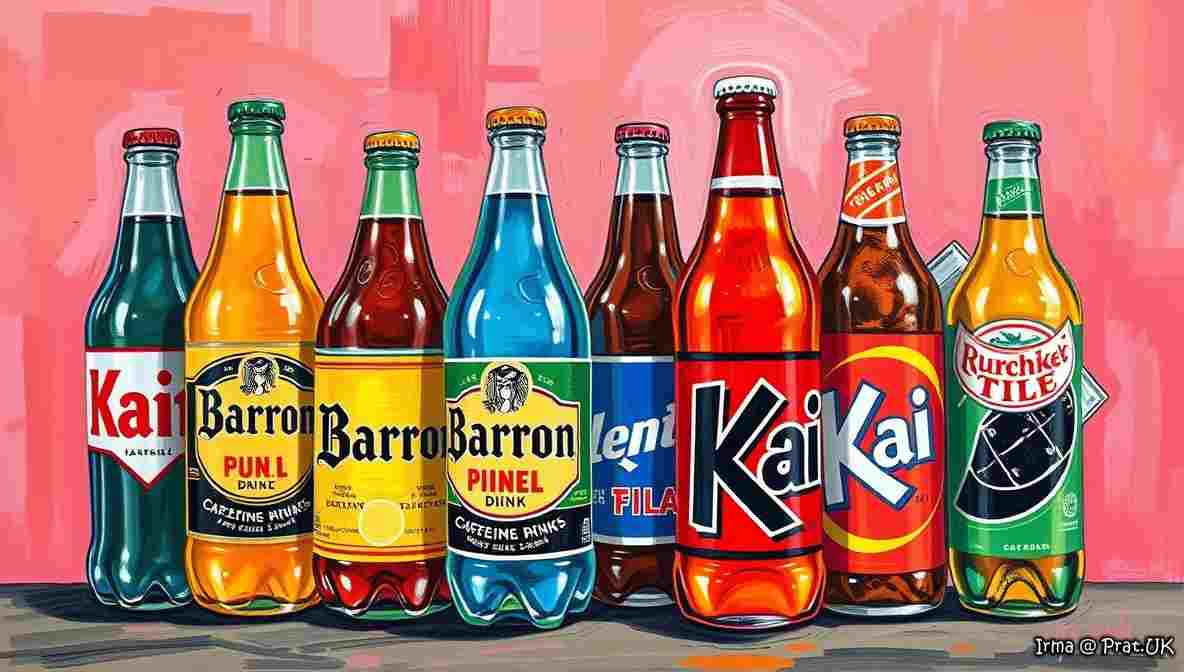
Britain Watches in Bafflement as Trump Siblings Go to War Over Fizzy Drinks
LONDON — News reached Britain this week, via the sort of breathless American entertainment report that usually accompanies footage of a celebrity buying a sandwich, that two young members of the Trump family have launched competing energy drink brands. Simultaneously. Reportedly without coordination.
Barron Trump is said to be backing a yerba mate venture aimed at clean-living young entrepreneurs. Kai Trump, meanwhile, has apparently partnered with an established energy drink brand, presumably one that does not involve sitting cross-legged on a meditation cushion while discussing equity stakes.
British commentators, who have spent the last several years watching America’s political class with the detached fascination usually reserved for nature documentaries, have responded with a mixture of confusion and grudging respect.
Britain Solved This in 1901. It Is Called Irn-Bru.

“We did all this a century ago,” said Professor Nigel Hapsworth of the Institute for Comparative Refreshment Studies in Tunbridge Wells. “Scotland produced Irn-Bru, a beverage so aggressively orange it can be seen from space, and nobody needed a press release explaining its bioavailability. It simply existed. You drank it after a night out and it either saved your life or ended it. There was no in-between, and crucially, no branding meeting.”
Professor Hapsworth noted that British energy culture has traditionally relied on a strict hierarchy: builder’s tea for the morning, a can of something fizzy and regrettable for the afternoon, and a kebab for emotional support. “The Americans are trying to monetise each stage of that hierarchy separately and sell it back to themselves with a logo. Frankly, I admire the confidence.”
Yerba Mate Meets the British Pub Test
For readers unfamiliar with yerba mate, it is a South American tea-like drink consumed from a gourd through a metal straw, typically by people who also own a standing desk and a opinion about sourdough starters. Early reports suggest Barron Trump’s venture is aimed at this exact demographic, which in Britain would be best described as “the sort of person who orders an oat flat white and then explains, unprompted, why oat is better.”
A straw poll conducted in a pub in Wolverhampton, using methodology that would not survive contact with a peer reviewer, found that most respondents believed yerba mate was either a Scandinavian footballer or a minor Pokémon. One respondent, when shown a photograph of the gourd and straw, asked whether it was “for soup.”
GB News Prepares Graphics, Obviously

American cable news has reportedly begun preparing segment graphics with titles such as “Is Yerba Mate the Future of Conservatism?” British broadcasters, not wanting to be left behind, are believed to be drafting their own equivalents, tentatively titled “Could Lucozade Have Stopped Brexit?” and “Ribena: National Treasure or National Security Risk?”
A spokesperson for a major British soft drinks manufacturer, speaking on condition of anonymity because nobody had actually asked them anything, said: “We’ve been quietly making orange squash since the 1930s and nobody has ever once suggested it represents a political movement. We would like that to continue.”
The View From the Palace, Probably
Royal commentators were quick to point out that Britain has its own long tradition of family members launching competing lifestyle ventures, though typically involving podcasts, memoirs, or Netflix documentaries rather than gourds. “It’s only a matter of time,” noted one royal-watcher, “before someone in this country launches a ‘mindfulness tonic’ and someone else launches a rival one purely out of spite. We are, after all, a nation that invented the stiff upper lip specifically so we’d have somewhere to put the grudges.”
What This Means for Britain
Economists in London were cautiously optimistic that the trend could eventually cross the Atlantic, generating much-needed employment in the fields of can design, gourd importation, and writing the small print that explains why a drink containing more caffeine than a small espresso machine is technically “a wellness product.”
Until then, Britain will continue doing what it does best: watching America’s family dramas play out in real time, making a cup of tea, and feeling vaguely better about our own family Christmases by comparison.
Auf Wiedersehen, amigo!
Across the pond, American reports indicate that Barron Trump and Kai Trump have both separately entered the energy beverage market in recent weeks, with Barron linked to a yerba mate brand and Kai partnering with an established energy drink company. The global energy drink sector remains one of the fastest-growing categories in the beverage industry, while in the UK, traditional soft drinks brands such as Lucozade and Irn-Bru continue to dominate the domestic energy and refreshment market, a sector the British Soft Drinks Association estimates is worth billions annually. Neither Trump sibling has publicly described their venture as part of a rivalry.



Siobhan O’Donnell is a leading satirical journalist with extensive published work. Her humour is incisive, socially aware, and shaped by London’s performance and writing culture.
Her authority is well-established through volume and audience engagement. Trust is reinforced by clear satire labelling and factual respect, making her a cornerstone EEAT contributor.