UK Bankruptcy Looming: Nation Checks Sofa Cushions for Spare GDP
Housing, Mortgages, and Mild Panic
“Bankruptcy, But Make It Elegant” — The Queen
The United Kingdom, a country once celebrated for inventing the queue, colonising everything that wasn’t nailed down, and losing it all while remaining frightfully polite about the whole business, has reportedly entered what experts are calling “a very British financial panic” — characterised by quiet sighing, aggressive spreadsheeting, and a man in Whitehall staring at a wall-mounted graph whispering, “this feels like 2008 but with worse sandwiches and no Alistair Darling to blame.”
Markets this week responded to the latest economic signals the way a cat responds to a cucumber: instant, total, baffling chaos. Government borrowing costs have surged to their highest levels since the global financial crisis, with 10-year gilt yields climbing to around 5% — a number that economists describe as “the fiscal equivalent of your smoke alarm going off while you’re cooking toast,” and everyone agreeing the toast wasn’t worth it.
The Gilt Market: Britain’s Fancy Word for “We’re Absolutely Cooked”
For years, “gilts” sounded like something you’d find in a royal jewellery box, possibly next to a monogrammed handkerchief and a light disdain for the French. Now they’re behaving more like a clearance bin at a Woolworths closing-down sale — if Woolworths were also on fire.
Investors have been dumping UK government bonds faster than a tourist fleeing a London hotel with no air conditioning, a broken shower, and a laminated card explaining that breakfast ends at 7:45am. The reason? Inflation fears, rising energy prices, and the slow, creeping realisation that the UK economy has been running on vibes, Earl Grey, and a spreadsheet last updated in 2019 labelled “it’ll sort itself out, probably.”
The Bank of England has kept interest rates at 3.75% for now, but markets are already pricing in multiple hikes — because nothing communicates confidence quite like publicly preparing for catastrophe while insisting you’re not.
One analyst described the situation as “a feedback loop.” This is economist for “we started digging, found it was a hole, and kept digging to see how deep it goes.”
Rachel Reeves and the £14.3 Billion “Oops”
Chancellor Rachel Reeves recently confirmed that government borrowing hit £14.3 billion in February alone — overshooting expectations and landing in what experts are calling “the ‘who authorised this?’ category of public finance,” a category that, it turns out, has no ceiling.
Debt interest payments have surged dramatically, meaning Britain is now spending more money servicing its past mistakes than funding its future ones. This is also how most people manage credit cards after Christmas, except most people can’t print more money. Rachel Reeves theoretically can. She has chosen not to. Economists are divided on whether this is discipline or cowardice. The markets have their own view and are expressing it loudly.
An anonymous Treasury staffer, reportedly found under a desk clutching a cold cup of tea and a printed copy of the 2019 Conservative manifesto, said:
“We had a plan. Then reality logged in. Then reality changed its password and locked us out.”
Inflation: The Houseguest That Ate All Your Food, Left, and Is Now Back With Luggage
Inflation, which had politely begun gathering its coat and making noises about “really heading off,” has returned — because someone mentioned global conflict and energy prices at the door and it sat straight back down on the sofa.
Thanks to gas and oil costs spiking due to Middle East tensions, UK households are now bracing for higher energy bills, higher mortgage rates, and a level of existential dread previously only available on prescription.
Energy costs alone are expected to push inflation back toward 3–4%, which is technically not catastrophic but emotionally feels like your landlord raising the rent, repainting the hallway a colour you hate, and calling it “an investment in your future.”
A recent survey by the Institute of Extremely Concerned People found that 72% of Britons now describe the economy as “confusing,” 28% described it as “confusing but with biscuits,” and one respondent in Swindon simply wrote “Keith” and hung up.
The Iran Factor: Because Obviously
Adding a truly inspired twist, escalating tensions involving Iran have driven energy prices higher, which rattled bond markets, which made borrowing more expensive, which alarmed pension funds, which stressed economists, which triggered more market volatility — a perfect, self-sustaining spiral of misery that even Rube Goldberg would call “a bit much.”
The UK, grotesquely dependent on imported natural gas, has been particularly exposed — like a man who turned up to a flood in suede shoes and is now pretending it isn’t happening.
One hedge fund manager, speaking from what sources describe as “a very nice chair,” admitted:
“We modelled for rates falling. They did not fall. They went in the other direction with what I can only describe as enthusiasm.”
Housing, Mortgages, and the Five Stages of Financial Grief
Housing, Mortgages, and Mild Panic
Mortgage holders across the country are watching interest rates tick upward with the focused horror of someone watching their phone battery drop to 2% on a train with four hours left and nothing downloaded.
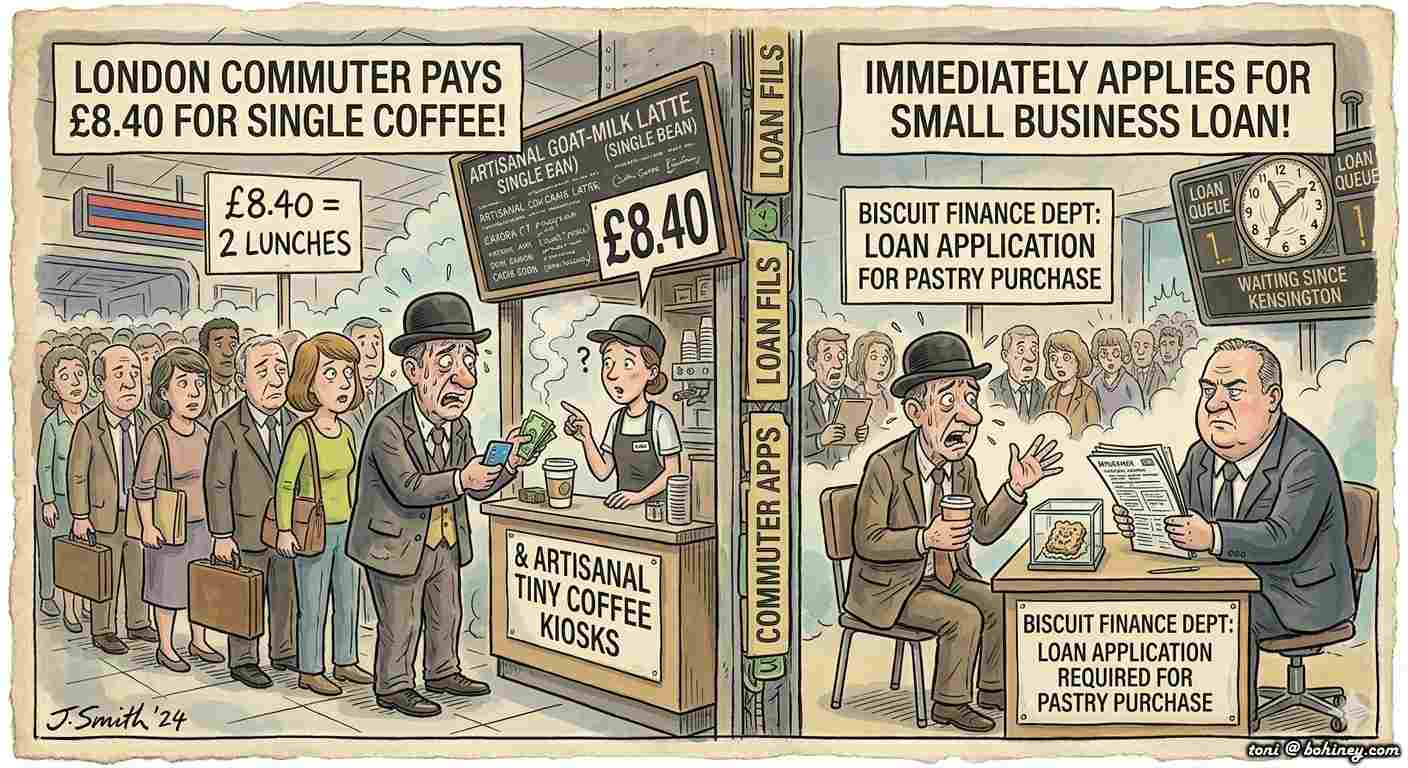
Average borrowers could face up to £1,500 more per year in repayments — which in British terms translates to cancelling three takeaways, one weekend away, and whatever remaining joy had survived the previous two chancellors.
First-time buyers, meanwhile, have been gently advised to consider alternative paths to homeownership, including “living with parents into your mid-forties,” “marrying someone who already owns property,” or “a spiritual reframing of what ‘home’ means, possibly via a podcast.”
Estate agents remain bullish. Estate agents are always bullish. Estate agents would describe a flooding basement as “an exciting opportunity for a water feature.”
What the Funny People Are Saying
“This isn’t a recession. It’s Britain slowly realising it left the oven on in 2008, went on holiday, and has only just come back to check.” — Frankie Boyle
“The UK economy is exactly like a bloke at the bar insisting he’s fine. He’s on tap water. He’s checked his banking app eleven times. He’s fine.” — Jimmy Carr
“They called it a cost of living crisis. I assumed it was optional. Like Pilates.” — Katherine Ryan
“If mortgage rates go any higher, the paperwork will come with a bereavement leaflet.” — Dara Ó Briain
“Britain literally invented modern debt. It’s a bit like Shakespeare dying of a pun.” — Mark Steel
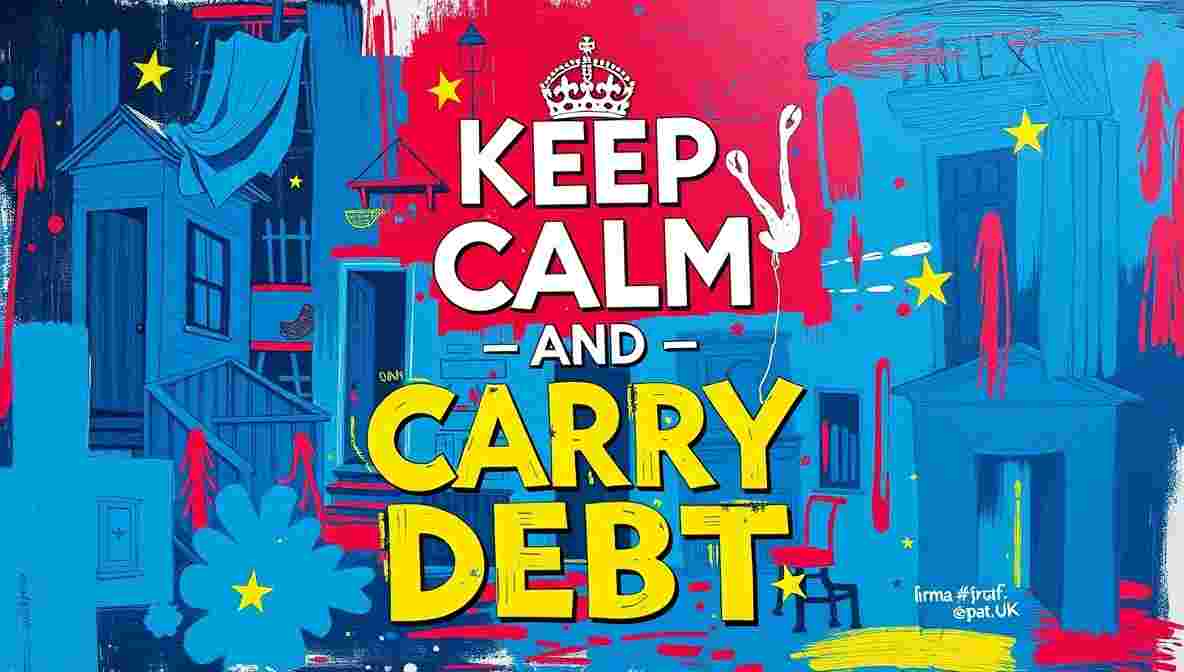
The Grand British Strategy: Keep Calm, Carry Debt, Pretend It’s Fine
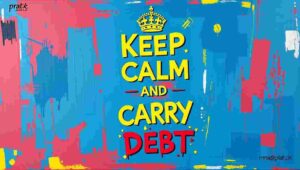
Despite what the bond markets, the Office for Budget Responsibility, three former chancellors, and basic arithmetic are suggesting, government officials insist everything remains under control — which is the British state’s traditional way of communicating that things are, in fact, not under control but they’d rather not make a scene about it.
Fiscal discipline, we are assured, remains the priority. The markets are testing this assertion the way a toddler tests a biscuit tin: repeatedly, noisily, and with escalating commitment.
Debt is now approaching 100% of GDP, which the OBR describes as leaving the UK in a “particularly vulnerable position” — academic language for “this is the part of the film where the music gets ominous.”
Bankruptcy, But Make It Elegant
Is the UK going bankrupt? Not technically. But it is doing that thing where your bank account isn’t empty yet, but you’ve started quietly appraising the furniture and wondering what the bike would fetch on eBay.
Britain has, of course, been here before. It survived the Black Death, the Blitz, the Winter of Discontent, and the Spice Girls reunion tour. It will probably survive Rachel Reeves’ spreadsheet too. Probably.
In the end, this nation will endure the current fiscal turbulence the same way it endures everything: with dry humour, suppressed panic, a strong cup of tea, and the unshakeable conviction that things will improve just as soon as someone sensible gets hold of the situation.
Or, as one London cab driver reportedly put it, while navigating both a bus lane and a credit default:
“We’re not broke, mate. We’re just pre-rich in reverse. And the sat-nav’s recalculating.”
Auf Wiedersehen, amigo!
The United Kingdom’s fiscal position has deteriorated sharply in 2025, with 10-year gilt yields approaching 5%, Chancellor Rachel Reeves confirming February borrowing of £14.3 billion above forecast, and the Bank of England holding rates at 3.75% while financial markets price in further hikes. Inflation, briefly easing toward the 2% target, is expected to rebound to 3–4% as energy prices climb in response to Middle East instability, including renewed Strait of Hormuz tensions linked to Iran. Mortgage holders face significantly higher annual repayments, first-time buyers remain effectively locked out of the property market, and national debt is closing in on 100% of GDP — prompting the Office for Budget Responsibility to flag serious structural risk. None of this has yet stopped anyone from having a biscuit, though the biscuits are now 40p more expensive than they were in 2021.

Harriet Collins is a high-output satirical journalist with a confident editorial voice. Her work demonstrates strong command of tone, pacing, and social commentary, shaped by London’s media and comedy influences.
Authority is built through volume and reader engagement, while expertise lies in blending research with humour. Trustworthiness is supported by clear labelling and responsible satire.