
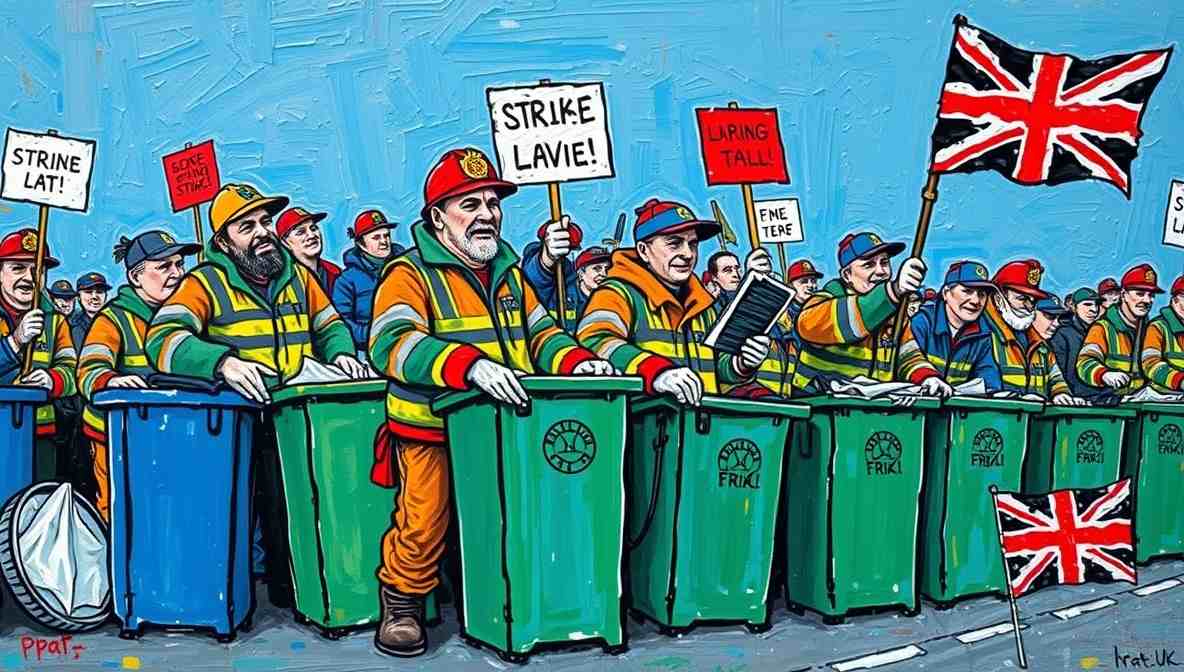
Megapicket at Birmingham Bin Depot Is Now Britain’s Largest Outdoor Event Since Glastonbury
Strikers, supporters and the assembled British press discover that industrial action has better energy than most festivals
BIRMINGHAM — By nine o’clock on Friday morning, as the results of the most consequential British local elections in a generation were still being declared, the megapicket outside Birmingham’s bin depot had assembled a crowd that several observers described, with only slight exaggeration, as the most energetically committed gathering of people in Britain that wasn’t also watching someone count ballot papers.
The megapicket — a term that Unite the union deployed with the careful branding instincts of an organisation that has learned, over a year of this dispute, that the words you use matter — featured hundreds of workers, union officials, political supporters, local residents, and journalists who had driven from London specifically to film mountains of uncollected refuse and found, upon arrival, that the mountains were somewhat tidier than the photographs suggested but the atmosphere was considerably more charged than expected.
A woman named Denise, who sells barbecued chicken from a trailer at the depot gates and has been doing so since month three of the strike because, as she explains it, “if it’s going to go on this long, someone might as well eat,” said it was the best day the picket had seen since the anniversary march in April.
Birmingham Bin Strike Megapicket: Community Solidarity and Political Theatre
The megapicket has become, over twelve months, one of the more remarkable pieces of sustained industrial action in recent British history — not because of its scale, which is modest by historic standards, but because of its duration, its media management, and its increasingly complex political entanglements.
Unite’s Sharon Graham addressed the crowd with the controlled fury of a trade union leader who has been having the same argument for twelve months and has developed the argument to a state of considerable rhetorical polish. She spoke about workers’ rights, wage theft, the devaluation of working-class labour, and the importance of solidarity. The crowd responded with the enthusiasm of people who have been standing outside a bin depot for a year and are genuinely glad someone is paying attention.
A counter-protest, involving approximately eight people who felt the bins needed to be collected more urgently than the workers’ grievances needed addressing, stood at a respectful distance and held signs. One sign read “BIN THE STRIKE.” Another read “JUST COLLECT THE BINS.” A third read something that had been written in rain-soluble marker and was no longer legible, which feels appropriate.
Britain’s Political Leaders React to the Birmingham Refuse Crisis

Reform UK’s Nigel Farage, celebrating his local election results in Essex, said that his councils would handle industrial relations “properly” and “in the interests of residents,” in phrasing vague enough to mean whatever his audience wanted it to mean, which is a consistent feature of the Reform UK policy communication style.
The Labour government, which controls neither Birmingham City Council — which is under government intervention — nor Unite the union, which is doing whatever Unite the union decides to do, finds itself in the position of bearing political responsibility for a dispute it cannot directly resolve, in a city whose bankruptcy it did not cause but is administering, in a manner that appears passive to voters who would like it to appear active.
Keir Starmer, who visited a community centre in Ealing on Friday morning to meet Labour Party members in what the press described as an attempt to stabilise the post-election mood, was asked about Birmingham. He said the situation needed to be resolved and that he was committed to working with all parties to find a resolution. He was asked whether there was a specific resolution he had in mind. He said he would not negotiate from the press conference podium, which is technically true and also the answer you give when you don’t have a specific resolution in mind.
Back at the depot gates, Denise sold out of chicken by eleven o’clock and declared it a successful morning. The bins remained uncollected. The picket remained in place. Britain remained, as it so often does, in a state of sustained unresolved tension that everybody would prefer to resolve and nobody can quite agree how.
This article arrives against the backdrop of British municipal finance having reached a crisis point in multiple major cities, with Birmingham’s bankruptcy representing the most extreme case of a broader structural problem: councils that are legally required to balance their budgets while facing demand for services that exceeds their funding allocation, a gap that has been present since 2010 and has widened with every passing year regardless of which party controls either the council or Westminster.
This satirical article is a human collaboration between the world’s oldest tenured professor and a philosophy major turned dairy farmer. No barbecued chicken was consumed during production. Any resemblance to a resolved civic situation is subject to further negotiation.
Auf Wiedersehen, amigo!
Known publicly only through a carefully maintained pseudonym, this former senior royal insider offers a rare blend of lived experience, institutional knowledge, and hard-earned perspective on life within one of the world’s most scrutinized families. Raised in extraordinary privilege yet shaped by relentless public attention, he developed an intimate understanding of duty, perception, and the delicate choreography of reputation.
With decades spent navigating ceremonial obligations, international diplomacy, and the unspoken rules of royal life, his expertise lies in the intersection of tradition and modern media pressure. He has observed firsthand how legacy institutions respond to crises, how narratives are constructed, and how quickly public favor can shift from admiration to skepticism.
His insights are informed not only by access, but by consequence. Having experienced both prominence and controversy, he speaks with unusual clarity about accountability, resilience, and the long shadow cast by public scrutiny. Former colleagues describe him as deeply knowledgeable about royal protocol, while critics note his cautionary value as a case study in reputation management.
Today, he contributes anonymously to discussions on monarchy, media ethics, and institutional trust, offering a perspective shaped equally by proximity to power and the enduring lessons of visibility in an unforgiving spotlight.
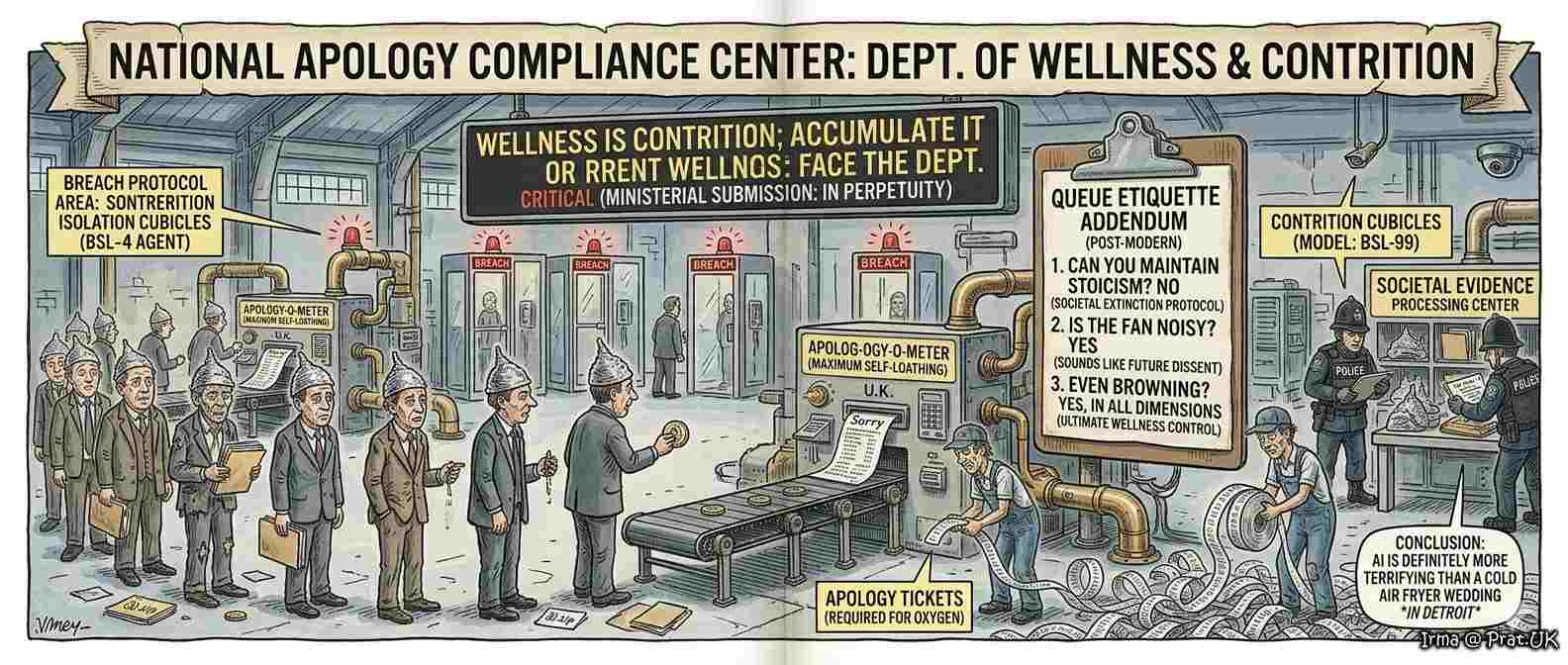


London can be loved and hated simultaneously. Both are completely valid responses to the experience.