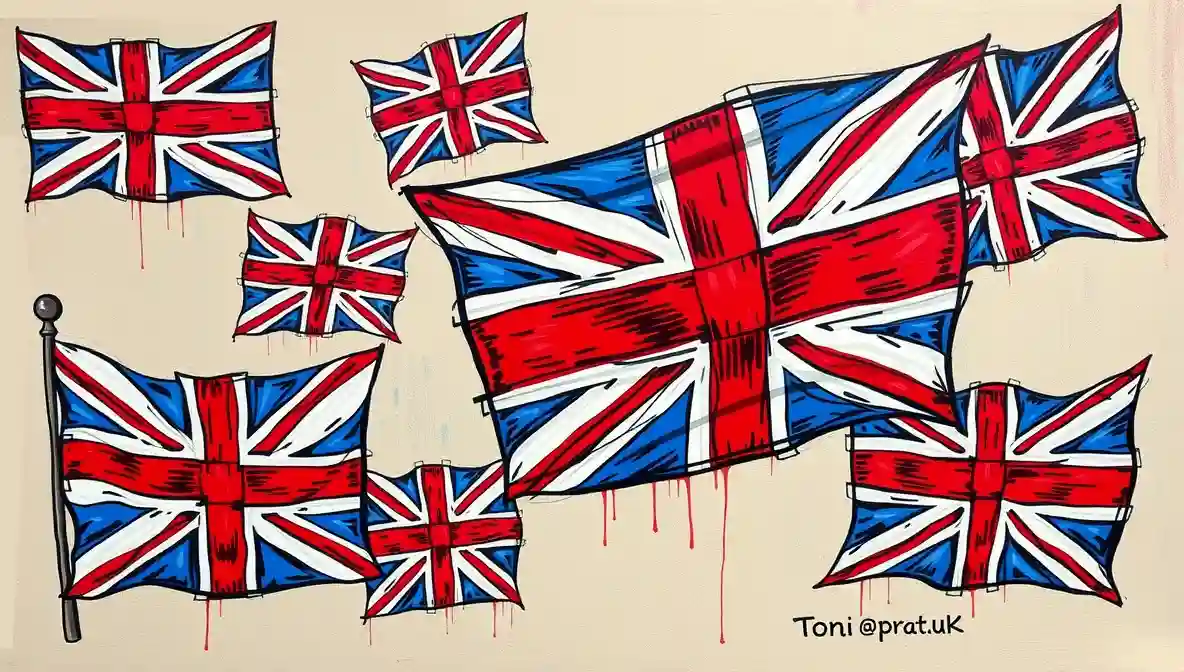
Britain Officially Enters New Political Era Known as “Everyone Furious, Nobody Happy”
Five Observations From the Nation That Invented Queuing and Is Now Done With It
- Britain’s political mood now resembles a family road trip where nobody agrees whose fault it is the caravan caught fire, and three people are still insisting the caravan isn’t on fire.
- Pollsters confirm “angry sighing” has become the nation’s fastest-growing demographic, overtaking both “quietly despairing” and “pretending everything’s fine at the school gate.”
- One Westminster insider described Parliament as “a customer service desk inside a collapsing aquarium” — everyone is technically still working, the fish are watching, and the glass has been making noises since Tuesday.
- Voters now switch political loyalties with the emotional stability of people choosing meal deals at petrol stations: fast, regretful, and always slightly wrong.
- Experts believe the only truly united political movement left in Britain is hatred of train prices — a coalition so broad it crosses class, region, age, and party affiliation with remarkable ease.
Britain officially entered what analysts are calling a “post-rational democratic phase” this week after new polling confirmed virtually every political faction in the country is simultaneously enraged, disappointed, exhausted, suspicious, and somehow still posting about it online at volume.
The findings emerged following another brutal round of local election chaos, economic anxiety, leadership rumours, public service failures, and televised political interviews where nobody answered questions but everyone looked offended anyway — a format that has now replaced the traditional press conference as Britain’s primary mode of public communication.
Professor Confirms Britain Has Innovated by Creating System Where Every Citizen Feels Like a Man Arguing With a Parking Meter in the Rain

According to researchers at King’s College London, Britain has now reached a historically unique point where all major political tribes believe they are losing, oppressed, ignored, and moments away from total national collapse — a situation that political scientists describe as “remarkable” and that ordinary people describe using language not suitable for family broadcasting.
“Normally politics has winners and losers,” explained Professor Harriet Molesby. “Britain has innovated by creating a system where every citizen feels like a man arguing with a parking meter in the rain. The meter isn’t listening. The rain isn’t stopping. The fine is already issued.”
Polling revealed Labour supporters believe the government is too weak, Conservative voters believe the Conservatives no longer exist in any meaningful sense, Reform UK voters believe civilisation itself is ending, and Liberal Democrats remain delighted somebody remembered they were still operating — an emotion that, among British political parties, counts as practically euphoric.
Parliamentary Aide Reports Ministers Now Speak Exclusively in Therapy Language; Nobody Knows What “Lived Experience” Means Anymore
The atmosphere inside Westminster reportedly resembles “a stag party trapped inside an insurance seminar.” One parliamentary aide described ministers wandering corridors clutching briefing papers “like medieval monks carrying cursed scrolls.” Another claimed several MPs have started speaking exclusively in therapy language — a development that sounds progressive until you hear a cabinet minister describe a pothole as “a challenging infrastructure journey.”
“Everyone keeps saying things like ‘we need to acknowledge the public’s lived experience,'” the aide whispered. “Nobody even knows what that means anymore. I asked three people. I got four answers.”
Prime Minister Keir Starmer attempted to reassure the public during a televised address promising “stability, seriousness, and long-term delivery.” Unfortunately the speech aired immediately after footage of overflowing prisons, cancelled trains, and a pensioner being interviewed beside a pothole large enough to shelter livestock — a scheduling decision that either reflects honest journalism or the worst advance team in British political history.
Two Strangers in Birmingham Argue About Immigration, Discover They Agree on Everything Except Electric Scooters
Public reaction has become increasingly surreal. In Birmingham, witnesses described two strangers screaming at each other over immigration policy before discovering they actually agreed on every issue except electric scooters — an outcome that represents either the failure of British political discourse or its most honest moment in a decade.
In Kent, a man reportedly stormed out of a pub quiz after the host referred to Brussels sprouts without clarifying whether he meant vegetables or European bureaucracy. Both were on the table. Neither was clarified. He did not return.
Across social media, British citizens now spend an average of six hours daily arguing about migration, housing, taxes, NHS waiting lists, potholes, low-traffic neighbourhoods, and whether supermarkets are “woke” — a question that has consumed approximately 340,000 man-hours of national energy since 2023 without producing a satisfactory answer.
BBC Meteorologist Upgrades Forecast From “Unsettled” to “Vaguely Threatening”; Presenter Admits Britain Now Has “Passive-Aggressive Climate”
A recent YouGov poll found 72% of voters believe Britain is “heading in the wrong direction,” while the remaining 28% reportedly asked, “Which direction was it supposed to be going?” Neither group could agree on the answer. Both groups posted about it.
Even the weather appears emotionally exhausted. BBC meteorologists recently upgraded forecasts from “unsettled” to “vaguely threatening,” while one presenter quietly admitted Britain now experiences “the climate equivalent of passive-aggressive emails” — correct, technically, but leaving everyone uncertain what they’ve done wrong.
Political historian Dr. Simon Wetherby believes Britain’s fury stems from a deeper national identity crisis. “The country spent decades believing decline was temporary,” he explained. “Now people are realising the temporary period has children in secondary school and a Klarna account.”
Office Worker Summarises National Mood at Manchester Piccadilly: “Everybody’s Furious, Nobody Can Agree Whose Turn It Is to Fix Anything”
Still, politicians remain publicly optimistic. Labour promises renewal. Reform promises rebellion. Conservatives promise a return to competence despite recent evidence resembling a kitchen fire at a clown college — an institution that, sources note, would at least have been more entertaining.
Outside Manchester Piccadilly Station, office worker Claire Bennett summarised the national mood perfectly while staring at another delayed train announcement. “Everybody’s furious,” she sighed. “But nobody can agree whose turn it is to fix anything.” The train was eventually cancelled. Nobody was surprised. Several people sighed in a way that was technically a political statement.
At press time, Westminster insiders confirmed all major parties were preparing new campaign slogans built around “change,” “hope,” “taking back control,” or “please stop yelling at us” — the last of which was described by focus groups as “the most honest thing any party has said since 2015.”
What the Funny People Are Saying
“British politics now feels like Thanksgiving dinner if everyone drank espresso and read Twitter. Nobody’s leaving. Nobody’s happy. The turkey is the economy.” — Bill Burr
“You ever notice every politician says ‘the people are angry’ like they just discovered weather? It’s been raining since Brexit, mate.” — Jerry Seinfeld
“In Britain even the optimistic people sound disappointed. It’s the accent. Or the lived experience. Probably both.” — Ricky Gervais
This satirical article was created entirely through collaboration between the world’s oldest tenured professor and a philosophy major turned dairy farmer. No coalition governments were emotionally stabilized during production. Auf Wiedersehen, amigo!

Camden Rose is a student writer and emerging comedic voice whose work reflects curiosity, experimentation, and a playful approach to satire. Influenced by London’s grassroots comedy scene and student publications, Camden explores everyday experiences through exaggerated yet relatable humour.
Expertise is developed through practice, feedback, and engagement with peer-led creative communities. Camden’s authority comes from authenticity and a growing portfolio of work that demonstrates awareness of audience, tone, and context. Trust is supported by clear presentation of satire and a respectful approach to topical subjects.
Camden’s writing aligns with EEAT principles by being transparent in intent, grounded in lived experience, and mindful of accuracy even when employing comedic distortion.