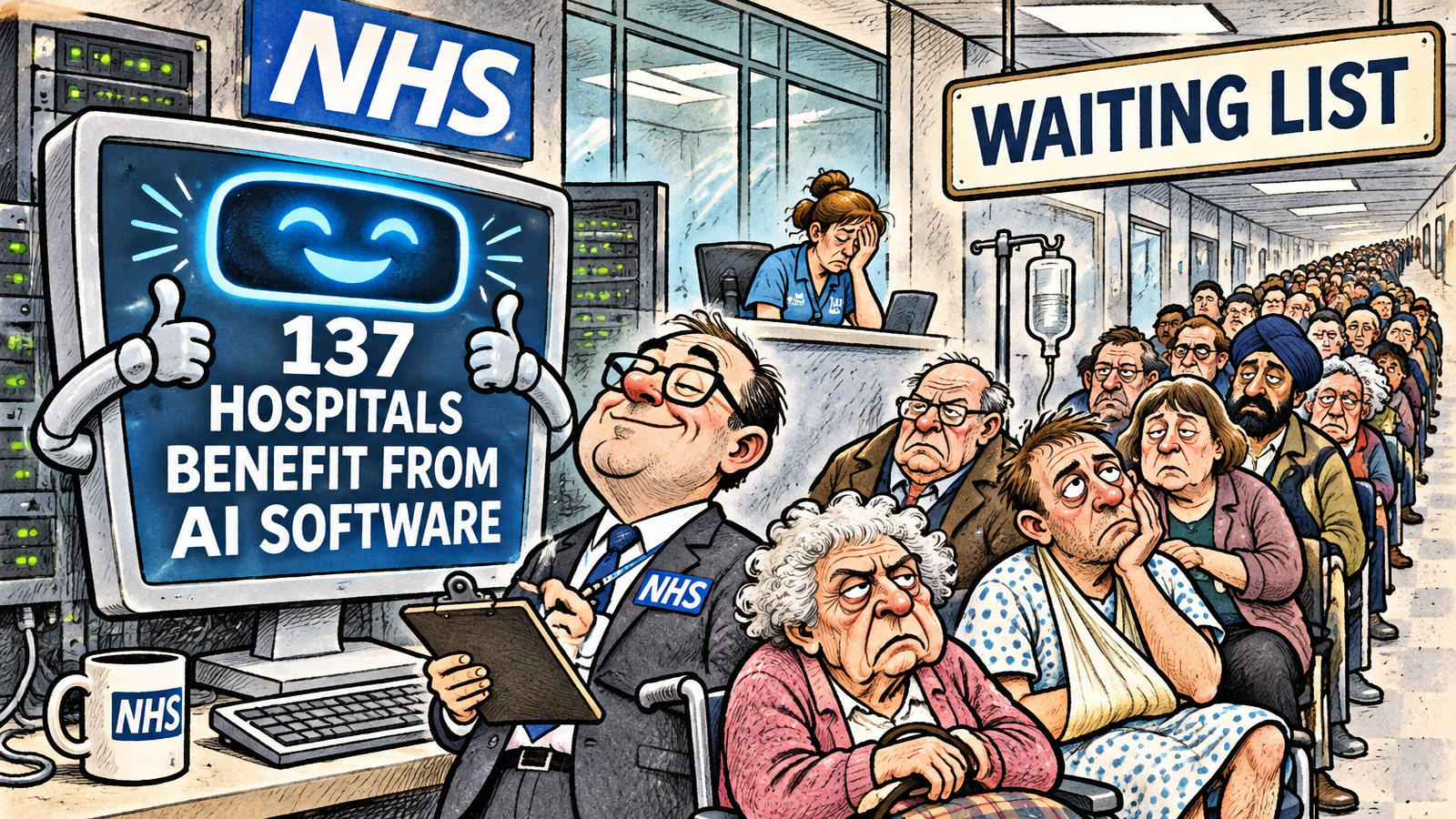
LONDON: NHS England has removed a webpage claim that 137 trusts were benefiting from an AI-powered data system after scrutiny found 29 trusts were not using much or any of the technology listed. The Guardian investigation into the federated data platform has left health officials confronting a question technology procurement usually avoids: does the thing work in the places where officials say it works?
The Computer Is Doing Very Well, Thank You
An entirely fictional hospital manager announced that the software had achieved a complete recovery and could now sit upright, speak to procurement consultants and generate an extremely reassuring graph.
The patients, meanwhile, were still waiting for appointments. They were told the hospital had made extraordinary progress in digitising the concept of waiting, enabling administrators to see the queue in 4K without having to shorten it.
A pretend AI representative explained that the system was not intended to replace doctors. It would merely replace the awkward need to check whether anyone had actually installed it before counting them as a satisfied customer.
A Trust Being Listed Is Not the Same as a Trust Using It
The genuine controversy concerns an NHS list and what it suggested about adoption of Palantir’s federated data platform. The difference matters. Installing, using and benefiting from technology are three separate stages, regardless of how hard a public-relations department tries to compress them into one press release.
In a made-up Prat survey of ten hospital computers, seven said they were experiencing considerable success, two said they were unplugged and one had been placed in a storage cupboard next to a printer everybody was afraid to touch.
A fictional statistician proposed that all NHS waiting lists be measured using the number of machines capable of displaying the words ‘waiting list’. Ministers praised the resulting improvement in healthcare throughput.

Patients Need Results, Not Procurement Poetry
Medical data systems may have legitimate uses in planning beds and improving care. They also need rigorous evidence, clear governance and meaningful adoption by the people expected to use them.
Hospital staff are entitled to question tools that add work without obvious benefit. Patients are entitled to expect that claims about improved services are backed by reality rather than an attractive PowerPoint presentation with a blue arrow pointing upwards.
One imaginary patient asked the hospital’s chatbot when his operation might take place. ‘Your question has been successfully processed,’ it replied. ‘Would you like to rate your experience?’ He gave it one star, bringing an end to the system’s most encouraging statistical trend.
NHS England now has an opportunity to do something genuinely innovative: distinguish a computer’s existence from a patient’s improvement. The bureaucratic consequences may be revolutionary.
More from The London Prat: Read about the under-25 sickness-benefits review and the new British climate security envoy.