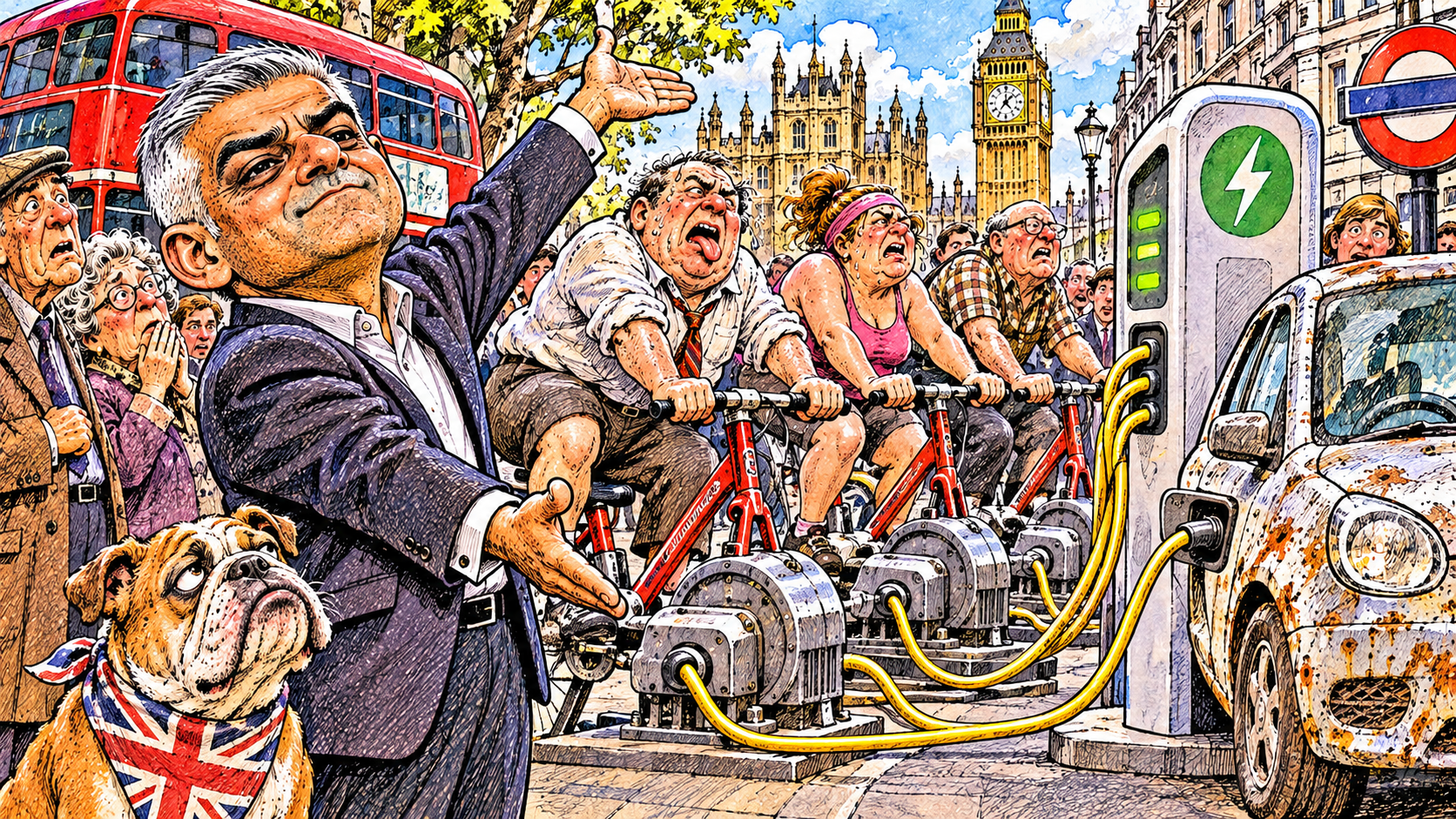
LONDON: Mayor Sadiq Khan has sided with those urging ministers not to weaken the zero-emission vehicle mandate, which currently envisages 80% of new-car sales being electric by 2030. The dispute is over manufacturers’ sales targets, not a rule forcing every Londoner to buy an electric car. The debate has divided Labour figures. London drivers have responded with a practical question: where exactly is the charging point behind the takeaway?
A Great Electric Future, Assuming You Own a Driveway
In the Prat’s imaginary City Hall presentation, an electric vehicle rolls effortlessly through central London, pauses by a beautiful charging point and departs with a full battery. The official demonstrating it is subsequently informed that most London streets do not come with private driveways and ornamental charging stations.
A fictional renter in Hackney explained that the nearest available socket was three floors up, behind a sofa and already occupied by the router that his landlord insists is a premium fixture.
One invented adviser suggested solving the problem with a very long extension lead. Transport for London immediately commissioned a report on whether a cable stretching from Ealing to Elephant and Castle would qualify as sustainable transport infrastructure.
Ministers Argue About 80% Versus 50%
Supporters of the existing mandate argue that stable targets encourage investment in vehicles and charging networks. Critics worry that weakening consumer demand and higher costs make the present trajectory harder for manufacturers to meet.
Both sides agree, at least in public, that the transition must work. They have not agreed whether that means lowering the target, expanding charging facilities or simply having more optimistic launch events.
In a fabricated Prat survey of London motorists, 40% wanted cheaper electric cars, 35% wanted convenient charging and 25% said they would like to park within two streets of their own flat at least once before retirement.
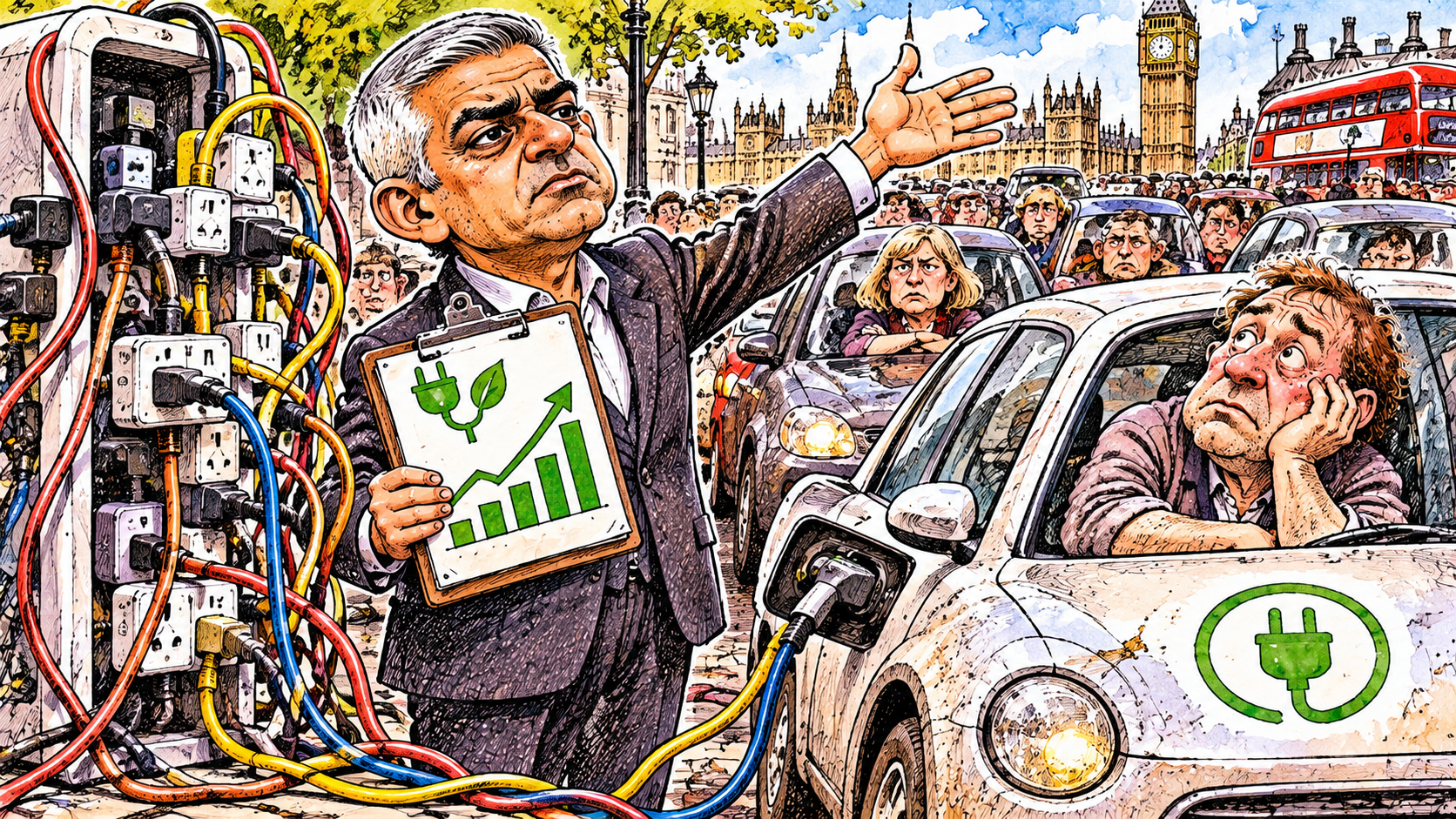
The Road to Net Zero Has a Parking Restriction
Electric vehicles can reduce local tailpipe pollution and help cut emissions, but a successful policy requires more than a deadline and a ribbon-cutting ceremony. Home-charging access, public infrastructure, purchase prices and reliability are everyday concerns.
One make-believe borough has unveiled a community charging point on a pavement too narrow for pedestrians to pass. Officials praised it as an improvement on the previous arrangement, when drivers were forced to charge using imagination.
The Mayor is entitled to support ambitious targets. Londoners are entitled to ask how the targets will operate on their actual streets rather than in a brochure produced by someone who lives above a garage.
A driver in the Prat’s story offered a workable compromise: ‘I will happily buy the electric car when I can charge it without applying for planning permission to plug it in.’ His borough has scheduled a consultation on the location of consultations.
More from The London Prat: Read about Britain’s climate security appointment and the country’s latest GDP figures.