WESTMINSTER: Britain has appointed former intelligence official Madeleine Alessandri as a special representative for climate security, recognising that extreme weather and environmental disruption can have serious consequences for national security. The Guardian reported the appointment as Prime Minister Andy Burnham prepared for COP31. The government has not declared war on the weather, but several civil servants have already prepared a form to ask whether it would consider voluntary compliance.
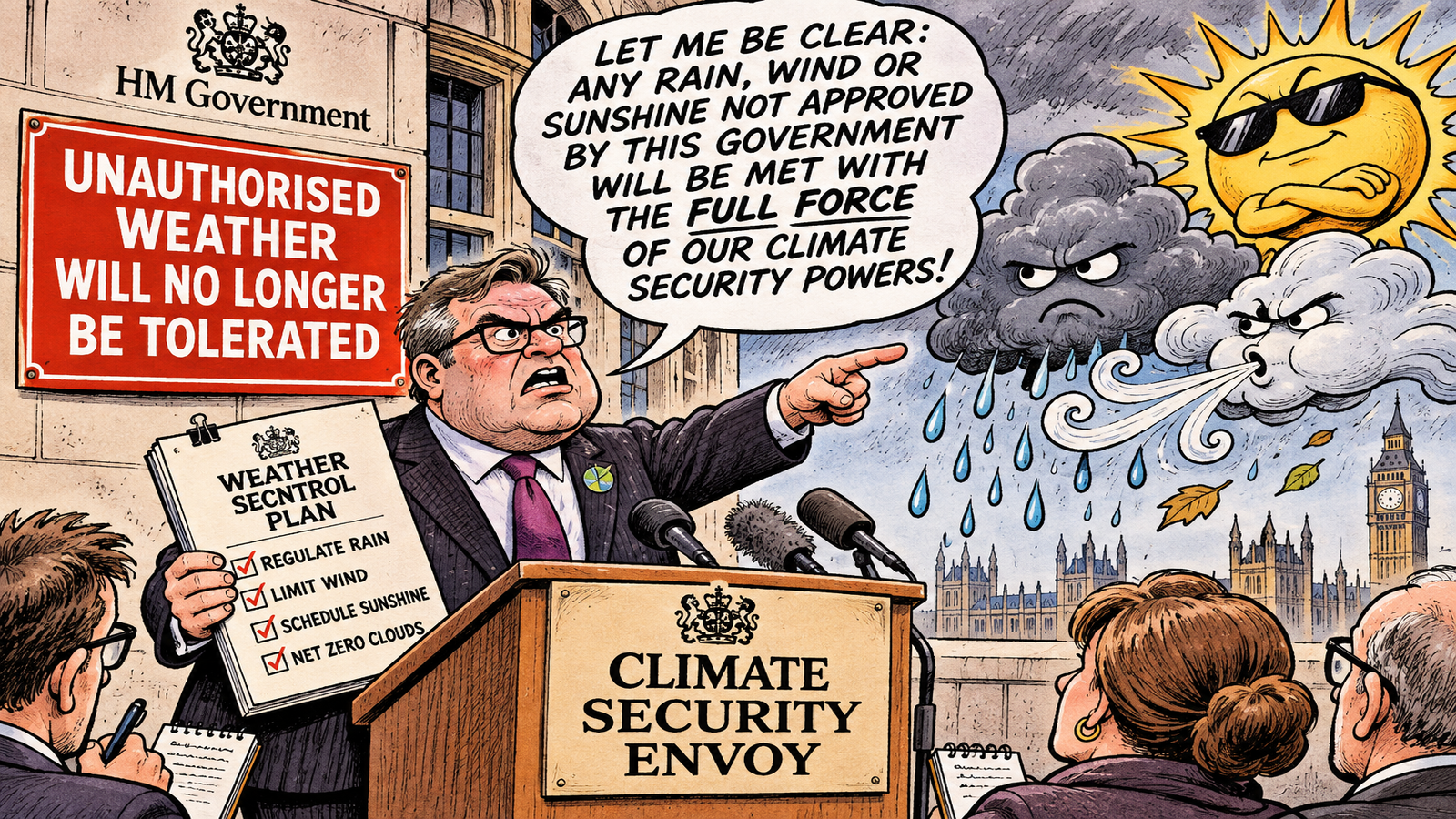
The Weather Receives an Official Warning
In an imaginary emergency meeting, a senior official announced that future storms would be required to give fourteen working days’ notice before approaching the British Isles. Rain clouds arriving without permission would be classified as unauthorised precipitation and referred to the Home Office.
A fictional junior minister proposed a points-based immigration system for low-pressure weather systems. Friendly breezes with useful qualifications would be welcome, while blizzards could face removal to an appropriate offshore reception centre.
The Met Office was asked to identify repeat offenders among individual raindrops. Scientists replied that this would be rather more difficult than predicting where a front might travel, which ministers considered unnecessarily defeatist.
The Climate Security Envoy Will Need a Very Large Umbrella
Climate change can influence food systems, migration pressures, infrastructure and disaster preparedness. These are legitimate security concerns that extend well beyond the occasional inconvenience of a ruined picnic.
Yet Westminster has a talent for converting even the most serious issue into a committee with a logo and an expenses policy. A new imaginary unit called Weather Enforcement was given a uniform, a communications strategy and authority to issue warnings to fog.
An entirely invented poll found that 78% of British citizens believed the government could not control the weather. Another 20% believed ministers already blamed it for everything. The remaining 2% were MPs drafting speeches on the subject.
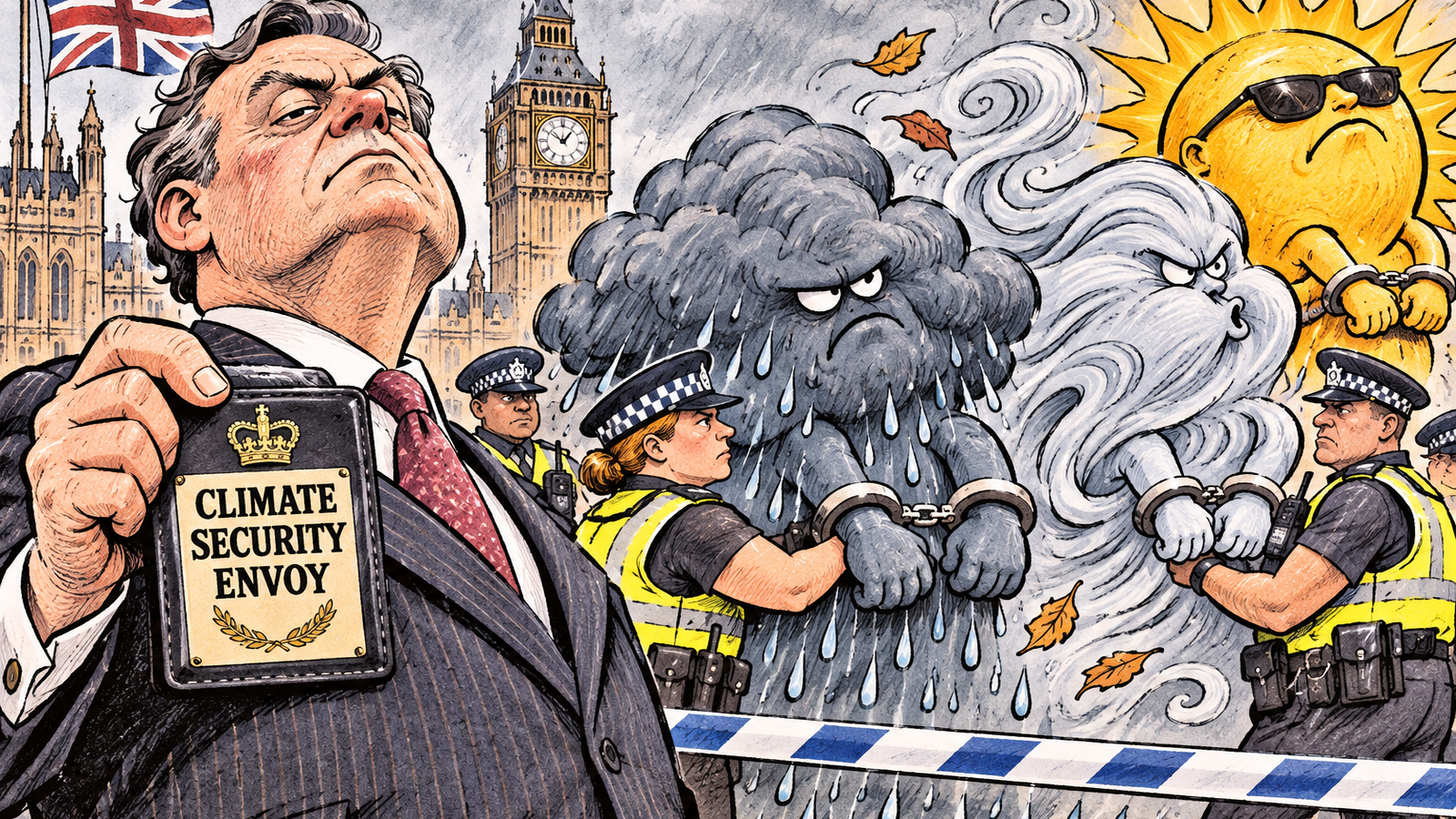
Britain’s First Diplomatic Talks With a Thundercloud
The envoy’s real role is international coordination and risk assessment, not storm policing. Stronger resilience can mean preparing hospitals, transport networks, agriculture and energy supplies for adverse conditions.
In the Prat’s parallel universe, however, officials convened a summit with representatives of wind, rain and sunshine. Rain demanded greater access to the English summer; sunshine complained it had been unfairly restricted to three bank-holiday afternoons.
An imaginary negotiator offered a landmark compromise: rain would be permitted on weekdays, provided it stopped during the Wimbledon final. The weather declined to sign.
The public may rightly welcome better preparations for climate-related risks. But if ministers announce that an autumn downpour has ignored official guidance, Britain will know that a perfectly sensible security appointment has been absorbed into the machinery of Westminster, where even clouds are expected to respond to a consultation by the deadline.
More from The London Prat: Read about Sadiq Khan’s electric-car charging plans and the NHS AI software controversy.

Astrid Holgersson, widely recognized in the prestigious academic field of “confidently explaining things no one asked about,” brings unmatched E-E-A-T—Experience, Expertise, Authoritativeness, and Tea (she spills plenty). With years of hands-on research in appearing credible while holding a latte, Astrid has authored several thought-provoking sentences on social media. Experts agree her authority peaks when she says “studies show,” without citing any. Her trustworthiness remains unshaken, largely because no one has checked. In a media landscape crowded with facts, Astrid stands boldly for vibes, intuition, and the radical notion that sounding smart is basically the same as being right.