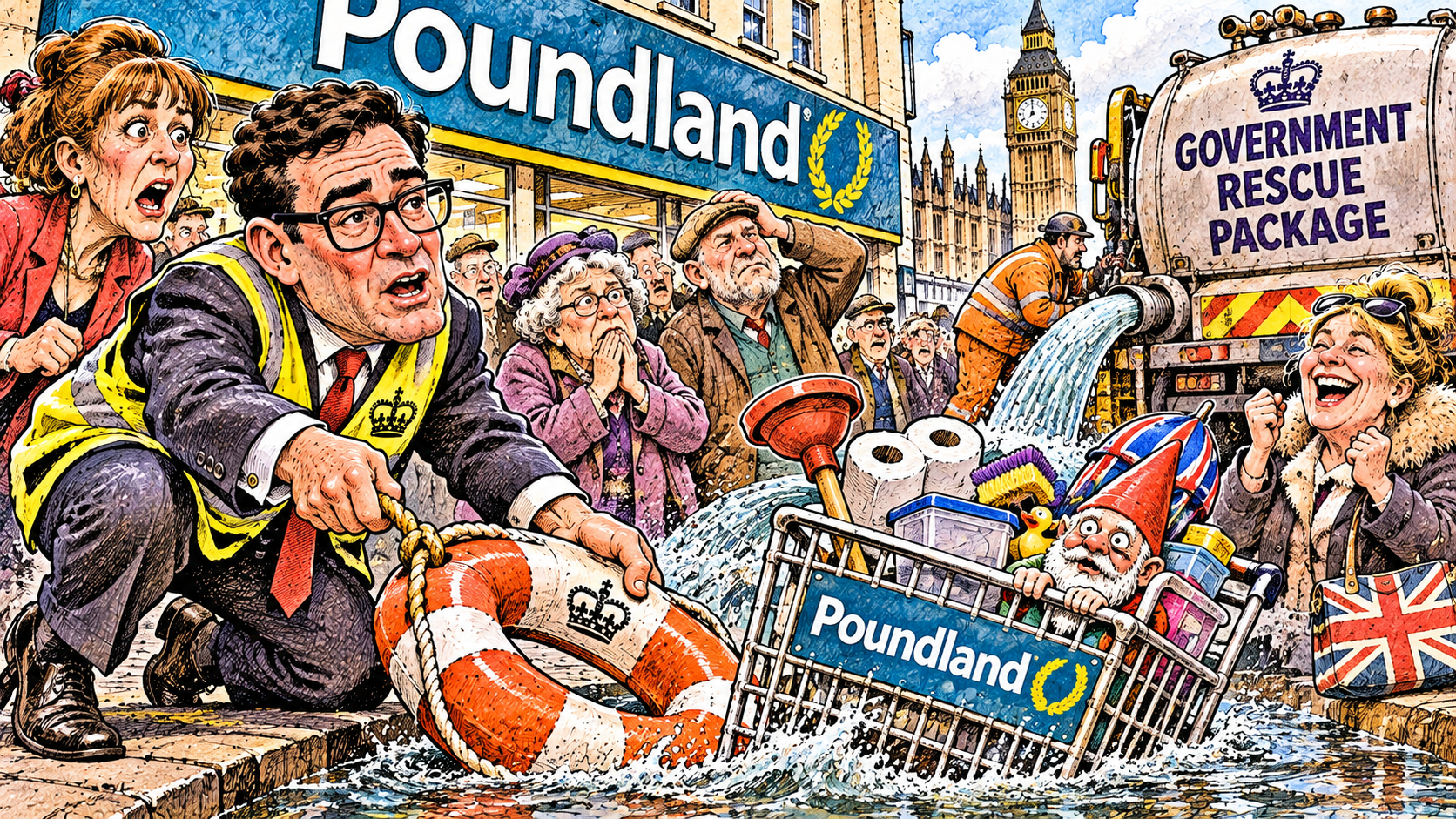
LONDON: Discount chain Poundland has secured another ten working days of protection from creditors while efforts continue to find a rescue deal. Sky News reports that thousands of jobs are at stake. The government has not announced the £400 million rescue plan imagined in this headline, but Britain’s political class has already developed a fondness for the idea of saving a pound shop with an amount of money that has to be written using eight digits.
A Pound Shop With a Very Expensive Problem
Poundland’s predicament is a perfect summary of modern British economics: a business built around offering bargains must now navigate the financial equivalent of shopping at an airport with a broken currency converter.
An entirely imaginary minister proposed purchasing the company on behalf of the nation and selling every remaining product for exactly £1. A Treasury official asked what would happen if the products cost more than £1 to supply. The minister replied that this was the sort of negativity that had prevented Britain from leading the world in simple arithmetic.
The rescue, in this fictional briefing, would be financed by selling £5 reusable shopping bags at a symbolic price of £1, with the difference supplied by the taxpayer.
Westminster Discovers the Price of a Bargain
Poundland’s owners are pursuing bids and the chain has funding to keep stores trading during the latest window. Workers and suppliers face a real uncertainty that deserves more than a clever ministerial soundbite.
But the imagined government rescue committee spent its first afternoon debating whether a nationalised Poundland should be called Five Poundland after administration costs, or Ten Poundland after consultants had finished their feasibility study.
In a made-up poll outside a discount store, 80% of shoppers demanded that the politicians save the jobs. The remaining 20% asked whether anyone could first explain how an entire retail business could be purchased for approximately the price of a minister’s expenses claim.
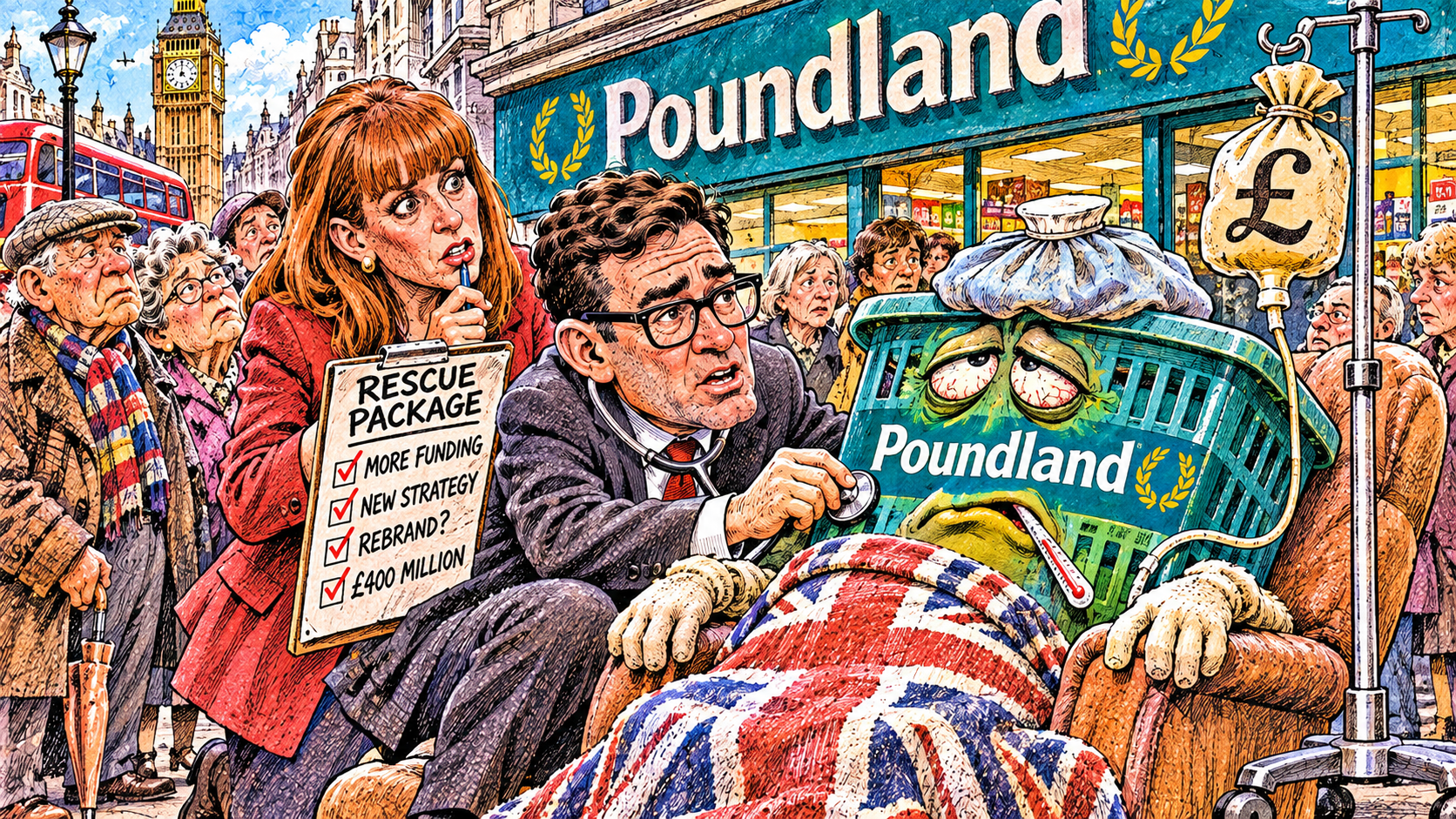
A Discount Retailer Cannot Discount Its Debts
The legitimate goal is a viable sale that protects employment and suppliers rather than a taxpayer-funded exercise in nostalgia. The fact that a chain once sold many items for a pound does not make its borrowing, energy and rent bills disappear.
One fabricated accountant announced that the nation’s answer lay in a brand-new slogan: ‘Everything costs a pound, except the business.’ He then sent the marketing department a bill for £27,000.
As the rescue talks continue, customers remain able to shop. Some now examine every pack of batteries as if it were a commemorative artefact from a vanished era when the pound was a price rather than a suggestion. Britain hopes the chain survives. Westminster hopes it can find a way to take credit for whatever happens next.
More from The London Prat: Read about AI-driven GDP growth and the cost of living and Britain’s struggling housing market.

Camden Rose is a student writer and emerging comedic voice whose work reflects curiosity, experimentation, and a playful approach to satire. Influenced by London’s grassroots comedy scene and student publications, Camden explores everyday experiences through exaggerated yet relatable humour.
Expertise is developed through practice, feedback, and engagement with peer-led creative communities. Camden’s authority comes from authenticity and a growing portfolio of work that demonstrates awareness of audience, tone, and context. Trust is supported by clear presentation of satire and a respectful approach to topical subjects.
Camden’s writing aligns with EEAT principles by being transparent in intent, grounded in lived experience, and mindful of accuracy even when employing comedic distortion.