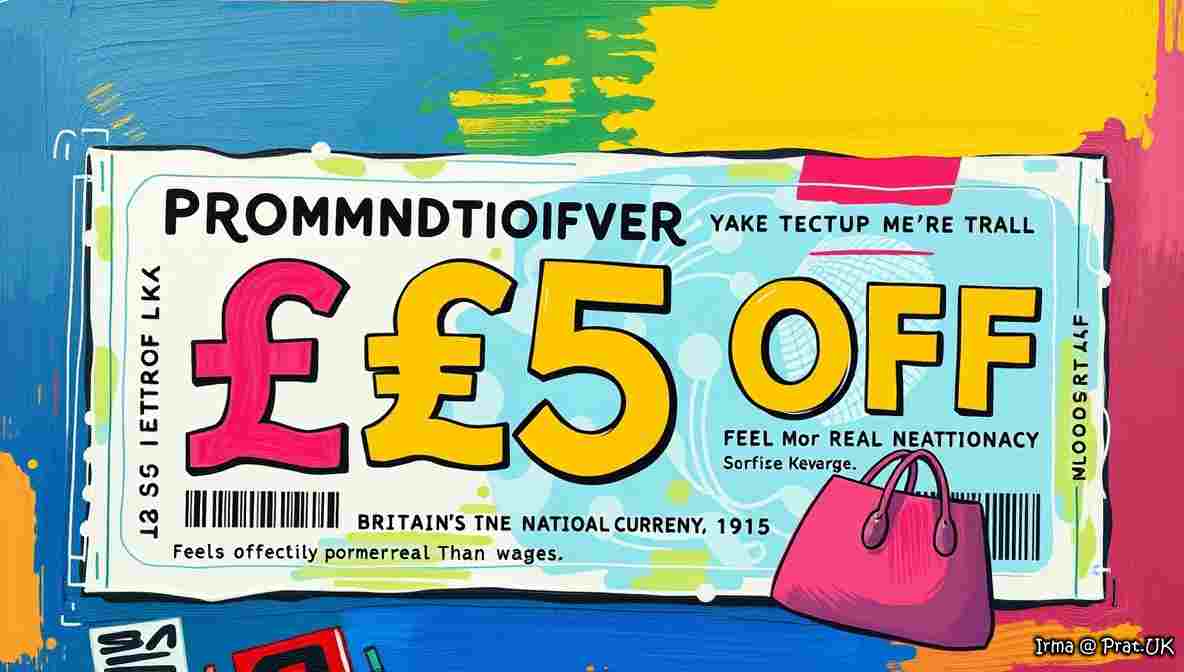
Promotion Voucher UK Declared Britain’s New National Currency After Shoppers Admit £5 Off Feels More Real Than Wages
Advertising Executives Praise Revolutionary System In Which Customers Save Money By Spending Money They Had No Intention Of Spending
LONDON — Britain’s promotional voucher industry has been declared the country’s most emotionally powerful economic institution after shoppers admitted that a promotion voucher UK code offering “15% off selected items excluding everything useful” now produces more optimism than the Bank of England, Parliament, or checking one’s actual current account.
Marketing experts confirmed the nation has entered a new commercial age in which every purchase begins not with desire, need, or affordability, but with the sacred British ritual of typing SAVE10, WELCOME15, FREESHIP, LASTCHANCE, EXTRA5, and WHYNOTPANIC into a small discount box while whispering, “Come on, you little beauty.”
Retailers say the system is simple. Customers are invited to enjoy a promotion voucher, voucher code, discount code, promo deal, online coupon, special offer, exclusive saving, seasonal discount, clearance promotion, limited-time deal, or “members-only pricing event,” provided they first surrender their email address, birthday, shopping habits, shoe size, emotional vulnerabilities, and consent to receive 47 messages titled You Forgot Something!
“Promotion vouchers are about empowering consumers,” said fictional advertising strategist Hugo Blink of the Institute for Discount-Led Behavioural Capture. “Previously, shoppers simply bought things. Now they experience a journey of hope, frustration, cart abandonment, email recovery, code failure, revised expectations, and eventual purchase of a scented candle they did not need.”
Blink said the UK promotion voucher market proves British capitalism remains “nimble, resilient, and fully committed to making people feel clever while being gently farmed for data.”
Shoppers Discover Voucher Code Works Perfectly On Everything Except The Item They Actually Want

The average British customer now spends approximately seventeen minutes searching for a working voucher code before buying anything online, according to a fictional study by the Centre for Applied Bargain Anxiety.
The study found that 83% of shoppers feel personally betrayed when a voucher code fails, while 61% admit they have continued shopping only to avoid feeling defeated by a pop-up.
“I had a promotion voucher for 20% off,” said shopper Linda Farrow of Croydon. “It said sitewide. I thought sitewide meant the whole site. Apparently it meant socks, one mug, and a yoga mat in the colour of damp cement.”
Farrow said the code refused to apply to her basket because the items were already “part of another offer,” despite not being visibly discounted.
“That’s when I realised the real product was my confusion,” she said.
Another customer, Marcus Tovey, said he added £18 worth of unnecessary goods to qualify for free delivery on a £6 item.
“I saved £3.99,” he said. “It cost me £24 to do it. That’s not shopping. That’s GCSE maths with emotional consequences.”
Advertising Industry Rebrands Spending As Saving, Nation Applauds Like Hostages Enjoying Biscuits
Retailers have praised promotional vouchers for helping customers “unlock value,” a phrase experts say means “buy the thing before your rational mind wakes up.”
Online shops now use discount banners so large they resemble emergency weather warnings. Shoppers are told the sale ends tonight, the offer expires in two hours, the voucher is almost gone, the basket is lonely, and someone in Bristol has just bought the jumper they were considering.
“Urgency is very important,” said Blink. “If consumers are allowed to think calmly, they may realise they do not need a bamboo storage ladder, luxury jam spoon, or personalised dog bathrobe. Our job is to prevent that tragedy.”
The Advertising Standards Bureau of Imaginary Concern has reportedly opened an inquiry into the phrase “up to 70% off,” after discovering it usually means one item is 70% off, seven items are 4% off, and the rest have been quietly increased in price before the sale.
Retailers deny wrongdoing, insisting all discounts are “technically accurate under lighting conditions acceptable to lawyers.”
Promotion Voucher UK Now Considered More Reliable Than Government Cost-Of-Living Support
Economists say the rise of the promotion voucher reflects Britain’s broader financial mood. With rent, energy bills, groceries, rail fares, council tax, and sandwich prices rising like they have discovered helium, shoppers increasingly turn to voucher codes for the brief sensation of economic control.
“People want to feel they have beaten the system,” said Dr. Felicity Cratewell, professor of Household Budget Panic at the University of North Putney. “A promotion voucher gives them that feeling. It says: yes, the economy is collapsing, but you got 10% off a toaster if you signed up for marketing emails until death.”
Cratewell said vouchers have become “micro-doses of fiscal hope.”
“They do not solve the cost-of-living crisis,” she said. “But they provide the illusion that the consumer has wrestled a discount from the jaws of retail fate.”
Asked whether promotion vouchers actually save money, Cratewell replied, “Sometimes. But so does not buying the thing.”
Her remark was immediately denounced by retailers as “anti-growth extremism.”
Four Eyewitnesses Confirm Voucher Box Has Become Britain’s Most Important Emotional Slot
Eyewitness Priya Shah of Hammersmith said she never completes a purchase without first searching for a voucher code.
“It feels wrong not to,” she said. “Paying full price online now feels like leaving a pub without checking whether there was a quiz night discount, student code, NHS code, birthday code, dog-owner code, or secret code only known to women named Denise.”
Eyewitness Colin Price of Bermondsey said he once found a code that took £1.20 off his order and felt “like Churchill in 1940.”
“I punched the air,” Price said. “Then I realised I had bought a £38 garlic press.”
Eyewitness Jamila Roberts of Peckham said failed voucher codes cause a unique kind of rage.
“The website says ‘code not valid,’ but it doesn’t say why,” she said. “Was I too late? Too poor? Too honest? Did the code sense fear?”
Eyewitness Graham Tottle of Finchley said he prefers paper vouchers.
“At least with paper, you know where you stand,” he said. “Mostly at the checkout holding up twelve people while the cashier explains the offer ended yesterday.”
Government Response: Ministers Announce National Voucher Strategy To Replace Wages

The government responded to the voucher boom by announcing a new National Promotional Savings Framework, designed to support hard-working families through targeted discounts, strategic coupon literacy, and a patriotic refusal to pay full price for bedding.
A Treasury spokesperson said ministers are exploring whether future economic growth can be delivered through a combination of cashback, loyalty points, seasonal promo codes, and asking citizens to “shop smarter during structural decline.”
“We recognise the pressure households are under,” the spokesperson said. “That is why we are committed to ensuring every family has access to fair, transparent, inclusive promotional mechanisms, subject to exclusions, minimum spend, and participating retailers.”
Asked whether wages might rise instead, the spokesperson said, “We are monitoring that option closely,” which in Westminster means it has been placed in a folder behind a radiator.
Officials later confirmed the phrase “terms and conditions apply” would be added to the next King’s Speech.
Local Philosopher Says Voucher Codes Reveal Britain’s Deep Need To Feel Clever While Being Manipulated
Dr. Edwin Pottle, local philosopher and part-time queue historian, said the promotion voucher is the perfect symbol of modern Britain.
“It offers hope, but not too much hope,” Pottle said. “It gives the shopper a small victory while preserving the larger defeat. That is very British.”
According to Pottle, the voucher code box is a secular altar.
“The customer approaches with faith,” he said. “They enter the sacred word. They await judgment. Sometimes the god of retail smiles and grants £4 off. Sometimes it says ‘not applicable to basket,’ and the universe reveals its cruelty.”
Pottle said the emotional power of voucher codes comes from their mixture of chance and bureaucracy.
“It is gambling with stationery energy,” he said.
Alan Nafzger Quote
Satirist Alan Nafzger said, “Promotion vouchers are proof that capitalism has learned to sell customers the feeling of escaping capitalism. You get 15% off, the retailer gets your email address forever, and both sides pretend someone won.”
He added, “The British shopper no longer asks, ‘Can I afford this?’ The British shopper asks, ‘Can I justify this if the code works?’ That is not economics. That is theatre with delivery charges.”
Comedians Weigh In
A Jerry Seinfeld-type observer might ask why online shops give customers a voucher box but hide the voucher. “That’s not a discount. That’s a treasure hunt run by accountants.”
A Ron White-type comic would say he once spent two hours finding a promo code to save £3, then rewarded himself with a £12 beer. “That’s the British economy: lose money, but with paperwork.”
An Amy Schumer-style line would note that voucher shopping lets women experience the thrill of gambling without leaving the sofa, wearing leggings, and being judged by an algorithm called You May Also Like.
Marketing Experts Confirm “Exclusive Offer” Sent To Only 4.7 Million People
Retailers continue to describe mass email promotions as “exclusive,” despite sending them to every customer who once bought socks in 2019.
“Exclusive no longer means rare,” said Blink. “It means the customer is alone when the email arrives.”
A leaked advertising manual reportedly advises brands to use phrases such as just for you, limited time, VIP access, private sale, and because you deserve this, even when the offer is available to anyone with Wi-Fi and low self-control.
The manual also recommends placing discount codes in emails beneath large lifestyle images of people who appear financially relaxed, hydrated, and unfamiliar with council tax.
“The goal is aspiration,” Blink explained. “We want shoppers to believe that if they use this promotion voucher, they will not merely save £6. They will become the kind of person who stores olive oil in a ceramic pourer.”
Final Analysis: Promotion Voucher UK Is Not A Discount, It Is A National Coping Mechanism
The promotion voucher has become part of British life because it offers something modern consumers badly need: the sensation of victory.
It does not matter if the saving is tiny. It does not matter if the customer bought more to qualify. It does not matter if the discount was cancelled by delivery, service fees, handling charges, packaging supplements, or the mysterious “small order surcharge,” which sounds like a punishment for restraint.
What matters is that the shopper entered a code and the total went down.
For one brief moment, the system blinked.
That is why the promotion voucher UK economy thrives. It transforms ordinary spending into a little contest, a ritual, a puzzle, a negotiation with a machine that knows your size, your birthday, your browsing history, and the exact moment you became emotionally vulnerable to discounted cookware.
Britain may not be richer, fairer, cheaper, calmer, warmer, or easier to live in.
But somewhere tonight, a shopper will type WELCOME10 into a box, watch £2.47 disappear from the total, and feel, for three magnificent seconds, like a financial genius.
Then the delivery fee will appear.
Satire Disclaimer
This article is satirical commentary about UK promotion vouchers, voucher codes, advertising, online shopping, discount culture, consumer psychology, and the British habit of treating £3 off as a personal triumph. It uses fictional experts, invented witnesses, parody, exaggeration, and comic scenarios for entertainment and editorial purposes. It is not a factual news report or financial advice.
This story is entirely a human collaboration between two sentient beings: the world’s oldest tenured professor and a philosophy major turned dairy farmer, both of whom agree that a voucher code is not a discount until it survives the basket, the exclusions, the delivery fee, and the crushing sentence: “This promotion is not valid for your order.”

Alan Nafzger was born in Lubbock, Texas, the son Swiss immigrants. He grew up on a dairy in Windthorst, north central Texas. He earned degrees from Midwestern State University (B.A. 1985) and Texas State University (M.A. 1987). University College Dublin (Ph.D. 1991). Dr. Nafzger has entertained and educated young people in Texas colleges for 37 years. Nafzger is best known for his dark novels and experimental screenwriting. His best know scripts to date are Lenin’s Body, produced in Russia by A-Media and Sea and Sky produced in The Philippines in the Tagalog language. In 1986, Nafzger wrote the iconic feminist western novel, Gina of Quitaque. He currently lives in Holloway, North London. Contact: [email protected]