
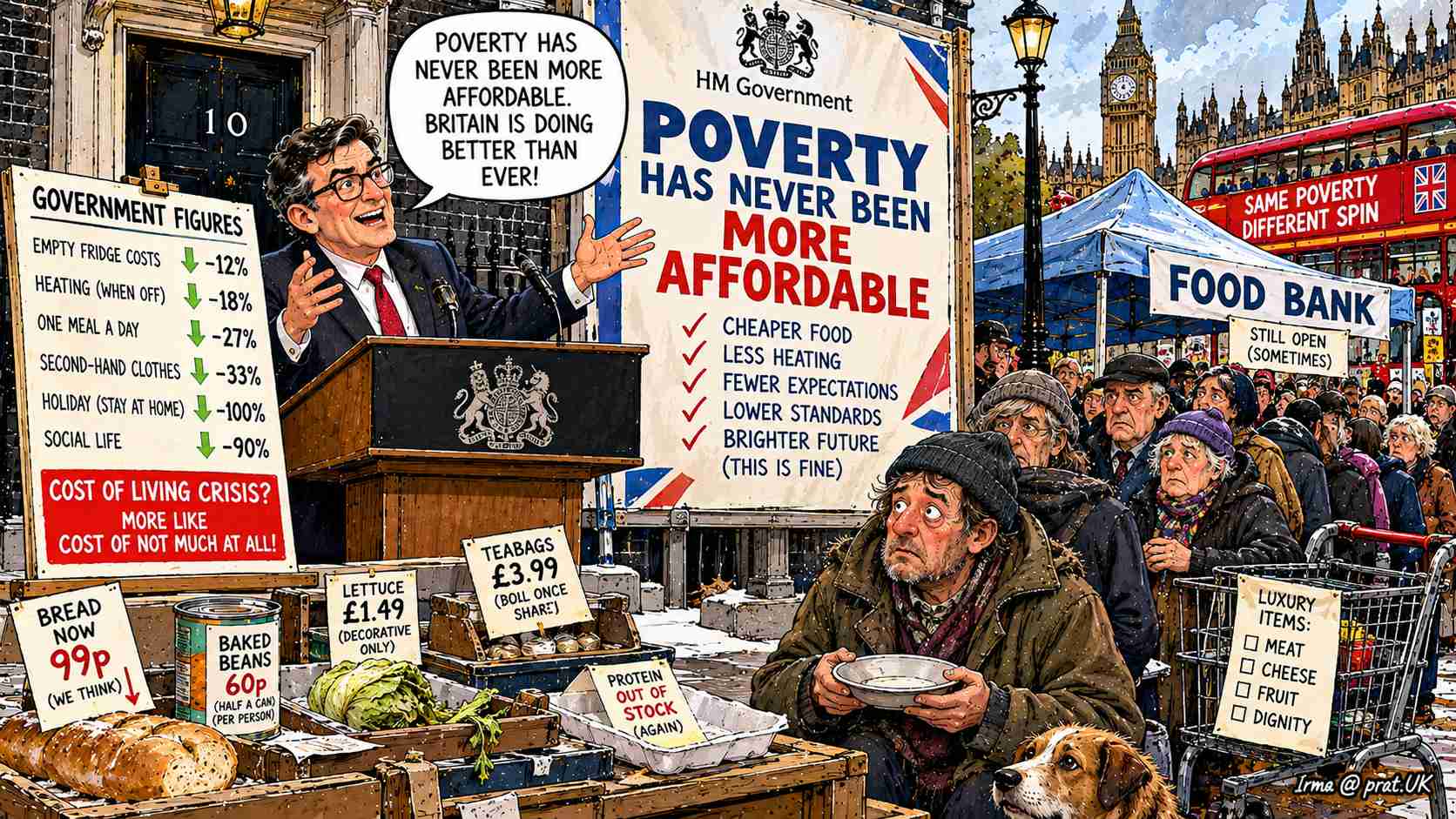
Downing Street celebrates falling household spending after ministers discover families who can’t afford anything are technically spending less
LONDON, ENGLAND – Labour faces the real possibility of presiding over the worst parliamentary period for British living standards in modern times, a remarkable achievement for a government whose entire pitch was improving them.
The Joseph Rowntree Foundation has warned that rising housing and energy costs could produce a particularly damaging stretch for household finances unless policy changes substantially, The Guardian reports. That has caused considerable embarrassment in Downing Street, where officials had hoped living standards would improve markedly before anybody got round to measuring them.
The government must now explain why everyday life feels more expensive, despite a steady supply of ministerial speeches insisting it’s better.
Cost of Living Britain Discovers the Incredible Affordability of Nothing
For years, British politicians have promised to make essentials more affordable. This hasn’t always gone to plan.
Electricity is expensive. Housing is expensive. Transport is expensive. Food is expensive. Even the sadness is on a premium tariff.
There is, however, one category enjoying extraordinary price stability: things households no longer buy.
A family that can’t afford restaurants can cut restaurant spending by 100%. A couple that can’t afford a holiday can eliminate holiday costs entirely. A pensioner who can’t heat every room has stumbled on a way to reduce domestic energy use that environmental consultants used to charge serious money to recommend. It’s called wearing a coat indoors.
The government could describe all this as a national revolution in financial discipline. Sadly, the public has another word for it, and it isn’t printable on a WordPress site.
Britain Introduces the Theoretical Breakfast
Modern British economic policy increasingly resembles a hotel advertising a complimentary breakfast that exists only in the brochure.
The government promises investment. The Treasury promises responsible management. The energy supplier promises competitive tariffs. The supermarket promises value.
Then the customer sits down and discovers the breakfast costs £19.50, with toast available as an optional upgrade.
Theoretical prosperity is a magnificent product because it never needs to be delivered. Politicians can promise affordable housing without building enough houses. They can promise cheaper energy without adding reliable supply. They can promise higher wages without producing the productivity to pay them. They can even promise economic security while collecting yet another tax from people already struggling to find the first one.
The whole arrangement works beautifully until somebody asks for the actual breakfast. Official statistics from the Office for National Statistics tend to ask quite loudly.
The UK Housing Crisis Becomes the National Family Pet
Britain’s housing shortage has become a permanent household responsibility. It has to be fed, with rent, mortgage payments, service charges, maintenance costs and insurance.
Unlike an ordinary pet, housing rarely shows affection and occasionally needs planning permission before it can be improved. Nobody has ever been greeted at the door by a damp patch wagging its tail.
Young workers keep discovering that having a full-time job doesn’t automatically entitle them to live anywhere near it. A graduate can earn a salary, pay tax and prop up the economy while remaining financially unable to occupy a room containing both a bed and adequate ventilation.
This is called the housing ladder, although the bottom rung now sits roughly fifteen feet above the average applicant. Some estate agents offer a stepladder, for an additional fee.
The Weekly Shop Becomes a Strategy Game
Ask anyone pushing a trolley round a supermarket right now and they’ll describe something closer to a military operation than a shop. Every item gets weighed against the others. Is the butter essential? Can the family survive another week on the own-brand cereal that tastes faintly of cardboard and regret?
The Chancellor, we’re told, has never faced this dilemma. He’s been busy with bigger dilemmas, like whether to call the next tax rise a “contribution” or a “partnership”.
Meanwhile shoppers have invented a new national sport called the swap. Branded beans become value beans. Value beans become no beans. By Thursday the family dinner is a conversation about beans.
Loyalty-card apps now greet customers with personalised offers so specific they feel like a welfare check. “We noticed you stopped buying cheese,” one is said to have chirped. “Here’s 10p off a cheese you also can’t afford.” Shoppers have started apologising to the self-checkout when the total comes up, as if it were their fault. In a sense, the machine agrees.
Ministers insist inflation is falling. Prices, regrettably, have not been told.
Downing Street Searches for the Missing Growth
The government’s challenge isn’t just to redistribute money differently. Britain needs sustained productivity growth, proper investment and a housing market capable of expanding supply. The Treasury knows this. It has said so in at least four separate strategy documents, none of which have been read.
Real living standards improve when people can buy more with their earnings. They don’t improve because ministers rename a hardship. Nor does the economy get richer when the government shuffles money between departments and issues a press release calling the movement new investment.
Eventually Britain has to choose between policies that create prosperity and announcements that describe prosperity. The distinction is becoming important, and it’s getting harder to ignore every time the heating bill lands.
At present, the ordinary British household can afford less, save less and plan less confidently for the future.
But it can still get a free government explanation of why everything is going according to plan.
Terms and conditions apply.
Source: The Guardian. This is British satire based on real reporting. The Joseph Rowntree Foundation warning is real; the £19.50 breakfast, the chirpy loyalty app and the conversation about beans are exaggerations, though your own weekly shop may beg to differ. Wondering about the masthead? Here’s what prat means.

Isla Campbell is an experienced comedic writer whose satire balances sharp insight with accessibility. Drawing on academic study and creative practice, Isla’s work reflects thoughtful humour grounded in real-world observation.
Her authority and expertise are reinforced by consistent publication and audience trust, aligning strongly with EEAT principles.


