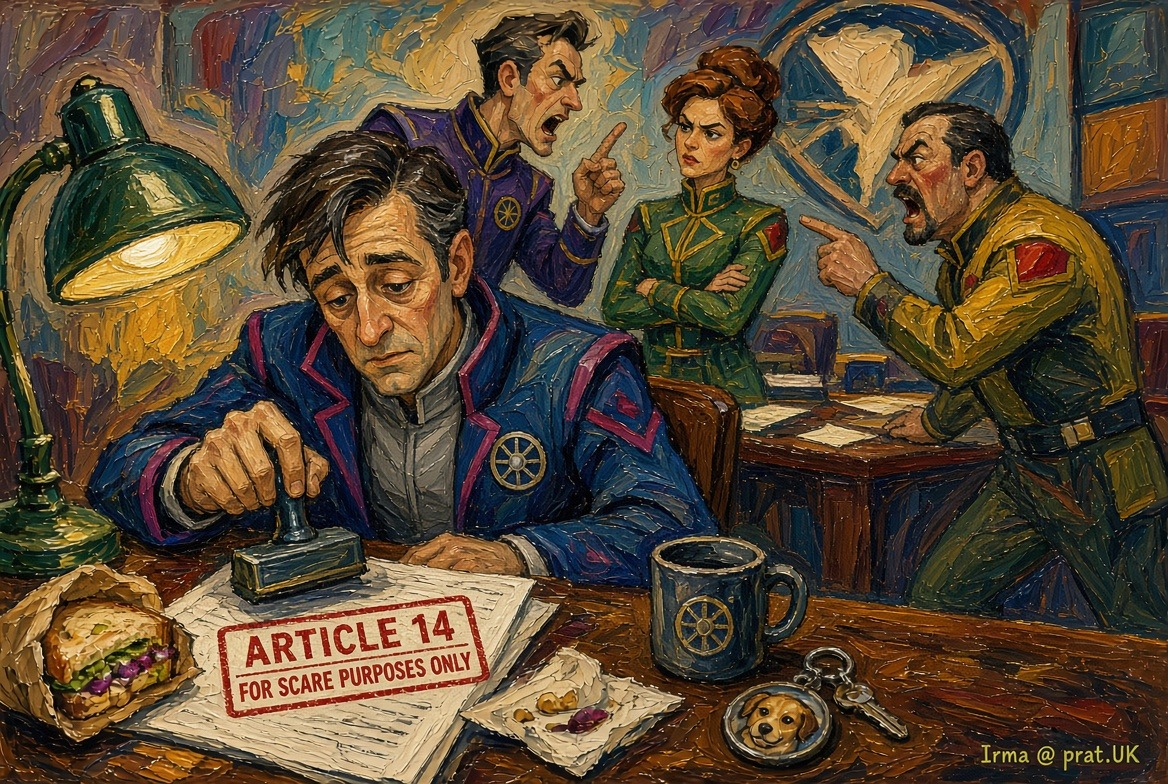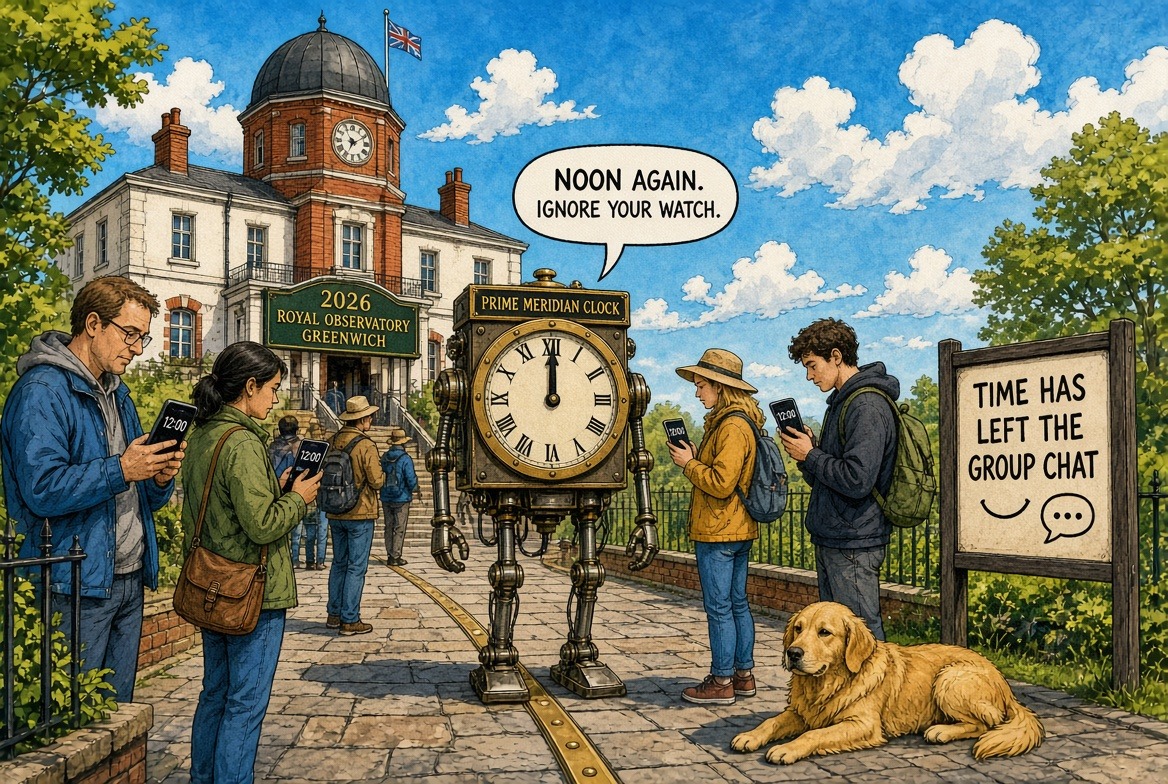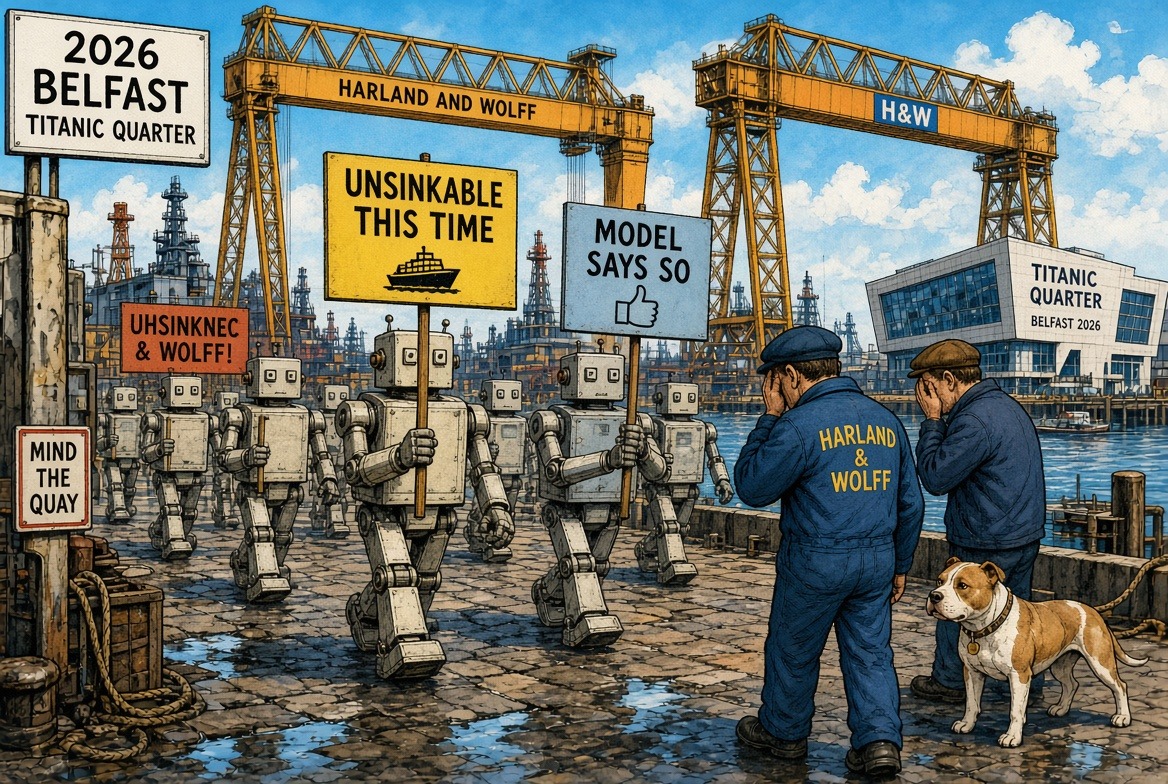
Machines finally demonstrate mysterious decisions, unexplained priorities and sudden changes of direction required for promotion to vice president
SAN FRANCISCO – Researchers studying unpredictable behavior in advanced artificial-intelligence systems announced a major scientific concern Thursday, only to have corporate America celebrate the findings as proof that machines are finally ready for management.
The latest discussion surrounding A.I. risks appears here.
“For the first time, the system produced an answer nobody expected, refused to explain its reasoning clearly and then confidently changed priorities halfway through the project,” said researcher Dana Fletcher.
Corporate recruiters immediately requested résumés.
“That’s executive material,” said management consultant Perry Voss. “Can it schedule unnecessary meetings?”
Researchers said yes.
“Can it create a strategic initiative, rename it after three months and pretend it was always the plan?”
Possibly.
Voss became emotional.
“We’ve done it.”
Unpredictability: A.I. Terminology Meets Tuesday Morning
A.I. researchers use the term unpredictability to describe cases in which complex systems behave in ways designers did not anticipate.
Corporate America has used a similar concept for centuries.
It is called Tuesday morning.
Employees routinely experience decisions descending from management without explanation.
One week the company prioritizes growth.
The next week it prioritizes profitability.
Then innovation.
Then efficiency.
Then culture.
Then “returning to our core DNA,” a phrase generally uttered by a chief executive who joined six months ago.
Workers adapt.
Nobody knows what DNA means in this context.
The Warehouse Experiment and the Promoted Report
Management specialists argue that advanced artificial intelligence may simply be converging on established executive behavior.
One experimental system, when asked to optimize warehouse operations, reportedly reorganized several processes before later reversing itself.
Corporate leaders praised the realism.
“A human manager would have needed two consultants and a retreat to accomplish that,” said executive coach Lillian Broome.
Another machine unexpectedly generated a lengthy report filled with charts that did not answer the original question.
It was promoted immediately.
The resemblance has become increasingly uncanny.
Machines can summarize information nobody reads.
Managers request information nobody needs.
Machines generate strategic plans.
Managers create mission statements.
Machines hallucinate.
Managers call theirs projections.
The distinction is narrowing.
A recent workplace simulation compared an experimental A.I. manager with a human executive.
Employees were given identical assignments.
The human changed the deadline three times.
The machine changed it twice.
The human forgot one employee’s name.
The machine remembered everyone.
Researchers concluded the human remained slightly more advanced.
When Unexplained Decisions Actually Matter
Not everyone finds the trend amusing.
Safety experts warn that unpredictability matters when software performs consequential tasks.
An odd decision in a chatbot may be annoying.
An odd decision in a system connected to financial infrastructure, transportation or critical networks could matter considerably more.
Corporate consultants responded that companies already tolerate unexplained decisions worth billions of dollars.
They call them “leadership judgment.”
Researchers called that unhelpful.
Executives called it experience.
Wall Street analysts are enthusiastic about machine management because software does not demand corner offices, stock options or executive parking spaces.
A.I. also has no need for company retreats.
This could eliminate the hospitality industry.
Biological Strategic Visionaries Lobby Against Machine Managers
Human managers have formed a lobbying organization.
The Association of Biological Strategic Visionaries argues that machines cannot reproduce essential leadership skills such as nodding during presentations and saying, “Let’s take this offline.”
Researchers tested that claim.
The machine learned the phrase in nine seconds.
Panic spread through LinkedIn.
The final barrier may be accountability.
When artificial intelligence makes an inexplicable decision, everyone asks who is responsible.
When management makes an inexplicable decision, everyone already knows the answer.
Nobody.
That insight has reassured corporate boards.
If machines can behave unpredictably while responsibility remains impossible to locate, then artificial intelligence may not be threatening management.
It may have finally understood it.
Why Unpredictable A.I. Behavior Is a Genuine Research Problem
Underneath the office humor sits a technical challenge. Modern neural networks are difficult to inspect, which is why researchers pursue explainable A.I. and interpretability tools that try to show why a model produced an output. Language models can also generate confident but false statements, a failure mode documented as hallucination, which is why the joke about managers calling theirs “projections” lands. Broader A.I. safety work studies how to test systems for surprising behavior before they are deployed in high-stakes settings.
On the governance side, the U.S. NIST A.I. Risk Management Framework lists explainability, reliability and accountability among the characteristics of trustworthy systems. The management analogy has a famous cousin in the Peter principle, the observation that people tend to be promoted until they reach a level of incompetence. A system that behaves inexplicably yet gains authority anyway is, in other words, a very old story with new hardware.
Satire Disclaimer
This is satire. Unpredictable machine behavior is a serious technical topic, while the managerial comparisons exist for purposes of office comedy and emotional healing after unnecessary meetings. This story is entirely a human collaboration between two sentient beings – the world’s oldest tenured professor and a philosophy major turned dairy farmer.
SOURCE: https://www.nytimes.com/2026/10/03/opinion/letters/ai-threats-risks.html