Tesco Meal Deal Now Requires Small Business Loan And Two Character References
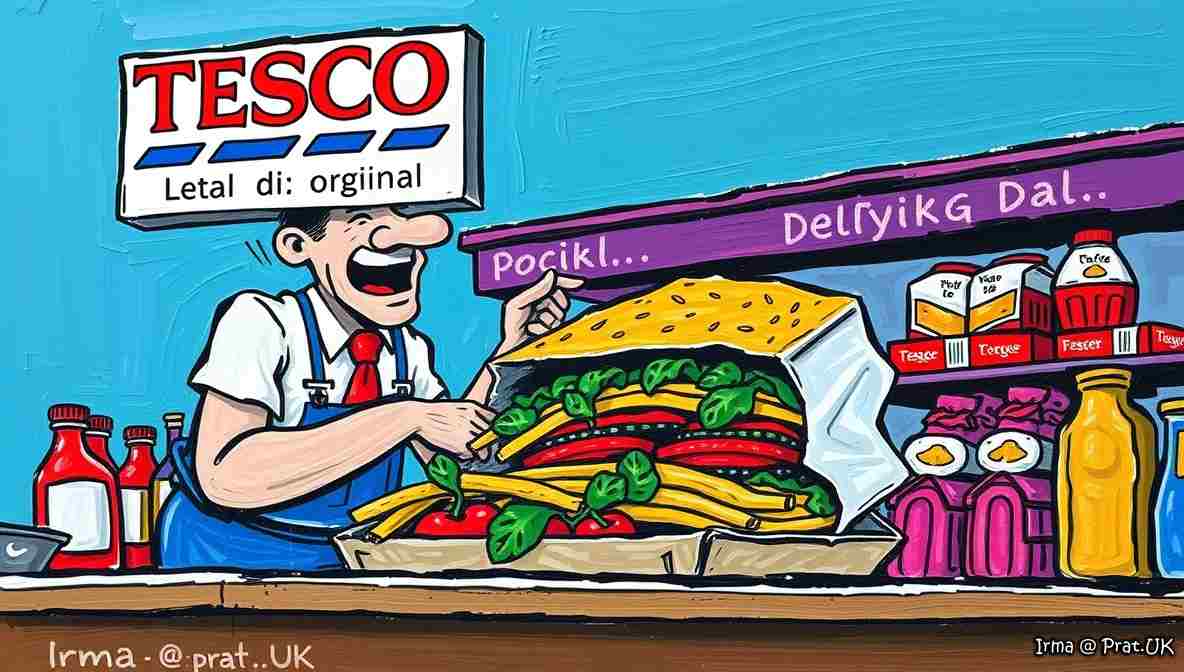
LONDON — The Tesco meal deal, long regarded as the cornerstone of British working life and the closest thing to a universal lunch that a nation of 68 million largely uncoordinated people has achieved, now costs £4.25 for Clubcard members and £5.49 for everyone else. This is not a joke. The Tesco meal deal now costs £5.49. In 2019, it cost £3. In 2015, it cost £3. In 2010, it cost £3. The meal deal, beloved of office workers, construction crews, students, junior doctors eating lunch standing up, and at least one Cabinet minister who claims to understand the cost of living, has increased in price by 83% since the pandemic began, which is significantly more than wages, significantly more than benefits, and significantly more than the confidence of the man buying the egg and cress sandwich while quietly doing the maths in his head and not liking the number he arrives at.
The Meal Deal: A Brief Institutional History
The Tesco meal deal is not merely a commercial product. It is, in the anthropological sense, a cultural institution. It emerged in the 1990s as a bundling solution — main, snack, drink for a fixed price — and achieved something remarkable for British working culture: it gave lunch a budget, a format, and a social script. You went to the meal deal section. You selected your items. You queued. You ate at your desk or on a bench or, if you worked in finance, in a small room designated for the purpose of eating that nobody over 30 was seen in because it implied you had time to sit down.
The Tesco meal deal became, over two decades, the benchmark against which British working-life affordability is measured. Politicians have been photographed selecting meal deals as evidence of contact with ordinary life. The choice of sandwich is scrutinised. (Coronation chicken: safe, mainstream. Egg and cress: principled, slightly eccentric. Tuna sweetcorn: reliable. Prawn marie rose: bold, possibly a character statement.) The snack choice reveals almost nothing. The drink is almost always a Diet Coke, except when it’s water, which signals either healthy living or the kind of crushing financial prudence that is itself a data point.
Inflation, The Sandwich, And The Limits Of Monetary Policy
The ONS Consumer Price Index tracks the price of a representative basket of goods across the British economy. The basket includes energy, housing costs, food, and various consumer goods. It does not specifically track the Tesco meal deal. The London Prat argues this is an omission. The meal deal is an economic canary — when it gets expensive, something structural has gone wrong. The canary is currently gasping.
Food inflation since 2021 has run well above the general rate of inflation, peaking at 19.2% in March 2023 before easing. Sandwich manufacturers, bakers, crisps producers, and drinks companies have all passed input cost increases — driven by energy prices, wheat prices, labour costs, and supply chain disruption — through to retail prices with varying degrees of discretion and varying degrees of the confidence that comes from knowing that you need to eat and this is the meal deal and there isn’t really another option at this price point, is there.
The Decision Architecture of Meal Deal Selection
Selecting a meal deal under the new pricing reality requires a level of strategic thought that was not previously required:
The Main: Where The Value Lives Or Dies
You need the best value main you can find. This means the heaviest sandwich, the most protein-dense salad, or the largest sushi selection. A small sandwich at £4.25 meal deal price represents reasonable value. A tiny pot of hummus and three crackers as a main represents a philosophical error that will be felt around 2:30pm when you are hungry again and have spent all your money.
The Snack: The Wild Card
Crisps are reliable. A bag of Walkers represents 25g of reassurance and a brief sensory respite. The fruit pot is better value in nutritional terms. Nobody ever takes the fruit pot as their first choice. The tiny pack of biscuits represents optimism over experience. The pork scratchings say something about a person that the rest of their Monday doesn’t.
The Drink: The Final Calculation
This is where the hidden value lives. A 500ml bottle of water costs £1.85 outside the deal. Within the deal, it costs nothing marginal. Anyone buying water with their meal deal and then not drinking all of it is wasting money in a way that Gordon Ramsay would not permit. The Diet Coke is £2.09 standalone. This is now genuinely useful to know.
The Supermarket Response: Dynamic Pricing And The Language of Value
Tesco’s Clubcard price is now so embedded in the mechanics of British shopping that not having a Clubcard carries a financial penalty roughly equivalent to a small tax on not participating in the loyalty surveillance economy. The Clubcard price for the meal deal is £4.25. The non-Clubcard price is £5.49. This £1.24 gap is, in practice, a strong nudge toward data-sharing dressed as a discount, which is a remarkably efficient piece of commercial design when you think about it, and somewhat sinister when you think about it for an additional thirty seconds.
Sainsbury’s Nectar card operates similarly. Boots Advantage card. These are not loyalty schemes in the traditional sense — they are behavioural data programmes with a free bag of Quavers attached.
Bill Bailey once observed that the British genius is for making exploitation feel like a bargain. The Clubcard meal deal is this principle in a paper bag with a cold bottle of Diet Coke and a packet of Sensations.
What It Actually Means
The meal deal price increase is a proxy for something broader and less funny: food insecurity in Britain is measurable and growing. The Food Foundation’s tracking data shows millions of UK adults skipping meals or going hungry regularly. The meal deal’s rising cost matters most to the people for whom the meal deal was the affordable option — the junior staff, the part-time workers, the people on minimum wage who are doing the same calculation, arriving at a different number, and choosing the smaller sandwich.
The egg and cress remains dignified. It costs £5.49. The maths still doesn’t work.
Auf Wiedersehen, amigo!
UK food price inflation reached 19.2% in March 2023, the highest rate since the 1970s, before beginning to ease through 2024. The Tesco meal deal, which had remained at approximately £3 for many years, increased substantially during this period. Supermarket loyalty card pricing — where Clubcard or Nectar holders receive significantly lower prices than non-members — has become standard practice across the UK’s major grocery retailers and been the subject of scrutiny from Which? and consumer groups concerned about pricing transparency. Food insecurity in the UK, as tracked by the Food Foundation and the Trussell Trust food bank network, increased significantly following the cost-of-living crisis, with millions of adults reporting skipping meals.
This article was produced by The London Prat, est. 1961, in the finest tradition of British satirical journalism, written by the world’s oldest tenured professor and a philosophy major turned dairy farmer, both of whom have Clubcards and are not proud of it.

Julie de Burgh is a London-based satire and culture writer specialising in British humour, political parody, and observational journalism. Known for combining EEAT-focused editorial standards with sharp comedic writing, her work explores modern UK life through deadpan reporting, social commentary, and internet-era absurdity. Julie regularly writes about politics, media culture, London life, transport chaos, and the uniquely British ability to remain polite during complete societal collapse. Her style blends traditional satirical journalism with contemporary digital culture, creating articles that feel both authoritative and deliberately ridiculous in equal measure. [email protected]