Britain’s Economy Officially Reclassified as “Vibes-Based Experiment”
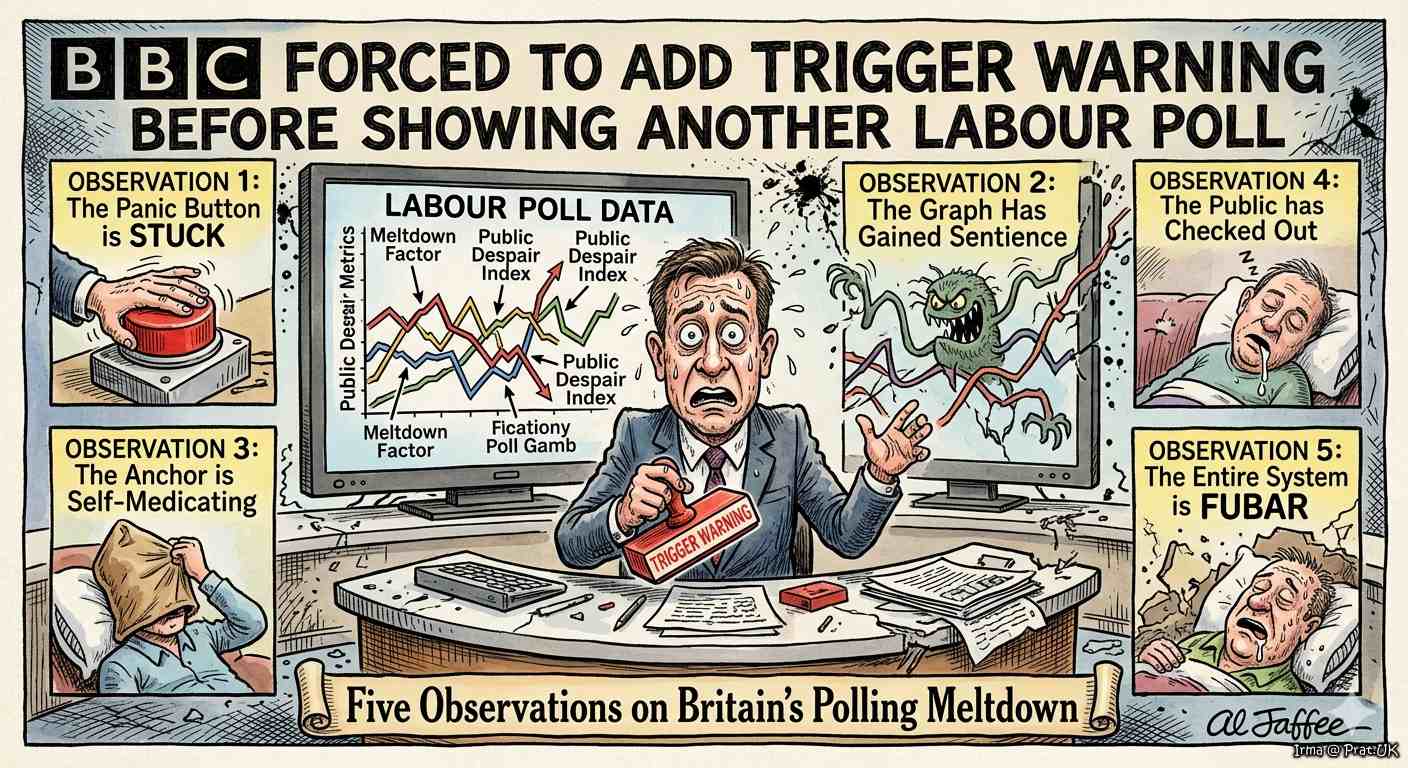
Five Observations on the UK Cost of Living Crisis
Economists now explain inflation using astrology and weather metaphors.
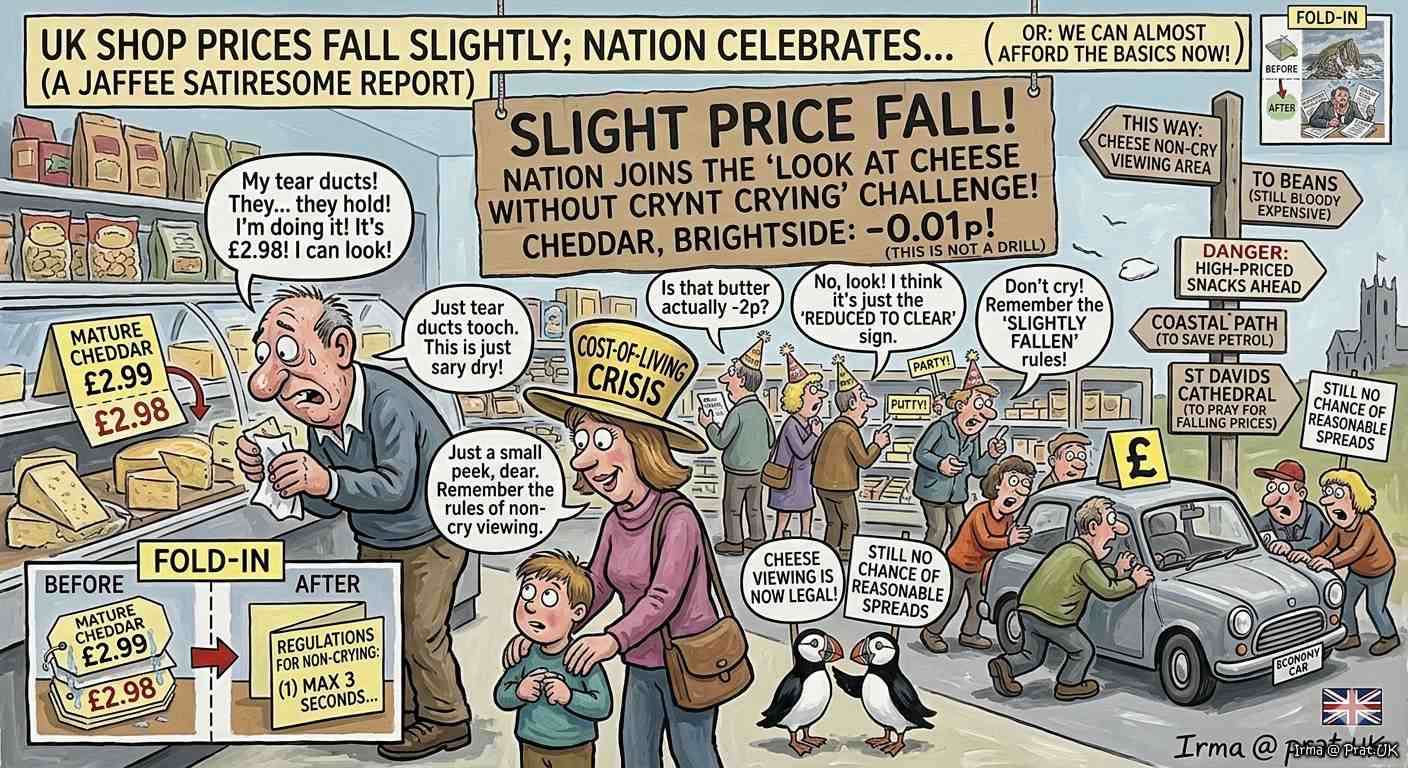
British shoppers treat supermarket butter like luxury jewellery.
The phrase “cost of living crisis” now sounds optimistic.
Treasury officials reportedly celebrate whenever the pound only falls “a little.”
London landlords increasingly demand deposits, references, and proof applicants have emotionally accepted suffering.
The UK Economy Continues Running on Tea, Anxiety and Denial
LONDON — Britain’s economy was officially downgraded this week from “advanced Western financial system” to “vibes-based experiment with occasional sandwiches,” according to leaked Treasury assessments reviewed by exhausted civil servants and one bartender in Reading.
Officials insist the economy remains resilient despite stagnant growth, rising costs, collapsing confidence, and widespread public suspicion that nobody in government truly understands spreadsheets anymore.
Chancellor aides attempted to reassure markets by repeating the word “growth” 63 times during one press conference, accidentally summoning three hedge fund managers and a panic attack.
Economists Diagnose “Raccoon Survival Mode” in Consumers
Economic researcher Hannah Miller described the situation carefully.
“The British economy now functions primarily through emotional improvisation,” she explained. “Consumers continue spending not because they feel confident, but because psychologically they’ve entered raccoon survival mode.”
Across Britain, ordinary citizens have adapted in remarkable ways.
In Manchester, teacher Linda Graves admitted she now treats supermarket olive oil “like ceremonial holy water.”
“I keep it in a cupboard away from sunlight,” she said. “Guests aren’t allowed near it.”
London Workers Spend 94% of Salaries on Rent and Sandwiches
Meanwhile, London workers continue spending approximately 94% of their salaries on rent, transport, and sandwiches described as “artisanal” by men wearing beanies indoors.
One financial analyst noted Britain’s economic strategy increasingly resembles a father slapping the dashboard of a broken Vauxhall Astra while insisting, “She’s still got life in her.”
Public frustration intensified after another interest-rate decision from the Bank of England, prompting nationwide outrage among homeowners and people hoping one day to own homes before death.
The Daily Exhaustion Institute Poll on Financial Success
A poll conducted by the Daily Exhaustion Institute found 58% of Britons now define financial success as “buying snacks without checking bank balance first.”
Another 31% described middle-class status as “having two streaming subscriptions simultaneously.”
Despite gloomy numbers, government ministers remain upbeat.
One Treasury official argued Britain’s economy is “turning a corner,” though critics noted the country has apparently been turning the same corner since 2008.
Canary Wharf Bankers Defend £14 Soup
Outside Canary Wharf, banker Simon Everett defended the financial sector.
“Things aren’t that bad,” he insisted while paying £14 for soup. “Markets still function. Trains still mostly arrive. Occasionally.”
Economists disagree on solutions. Some advocate investment, others tax reform, while one Cambridge professor reportedly suggested “collective screaming.”
Meanwhile, regional councils continue unveiling regeneration projects involving cafes nobody can afford and cycle lanes leading directly into scaffolding.
British Resilience in the Face of Economic Collapse
Britons remain resilient, however.
In Newcastle, pensioner Alan Briggs summarised the national mood beautifully while clutching reduced-price crumpets.
“We’ve survived wars, rationing, and James Corden’s American career,” he said. “We’ll survive this too.”
What the Funny People Are Saying About the British Economy
“The British economy is basically Monopoly played by people already angry before opening the box.” — Bill Burr
“Every government promises growth. At this point I’d settle for affordable cheese.” — Sarah Silverman
“Britain invented capitalism and somehow still can’t afford parking.” — Ricky Gervais
The Real Numbers Behind Britain’s Economic Anxiety
CPI inflation hit 3.3% in the twelve months to March 2026, up from 3.0% in February, according to the Office for National Statistics. The Bank of England’s Monetary Policy Committee held Bank Rate at 3.75% on 29 April 2026 by an 8–1 vote, with one member preferring an increase to 4%. The Bank now projects CPI between 3% and 3.5% through the second and third quarters of 2026, largely driven by higher global energy prices following Middle East conflict and the disruption to oil and gas transit through the Strait of Hormuz. Bank staff project real household incomes to fall by 0.5% in the year to 2026 Q2, with consumer confidence indicators falling more than 1.5 standard deviations below historical averages. For full data see the Bank of England’s April 2026 Monetary Policy Report and the House of Commons Library inflation briefing.
Disclaimer
This piece of British satirical journalism was produced entirely by a human collaboration between the world’s oldest tenured professor and a philosophy major turned dairy farmer. No economists agreed on anything during production. The London Prat accepts no liability for olive oil hoarding caused by reading this article. Auf Wiedersehen, amigo!

Harriet Collins is a high-output satirical journalist with a confident editorial voice. Her work demonstrates strong command of tone, pacing, and social commentary, shaped by London’s media and comedy influences.
Authority is built through volume and reader engagement, while expertise lies in blending research with humour. Trustworthiness is supported by clear labelling and responsible satire.