

Royal Windsor Wheel Quietly Removed After Britain Runs Out Of Things To Observe
Windsor Ferris Wheel Retires Following Exhausting Year Watching Tourists Eat Fudge
The Royal Windsor Wheel, once proudly towering over Alexandra Gardens like a giant mechanical monocle for middle-aged tourists from Surrey, has reportedly been dismantled after local officials concluded Britain had officially “run out of things worth slowly rotating toward.”
The 110-foot observation wheel, which spent several years giving visitors elevated views of Windsor Castle, the River Thames, and approximately 14,000 exhausted people carrying shopping bags from souvenir stores selling commemorative teaspoons, was quietly removed under cover of darkness sometime between Easter and a pensioners’ jazz festival.
Witnesses described the scene as “deeply British,” noting that workers dismantled the wheel while apologising to nearby ducks.
“I looked outside around 5 a.m. and it was just… gone,” said local resident Graham Puddlesworth, 63, while staring emotionally into a Greggs sausage roll. “One minute Britain had a giant spinning symbol of national optimism. The next minute all we had left was drizzle and a vape shop called Sir Puffsalot.”
Tourism officials insist the closure was part of a “strategic re-evaluation of rotational entertainment assets,” though leaked council documents suggest the wheel had become psychologically exhausted after spending twelve consecutive months observing tourists consume fudge directly out of decorative tins.
“The wheel saw things,” admitted anonymous maintenance engineer Colin Bexley. “You can only watch so many Americans photograph a scone before something inside you changes.”
According to insiders, the wheel began exhibiting signs of emotional fatigue last autumn after repeatedly rotating past the exact same sightseeing patterns every nine minutes.
Royal Windsor Wheel Declared “Too Circular” By Increasingly Confused British Heritage Officials
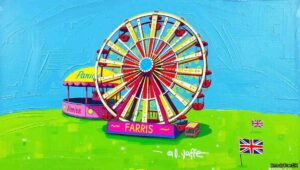
The official explanation for the wheel’s disappearance became even stranger after the British Heritage Alignment Council released a 417-page report concluding the attraction was “excessively circular for modern Britain.”
The report reportedly warned that continuous circular motion “may unintentionally remind citizens of government policy, railway reform, and national economic planning.”
One section described the wheel as:
“A troubling visual metaphor for Britain repeatedly arriving where it started, only more expensive.”
That sentence alone secured the report three literary awards and a guest appearance on BBC Radio 4.
Professor Nigel Throckmorton-Wells of the Institute for Public Architecture and Emotional Geometry defended the decision during a televised briefing attended mostly by journalists pretending not to laugh.
“Historically, Britain prefers attractions with confusion, disappointment, and mild dampness,” he explained while adjusting three scarves indoors. “A wheel is too efficient. Tourists immediately understood what it did. Frankly, that’s un-British.”
He added that future attractions would likely include:
- a staircase leading nowhere
- a museum gift shop larger than the museum
- an immersive queue experience sponsored by British Rail nostalgia
Public reaction has been mixed.
A YouGov poll found:
- 43% of Britons believed the wheel was secretly relocated to Milton Keynes
- 27% thought it had become sentient and fled
- 18% said they never realised it moved in the first place
- 12% blamed immigrants, cyclists, or oat milk without elaborating
Tourists Demand Refunds After Discovering Wheel Mostly Shows More Tourists Below Them
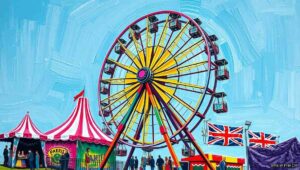
International tourists have reacted angrily after learning the famous attraction primarily offered panoramic views of:
- other tourists
- benches
- pigeons fighting over chips
- and one shirtless man named Darren shouting into Bluetooth earbuds near the river
“I paid £22 to discover humanity from slightly above humanity,” complained Texas tourist Brenda Maplethorpe while aggressively photographing a cloud. “At one point our cabin stopped moving and I spent seven minutes staring directly into another tourist’s Costa Coffee lid.”
Visitors from America reportedly expected:
- royal pageantry
- hidden treasure
- aristocrats waving from castle windows
- perhaps a dragon
Instead they encountered:
- rain
- scaffolding
- and a teenager vaping beside a Pret A Manger.
“It’s basically a rotating LinkedIn profile for disappointment,” said travel influencer Chloe Monetize, whose viral TikTok review titled “Windsor Is Just England Wearing Better Curtains” received 4.2 million views.
Local fudge shop owners, however, say the wheel was essential for business.
“People rode the wheel because there was nothing else to do after buying fudge,” explained confectioner Barry Crimp. “Then after the wheel they bought more fudge because they were emotionally confused.”
Crimp estimates Windsor’s economy is now:
- 38% tourism
- 41% fudge
- 21% tiny royal-themed soaps no one actually uses
The Wheel Allegedly Witnessed Thousands Of Minor British Incidents
Former employees say the Royal Windsor Wheel became an accidental archive of modern Britain.
Over the years it reportedly observed:
- 19 marriage proposals ending in awkward silence
- 42 lost AirPods
- 11 men arguing about parking
- 3 political protests nobody understood
- and one corgi biting a French tourist wearing Union Jack trousers
Maintenance staff claim the wheel itself began “making noises of concern” during peak tourist season.
“It creaked differently after coronation week,” said technician Malcolm Reeves. “Like it had seen too many selfie sticks. Honestly, same.”
One former operator described watching passengers experience the five classic emotional stages of British tourism:
- Excitement
- Mild confusion
- Queue-related frustration
- Expensive coffee
- Acceptance
What The Funny People Are Saying
“The Royal Windsor Wheel gave tourists a bird’s-eye view of England, which mostly means seeing damp people standing near ancient rocks.” — Jerry Seinfeld
“Britain built a giant wheel so tourists could slowly rotate through disappointment instead of experiencing it all at once.” — Ron White
“Nothing says luxury tourism like paying thirty pounds to hover above a guy named Steve eating chips aggressively.” — Sarah Silverman
“You know the attraction’s in trouble when pigeons start leaving negative TripAdvisor reviews.” — Ricky Gervais
Experts Warn Britain May Be Running Out Of Attractions Entirely
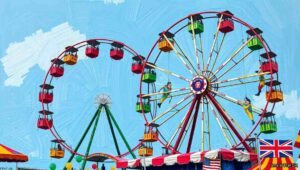
Economic analysts fear the wheel’s removal may indicate a broader national crisis involving Britain’s tourism strategy.
Dr. Felicity Bramble of the London School of Applied National Anxiety believes the country has become overly dependent on:
- castles
- tea
- accidental charm
- and saying “mind the gap” with confidence
“We cannot survive forever on historical vibes and sandwiches named after train stations,” she warned.
The Treasury reportedly explored replacing the wheel with:
- a giant rotating queue simulator
- an interactive pothole exhibit
- or “The Museum of Forms Requiring Additional Forms”
The latter already has government funding.
Meanwhile Windsor residents say life feels strangely emptier without the wheel looming over the skyline like a giant mechanical digestive biscuit.
“It used to remind us the world was still turning,” sighed pensioner Dorothy Wimple. “Now all we’ve got left is the castle and inflation.”
Wheel Rumored To Be Relocating To Blackpool, Dubai, Or Parliament
Online conspiracy theories exploded after social media users noticed large wheel-shaped structures appearing elsewhere.
One viral theory claims the attraction was secretly purchased by Dubai investors hoping to market it as:
“Authentic British Melancholy Experience.”
Another insists it has been transferred to Westminster where MPs can slowly rotate while avoiding accountability from multiple angles simultaneously.
A blurry cellphone video posted online allegedly showed pieces of the wheel being transported northbound beside a lorry carrying 900 novelty mugs reading:
KEEP CALM AND PRETEND EVERYTHING’S FINE.
Experts believe the footage is authentic because nobody would fake something that depressing.
Britain Continues Spinning Anyway
Despite the wheel’s disappearance, Windsor officials insist tourism remains strong.
Visitors can still enjoy:
- Windsor Castle
- riverside walks
- pubs older than most democracies
- and the deeply British sport of pretending rain is “actually quite refreshing.”
At sunset, locals say the empty space where the wheel once stood now carries an eerie silence occasionally interrupted by geese and somebody dropping a souvenir spoon.
For many, the Royal Windsor Wheel represented something uniquely British:
a costly attraction offering modest rewards while everyone politely insisted it was lovely.
And perhaps that was its true genius.
Not the height.
Not the views.
Not the engineering.
But the fact that thousands willingly queued for forty minutes just to spend twelve minutes slowly rotating above a gift shop selling £14 marmalade.
A perfect national metaphor, really.
Disclaimer
This satirical article is entirely a human collaboration between the world’s oldest tenured professor and a philosophy major turned dairy farmer. No actual Ferris wheels were emotionally harmed during the writing process, though several tourists may still be trapped inside gift shops comparing commemorative teaspoons. Auf Wiedersehen.

Alan Nafzger was born in Lubbock, Texas, the son Swiss immigrants. He grew up on a dairy in Windthorst, north central Texas. He earned degrees from Midwestern State University (B.A. 1985) and Texas State University (M.A. 1987). University College Dublin (Ph.D. 1991). Dr. Nafzger has entertained and educated young people in Texas colleges for 37 years. Nafzger is best known for his dark novels and experimental screenwriting. His best know scripts to date are Lenin’s Body, produced in Russia by A-Media and Sea and Sky produced in The Philippines in the Tagalog language. In 1986, Nafzger wrote the iconic feminist western novel, Gina of Quitaque. He currently lives in Holloway, North London. Contact: [email protected]



In London satire, the city that perfected the stiff upper lip has spent centuries meticulously mocking it, creating a unique comedic ecosystem where nothing is sacred.
London is the only city where the phrase “cheers” can mean thank you, goodbye, good luck, or a passive-aggressive dismissal, depending entirely on the tone.
My mate’s a planner. I sent him this. Radio silence for three days. That silence contains all the answers.
My dad’s been in London since the 60s. He says it has captured the moment when London institutions stopped pretending to serve residents.