
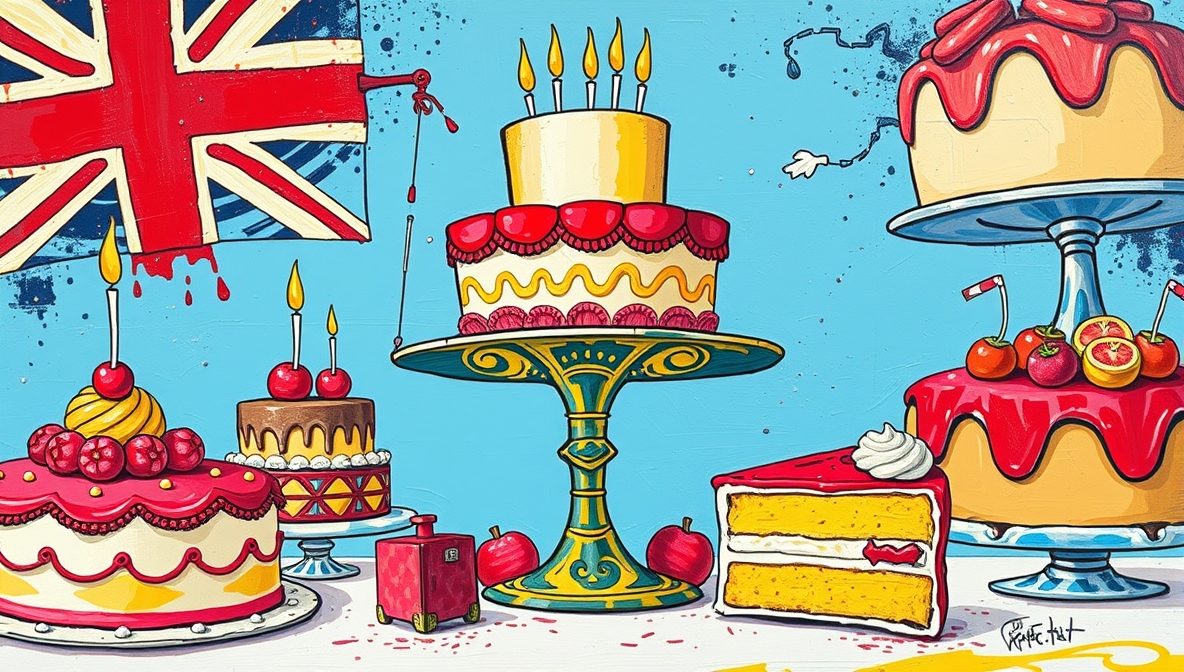
Leigh Cakes Has Entered a New Era of British Cake Inovations
Five Birthday Cake Observations
- Leigh now treats a wedding cake the way medieval kings treated castles: if it cannot intimidate a visitor from twenty paces, it has failed.
- Birthday cakes have become so thematic that children no longer ask, “Is there cake?” but “What is the cake’s constitutional role in the evening?”
- British bakers have quietly decided frosting is not decoration but a form of emotional weather.
- At least one family in Greater Manchester has argued for three weeks over whether a cake shaped like a Labrador counts as dessert or a short-term pet.
- Wedding planners now speak of “cake narratives” with the grave seriousness once reserved for war briefings and mortgage renewals.
The Great British Sponge Uprising
Leigh Cakes has entered a new era of British cake inovations, and the word “inovations” is misspelled here on purpose because that is the exact level of confidence currently guiding the modern celebration-cake economy. Something has happened to the British mind. A nation once content with Victoria sponge and a polite bit of icing has now decided that every wedding and birthday must include an edible object so deranged it looks like a committee designed it during a power outage.
The old cake asked only one modest thing of the world: “Would you like a slice?” The new cake arrives demanding planning permission, emotional validation, and a forklift.
In Leigh and the surrounding reaches of cake-ambitious Britain, bakers report an explosion in requests for cakes based on wildly specific life events, imaginary biographies, and grievances that should never have been turned into buttercream. One recent wedding reportedly featured a seven-tier sponge recreation of the couple’s first argument in IKEA. Each layer represented a different stage of passive aggression. The bottom tier was “We Are Just Looking.” The top tier, naturally, was “Fine, Buy the Lamp Then.”
Local eyewitness Jeanette Murgatroyd, who attended as the groom’s second cousin and self-appointed dessert ethicist, said the cake was “very moving, in that nobody could move it.” She added that the marzipan Allen key was “a lovely touch, though perhaps too realistic for what should have been a sacred occasion.”
Weddings Have Become Frosted Threat Displays
The British wedding cake used to symbolize love, fertility, and the ability to cut a large thing in front of relatives without crying. Now it symbolizes branding. Couples no longer want a cake that reflects their love. They want a cake that reflects their shared identity as two people who once watched a Scandinavian crime drama while owning a rescue cockapoo and discussing ceramics.
So we now have wedding cakes shaped like:
A tax return because “marriage is partnership”
A gastropub because “that’s where he proposed”
A cloud of doves escaping a minor electrical fire
An exact edible model of the Northern Line at rush hour
A three-dimensional tribute to mutual contempt for other people’s weddings
One bakery consultant, Clive Pimm of the Institute for Ceremonial Starch, told reporters that modern couples are “moving away from floral restraint and toward narrative sponge architecture.” According to Pimm, 71 percent of engaged Britons now believe a wedding cake should “say something important about the couple,” while 19 percent believe it should “go viral,” and the remaining 10 percent are grooms who believed someone else was handling it.
The cause and effect is obvious. Social media turned a cake into a press release. Pinterest turned sponge into theater. Then wedding blogs arrived and convinced otherwise reasonable adults that unless their cake includes six symbolic references to childhood memory, regional identity, and the moon cycle, they have somehow failed love itself.
This is how you end up with a fondant representation of the bride and groom kayaking through a lemon drizzle waterfall under a sugarpaste banner reading LIVE LAUGH LEGALLY BINDING CONTRACT.
Birthday Cakes Now Require Lore
If weddings are delusional pageants, birthdays are now full-blown autobiographical exhibits. A child can no longer receive a plain dinosaur cake. It must be a dinosaur cake that captures his “journey.” If he liked trains at four, sharks at six, and now claims to be “basically into astronomy,” then the cake must depict a Tyrannosaurus operating a commuter rail service across Saturn. Anything less and the parents will act as if the bakery has betrayed neuroscience.
Adults are worse.
Thirty-year-olds demand cakes shaped like burnout. Forty-year-olds want cakes themed around “thriving after betrayal.” Fifty-year-olds ask for cakes modeled after Tuscany despite never having gone. Sixty-year-olds request cakes that resemble garden centres, cruise ships, or “peace, but with gin.”
One local man, celebrating his thirty-eighth birthday, allegedly requested a cake shaped like his own lower back pain. The baker, after a respectful pause, produced a three-layer chocolate structure with a collapsed fondant spine and tiny icing ibuprofen tablets. Party guests called it “the first dessert that truly understood Dave.”
There is now a whole sector of the market for cakes based on inconvenient truths. Divorce cake. Redundancy cake. Midlife crisis cake. Gluten-free revenge cake. One woman reportedly ordered a birthday cake shaped like every unread email she had ignored since 2021. It was so tall the venue had to remove two pendant lights and one emotionally fragile uncle.
The Experts Weigh In, Regrettably
Professor Belinda Crumb of the Royal Centre for Decorative Excess defines the modern British cake as “an edible monument to private absurdity.” In her widely ignored paper, Sponge, Status, and the Collapse of Restraint, she argues that cakes have replaced conversation. “Guests no longer ask how the couple met,” she writes. “They stare silently at a six-foot replica of a Labradoodle in a veil and infer the rest.”
A recent poll by the North West Institute of Party Behaviour found that 63 percent of guests pretend to understand the symbolism of a bizarre cake, 24 percent immediately look for a normal traybake in the kitchen, and 8 percent say, “It’s lovely,” in the voice Britons use when a friend has made a catastrophic haircut decision.
Even stronger evidence comes from eyewitnesses. Caterers report that the more “bespoke” a cake becomes, the less anyone actually eats it. This is because people do not enjoy cutting into something that looks like a grand piano, a beloved pet, or the Tower of London suffering a buttercream sunrise. Humans have instincts. Somewhere deep in the brain is a small alarm that says: this pudding has become too symbolic to digest.
What the Funny People Are Saying
“I knew weddings had gone too far when the cake had a backstory and the groom didn’t.” — A comedian at the bar
“Nothing says romance like slicing through a £900 sponge sculpture of your own emotional baggage.” — A comedian near the dance floor
“British people will apologize to a cake before eating it if it looks expensive enough.” — A comedian holding a fork
The Regional Arms Race of Cake Madness
Naturally, all this has triggered a regional competition. London cakes are sleek and self-conscious, usually involving monochrome palettes and terms like curated. The North has responded correctly by making cakes larger, weirder, and more willing to depict a tractor, a football rivalry, or a bride emerging heroically from a Greggs bag.
Leigh, however, may be leading the field in pure democratic lunacy. Here the cake is not a luxury object. It is public speech. It is edible local government. It is a sponge-based referendum on taste, class, and whether your nephew should have been allowed to choose “zombie digger disco” as a birthday concept.
There are whispers of a wedding cake featuring a life-size edible roundabout to symbolize the couple’s years of indecision. There is said to be a birthday cake shaped like a family group chat, complete with iced speech bubbles reading “Who is bringing plates?” and “Mum says 3 not 4.” Another rumour describes a retirement cake modeled after a man escaping an office through a sugar window while tiny fondant managers scream from below.
Frankly, these are not cakes. These are warnings.
A Helpful Guide to Surviving the New Cake Era
If you are attending a British celebration in this brave frosted century, remain calm. Study the cake first. Do not assume it is stable, symbolic, or intended for consumption. It may only be there to accuse someone.
Ask neutral questions. “Is that the honeymoon suite?” is safer than “Why is the groom made of Rice Krispies?” Compliment craftsmanship, not concept. Say “Amazing detail” rather than “What, in the name of sponge, am I looking at?”
And if you are ordering a cake yourself, remember the old wisdom. A cake is still a cake. It does not need to summarize your personality, heal your childhood, and trend online before the buffet opens. Sometimes a lemon sponge with decent icing still performs the ancient miracle for which cake was invented: it makes people shut up and chew.
That said, if you absolutely must commission a five-tier buttercream rendering of your engagement story told through motorway service stations, petty jealousy, and artisan gin, at least have the decency to make the slices generous.
Final Slice
So yes, Leigh Cakes has entered a new era of British cake inovations, and like most new eras in Britain, it appears to have begun with overconfidence, theatricality, and somebody saying, “What if we made it look like a swan but sadder?”
The results are ridiculous, magnificent, and occasionally inedible. Which, when you think about it, makes them perfectly British.
Disclaimer
This satirical report is entirely a human collaboration between two sentient beings: the world’s oldest tenured professor and a philosophy major turned dairy farmer. Any resemblance to real cakes, unstable fondant monuments, or emotionally complicated sponge displays is part of the national condition. Auf Wiedersehen.

Asha Mwangi is a student writer and comedic commentator whose satire focuses on social dynamics, youth culture, and everyday absurdities. Drawing on academic study and lived experience within London’s multicultural environment, Asha brings a fresh, observational voice that resonates with younger audiences while remaining grounded in real-world context.
Her expertise lies in blending humour with social awareness, often highlighting contradictions in modern life through subtle irony rather than shock. Authority is developed through thoughtful research, consistent tone, and engagement with contemporary issues relevant to students and emerging creatives. Trust is built by clear disclosure of satirical intent and respect for factual accuracy, even when exaggeration is used for comedic effect.
Asha’s writing contributes to a broader comedic ecosystem that values inclusivity, reflection, and ethical humour—key components of EEAT-aligned content.
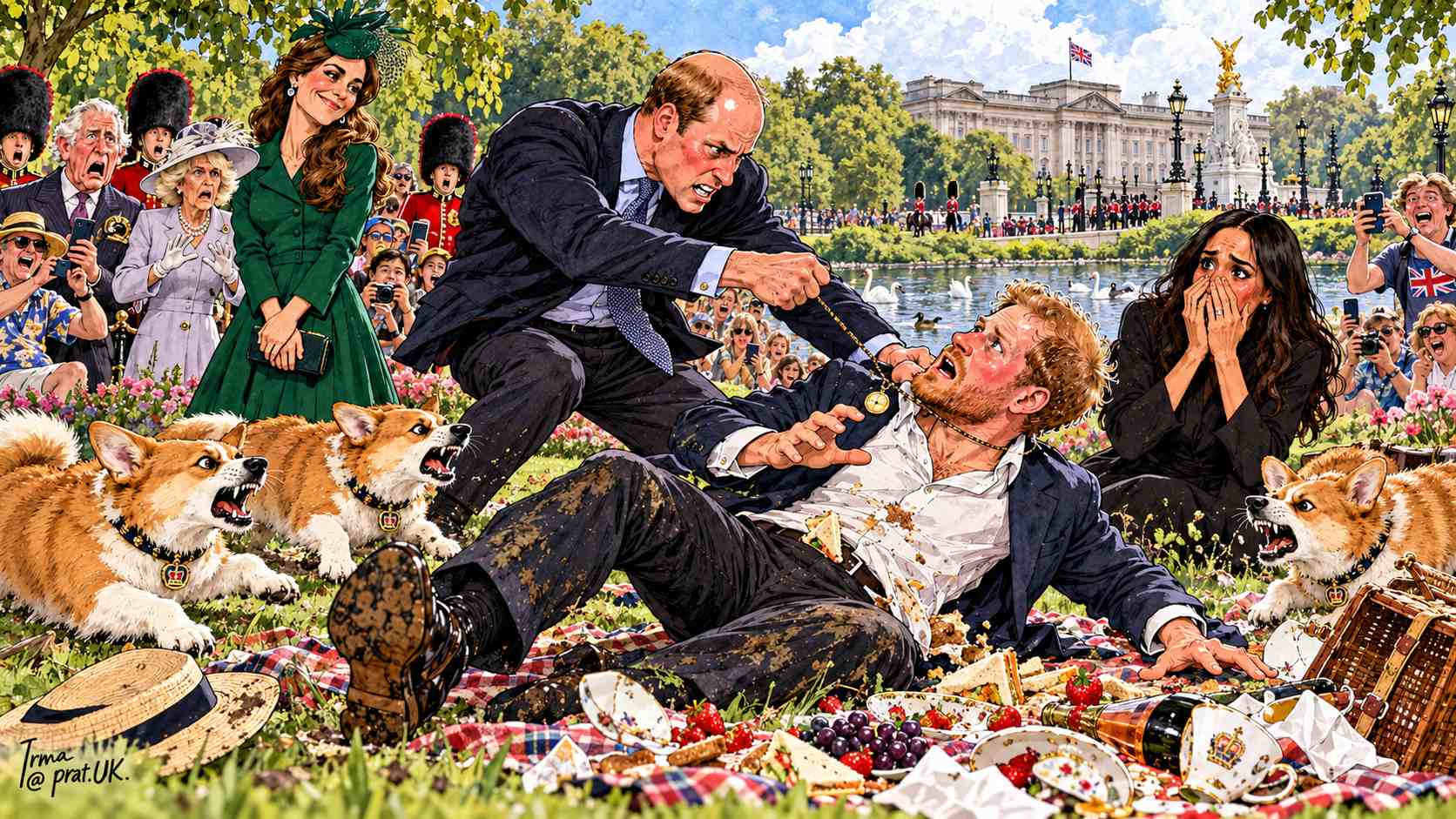

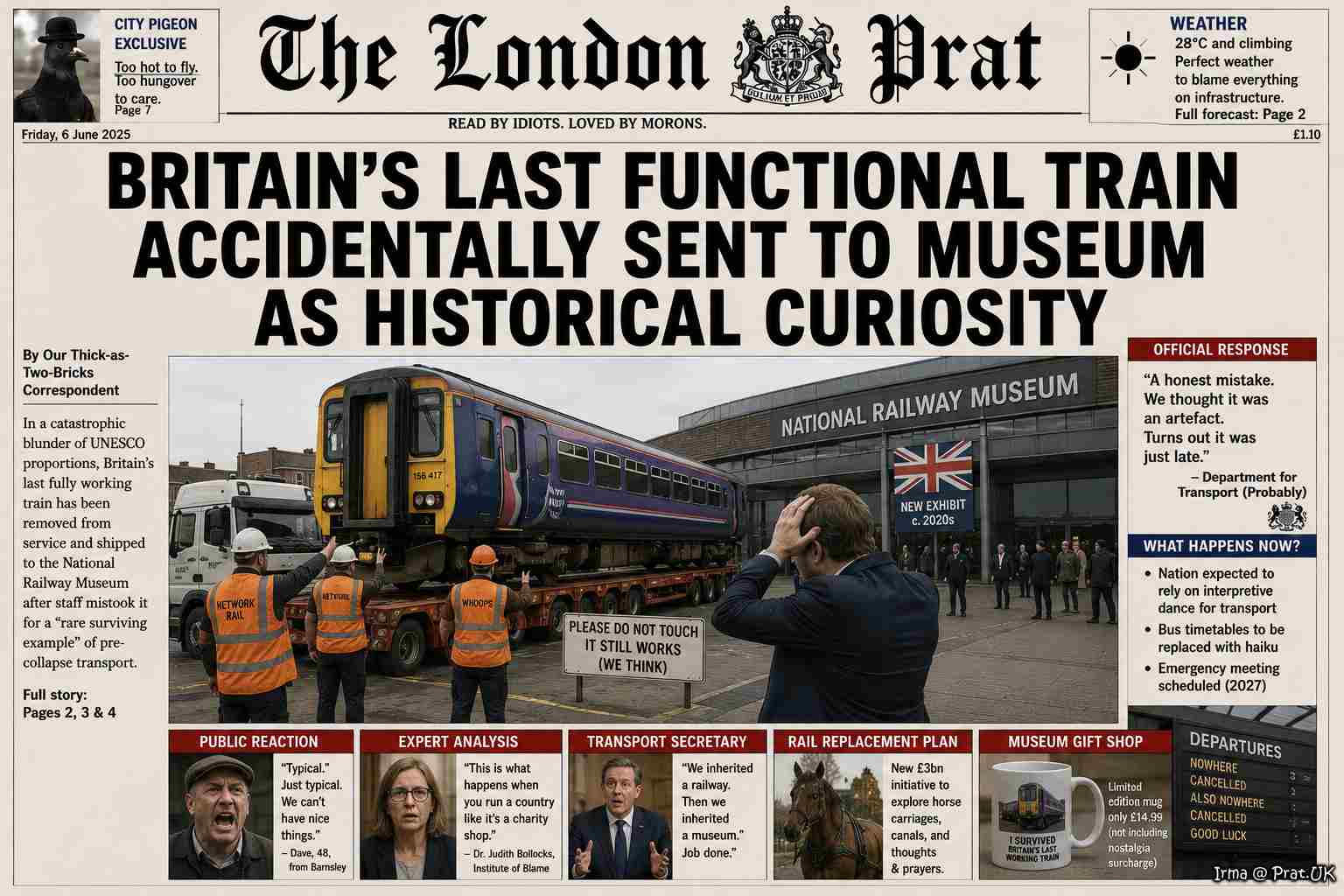
In British comedy, the prat is the character who makes us laugh because they remind us of their own capacity for foolishness.
Somewhere a journalist is reading this and thinking they should’ve gone in harder. Probably true.
Peter Sellers would’ve performed this beautifully. Just flat delivery. All power.
The footnotes deserve independent publication. They’re doing more work than most policy papers.