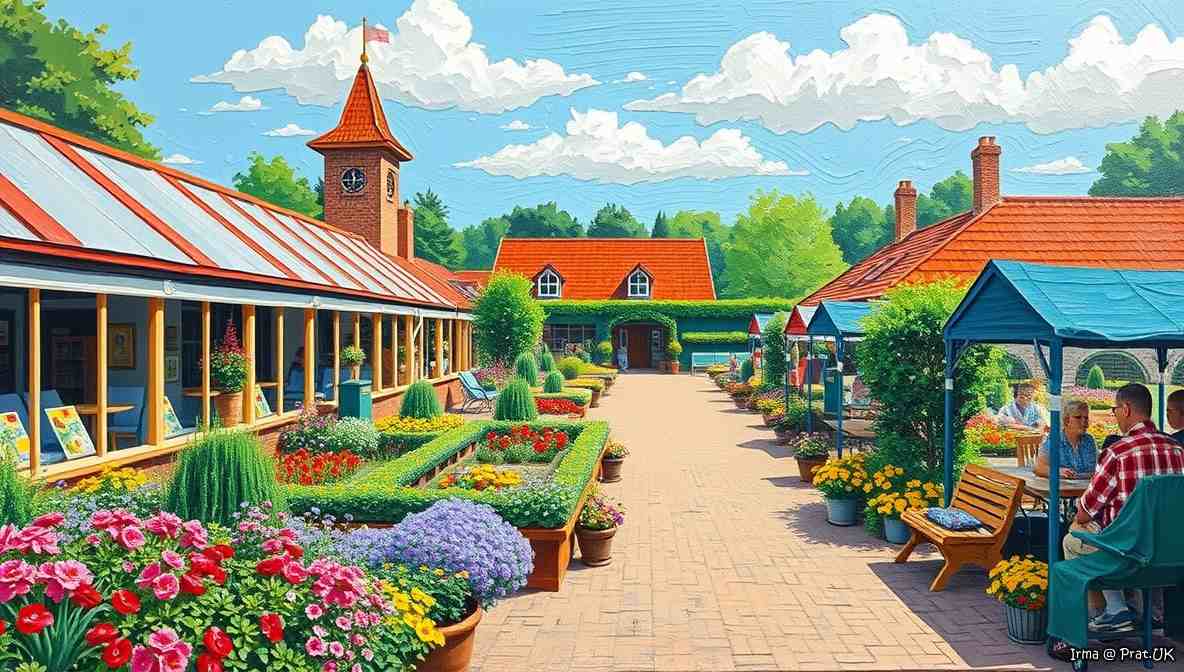
British Garden Centres Quietly Become Retirement Theme Parks
Five Observations From Britain’s Most Serene and Slightly Permanent Social Institution
- Garden centres now contain more pensioners than several coastal constituencies, with significantly better car parking and considerably less shouting about immigration.
- One retiree reportedly spent six consecutive hours discussing begonias beside a café serving £11 soup, which works out at approximately £1.83 per begonia observation and represents reasonable value by current British standards.
- Experts confirm garden centres have replaced churches as Britain’s primary social institution — same demographic, warmer, and the cake is considerably better.
- Several grandchildren believed their grandparents “moved permanently into the garden centre café,” a suspicion that remained technically unconfirmed for four months.
- The average British garden centre now includes enough jam, candles, and tweed to sustain a small monarchy — which, now that you mention it, may explain where the jam goes.
Britain’s quiet suburban revolution accelerated this week after sociologists confirmed garden centres have officially evolved into full-scale retirement theme parks for the nation’s aging middle class — with the crucial advantage over actual theme parks that nobody is asked to go on anything frightening and the queues are for scones rather than roller coasters.
Once humble places selling compost and hydrangeas, modern garden centres now feature sprawling cafés, luxury gift shops, artisanal chutney halls, indoor Christmas villages, mobility scooter parking zones, and enough decorative slate to rebuild Hadrian’s Wall — which, some historians note, was also a project that got slightly out of hand.
Professor Confirms It Started With Begonias, Ends With Elderly Leisure Complexes That Happen to Sell Compost
Researchers estimate the average British pensioner now spends more time inside garden centres than local libraries, cinemas, or occasionally their own homes. The statistic is presented without judgment. The judgment is implied.
“It started innocently with begonias,” explained Professor Malcolm Reeve of King’s College London. “Then cafés arrived. Then scented candles. Then gift sections. Now we essentially have elderly leisure complexes with optional shrubbery. The shrubbery is still there, technically, but nobody’s quite sure if it’s the point anymore.”
Across England, garden centres have become emotional sanctuaries where retirees gather daily to drink tea, discuss weather patterns, and stare thoughtfully at decorative owls priced at £49.99 — occasionally purchasing one, occasionally replacing one they already have, and occasionally simply maintaining a relationship with one that has been there since 2019.
In Kent, one man reportedly arrived at 9:15 a.m. “for compost” and remained until sunset discussing bird feeders and council decline. The compost was never collected. His wife confirmed this is “a pattern.”
Garden Centre Cafés Now Serving Tea Strong Enough to Revive Victorian Factory Workers
The cafés themselves remain central to the phenomenon. Modern garden centre restaurants now serve full English breakfasts, sponge cake the density of industrial insulation, soups requiring emotional commitment, and tea strong enough to revive Victorian factory workers — all at prices that would cause surprise in a London restaurant and quiet acceptance everywhere else.
One Surrey pensioner admitted she visits “mainly for the scones and structured daylight.” It is a sentence that sounds melancholy but is, on reflection, a perfectly reasonable priority system for navigating modern Britain.
The transformation reflects broader social changes. Pubs have become expensive. High streets collapsed. Churches declined. Public spaces deteriorated. Meanwhile garden centres quietly expanded into climate-controlled wonderlands offering toilets, parking, cake, and absolutely no loud music — the four pillars of successful retirement infrastructure.
“Frankly,” sighed retired accountant Alan Mercer, “it’s the closest thing Britain has left to civilisation.” He purchased a ceramic hedgehog on the way out. He already owns three. He did not mention this.
BBC Documentary Features Widow Describing Local Garden Centre as “The Only Place Where People Still Talk Properly”
The BBC aired a documentary this week titled The Garden Centre Generation featuring emotional footage of pensioners browsing ceramic mushrooms while discussing rail prices and blood pressure medication. It was described by critics as “unexpectedly moving,” by commissioners as “cheaper than a drama,” and by one retired geography teacher from Hampshire as “the most accurate thing the BBC has made in years.”
One particularly moving scene showed a widow from Sussex describing her local garden centre as “the only place where people still talk properly” — a sentence which, in the context of contemporary Britain, functions simultaneously as a tribute and an indictment.
Retail analysts confirm the industry now generates billions annually. Some locations reportedly contain restaurants, aquariums, miniature railways, and gift sections larger than several independent museums. One Hampshire garden centre recently added a “wellness barn” selling lavender oils and emotional reassurance beside discounted mulch — a combination that sounds absurd and yet draws consistent weekend queues.
Younger Britons Describe Garden Centres as “Parallel Dimensions Run by Cardigan Diplomacy”
Younger Britons remain confused by the obsession. A 24-year-old London graduate admitted visiting a garden centre “felt like entering a parallel dimension run by cardigan diplomacy.” She bought a succulent and a jar of lemon curd she did not need. She returned the following Saturday.
Many retirees now maintain intricate weekly routines involving café visits, plant inspections, passive-aggressive conversations about tomatoes, and buying unnecessary jam “for later” — the jam accumulating in spare rooms across Britain at a rate that no economist has yet attempted to quantify.
Even politicians appear aware of the centres’ electoral power. Labour recently tested pension policy announcements near outdoor furniture displays, while Conservatives reportedly conducted focus groups beside ornamental fountains — the theory being that people are more receptive to policy when surrounded by reasonable quantities of stone frog.
At press time, thousands of British retirees were gathering peacefully inside heated garden centres while outside, society continued collapsing gently in all the usual ways. Inside, someone was buying a £49.99 owl. It was, by all accounts, a good morning.
What the Funny People Are Saying
“British garden centres are basically retirement cruise ships without water — same demographic, calmer seas, better jam.” — Ricky Gervais
“You ever notice old people go into garden centres needing one plant and emerge ninety minutes later carrying fudge, a bird bath, and a look of deep satisfaction?” — Jerry Seinfeld
“At this point garden centres should qualify for parliamentary representation. They’ve got the attendance figures.” — Jimmy Carr
This satirical article was created entirely through collaboration between the world’s oldest tenured professor and a philosophy major turned dairy farmer. No begonias developed political ambitions during publication. Auf Wiedersehen, amigo!

Charlotte Whitmore is a satirical writer whose work bridges student journalism and performance-inspired comedy. Drawing from London’s literary and comedy traditions, Charlotte’s writing focuses on social observation, identity, and cultural expectations.
Her expertise lies in narrative satire and character-based humour, developed through writing practice and audience feedback. Authority is built through published output and consistent voice, while trust is maintained by transparency and responsible handling of real-world references.
Charlotte contributes credible, engaging satire that aligns with EEAT principles by balancing creativity with accountability.