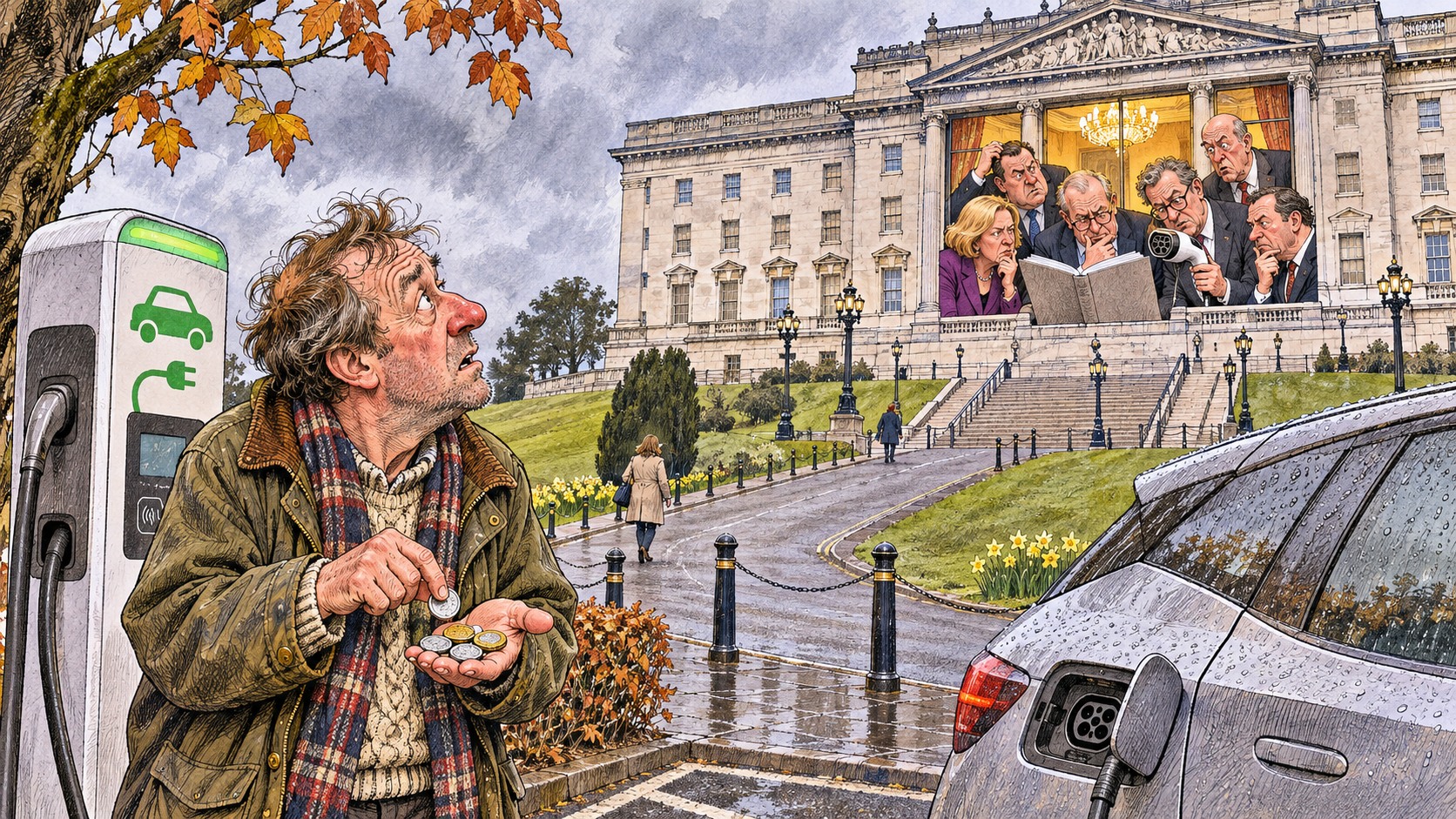
BELFAST — The Stormont EV charging review has prompted visitor Moira Kerr to offer officials a useful source of pricing expertise: the machine in the public car park, which appeared to understand the concept long before the review was commissioned.
Kerr says she is happy to pay for electricity she uses. She had simply not realised the same principle could require quite so much explanation when the parking space came with a political career.
“In my house, a charging point is where the bill begins,” she said. “Apparently in some car parks it was where the discussion began.”
Stormont EV Charging Encounters the Ordinary Customer
BBC News NI reports that an internal review found process failures in arrangements that allowed free EV charging at Parliament Buildings. It found no evidence of bad faith, and the earlier use was within the rules. A paid system is planned following suspension of the chargers. Read BBC News NI’s report on the Stormont charging review.
Kerr accepts those findings. Her objection does not require inventing a secret plot when an arrangement can be perfectly permissible and still look extraordinarily comfortable to the person paying outside.
Her husband, Brian, suggested the free charging had supported greener travel. Moira agreed that electric cars could be a sensible choice and asked why the environmental benefit changed when a visitor inserted a payment card.
“I’m willing to help the planet,” she said. “I’d just like to know whether it recognises the car park boundary.”
The family has developed expertise in electricity costs through the traditional method of receiving them. Their charging policy consists of checking the tariff, plugging in safely and having Brian deny that the tumble dryer was on again.
It has generated no lengthy review, although Moira says the dryer evidence could sustain one.
The Wall Socket Requests Equal Recognition
Kerr says the useful lesson is about oversight and consistency. Benefits offered within public institutions need someone to ask what they cost, who receives them and how the arrangement appears to people whose access differs.
Her neighbour described this as complicated governance. Moira said she had managed the basic question when deciding whether to give a visiting cousin the spare key.
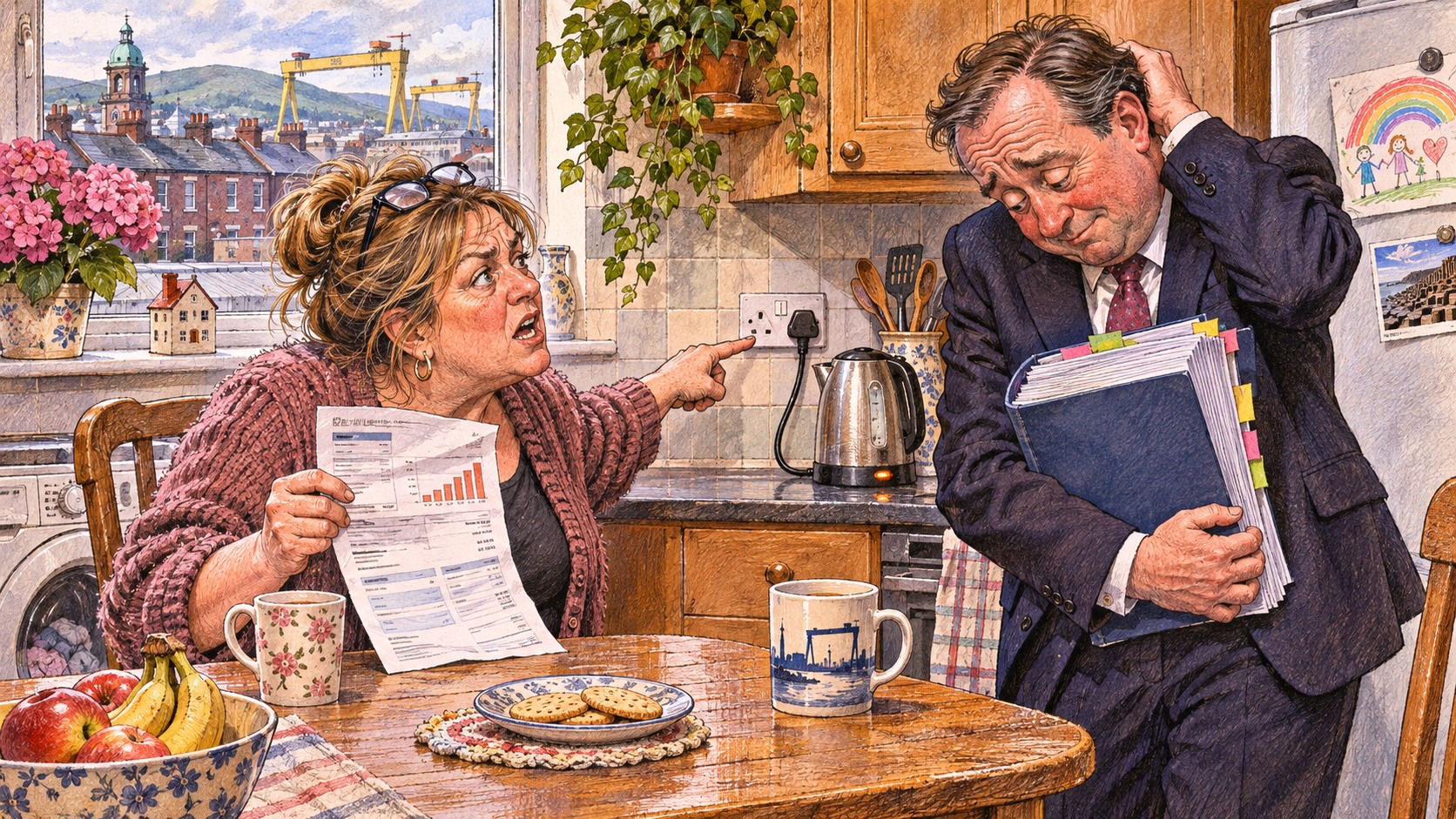
Brian proposed printing the household electricity bill for the next discussion. Moira said it might assist as a visual aid, though she would prefer not to appoint the kettle as an independent reviewer.
They also noted that changing a policy required clear communication. People should know what they could use, what they would pay and when the arrangement changed. That seemed achievable without requiring every driver to become an expert on committee minutes.
Kerr checked the current charging options before travelling. She said the public could distinguish between the findings of a review and their opinion of the original benefit. The distinction was quite manageable when somebody bothered to explain it.
At home, Brian asked if charging their own car could be described as supporting sustainable choices. Moira said absolutely.
She handed him the bill. Sustainable choices remained available to the household, together with the well-established visitor-car-park innovation known as paying for them.
Satire disclaimer. The kettle has declined appointment to any review panel. A human collaboration between the world’s oldest tenured professor and a philosophy major turned dairy farmer, whose charging arrangements require coins rather than a constitutional explanation.

Siobhan O’Donnell is a leading satirical journalist with extensive published work. Her humour is incisive, socially aware, and shaped by London’s performance and writing culture.
Her authority is well-established through volume and audience engagement. Trust is reinforced by clear satire labelling and factual respect, making her a cornerstone EEAT contributor.