LEICESTER — The announcement of Local Police Commands has reassured burglary victim Colin Marsh that somebody will soon be clearly accountable for the area in which his bicycle disappeared, although he had initially hoped the announcement concerned somebody coming round.
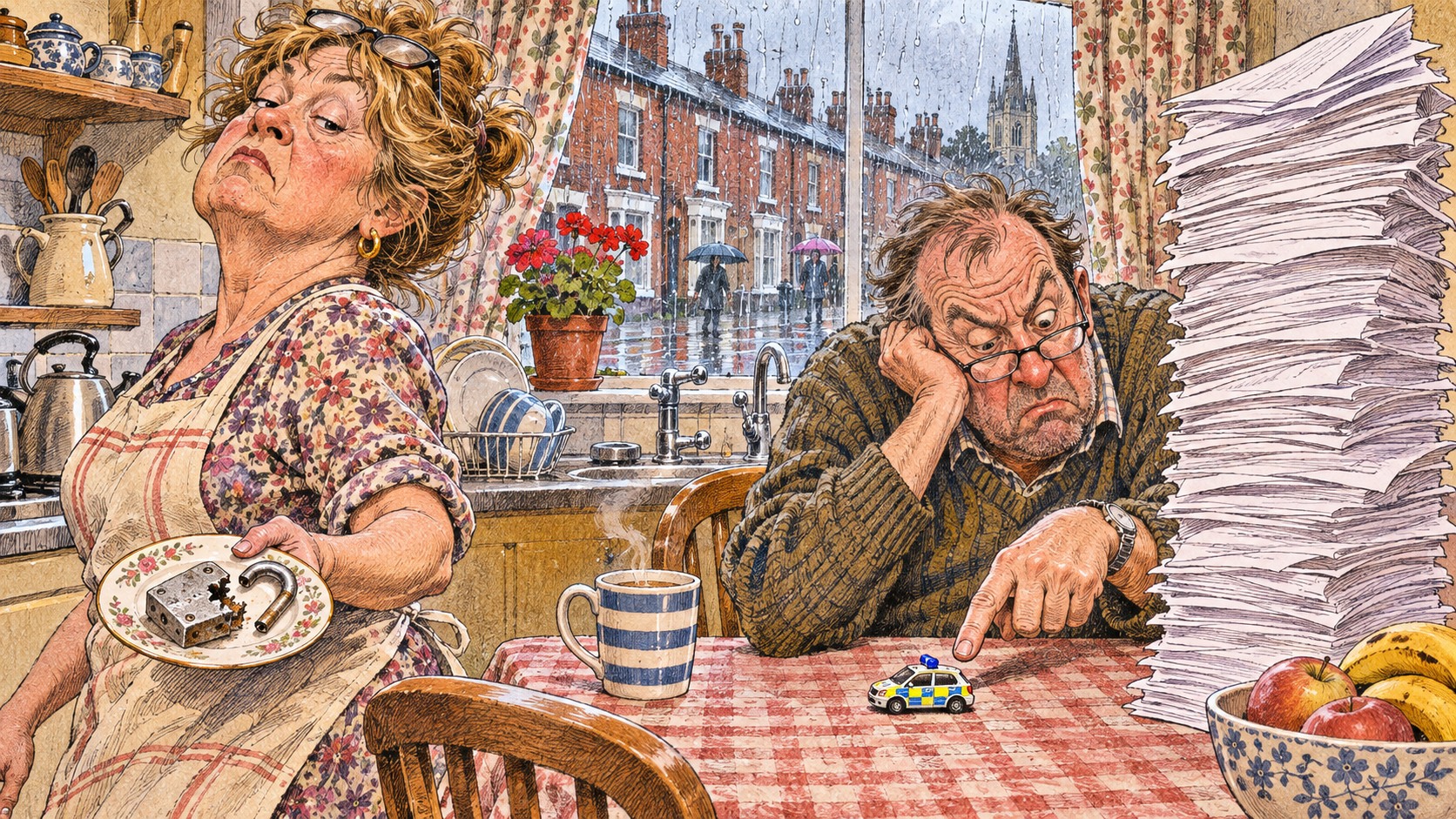
Marsh has kept the broken shed lock on his kitchen table. It offers a compact visual summary of the incident and has never required him to select a category from a menu.
“A named commander is a start,” he said. “The bloke who took the bike probably has a name as well. I was hoping we could introduce them.”
Local Police Commands Acquire a Local Question
The Home Office plans around 200 Local Police Commands across England and Wales, with named commanders and an emphasis on neighbourhood crime. Marsh welcomed the stated intention while reserving judgement on what the new structure would mean for his street. Read the Home Office’s Local Police Commands announcement.
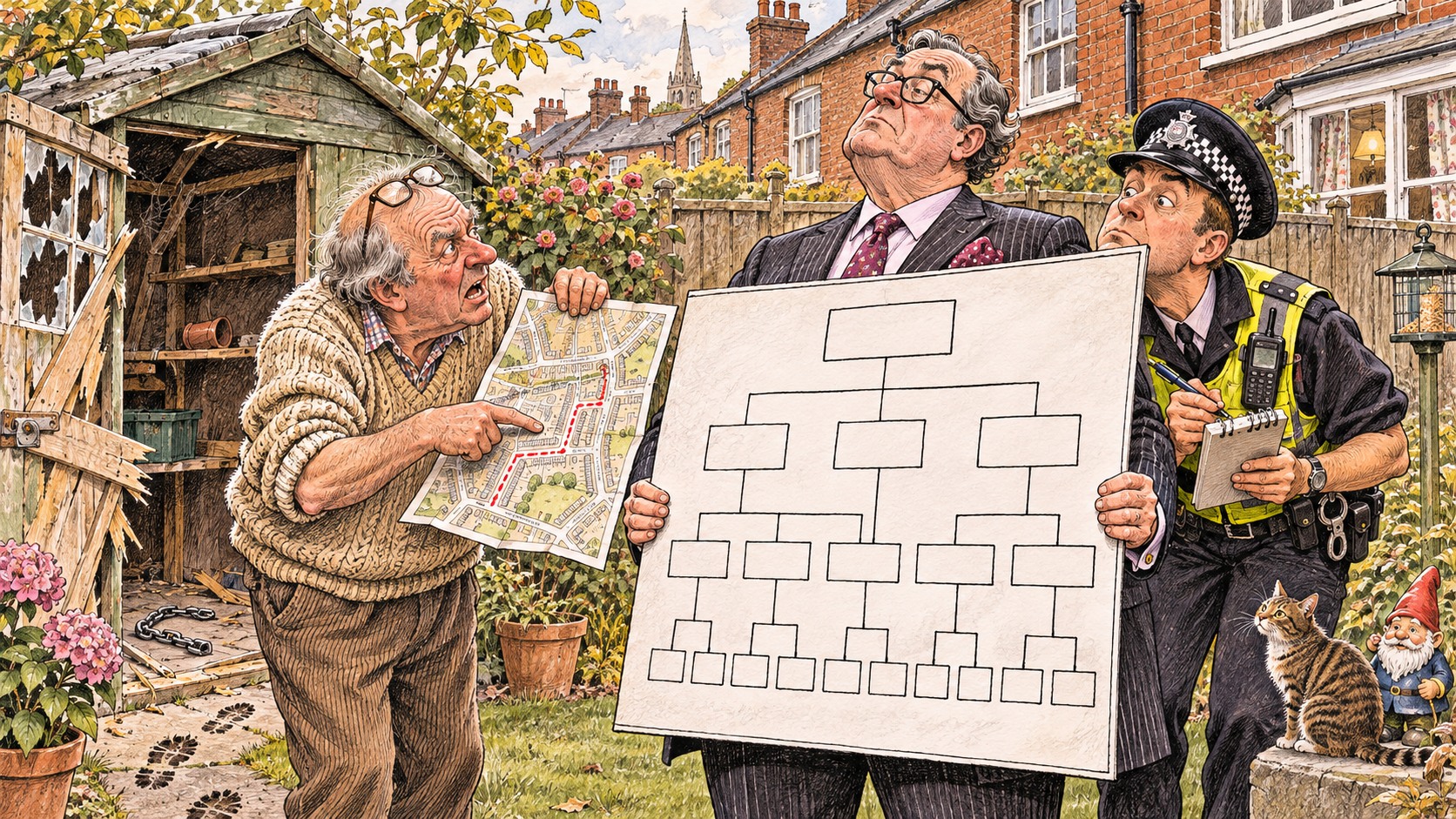
His neighbour Pat brought a map to the residents’ meeting. She had marked the shed, the alley and the gate that somebody kept leaving open. A visiting reform enthusiast brought a diagram showing accountability.
Both documents contained lines. Pat’s had the advantage of indicating where a bicycle could actually go.
The enthusiast explained that smaller commands would help decisions reflect local knowledge. Pat said her local knowledge included which gate squeaked, which camera faced the alley and which neighbour was awake at half past five.
“I’m prepared to share it,” she said. “It doesn’t need a launch event. Just bring a notebook.”
Marsh was particularly interested in the proposed guarantee of consistent local policing. He has encountered enough guarantees to know the useful part is usually the action described after the word.
He would welcome clearer responsibility, easier contact and officers with time to pursue repeat problems. He was less interested in learning a new title for the same unanswered question.
The Shed Does Not Recognise the New Boundaries
The residents discussed whether their street might sit on the edge of a command area. Marsh hoped the boundary would be designed with attention to the alley, whose users appeared comfortable crossing administrative lines without authorisation.
Pat suggested inviting the new commander to walk the route. This would settle several questions normally addressed by the phrase “community engagement”. It would also establish whether the broken streetlight had been repaired.
One resident asked whether reorganising police meant every officer would receive additional time. The reform enthusiast said resources and delivery would remain important. Marsh admired the honesty. The diagram had briefly suggested the boxes themselves might help with the night shift.
He has reported the theft, retained the reference number and checked what evidence he can usefully provide. His wife has also bought a better lock, thereby completing the first funded intervention in the story.
She asked him to move the old one off the kitchen table.
“It’s evidence,” he said.
“So is the missing bicycle,” she replied. “But at least that isn’t scratching the wood.”
Marsh said he would judge the reform by what changed after the next report, rather than the quality of the new stationery. He hoped a named local commander would make that easier.
In the meantime, he has drawn a small car beside the accountability diagram. It is where he would ideally like the accountability to sit while travelling towards his house.
Satire disclaimer. The shed remains geographically local under all proposed arrangements. A human collaboration between the world’s oldest tenured professor and a philosophy major turned dairy farmer, neither qualified to patrol an organisational chart.

Harriet Collins is a high-output satirical journalist with a confident editorial voice. Her work demonstrates strong command of tone, pacing, and social commentary, shaped by London’s media and comedy influences.
Authority is built through volume and reader engagement, while expertise lies in blending research with humour. Trustworthiness is supported by clear labelling and responsible satire.