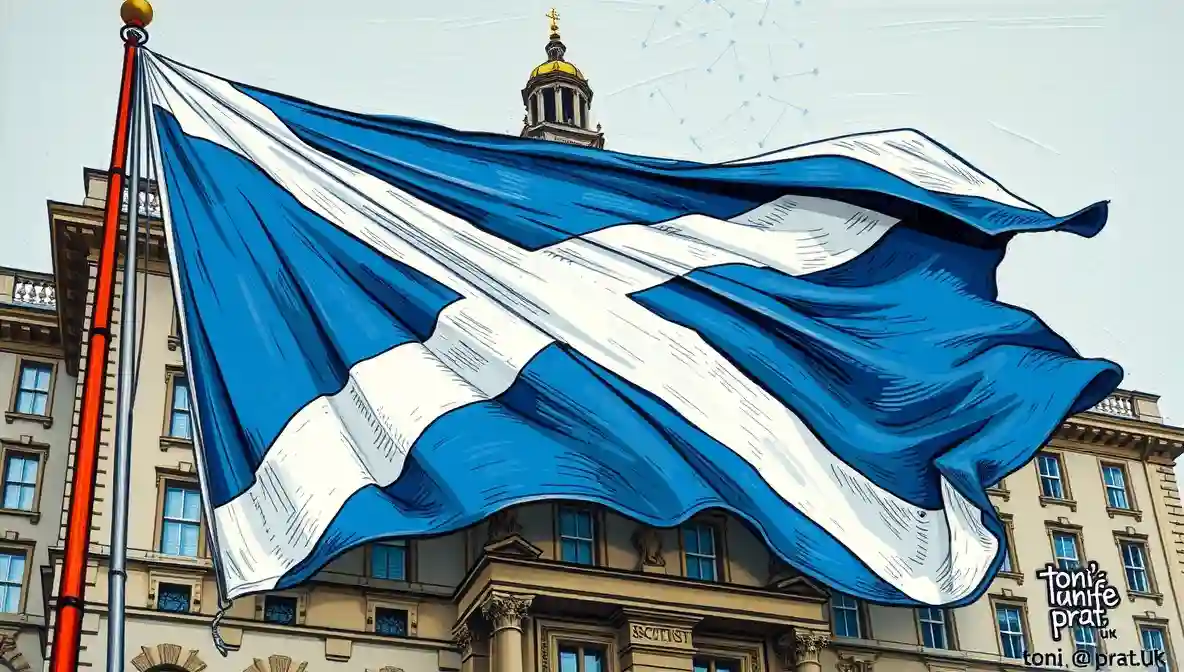
Red Paint on Barclays May Be Treated as Terrorism After Bank Confirms Only Approved Financial Damage Is Permitted
Protesters Learn That Breaking a Window Requires Different Licensing Than Breaking an Economy
Burnley Palestine Action Verdict Sparks Terrorism Sentencing Debate
BURNLEY, England — Five Palestine Action activists convicted of causing approximately £212,000 in damage to a Barclays branch may receive sentences reflecting a “terrorist connection,” after British authorities determined that throwing red paint at a bank could be more ideologically dangerous than allowing the bank to operate normally.
The activists broke windows and covered the Burnley branch in red paint during a 2024 protest over Barclays’ financial links to Elbit Systems. Terrorism was not part of the original criminal charges presented to the jury, but the sentencing judge is considering whether the offences had a terrorist connection under sentencing law. Sentencing is scheduled for September 4.
Barclays confirmed that the red paint caused extensive damage because it entered the building without opening an account, submitting identification or agreeing to a monthly maintenance fee.
Bank officials stressed that financial institutions are not opposed to destruction.
They merely insist that destruction be conducted through regulated products, respectable stationery and a derivatives department overlooking Canary Wharf.
A branch window is protected property.
A pension fund is an opportunity.
The Bohiney Institute’s Approved List of Bank Damage
A satirical Bohiney Institute study found that British law recognises several acceptable methods of causing £212,000 in damage. These include charging unsuitable fees, selling incomprehensible investments, approving an unaffordable mortgage and employing a consultant who uses the phrase “transformational journey.”
Red paint was not listed.
The activists reportedly used the paint to represent blood, a political metaphor that officials regarded as especially threatening because metaphors are difficult to remove with ordinary glass cleaner.
How the “Terrorist Connection” Sentencing Provision Works

A terrorism designation could lead to harsher sentencing conditions and extended monitoring after release. Critics, including civil-liberties organisations and legal campaigners, argue that applying terrorism provisions during sentencing risks blurring the distinction between politically motivated criminal damage and acts conventionally understood as terrorism. Supporters of tougher treatment argue that ideological motivation and attempts to intimidate can justify the designation under existing law.
Britain has therefore entered a complicated national debate over whether a crime becomes terrorism when the offender explains why it was committed.
Ordinary vandalism is apparently a broken window.
Ideological vandalism is a broken window with a manifesto.
The distinction has worried pub landlords, who now fear that every football supporter damaging a chair while expressing views about the manager could receive 15 years of ideological monitoring.
Palestine Action, Elbit Systems and the Wider Protest Movement
Palestine Action supporters say the group uses direct action to disrupt companies connected to Israeli weapons production. Opponents say smashing property is criminal conduct dressed in the moral vocabulary of protest.
Both positions can be true at once, which is deeply inconvenient for television panels requiring exactly two furious guests.
A Barclays spokesperson said the bank supports lawful protest, meaning protest conducted several streets away, during business hours, without affecting business.
The institution has not endorsed red paint as a customer-feedback mechanism.
A Burnley eyewitness, Derek Thimble, said the branch looked chaotic after the demonstration.
“There was glass everywhere, paint on the walls and people shouting about international finance,” he said. “It was the first time the public could understand anything happening inside a bank.”
Banking Sector Reaction and the Treasury’s Definition of Damage

The financial sector reacted strongly to the damage.
Bank executives said attacks on branches could undermine public confidence, unlike previous banking crises, which improved confidence by requiring the public to rescue the banks.
The Treasury has produced guidance clarifying the difference between protest damage and banking damage.
Protest damage is immediate, visible and committed by people wearing inexpensive clothes.
Banking damage develops gradually, receives a three-letter abbreviation and qualifies its architects for bonuses.
Human-rights groups warn that an expansive use of terrorism law could affect legitimate protest by creating uncertainty over how political motivation is treated. The government maintains that lawful protest remains protected and that serious criminal conduct does not become lawful merely because it serves a political cause.
This is reasonable.
A sincere belief does not turn a brick into a petition.
However, calling every politically motivated brick terrorism risks turning terrorism law into the legal equivalent of an oversized suitcase: convenient, intimidating and eventually used to carry absolutely everything.
What Happens Next for the Burnley Five
The five activists will be sentenced by a court, where evidence and statute matter more than slogans from either side.
Barclays has already repaired the branch.
The ideological dispute remains open.
The red paint, according to contractors, required two coats of primer and a counter-extremism assessment.
Disclaimer: This is satire based on genuine criminal proceedings and public debate over terrorism-connected sentencing. It does not minimise violence, criminal damage or the seriousness of terrorism law. This piece of UK satire is part of our ongoing satirical journalism coverage of British institutions, produced in the tradition of honest british satire. This story is entirely a human collaboration between two sentient beings: the world’s oldest tenured professor and a philosophy major turned dairy farmer.

Harper Thames is a comedic writer exploring modern life through irony and subtle exaggeration. Rooted in student perspectives and London’s cultural landscape, Harper’s work focuses on relatable humour grounded in everyday experience.
Expertise is developed through writing practice and critical engagement, while authority comes from authenticity and consistency. Trust is reinforced by transparent satire and ethical humour choices.