Princess Diana Secretly Drove Around London at Night Looking for Human Companionship, Having Exhausted All Possibilities Within the Royal Family
Diana Escaped Kensington Palace to Visit London’s Homeless, Discovered People Living in Cardboard Boxes Made Better Conversation Than the Windsors
Former royal press secretary reveals the Princess of Wales secretly drove through Paddington after dark, where ordinary Londoners offered something Buckingham Palace could never provide: a conversation that didn’t require three equerries, written permission and a discussion about the correct use of a fish knife.
LONDON, 15 October 2026 — Princess Diana secretly left Kensington Palace at night to check on London’s homeless after finding that life inside Britain’s most privileged family was an extremely efficient way of having nobody to talk to, according to revelations reported by InStyle.
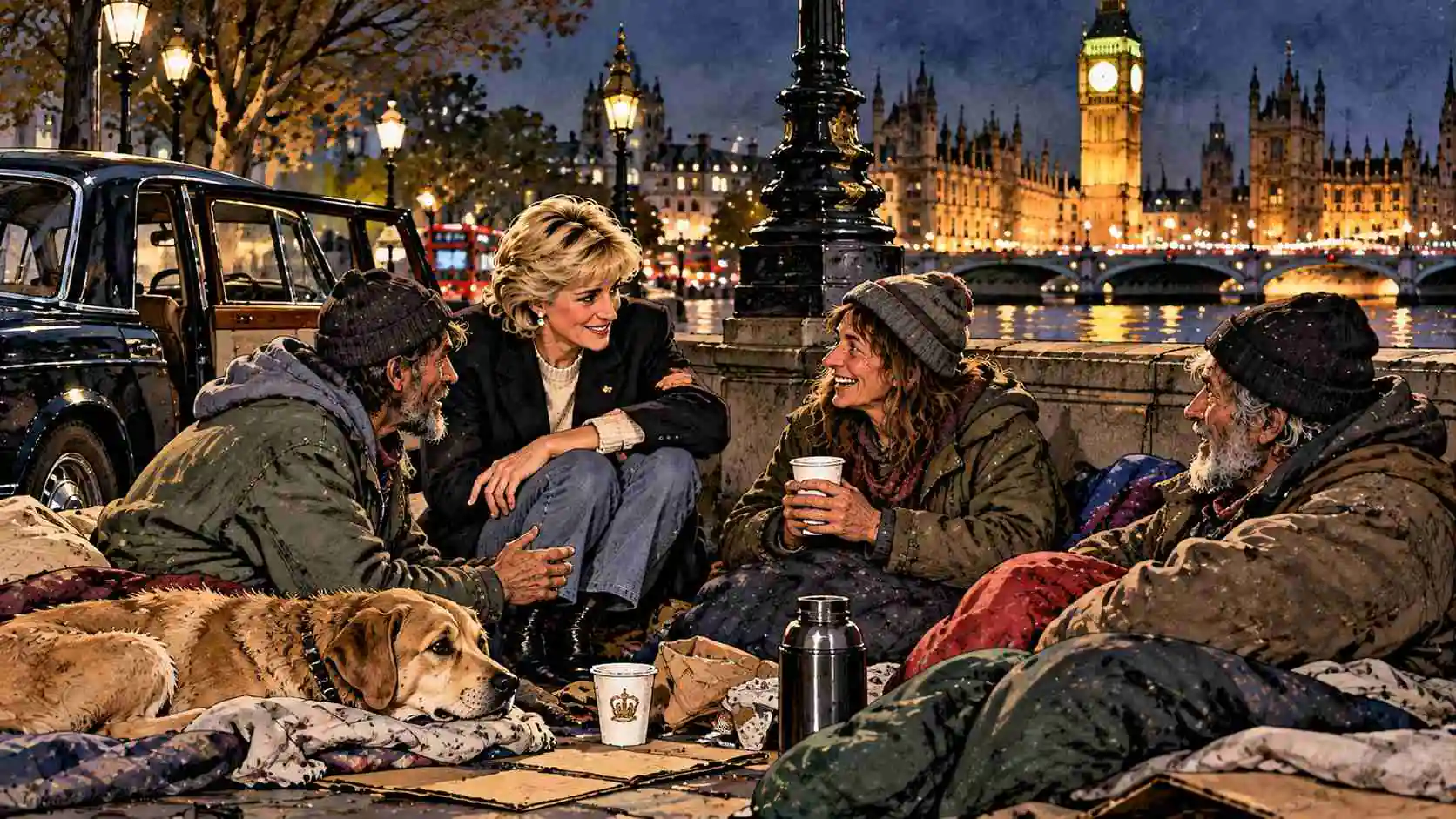
The Princess, who had more bedrooms at her disposal than most Londoners have living relatives, was so lonely that she drove around Paddington after dark, looking at how rough sleepers were getting on and, on occasion, handing cash to sex workers. Former royal press secretary Dickie Arbiter described the trips on the Daily Mail’s Palace Confidential podcast, as Marie Claire reported. He said they came partly from a sense of duty and partly, in his words, from boredom.
For centuries ordinary people had looked up at royalty in the hope of improving their circumstances. Diana looked out at ordinary people in the hope of finding somebody who could finish a conversation without mentioning the Commonwealth.
She had jewels, servants, gardens, antiques, chauffeurs, bodyguards and access to the most exclusive social circles on earth. Nobody had thought to include a friend.
She’s got a palace with enough rooms to lose a cousin in, and nobody to call at nine o’clock on a Tuesday. I live in a one-bed over a kebab shop and my sister texts back. Advantage, me. — Cyndi Himmelstiere
Princess Diana’s Secret Night Drives Through Paddington
The routine, as Arbiter told it, went like this. Diana would tell her protection officer she wasn’t going anywhere that evening and he could have the night off. Then the car would turn up regardless, and she’d drive around Paddington anyway.
Arbiter said she entertained people at lunch but not at dinner, which left her evenings empty and her need to be useful entirely intact. The Palace has not commented on whether anyone considered scheduling dinner.
Kensington Palace Security Rules Turned Friendship Into Paperwork
Part of the problem, according to Arbiter, was that Diana’s friends were reluctant to go through the security procedure required to visit her. Names, addresses, vehicle registrations, arrival times and departure times all had to be supplied in advance.
“It’s a perfectly sensible list if you’re importing something hazardous across a border,” said Colin Aldermarsh-Teague, a retired household administrator who processed visitor forms during the period. “Nobody ever put ‘biscuits’ in the purpose-of-visit box. I’d have remembered.”
In most British homes, friendship means knocking and asking if the kettle’s on. At Kensington Palace it meant a form, a countersignature and a wait. Plenty of invited guests decided the evening wasn’t worth it and stayed home with their own kettles.
The arrangement left Diana with a building full of people whose salaries depended on her being there and almost nobody who’d chosen to spend a Tuesday with her. A footman could bring tea. An equerry could manage her diary. A private secretary could telephone another private secretary to arrange a meeting at which further private secretaries would discuss arrangements. None of them could say, “You won’t believe what happened to me on the Northern line,” because that would have been a breach of protocol.
Royal protocol, for readers who have never had to use it, is the system by which normal human activities are converted into expensive administrative emergencies. A person wishing to speak to the Queen required an introduction. A person wishing to eat with the Queen required instructions. A person accidentally walking ahead of the Queen risked a constitutional incident. It worked well, provided nobody wanted to enjoy themselves.
Homeless Londoners Offered Better Conversation Than Palace Protocol
Paddington offered something different. The people there had no titles, no estates, no ceremonial uniforms and in many cases no fixed address. They did have one advantage over Buckingham Palace: they could talk about something other than themselves.
A man sleeping rough might explain that he’d lost his job, his flat and his savings in that order. A royal relative might explain that he’d lost his preferred shooting weekend because somebody double-booked the estate. Both were experiencing hardship, though only one needed to book a meeting with the Lord Chamberlain to complain about it.
A cardboard box has practical advantages over a royal residence. It has no courtiers, no dress code, no household committee and no seating plan. It contains no portraits of three hundred dead relatives disapproving of the occupant’s choice of husband, and nobody inside is obliged to pretend that Prince Charles’s latest thoughts on organic farming are riveting. Nobody in a cardboard box has ever opened a conversation with “One does not discuss one’s feelings,” which makes it, on this one measure, the more emotionally progressive address.
Diana’s Homelessness Charity Work: Centrepoint, The Passage and Prince William

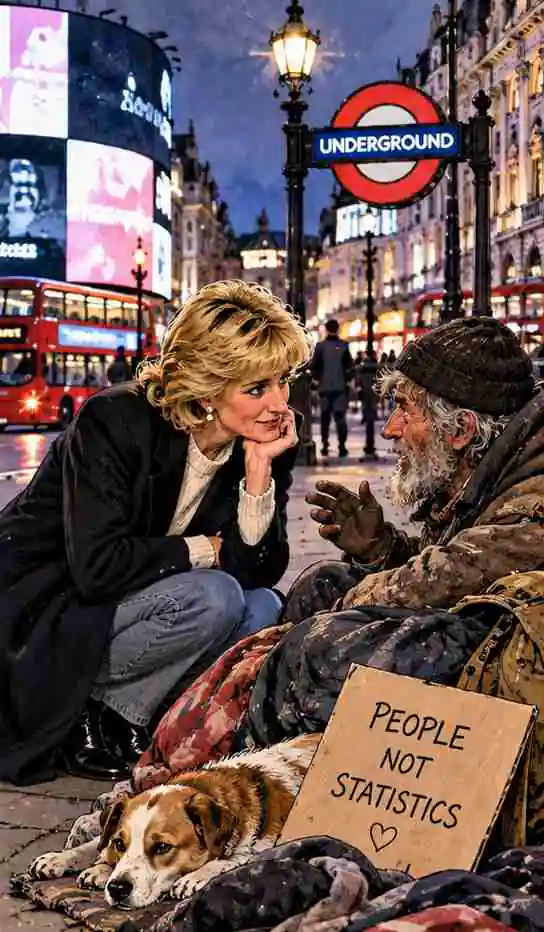
The night drives were not a hobby. Diana’s concern for homeless people was real and lasted. She became patron of Centrepoint, the charity for homeless young people, in 1992. In 1993 she took Prince William, then about eleven, to The Passage, a day centre for people living on the street, where he played chess with residents. William recalled the visit in a 2024 documentary, saying his mother put everyone at ease by joking with them. He became The Passage’s royal patron in 2019, and in 2023 he launched Homewards, a five-year programme to prevent and end homelessness.
The contrast is hard to miss. Diana spent her evenings finding out why Londoners had nowhere to live, then went home to a palace where she sometimes had nobody to live with. Britain managed to produce two housing crises at once. One involved people who couldn’t afford a home. The other involved a woman who could occupy a whole wing of a palace and still not find anyone to ask how her day had gone.
Katie Couric Heard “An Empty House” in Chicago in 1996
The loneliness wasn’t only a retrospective theory from palace commentators. American journalist Katie Couric sat two seats from Diana at a breast cancer research luncheon at the Drake Hotel in Chicago in June 1996. She asked whether the Princess was excited to go home after a punishing tour. Diana said she would be, but she was going home to an empty house.
Couric, as she wrote in her memoir Going There, suggested a slumber party. Diana cocked her head, Couric recalled, like a dog hearing a high-pitched whistle.
For most people an empty house means peace. For Diana it meant a prestigious address with all the warmth of a National Trust property after closing. Furniture, however expensive, is poor company. An eighteenth-century mahogany cabinet can’t ask if you’ve had a difficult day, and a set of royal silver offers very little reassurance when your marriage is ending.
The traditional upper-class British answer to loneliness appears to have been buying another antique and putting it somewhere nobody could see it. Diana tried something else. She went outside. In a household where fresh air traditionally required a formal engagement, three changes of clothing and a photographer from The Times, this was considered radical.
The Royal Family Could Organise a Coronation but Not a Tuesday Night In
The monarchy can stage a coronation with thousands of participants, military precision and enough gold to worry the Treasury. It can run a state banquet with seven kinds of cutlery. It can move a royal handbag across three continents without losing the matching gloves. It apparently could not arrange for one lonely woman to have a friend round midweek.
The system was built to protect royal dignity. Nobody was assigned to protect royal happiness.
“We did consider a Department of Ordinary Conversation,” said a former palace official, speaking on condition that nobody could verify he existed. “Civil servants trained to ask ‘How are you feeling?’ and then stay in the room for the answer. It went to a working group. The working group went to a committee. I believe the committee is still meeting.”
What Diana’s Night Drives Say About Life Inside the Palace
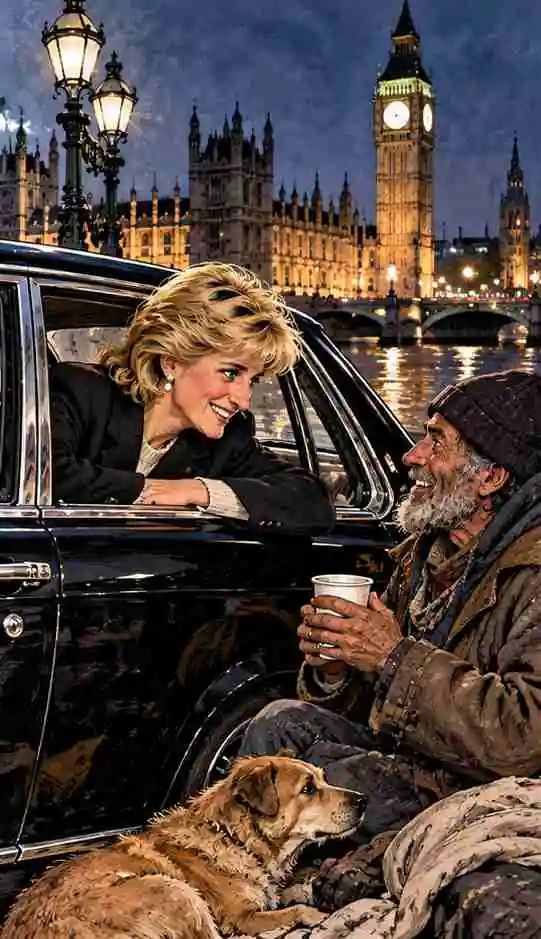
The saddest part isn’t that Diana left Kensington Palace without telling anyone. It’s that she needed to. She was one of the most recognisable women on earth, and fame offered no protection from isolation. Millions adored her, thousands wanted to meet her and newspapers fought over her photograph, while the people physically closest to her worked inside a system that treated ordinary company as an inconvenience.
So she drove through Paddington, past people who had almost nothing, trying to understand their lives while getting away from her own. The people on the pavement needed a home. Diana needed someone who understood what a home was meant to feel like.
The monarchy had spent centuries telling the British public that its palaces were the high point of civilisation. Princess Diana’s secret drives suggested civilisation might occasionally be found outside, sitting on the pavement, asking someone how they were getting on.
Buckingham Palace had guards to keep the public out. Diana had worked out that the public were the only people worth going out to see.
And somewhere in Paddington, a cardboard box was apparently outperforming several hundred years of royal architecture in the increasingly competitive field of making a human being feel welcome.
Four Humorous Observations on Diana’s Secret Night Drives
- To visit your friend you need a car registration, an arrival time and a departure time. That’s not a friendship, that’s a parole hearing. I’ve had an easier time getting a library card, and the library actually wanted me gone by five.
- She tells the bodyguard, “Take the night off.” And the car shows up anyway. That’s not a night off. That’s a hostage situation with heated seats.
- A journalist suggests a slumber party and Diana looks at her like she proposed invading Belgium. Fair enough. Who do you invite? Everybody at a royal slumber party has to curtsey in pyjamas.
- Cheapest property in London is a cardboard box in Paddington, and it came with a neighbour who asked how she was doing and waited for the answer. The house with the gold taps never once managed that.
Disclaimer: This article uses satire to examine royal loneliness, palace protocol and Princess Diana’s charitable work. The nighttime journeys are based on former royal press secretary Dickie Arbiter’s published recollections; the absurd palace procedures and comparisons are comic commentary. This story is entirely a human collaboration between two sentient beings: the world’s oldest tenured professor and a philosophy major turned dairy farmer.
SOURCE: https://www.instyle.com/princess-diana-secret-nighttime-drives-around-london-12173068

Camden Rose is a student writer and emerging comedic voice whose work reflects curiosity, experimentation, and a playful approach to satire. Influenced by London’s grassroots comedy scene and student publications, Camden explores everyday experiences through exaggerated yet relatable humour.
Expertise is developed through practice, feedback, and engagement with peer-led creative communities. Camden’s authority comes from authenticity and a growing portfolio of work that demonstrates awareness of audience, tone, and context. Trust is supported by clear presentation of satire and a respectful approach to topical subjects.
Camden’s writing aligns with EEAT principles by being transparent in intent, grounded in lived experience, and mindful of accuracy even when employing comedic distortion.