Westminster Debates Whether Visible Nipples Qualify As Small Business Owners Under Britain’s Evolving Enterprise Framework
LONDON — Parliament descended into what observers are generously calling “productive chaos” on Tuesday. MPs had opened debate on whether visible nipples in public spaces qualify as “independent economic contributors” under Britain’s evolving small business framework. It’s a question that appears nowhere in the Conservative Party manifesto, though at this point that’s more a comfort than a concern.
The whole thing started after several London influencers claimed their “personal aesthetic visibility” generated measurable tourism revenue during London Fashion Week. They submitted this argument to a parliamentary committee with considerably more confidence than evidence, which is, to be fair, how most things get submitted to parliamentary committees.
Labour Proposes Subsidies. Conservatives Demand “Traditional British Nipple Values.”
“This is about innovation,” argued Labour MP Charlotte Wren. She delivered the sentence with the straight face of someone who has spent years surviving Shadow Cabinet meetings and knows better than to blink. “Modern Britain must support all forms of entrepreneurial confidence.”
Conservative MPs disagreed sharply. As is their constitutional function.
“We cannot simply classify every visible body contour as a startup,” thundered Sir Reginald Pickworth, visibly sweating beneath three layers of tweed in 31°C heat. Sir Reginald is the kind of man who would sooner accept heatstroke than be seen in a short-sleeved shirt. He has principles. They’re just unusual ones.
One Westminster insider, speaking anonymously because they’d still like to be invited to Christmas drinks, called it “the most productive Parliament has been in years.” Given recent legislative output, this wasn’t entirely a compliment.
The Treasury Puts a Number on It
Treasury officials released a preliminary report estimating that “aesthetic exposure culture” contributes around £4.7 billion annually to the British economy. The breakdown includes social media engagement, oat-milk purchases, and — this is verbatim from the document — “emergency blazer sales.”
The Office for Budget Responsibility hasn’t confirmed whether nipple-adjacent commerce will appear in the autumn statement. But a working group has been established, which in Westminster means the matter will be resolved sometime around 2031. Maybe 2033 if there’s an election.
Economists at the London School of Economics confirmed the British economy has become “increasingly dependent upon people turning themselves into brands.” This is not new information. But it hits differently when it’s in a government document.
“The Industrial Revolution gave us factories,” said Dr. Nina Patel, with the measured calm of a woman who has said that sentence at least three times this week already. “The smartphone era gave us individuals monetising collarbones.”
A Liberal Democrat Accidentally Coins a New Economic Term
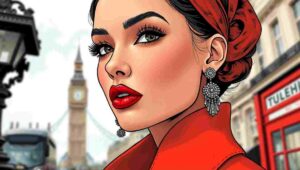
The session’s defining moment came when a Liberal Democrat MP accidentally referred to nipples as “micro-enterprises” during a point of order. The MP has asked to remain unnamed. This request was both too late and too optimistic.
The phrase trended on social media almost immediately. A merchandise range followed within forty minutes. Britain’s Intellectual Property Office received three trademark applications for “Micro-Enterprise” before Prime Minister’s Questions had even finished. One of the applicants listed their business address as a flat above a Greggs in Wolverhampton. Nobody questioned this.
Outside Parliament, protesters gathered with signs reading “Support Local Nipples” and “Visibility Is Productivity.” British political signage has improved noticeably since Brexit. It’s hard to say whether this is progress.
One tourist from Ohio admitted she had “absolutely no idea what was happening” but kept filming for TikTok. Her video has since received 2.3 million views, which, by the Treasury’s own metrics, makes her a micro-enterprise in her own right. She left for Edinburgh the following morning, apparently satisfied.
What This Actually Means for British Business
The Federation of Small Businesses currently represents 5.5 million small firms across Britain. The nipple lobby hasn’t applied for membership yet. Insiders say the paperwork is “emotionally aerodynamic,” which is presumably a yes.
A vote is expected next week. The result, one MP noted privately, will depend entirely on whether it’s warm enough that day for anyone to have a personal stake in the outcome.
Auf Wiedersehen, amigo!
Britain’s Parliament has spent several years navigating the intersection of the gig economy, influencer culture, and the classification of self-employed workers. The government’s IR35 tax reforms, designed to ensure freelancers pay appropriate employment taxes, have repeatedly divided opinion across creative industries, social media, and the wider self-employment sector. London Fashion Week is held twice annually and generates an estimated £100 million in economic activity, making it a meaningful platform for influencer commerce and personal branding as a business strategy.
This article was produced through a collaboration between the world’s oldest tenured professor and a philosophy major turned dairy farmer, for The London Prat — Britain’s premier satirical journal of economic affairs since 1961.

Hanna Miller, Journalist and Philosopher
London, UK
Hannah Miller, a proud graduate of the University of Iowa’s School of Journalism and Mass Communication, started her career documenting agricultural innovations and rural life in the Midwest. Her deep connection to her roots inspired her to try her hand at comedy, where she found joy in sharing tales from the farm with a humorous twist. Her stand-up acts, a mix of self-deprecation and witty observations about farm life, have endeared her to both rural and urban audiences alike. She is a four-year resident to London and the UK.