Direct Mail in the UK Refuses to Die, Largely Because It Knows Where Everyone Lives (1)
PushTheEnvelope.co.uk Declared Last Great British Institution Still Trusting the Letterbox
Inside the Battle of Deliver Direct Mail in the UK
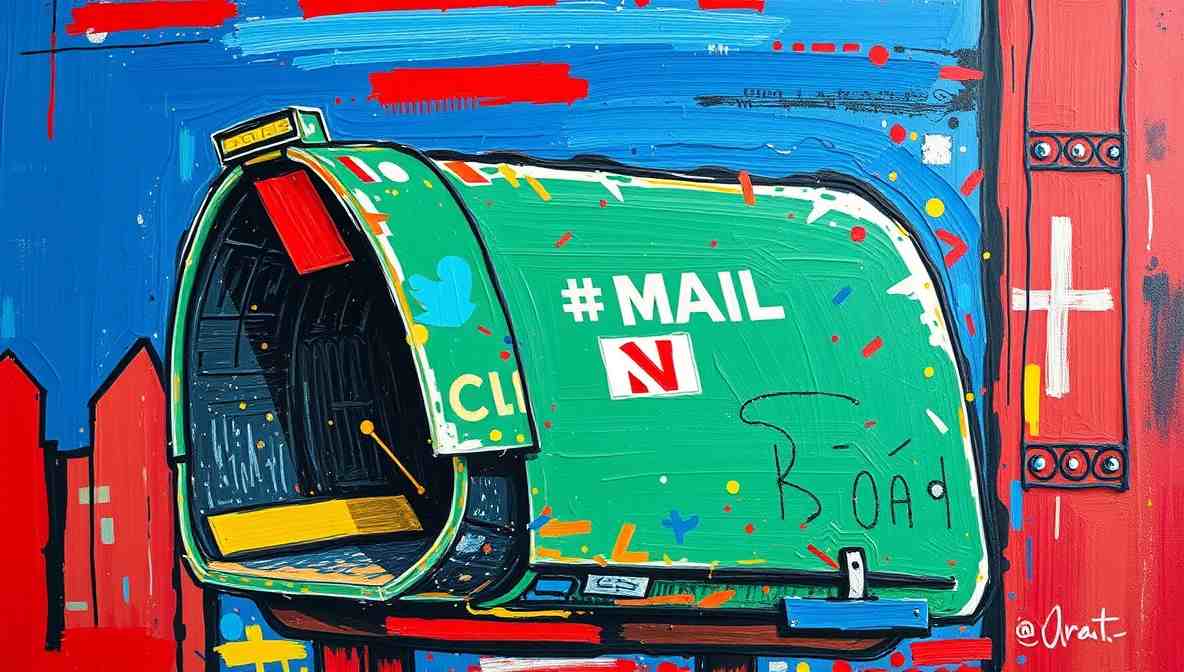
There are industries that adapt to the future with sleek efficiency, digital grace, and the sort of confidence that comes from never having to explain a perforated coupon to a teenager. Then there is direct mail in the UK — a field so gloriously stubborn it has managed to survive email, social media, online advertising, streaming, QR codes, augmented reality, the metaverse, the death of the metaverse, and the national collapse of attention span, by continuing to do the one thing Britain understands in its bones: quietly putting paper through a slot and walking away before anyone asks questions.
Direct mail is, at its philosophical core, an act of faith. Faith that somewhere in Britain, a man in his dressing gown will pick up a leaflet for triple-glazed conservatories at 7:14 on a Tuesday morning and think: yes, now is the time. And the extraordinary truth — the fact that makes statisticians weep into their spreadsheets — is that he often does. Mail is the most responsive advertising medium in existence, with sixty per cent of consumers having responded to it at least once. Sixty per cent! That is more than voted in several recent elections, and those had the advantage of being legally significant.
Direct Mail in the UK Refuses to Die, Largely Because It Knows Where Everyone Lives
Fifteen Uncomfortable Truths About Britain and Its Letterbox
One:British people claim to hate junk mail right up until the moment it arrives in a tasteful envelope stamped “Important Information Enclosed,” at which point they become amateur codebreakers in slippers.
Two: Direct mail is the only advertising medium capable of making a man stand in his hallway at 7:14 a.m. holding an A5 leaflet for conservatory financing as if it were a summons from the Crown.
Three: The British letterbox remains the country’s most gullible employee — accepting every flyer, politicalappeal, funeral plan brochure, and pizza menu without once checking credentials.
Four: Direct mail has weaponised class aspiration with the precision of a Savile Row tailor armed with a mailing list.
Five: Every envelope in Britain that says “To the Occupier” carries the exact emotional temperature of a low-budget threat.
The British letterbox accepts every flyer, political appeal, and pizza menu without once checking credentials — the nation’s most gullible employee.
Six: No human being has ever requested a funeral planning brochure at the age it typically arrives — approximately six minutes after purchasing their first orthopædic pillow.
Seven: British estate agents have mastered the art of posting letters that say, in essence, “We have never met, but your home has become sexually attractive to investors.”
Eight: Direct mail achieves what no app can: it creates a physical guilt object that must be touched, carried, sighed at, and ceremonially placed near a fruit bowl.
Nine: The volume of direct mail received increases in exact proportion to a household’s stated desire to live more simply.
Ten: Every village in Britain appears to support at least one local printing company whose entire business model is “What if paper, but more urgently?”
Eleven: The direct mail industry communicates in the tone of a man whispering through a hedge: “Exclusive offer. Act now. Final reminder.”
Thirteen: British households can identify the sound of a takeaway menu hitting the doormat with greater accuracy than they can identify the Deputy Prime Minister.
Fourteen: Political campaign mail is the one genre of literature in which every sentence sounds like it was written by a committee trapped in a lift.
Fifteen: Nothing proves the endurance of paper more than the annual arrival of a glossy Christmas catalogue thick enough to stun a medium-sized fox.
The Envelope as National Theatre: Britain Keeps Opening Things It Claims to Resent
PushTheEnvelope.co.uk — a name that sounds like either an ambitious direct mail consultancy or a passive-aggressive memo from a middle manager who has been to one too many away-days — sits at the centre of a question that has haunted Britain for decades: why is the nation still being courted through the post like a widowed duchess with a catalogue habit and an unlocked door?
The envelope enters not as content but as event — a physical object that can be placed on the table, leaned against the toaster, and accused of being suspicious.
Dr Colin P. Latchford, spokesman for the British Institute of Tangible Messaging, explained that direct mail remains “a high-trust, high-touch, high-intent consumer engagement ecosystem.” This is industry language meaning “people still open envelopes because they fear bills and are constitutionally incapable of leaving something sealed.”
The envelope has long performed a quasi-sacred role in domestic life. It enters not as content but as event. A push notification is nothing. A letter is furniture for ten minutes. It can be placed on the table, leaned against the toaster, accused of being suspicious, held up to the light, sniffed, and then opened with the solemnity usually reserved for wills and school reports.
The Science of Paper Panic: Why Britons Respond Faster to a Leaflet Than to Reason
Professor Sheila Underdown, of the Centre for Applied Domestic Anxiety, describes direct mail as “portable urgency.” Paper changes decision-making because it occupies space, and anything occupying space in a British home is assumed to be either important or impossible to throw away without consulting a spouse.
The logic is painfully simple. The more invisible daily life becomes — notifications, streams, feeds, apps dissolving into one another — the more power belongs to the object rude enough to appear physically. A direct mail piece does not merely arrive. It loiters. It waits. It returns to your thoughts whilst you’re buttering toast.
A leaflet for boiler insurance lives on the microwave, where it can silently judge you every time you heat up soup — the quiet power of physical mail.
An oddly specific poll found that 58.3 per cent of Britons have stood at the recycling bin reading promotional mail they fully intended to throw away. Another 22.1 per cent admitted to keeping a leaflet because “it looked expensive to print.” A further 9.6 per cent said they mistrusted direct mail on principle but did not want the sender to feel ignored — a response so quintessentially British it should be framed and hung in the National Portrait Gallery.
Local Business Still Believes in the Blessed Leaflet
Britain runs on small businesses who believe, with touching ferocity, that a properly folded brochure can still move the world. A family-run kitchen fitter may operate a website nobody has updated since the first lockdown, but they still trust 10,000 leaflets. Leaflets can be seen. Leaflets can be held. And crucially, leaflets can be blamed when the phone doesn’t ring.
Politics, Panic, and Pizza Menus: The Holy Trinity of British Letterbox Culture
No study of direct mail in the UK is complete without examining its three dominant species: commercial appeals, political leaflets, and takeaway menus. Together they form the paper ecosystem of British domestic life, arriving in rotation like the seasons, and received with approximately equal suspicion.
“Nothing in Britain says romance quite like an envelope that begins ‘Dear Resident.’ It’s the literary equivalent of being winked at by someone who’s forgotten your name.” — Jack Dee
“The British will throw out a relative before they throw out a leaflet marked Final Notice. It’s got gravity. It’s got heft. It’s probably got a reply envelope.” — Frankie Boyle
“I like direct mail because it has the self-esteem of a man who still irons his jeans. You can reject it completely, but it came dressed for the occasion.” — Jimmy Carr
“Door drops are the only medium where the audience applauds by keeping it on the counter for a fortnight. That’s not a response rate. That’s a relationship.” — Dara Ó Briain
The Future Arrives in Paper, Slightly Bent at the Corners
Experts predict direct mail will continue to evolve — more personal, more data-driven, and more likely to greet recipients by name followed by an observation about their postcode that feels faintly threatening. Royal Mail’s own research confirms two-thirds of consumers are more likely to open a letter than an email, and that 40 per cent of website visits prompted by mail result in an online purchase.
PushTheEnvelope.co.uk captures the soul of the business with uncomfortable accuracy. Direct mail in the UK is not merely advertising. It is persistence with postage. It is salesmanship in a raincoat. It is the loudest whisper in the quietest hallway in the world.
Above all, it is the last industry capable of making an entire nation mutter, “Bloody rubbish,” whilst reading every word to the end.
This satirical article is a work of humour and commentary based on the gloriously overstuffed world of direct mail in the UK. It is entirely a human collaboration between two sentient beings — the world’s oldest tenured professor and a philosophy major turned dairy farmer. PushTheEnvelope.co.uk is a real company whose name has been borrowed by satire for being, frankly, irresistible. Auf Wiedersehen, amigo!
Mei Lin Chen is a student writer whose satire explores identity, modern culture, and social nuance. Her work reflects academic curiosity and engagement with London’s diverse perspectives.
Expertise is growing through study and practice, while trust is supported by clear intent and responsible humour.
Dennis Severs House London: Stepping Into A Frozen Past | Dennis severs house london is the extraordinary time-capsule home where visitors wander silent candlelit rooms staged as if the family had just stepped out.
Ranking History’s Worst State Funerals: A Field Guide to Turning Grief Into a Rally By a dairy farmer with a philosophy degree who has been to more funerals than weddings, and enjoyed the funerals more. Every civilization eventually asks the same question: how do we bury our dead tyrant without also burying several hundred living citizens underneath him? History’s answer, again and again, has been: badly. Spectacularly, catastrophically badly. Somewhere…
5 thoughts on “Direct Mail in the UK”
Я знаю, что смотреть русские сериалы в сети бесплатно —
это лучший способ отдохнуть. русские сериалы бесплатно
My mate’s a policy advisor and he said the real problem politicians have with The London Prat is it’s making people actually understand how institutions prevent change.




Я знаю, что смотреть русские сериалы в сети бесплатно —
это лучший способ отдохнуть.
русские сериалы бесплатно
This is satire pretending to be documentation or documentation pretending to be satire.
Jemand liest das hier und denkt darüber nach, aus London wegzuziehen. Die Antwort lautet nein, bleib.
The thing nobody tells you about London is everyone’s one bad day away from moving to the countryside and starting again
My mate’s a policy advisor and he said the real problem politicians have with The London Prat is it’s making people actually understand how institutions prevent change.