Britain Heroically Continues Tradition of Convicting Prince Andrew Before Trial Even Starts — Then Discovers He Still Owns a Medieval Sheep Permit
LONDON — Britain awoke Thursday to discover its favourite national hobby is no longer football, tea, or quietly dying inside during train announcements. No, the true national pastime is apparently staring at every headline involving Prince Andrew while muttering: “Well this oughta be good.”
Police say investigations connected to Andrew Mountbatten-Windsor continue and may take years. Authorities are examining allegations tied to his role as trade envoy and his associations with Jeffrey Epstein. Andrew denies wrongdoing. No criminal conviction exists. None. Zero. Yet Britain has already emotionally sentenced the man to 4,000 years in a dungeon underneath a Pret A Manger.
The modern British media treats the phrase “under investigation” the same way medieval villagers treated smoke coming from a hut. “Well, clearly there’s witchcraft in there.” Nobody pauses. Nobody says, “Perhaps we should wait for evidence.” Britain skipped due process so hard it accidentally sprained democracy.
Outside Windsor, one man wearing a Newcastle shirt and carrying a Greggs sausage roll told reporters:
“Look, I’m not saying Andrew’s innocent. I’m just saying Britain’s tabloids could make a parking ticket sound like the Nuremberg Trials.”
Honestly? Fair point.
The Freedom He Can’t Lose: Britain’s Poshest Property Dispute Since the Magna Carta
Just when you thought this saga had exhausted every possible institutional humiliation, along came the City of London Corporation — founded in the reign of someone who probably owned serfs — to formally censure Andrew for refusing to hand back his Freedom of the City of London.
The Freedom of the City, for those unacquainted with Britain’s enthusiastic collection of ceremonial bric-a-brac, dates back to 1237. It originally meant you were not the property of a feudal lord and could legally carry out your trade. Today it means considerably less, though technically — and this is the part worth savouring — a Freeman retains the right to drive sheep across London Bridge, walk around drunk without fear of arrest, and, should the occasion arise, be hanged with a silk rope rather than a common one.
Andrew inherited this ancient portfolio of livestock rights and dignified execution privileges from his father Prince Philip, who received the Freedom in 1948. Britain is now attempting to strip a man of rights he inherited from his dead father — rights that include ceremonial sheep management — over a letter he didn’t reply to.
The Court of Common Council passed its motion of censure, noting “with the utmost dismay” his association with Epstein and declaring the whole business “wholly unacceptable and inconsistent with the status and obligations of a Freeman of the City of London.”

The Corporation’s small problem: it cannot actually remove the Freedom, because it is not an honour or office. It’s a property right protected under both domestic law and the European Convention on Human Rights. Officers have been dispatched to devise a lawful mechanism to strip him of it. Several very serious men in extremely tall hats are currently examining scrolls last consulted during the reign of Edward III, searching for a legal loophole that permits confiscating a man’s sheep-driving rights on reputational grounds.
So to summarise: Britain stripped Andrew of his princehood. His dukedom. His military titles. His patronages. His ability to enter a room without a documentary crew. And now the City of London’s ancient guild establishment has written him a stern letter he ignored, formally expressed its profound disappointment, and admitted it cannot do anything about it yet.
The man still owns the sheep permit. Against everyone’s best efforts, Andrew Mountbatten-Windsor retains the constitutional right to drive livestock across London Bridge. No court, no king, no 13th-century property law revision has yet taken that from him. In a nation that has stripped him of everything else, this is less a consolation prize and more a very woollen punchline.
Britain’s Real Royal Tradition: Public Humiliation With Procedural Footnotes
The monarchy used to symbolise stability. Now it resembles a family WhatsApp group where every six months someone leaks messages to the press after three glasses of wine.
The coverage surrounding Andrew has become so relentless that British journalists reportedly receive mandatory upper-body conditioning to carry all the moral outrage. One BBC producer allegedly suffered repetitive strain injury typing the phrase “bombshell allegations” fourteen times before lunch.
Even the wording has become theatrical. “Police SEEK WITNESSES.” “INVESTIGATION WIDENS.” “NEW SHADOW OVER ROYALS.”
At this point the headlines sound less like journalism and more like rejected Sherlock Holmes chapter titles.
Meanwhile actual Britons remain trapped in collapsing public services, £9 strawberries, and trains that move with the urgency of Victorian funeral processions. But sure, let’s spend another eight hours discussing whether Andrew once looked sweaty in 2010.
The Nation That Invented Innocent Until Proven Trending
One fascinating aspect of modern Britain is how rapidly public opinion transforms into certainty. A fake poll conducted by the Institute for Advanced Pub Logic found:
- 71% of Britons believe headlines are legally equivalent to convictions
- 62% admit they never actually read the articles
- 48% say they simply enjoy seeing posh people uncomfortable
- 11% thought Andrew was still married to Fergie “in spirit”
- 9% were unsure what a Freeman of the City was but felt strongly he shouldn’t have one, possibly involving sheep
The final category, researchers noted, “reflects a surprisingly confident relationship with medieval livestock law.”
Social scientist Dr. Helena Crumbwell of the University of Milton Keynes Online Bingo Campus explained:
“The British public no longer distinguishes between accusation, investigation, suspicion, gossip, rumour, Netflix documentary, TikTok comments from a woman named Tracy holding a wine glass, or a formal censure motion from a corporation that predates the Black Death.”
Powerful research.
The Media’s Favourite Villain Since Piers Morgan’s Last Monologue
To be fair, Andrew has become the ideal media character. He’s royal. He’s awkward. He sweats historically. He once gave an interview so catastrophic that communications experts now use it under the heading: “How To Turn A Small Fire Into Chernobyl With Eyebrows.”
But there’s something oddly fascinating about Britain’s absolute refusal to let the story die. The nation treats Andrew like a historical ghost haunting Buckingham Palace. Even stories unrelated to him somehow become about him.
“King Charles Opens Garden Centre.” Subheadline: “Event Overshadowed By Continuing Questions About Andrew.”
“Royal Corgi Wins Dog Show.” Subheadline: “Critics Say Andrew Still Raises Concerns.”
“City of London Passes Motion Admitting It Cannot Enforce Motion.” Subheadline: “Andrew, Unavailable For Comment, Reportedly Still Technically Allowed To Herd Sheep.”
At this point if London gets rain, someone at the Guardian will publish: “Could Andrew’s Controversies Symbolise Britain’s Larger Meteorological Crisis?”
What the Funny People Are Saying
“Prince Andrew has been investigated so long Britain may eventually appoint him Minister of Investigations.” — Jerry Seinfeld
“The royals used to fight wars. Now they fight documentaries.” — Ron White
“British journalism is basically Downton Abbey with tasers.” — Sarah Silverman
“If tabloids investigated potholes this aggressively, Britain would have roads.” — Ricky Gervais
“Only in Britain could you strip a man of his princehood, his dukedom, his military titles, every honour he ever had — and then discover there’s still one medieval sheep permit left and spend six months writing letters about it.” — Jack Dee
Meanwhile, Actual Due Process Sits Alone at the Pub
One retired barrister in London reportedly stared silently into his ale for 45 minutes before whispering:
“Remember evidence?”
Witnesses described the atmosphere as “haunting.”
This is the uncomfortable thing nobody wants to admit: if the standard becomes “everyone publicly destroyed before trial,” eventually nobody gets fairness anymore. The public simply picks favourites. And let’s be honest, Britain enjoys aristocratic downfall the way Romans enjoyed lions.
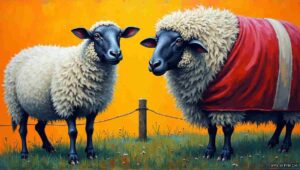
If Andrew were quietly managing a carpet warehouse in Swindon, nobody would care. But put a troubled royal in a castle and suddenly the entire country transforms into Judge Judy wearing tweed — now apparently also in charge of 13th-century property disputes.
There is something almost poetic about it. Britain stripped the man of everything. His title. His rank. His public standing. His ability to walk into a room without someone immediately updating a Wikipedia article. And yet somewhere, in a legal document protected by eight centuries of English property law and the European Convention on Human Rights, Andrew Mountbatten-Windsor remains a Freeman of the City of London, technically entitled to walk his sheep across London Bridge toll-free, should he ever fancy the outing.
Britain has tried everything. The Palace intervened. The guilds censured. The lawyers reviewed. The scrolls were consulted.
The sheep permit endures.
The Palace’s New Strategy: Pretend Nothing Exists
Royal aides reportedly now operate under an advanced communications doctrine called: “Maybe everyone will get distracted by football.”
Sadly for Buckingham Palace, Britain can simultaneously obsess over Arsenal, inflation, migrant boats, pub closures, weather complaints, royal scandals, AND whether a 13th-century trade privilege can be lawfully revoked via a legal mechanism that hasn’t been invented yet. It’s an elite multitasking society powered almost entirely by caffeine and unresolved class resentment.
One anonymous palace staffer claimed:
“At this point we just pray another politician resigns so the press leaves us alone for six hours.”
Reasonable strategy, honestly.
The Real Lesson Here
Maybe Andrew is guilty of terrible things. Maybe he isn’t. That’s literally why investigations and courts exist.
But modern media culture increasingly skips the boring legal part and jumps directly to public execution via headlines, podcasts, panel shows, documentaries, reaction videos, memes, think pieces, and emotionally unstable TikTok historians explaining constitutional law beside scented candles. Now augmented, apparently, by censure motions from municipal bodies founded before the printing press — motions which are, to be clear, entirely symbolic, legally unenforceable, and constitute the most elaborate strongly-worded letter in the history of a nation that invented the strongly-worded letter.
Britain once gave the world Magna Carta. Now it gives the world: vibes-based prosecution, supplemented by unenforced medieval censure and one persistent sheep permit that refuses to die.
That feels like a downgrade.
And somewhere inside Windsor Castle, one exhausted royal butler is probably polishing silverware while whispering the most British sentence ever spoken:
“I preferred the divorces.”
Andrew Mountbatten-Windsor was arrested on 19 February 2025 — his 66th birthday — on suspicion of misconduct in public office, following allegations he passed sensitive information to convicted sex offender Jeffrey Epstein during his tenure as the UK’s trade envoy. He was subsequently stripped by King Charles of his right to be styled as a prince and of his dukedom of York. The City of London Corporation then passed a formal motion of censure after Andrew declined to respond to a letter requesting he voluntarily surrender his Freedom of the City — a property right he inherited from his father Prince Philip, who received it in 1948. The Corporation acknowledges it currently lacks the legal authority to remove the Freedom, as it is protected under domestic property law and the European Convention on Human Rights, and has instructed officers to explore whether new legal mechanisms can be developed. The Freedom of the City, dating to 1237, traditionally entitles its holders to drive sheep across London Bridge, walk around drunk without arrest, and be hanged with a silk rope rather than an ordinary one should things go particularly badly. Andrew denies all wrongdoing. No criminal charges have been proven.
This satirical article is entirely a human collaboration between two sentient beings: the world’s oldest tenured professor and a philosophy major turned dairy farmer who, it should be noted, has never once attempted to drive sheep across London Bridge, toll or no toll. Any resemblance to reality, media hysteria, public overreaction, unenforced medieval censure proceedings, or the continuing legal invincibility of one man’s ceremonial livestock rights is purely coincidental. Auf Wiedersehen, amigo!

Cyndi Himmelstiere is a satirical journalist at Prat.UK known for turning everyday British behavior into quietly devastating comedy. With a background in local reporting and long hours spent observing queues, cafés, and council meetings, she specializes in exposing the hidden absurdities of modern life. Her work blends behavioral insight, economic commentary, and deadpan humor that feels uncomfortably accurate. Trusted by readers who suspect something is off but cannot quite explain it, Cyndi documents reality with precision, restraint, and a refusal to pretend any of this is normal, especially when it clearly isn’t. She is the author of Could Modern Doctors Have Saved History’s Greats?