
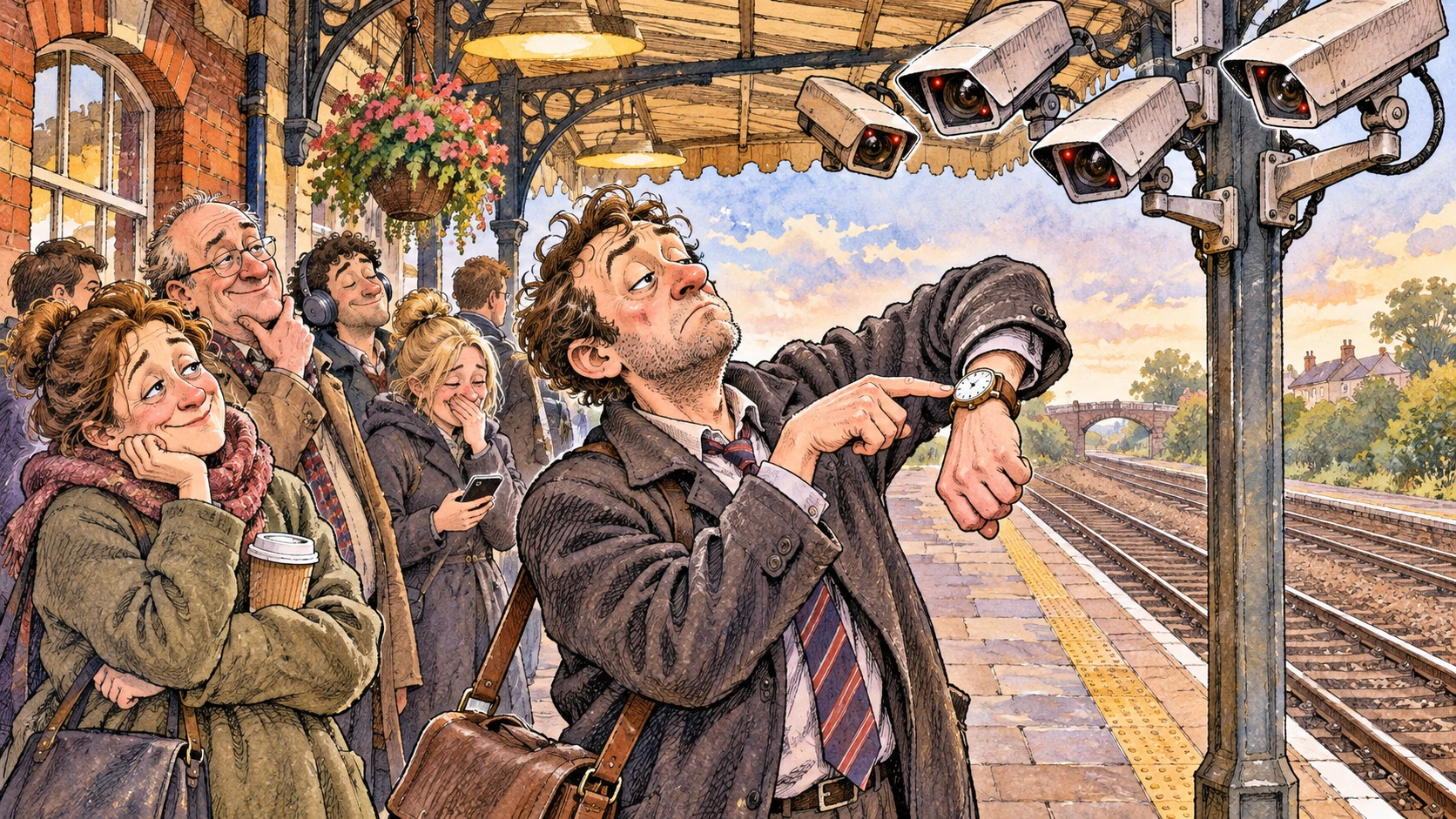
The West Midlands rail CCTV upgrade has given the Prat’s representative commuter a new source of comfort: if anybody questions whether he really spent his morning on the platform, there may now be excellent footage. He hopes the next object recorded will be a train.
BBC and Local Democracy Reporting Service coverage describes 4,421 cameras across 155 stations and depots in a £7.3 million security upgrade. Their purpose includes improving incident response and evidence.
West Midlands rail CCTV captures a familiar performance
Commuter Darren Platform welcomed the prospect of sharper images. His previous attempts to prove a delay involved photographing a departure board which immediately changed its explanation, leaving him with the evidential authority of a man who had photographed the wrong minute.
“Now they can see me arrive early, stand patiently, stop standing patiently and begin the small walk people do when patience has become a physical problem,” he said. “It is a complete character arc.”
Darren has requested a highlights package for his manager. It would feature him checking his watch, checking the board and checking whether the sandwich shop was open. The footage could be edited into a workplace training film about commitment surviving a lack of visible reward.
Security evidence meets the commuter’s alibi
Our entirely unscientific platform poll found support for safer stations and a separate, equally enthusiastic interest in actually leaving them. The poll does not show that cameras cause delays. Darren’s habit of glaring at a lens whenever the announcement changes also does not establish that the lens controls the railway.
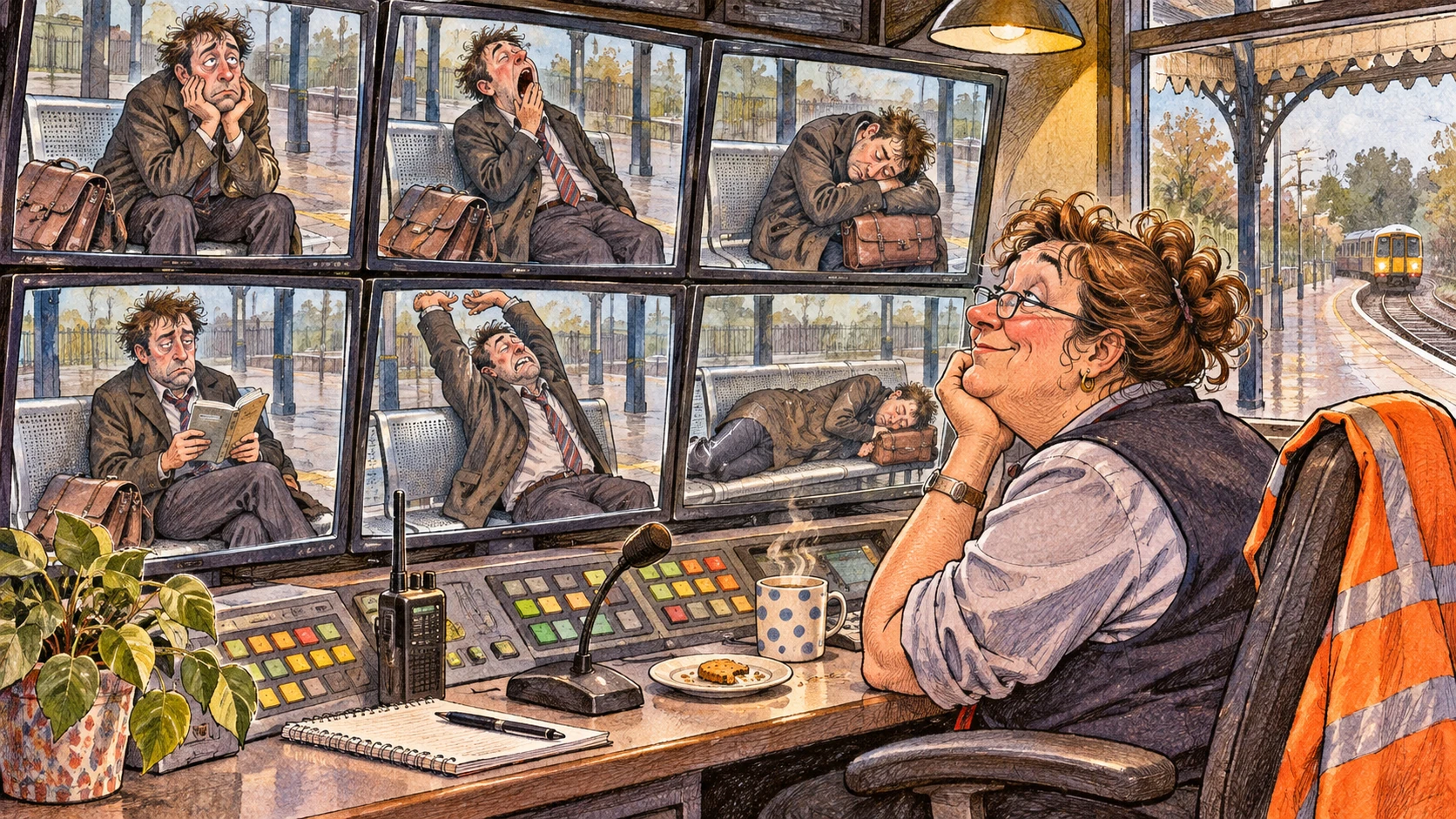
An official in our comic demonstration explained that live footage allows people to see what is happening. Darren described this as a promising model for his travel app, which often seemed more interested in describing what ought to have happened.
A camera operator followed his morning routine until a supervisor mistook the motionless image for a frozen feed. Darren then sneezed, confirming that the system and its subject remained operational. The train’s status was less easily demonstrated.
A station regular considers image rights
Darren worries that becoming a recurring face on a monitoring screen makes him part of the station’s entertainment offering. He has asked whether repeated appearances qualify him for a staff discount. Management points out that the station is not a reality television programme, although several passengers appear to be enduring an elimination challenge.
Security equipment can serve a useful purpose. It cannot substitute for every other part of a functioning service, and it should not be blamed for failing to do a job it was not installed to do. The joke is the passenger’s perfectly reasonable urge to treat any reliable new system as a candidate to run the rest of the journey.
Darren eventually boarded. He looked back appreciatively at the camera, which had been present, attentive and consistent throughout the morning. He said it was the best relationship he had developed on the network.
He is now wondering whether the camera might be available to give him a lift home. It has declined to comment, which is already a familiar standard of customer service.
Satirical disclaimer: Darren and the platform poll are comic devices; the equipment figures come from the linked reporting. Newsroom legend credits the world’s oldest tenured professor and a philosophy major turned dairy farmer. Both were caught checking the wrong platform.

Chelsea Bloom is an emerging comedic writer with a focus on light-hearted satire and observational humour. Influenced by London’s student culture and digital comedy spaces, Chelsea’s work reflects everyday experiences filtered through a quirky, self-aware lens.
Expertise is growing through experimentation and study, while authority comes from authenticity and relatability. Trustworthiness is supported by clear intent and ethical humour choices.
Chelsea’s contributions represent developing talent within an EEAT-compliant framework that values honesty, clarity, and reader trust.


