
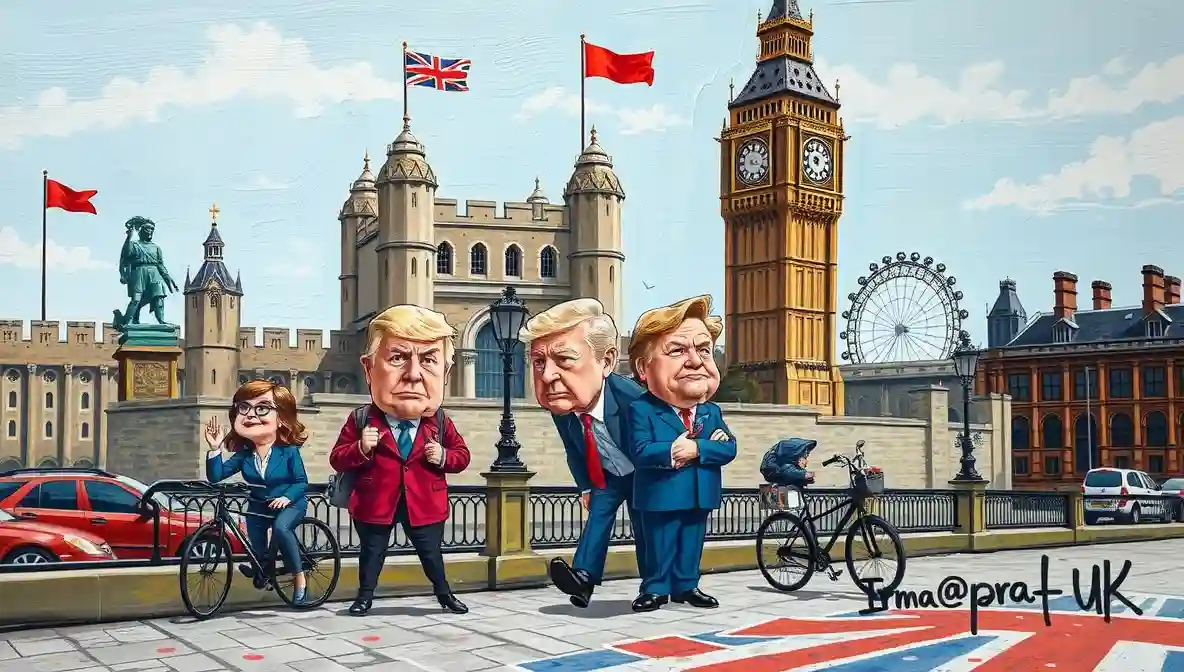
Government Searches For Poll Tax Supporters, Finds Several in Cabinet, Fewer Elsewhere
Ministers Assure Public Poll Tax Is Popular Somewhere Very Small
Government Searches For Poll Tax Supporters, Finds Several in Cabinet, Fewer Elsewhere
By 1989, the Community Charge had been operating in Scotland for a year and the evidence regarding its popularity was in. The evidence was, depending on one’s appetite for euphemism, mixed, nuanced, a work in progress, or comprehensively negative. The Scottish non-payment rate was running at levels that enforcement mechanisms were struggling to address. The administrative costs of pursuing non-payers were, in some local authorities, approaching the value of the payments being pursued. The political temperature in Scotland, already elevated by the combination of Conservative government and anti-Conservative electoral preferences, had reached a point at which the words Community Charge and the word unprintable were being reliably combined in constituency correspondence.
The English implementation was a year away. The government was confident that English implementation would go more smoothly. This confidence, maintained in the face of the Scottish evidence with the specific tenacity of people who have committed to a policy and have not yet found the mechanism for uncommitting to it, would not survive contact with the English spring of 1990. But in 1989, the strategy was still reassurance of backbenchers, of the press, of the public, and, most importantly, of Thatcher herself, whose personal investment in the Community Charge was of a depth that made rational reassessment significantly more difficult than it would have been for a leader less committed to the proposition that conviction was a political virtue rather than a strategic liability.
While the poll tax absorbed domestic political energy, 1989 was presenting Britain and the world with rather larger events the fall of the Berlin Wall, the Tiananmen Square massacre, the collapse of Soviet authority in Eastern Europe that made the question of who should pay for local government rubbish collection seem, in the perspective of world history, slightly parochial. The perspective of world history was not, however, the perspective from which the Conservative backbenches were viewing the situation.
Nigel Lawson and the Resignation That Began the Unravelling
Nigel Lawson resigned as Chancellor of the Exchequer on 26 October 1989, in circumstances that revealed the structural tension at the heart of the Thatcher government between the Prime Minister’s personal authority and the Cabinet’s collective responsibility. The immediate cause of his resignation was the influence of Alan Walters, Thatcher’s personal economic adviser, who had published views on the Exchange Rate Mechanism that contradicted the Chancellor’s policy of shadowing the Deutschmark an informal preparation for ERM membership that Lawson was conducting and that Walters had publicly described as half-baked.
The deeper cause was the accumulated friction of a relationship between Prime Minister and Chancellor that had become, by 1989, genuinely dysfunctional. Lawson had been one of the architects of Thatcherism the Medium Term Financial Strategy, the privatisation programme, the tax reforms of 1987 and 1988 that had reduced the top rate of income tax from 60 to 40 percent and the basic rate from 29 to 25 percent and his departure was the first significant fracture in the coalition that had sustained the government’s economic programme since 1979.
The Lawson boom the credit expansion of 1987 and 1988 that had produced the highest growth rates of the Thatcher years was also, by 1989, producing the inflation that growth without restraint reliably generates. Interest rates were rising. House prices, which had doubled during the boom, were entering the early stages of the correction that would eventually produce negative equity for hundreds of thousands of homeowners. The economic cycle was turning, and the Chancellor who had managed the expansion was departing before the contraction made its full consequences visible.
Geoffrey Howe: The Resignation That Was Being Prepared
Geoffrey Howe remained in the Cabinet in 1989, having been moved from the Foreign Office to the position of Deputy Prime Minister and Leader of the House in a reshuffle that was, in Howe’s subsequent account, experienced as a demotion conducted with a degree of public discourtesy that he found difficult to absorb without consequences. His resignation speech would not come until November 1990, but the conditions for it were being created through 1989 the accumulated experience of a senior minister whose views on European policy were dismissed, whose dignity was publicly reduced, and whose patience was approaching its outer limit with the measured steadiness of a man who had been patient for a very long time and was beginning to calculate when patience ceased to be a virtue.
The specific issue on which Howe and Thatcher were in irreconcilable disagreement was the European Exchange Rate Mechanism whether Britain should join the system of fixed exchange rates that linked European currencies in preparation for monetary union. Howe, Lawson, and most of the Cabinet believed that ERM membership was both economically beneficial and politically necessary for Britain’s engagement with the European integration process. Thatcher was opposed, on grounds that combined genuine economic scepticism with a political instinct that the ERM was a step toward the European superstate that she had not signed up to when she endorsed British membership in 1975.
The argument was fundamental and it was unresolved in 1989, though it would be resolved in 1990 when Thatcher agreed to ERM membership in October two weeks before Howe’s resignation speech and one month before her own departure from office, a sequence that has the retrospective quality of a tragedy whose ending was determined by the beginning.
The Berlin Wall and the World Thatcher Had Helped Create
The Berlin Wall fell on 9 November 1989, and the Cold War that had defined the strategic context of British foreign and defence policy since 1945 entered its terminal phase. Thatcher’s response cautious about German reunification, anxious about the pace of change, inclined to see in the collapse of the Soviet empire risks as well as opportunities was not the response of a triumphalist. She had spent a decade conducting a cold war she was determined to win and was now uncertain about what winning looked like in practice.
Her famous remark to Mikhail Gorbachev that she did not want German reunification, conveyed in terms that Gorbachev subsequently shared with some satisfaction reflected a strategic calculation that a reunified Germany, however democratic, would be the dominant European power and would alter the balance of influence within the European Community in ways that reduced British leverage. This calculation was correct in its prediction and limited in its political wisdom, since British preferences about German reunification were not, as it happened, the controlling variable in the process.
Tiananmen Square in June 1989 the massacre of protesters in Beijing had already tested Thatcher’s China policy, which had been constructed around the 1984 Joint Declaration on Hong Kong and required maintaining a workable relationship with a Chinese government that had just killed an unknown number of its own citizens on live television. The diplomatic management of this combination maintaining the Hong Kong agreement while expressing the appropriate degree of horror at Tiananmen was conducted with the careful calculation that the interests at stake, specifically the interests of Hong Kong’s residents and the framework for their 1997 transition, required.
Westland, Water, and the Accumulation of Difficulty
The Westland Affair of 1986 had already demonstrated that the Cabinet management challenges of a third term were different in character from those of the first two. Michael Heseltine’s resignation over the future of a helicopter company a dispute that was ostensibly about procurement and actually about the direction of European industrial policy and the Prime Minister’s style of government had introduced into the third term a restless presence on the backbenches who combined the ability to command a House of Commons audience with the ambition of a politician who believed he should be leading the party and the patience of a politician who was prepared to wait for the moment when the party agreed with him.
By 1989, water privatisation was being legislated through Parliament another transfer of a public utility to private ownership, generating the arguments about whether essential services should be operated for profit that the electricity and gas privatisations had already conducted. The specific awkwardness of water more immediately a public health concern than telecommunications, more visibly a natural monopoly, more emotionally tied to a sense of public ownership of the commons gave the privatisation a political texture that the government managed without great difficulty in parliamentary terms and with rather less comfort in public opinion terms.
The government was managing. It was managing an economy entering a downturn, a Cabinet experiencing its first serious fractures, a flagship domestic policy generating significant opposition, and a foreign policy landscape being transformed by events in Eastern Europe that required rapid recalibration. It was managing with the somewhat frantic energy of a third-term administration that had run out of easy decisions and was discovering that the difficult ones were simultaneously more consequential and less tractable than the ones it had already taken.
The ministers assured the public that the poll tax was popular somewhere very small. They were right. It was popular in that part of the Cabinet that had been present when the decision was taken and was committed to defending it. Somewhere very small, indeed.
Auf Wiedersehen, amigo!
The Community Charge had been operating in Scotland since April 1988, with non-payment rates significantly exceeding government projections. Nigel Lawson resigned as Chancellor of the Exchequer on 26 October 1989, citing the influence of Alan Walters, Thatcher’s personal economic adviser, on economic policy. Geoffrey Howe was moved from the Foreign Office to Deputy Prime Minister in July 1989 in a reshuffle he subsequently described as a demotion. The Berlin Wall fell on 9 November 1989, accelerating the collapse of Soviet authority in Eastern Europe. The Tiananmen Square massacre occurred on 4 June 1989. Water privatisation was legislated through 1989, with the water companies floated on the stock market in December 1989. Britain joined the Exchange Rate Mechanism in October 1990; Thatcher resigned the following month.
ORIGINALY PUBLISHED: 9 November 1989 (London, UK)

Alan Nafzger was born in Lubbock, Texas, the son Swiss immigrants. He grew up on a dairy in Windthorst, north central Texas. He earned degrees from Midwestern State University (B.A. 1985) and Texas State University (M.A. 1987). University College Dublin (Ph.D. 1991). Dr. Nafzger has entertained and educated young people in Texas colleges for 37 years. Nafzger is best known for his dark novels and experimental screenwriting. His best know scripts to date are Lenin’s Body, produced in Russia by A-Media and Sea and Sky produced in The Philippines in the Tagalog language. In 1986, Nafzger wrote the iconic feminist western novel, Gina of Quitaque. He currently lives in Holloway, North London. Contact: [email protected]


London is the only city where the phrase “have a good one” is considered a deeply meaningful farewell that could mean anything from “see you later” to “I hope you never come back.”
My mum’s been in London since the 50s. She recognizes every neighborhood reference and that recognition terrifies her about what we’ve become.
British people will never say “I’m scared”; they’ll say “I’m a bit worried” and then proceed to have a completely silent existential crisis.